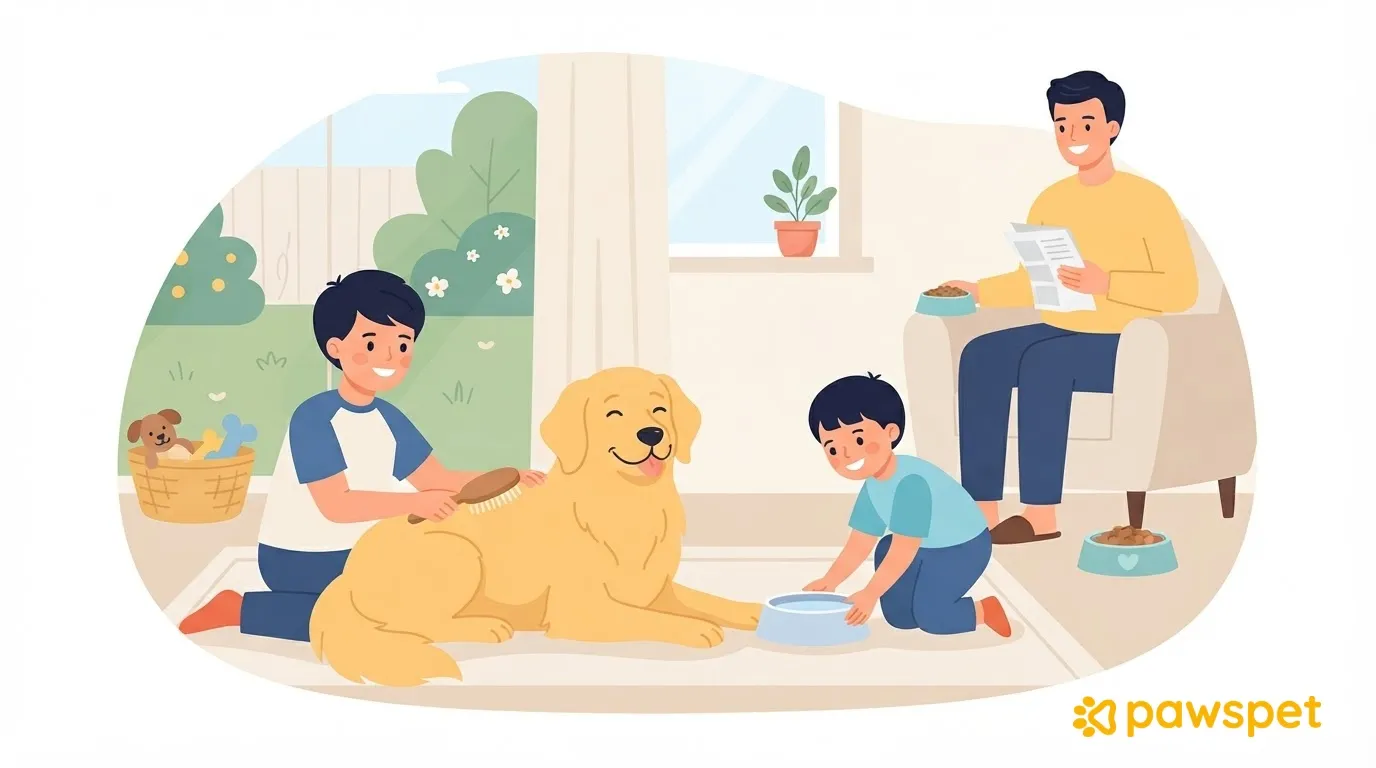
A dog is always an adult’s responsibility, even when the children were the ones who wanted one. Children can help with short, supervised tasks chosen to suit their maturity and the dog’s temperament—for example, topping up fresh water with an adult nearby or brushing the dog briefly if they enjoy it. Medication and parasite treatments, as well as walks with a dog that pulls or reacts, must remain an adult’s responsibility.
Children help; adults are responsible
Forgetfulness, tiredness, and school commitments can make it hard for a child to stick to a routine. The dog’s well-being must not suffer as a result: the adult checks and steps in when needed, without waiting for the child to remember. For meals, check the prepared portion and make sure it is served only once.
Tasks involving food, bowls, or toys are suitable only if the dog is calm around people in those situations. If the dog guards its belongings, an adult should handle those tasks and seek advice from a behavior professional.
Age-appropriate tasks: a guide
These age ranges are only a guide; the adult decides. For younger children, doing a task independently does not mean being left unsupervised with the dog.
| Age group | With an adult nearby | Independently, with a check | Not yet |
|---|---|---|---|
| 3–5 years | Fill the water bowl together; put toys away in the basket; toss a treat chosen by the adult onto the floor. | No tasks alone. | Serving meals; approaching a dog that is eating; holding the leash. |
| 6–9 years | Brush for a few minutes, if the dog enjoys it; pour the portion already prepared by the adult; play treat-search games. | Provide fresh water and put toys away, without interacting with the dog. | Walks without an adult. |
| 10–13 years | Do short exercises already planned by an adult or trainer; help pick up dog waste during a walk together; hold a second leash with a calm dog while the adult holds the main leash. | Prepare the meal in the amounts specified by the adult and let them know it has been served. | Medication; handling a dog that pulls. |
| 14 years and older | Practice routes and leash handling together. | At the adult’s discretion, take short walks on familiar routes with a manageable dog, following local rules. | Demanding walks and tasks reserved for adults. |
Always an adult’s responsibility:
- medication, parasite treatments, and decisions about the dog’s health;
- nail trimming and ear cleaning;
- handling conflicts between the dog and children or other dogs;
- walks with a strong or reactive dog, or in busy areas;
- meals for a dog that guards its food.
Rules for keeping tasks safe
For the first few times, the adult should stay right beside the child, and the task should be brief: it can end after a few successful steps. The dog should be awake and calm, not eating or chewing; do not wake the dog to involve it.
If the dog grabs food eagerly, toss the treat onto the floor rather than offering it by hand. At the first possible signs of discomfort, such as lip licking, turning away, or moving away, stop without insisting. Wash hands after handling bowls, brushes, and waste bags.
Caring for the dog is not a punishment: never assign tasks to make up for a bad grade.
Organizing the family routine
A visible chart shows who does what, when, and which adult checks. Between siblings, set clear turns instead of assigning the same task to everyone. Use a separate box for each meal and mark it as soon as the meal has been served; if no one has confirmed it, work out who served it before adding more food. The adult checks every day, even when all the boxes are ticked.
In the PawsPet owner app, from the “Activities” tab, the adult opens “New activity” using the + button, chooses “Feeding and supplies,” “Brushing,” or “Free play and walks,” links the dog, sets “Repeat” and “Set reminder,” and saves. Only completed recurring occurrences—not one-off activities—can be ticked using the small circle to distinguish what has been done from what remains: a reminder does not guarantee that a task has been completed.
Another adult who is already registered and added to “Collaborators” with “View” access to “Activities” can view them; “Edit” access is also needed to record them.
When enthusiasm fades or something goes wrong
Enthusiasm may fade; that does not mean the child does not love the dog. Reduce the task, change turns, or go back to doing it together; adults must still make sure the routine is covered. Do not make the dog’s place in the family depend on the children’s commitment.
If the child handles the dog roughly or the dog avoids them, suspend the tasks, increase supervision, and ask a behavior professional for help. Do not insist that they get used to each other.
A one-week trial
Choose one or two tasks per child, write them on the chart, and name the adult who will check them. Each evening, make sure the dog’s water, meals, and other needs have actually been taken care of. At the end of the week, ask what felt easy or difficult and adjust the tasks.
The goal is not to do everything alone, but to take part without leaving the dog’s needs unmet.