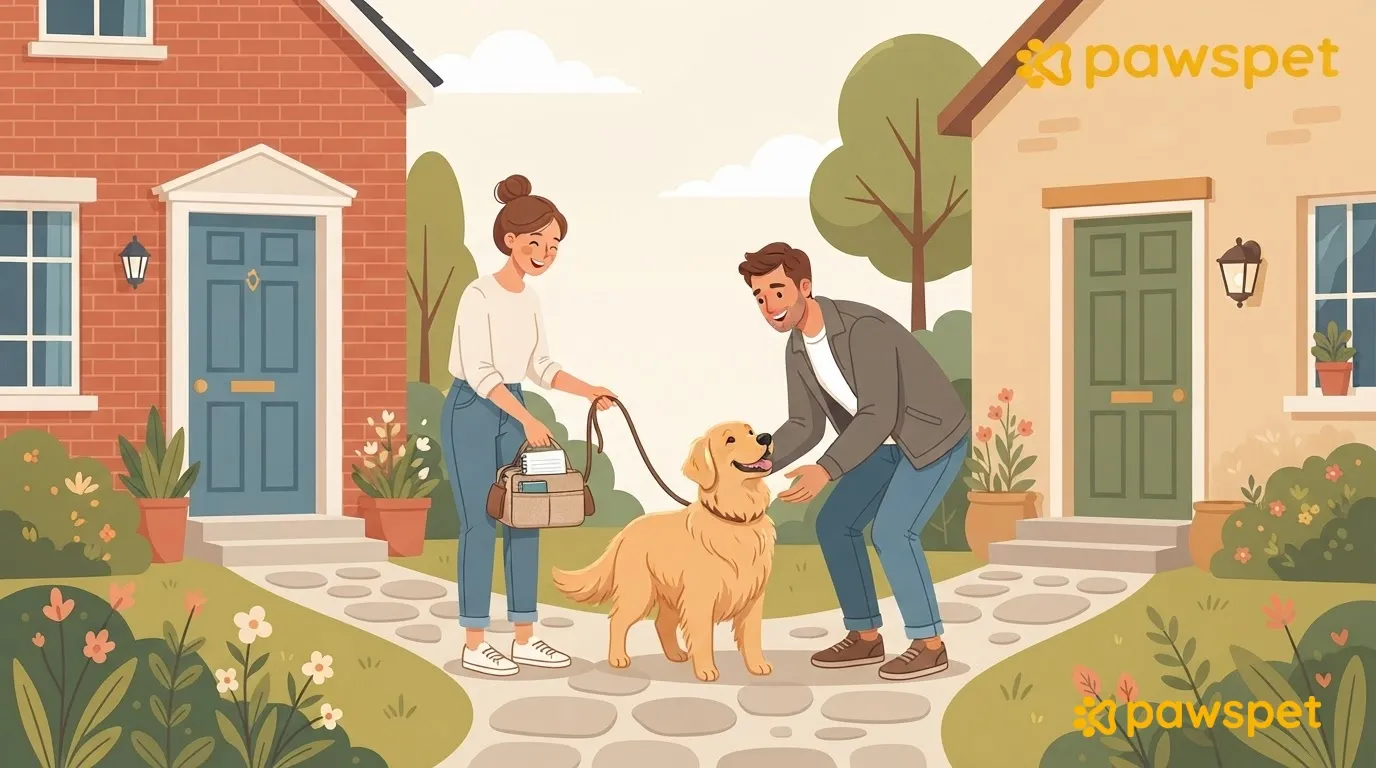
To keep things from falling through the cracks at each handoff, four things help: an initial agreement on a few shared rules, a handoff covering five key details, a kit that always travels with the dog, and one shared place to record what has been done and what still needs doing. This applies to parents taking turns, a child who takes the dog along, or a dog staying with grandparents on weekends or during the summer. The questions are always the same: Has the dog eaten? Have they been out? Was that scratching already happening? A handoff is not just a goodbye at the door; it is a small protocol, like a shift change.
Before the first handoff: what to agree on
Decide these things once, before the dog starts moving between homes:
- Approximate times for meals and walks.
- The same food in both homes: any change in food should be agreed with the veterinarian and made gradually.
- Three or four shared rules about the sofa, bed, table scraps, and leash use in shared spaces.
- The veterinarian to contact and who makes decisions in an emergency if the owner does not respond.
- Phone numbers linked to the microchip: check with the veterinarian or relevant registry that they are up to date.
The five-point handoff
The person handing over the dog shares the same five details with the person receiving them, every time:
- Last meal: what time.
- Last walk and bathroom break: when and what the dog did.
- Anything new or unusual: vomiting, limping, fears, wounds, ticks found.
- What has been done and what remains to be done: for example, the date an antiparasitic treatment was applied, so the other home does not repeat it; any ongoing medication, with the veterinarian’s written instructions.
- Upcoming appointments or due dates.
If there is nothing to report, write “nothing new”: a blank space leaves people wondering whether something was forgotten. Send the same handoff in a written message too, so there is a record.
The kit that travels with the dog
Keep a bag ready at all times:
- regular food, already portioned for the expected number of days
- bowl or mat, if the dog is used to one
- leash and harness with ID tag
- familiar blanket or toy
- any medication in its original packaging, with written instructions
- poop bags
- veterinarian’s contact details
Check the kit when the dog comes back too, not just when they leave: that way you know what is missing before the next handoff.
The first few days in the other home
An adjustment period may help: keeping the same routine, providing a quiet spot, and going out at the same times can all make a difference.
Make a note of any changes without interpreting them (appetite, restless sleep, accidents indoors, barking, or new fears) and pass them on at the next handoff.
For physical symptoms (such as vomiting, limping, or persistent scratching), contact the veterinarian, and do so immediately if it seems urgent. If the issue is an ongoing behavior difficulty, such as fears or barking, talk to a dog trainer. If in doubt, start with the veterinarian. Moving between different homes can be more difficult for cats, so discuss it in advance with a veterinarian or animal behaviorist.
Sharing health and activity updates with PawsPet
If someone at the other home uses PawsPet, the profile owner can add them as a collaborator: open the dog’s profile menu ⋮, then “Collaborators” and “Add collaborator.” The person needs an existing registered account; searching by name or email requires at least 4 characters. Permissions can be chosen area by area, such as “Health” and “Activity,” with either view or edit access: view access lets them check information, while edit access also lets them record it. Access does not expire automatically: when it is no longer needed, remove it using the remove icon.
If a family member does not use the app, open “Sharing” from the ⋮ menu and turn on the public link: it opens in any browser, without an account, in read-only mode, and shows photos, basic information, and a summary of diets and treatments, allergies, vaccines, and illnesses. It also shows the microchip and location, if entered: send it only to people you trust and turn off sharing when it is no longer needed; if you turn it back on, the previous link becomes valid again. You cannot record anything using the link alone: anything that is done should be written in the handoff message.
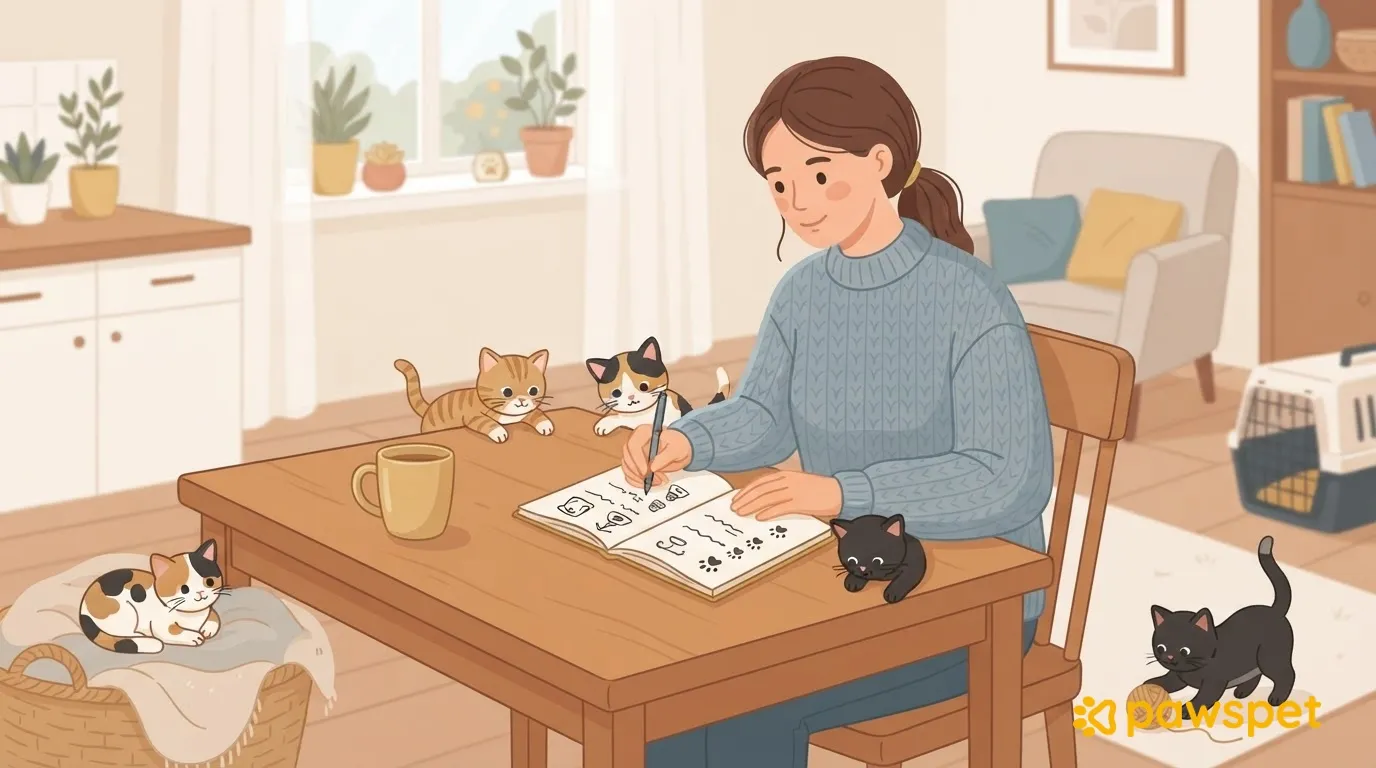
To avoid repeating treatments, record what was done and when. In the dog’s “Health” profile, tap “+,” choose “Treatment,” and enter the name and amount actually given, following the instructions you received. Alternatively, go to the “Activity” tab and create an activity for the dog with the type “Treatments and care” (category “Health”). Anyone with the necessary permissions can find it in “History” or among the activities before taking action. Sharing the profile gives both homes access to the same information: the person receiving the dog can check what has already been done instead of relying on memory.
Handoff checklist to copy into your message
Copy this into your message and fill it out at every handoff:
- Last meal: time …
- Last walk and bathroom break: …
- Anything new or unusual: …
- Done (with date) and to do: …
- Upcoming appointments or due dates: …
- Kit checked: yes
- In an emergency, call: …
- Next handoff: date …
Frequently asked questions
What if the rules are still different in the two homes?
Make the few rules that affect health and safety, such as food and leash use, the same, and accept other differences as long as the rules are clear and consistent within each home. If a difference causes ongoing difficulties, talk to a dog trainer.