If you’re caring for foster kittens, get a written plan from the veterinarian and the organization, keep a log for each kitten using the same entries on every shift, hand off in five lines, and call right away if any of the signs listed below appear. That way, the next caregiver knows how the last meal went and which kitten was causing concern, and the veterinarian receives organized information instead of scattered messages. This article does not specify amounts, meal times, type of milk, temperatures, medications, or weight thresholds: the veterinarian determines these.
Before you begin: the written plan
Before the first shift, ask the veterinarian and the organization to put the following in writing:
- the veterinarian to contact, the organization’s contact person, and the emergency number;
- how and when to feed the kittens, as prescribed;
- what to record on each shift;
- how often to weigh them, if required;
- which changes to report and to whom;
- who covers the night shifts.
Then agree on how to identify the kittens: a name or number chosen with the organization, used consistently in the log, plan, and messages, with a description of the coat beside it. Also record the date of birth, estimated with the veterinarian if it is unknown. If the instructions change, have the plan updated in writing and remove the old version so no one follows outdated instructions.
What to record on each shift
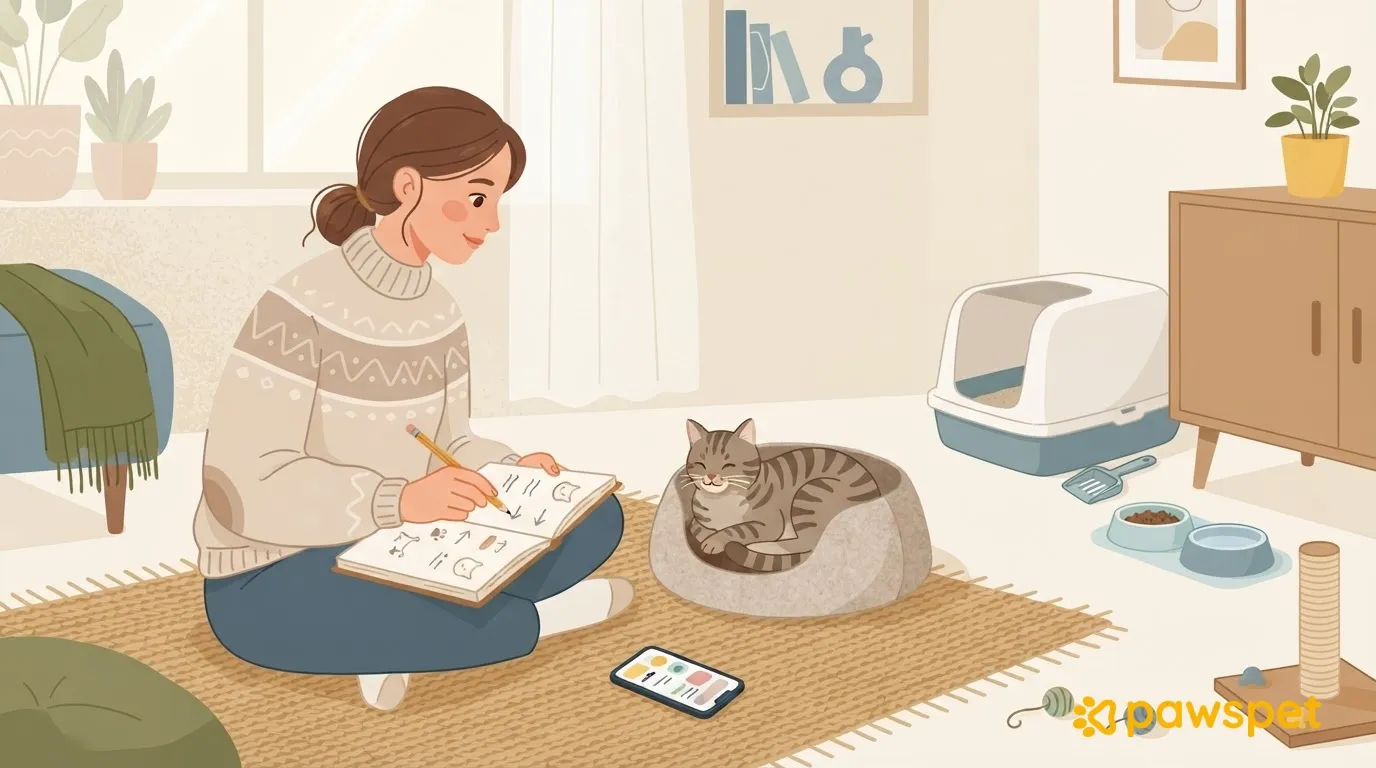
Keep a record for each kitten, in a notebook near the nest or on a shared sheet, and fill it in right after each care shift, not at the end of the day. Write what you observed, not an interpretation: “refused the meal” says more than “seems unwell.”
| Entry | What to write | Example |
|---|---|---|
| Shift | Time and name of caregiver | [time] – [name] |
| Meal | Accepted all, some, or none compared with the plan; don’t make up amounts | Accepted some |
| Elimination | Yes or no, describing its appearance in words | Yes: [description in words] |
| Behavior | How the kitten behaves: suckles vigorously, seeks warmth, cries, sleeps | Suckles vigorously, then sleeps |
| Nest and environment | Dry, clean, as specified in the plan | As planned |
| Notes and questions | Anything not covered by the other entries and whom you told | [question], reported to [who] |
Fill in every entry even when everything is going according to plan: a written line shows that someone checked, while a blank leaves room for doubt.
Signs to report right away
Some signs cannot wait until the next shift. Call right away if a kitten:
- does not suckle or refuses meals;
- feels cold to the touch or is very lethargic;
- cries continuously;
- has diarrhea or vomits;
- has difficulty breathing;
- has a very swollen belly;
- has injuries;
- is losing weight or is not gaining as indicated by the veterinarian.
Follow the contact chain written in the plan and, if the first number does not answer, call the next one without waiting. This list is not exhaustive: add the signs specified in the plan and, if something concerns you, call anyway. Do not give medications or supplements on your own initiative. Contacting the veterinarian comes before any record-keeping: call first, then write down what you observed and what you were told.
Weight: same method, same scale
If the plan calls for weight checks, always use the same scale, one that measures grams, at the same time and under the same conditions—for example, always before the same meal. Note who weighed the kitten, look at the trend over several days rather than a single reading, and send the data to the veterinarian as agreed.
If the organization records the kittens in the PawsPet app, each kitten has its own profile. Creating one requires a name, date of birth, species, and sex; a photo is optional. An uncertain sex can be corrected later via ⋮ » «Edit». Enter the weight in the kitten’s «Measurements» record: enter it in kg, including decimals (if the scale shows grams, convert them to kg before entering the weight), and below 1 kg the app displays it in grams.
The app keeps only one measurement per calendar day: a second entry on the same day updates the first, so any other weigh-ins required by the plan should remain in the log only. You can note who weighed the kitten in the measurement notes. The app shows the change from the previous reading, but does not say whether it is normal: that judgment belongs to the veterinarian.
Caregivers can enter weights only if the profile owner has added them as a collaborator (via ⋮ » «Collaborators») with «Edit» permission for Health: a PawsPet account is required, permissions are granted profile by profile, and access does not expire automatically—it must be removed manually. To let the next caregiver and coordinator follow weight trends, you can keep each kitten’s weigh-ins in the measurements for its PawsPet profile: they will be easier to show to the veterinarian.
The handoff
At each shift change, the person leaving gives the person arriving five lines for the litter, naming the kitten when needed:
- Last meal and how it went
- Next meal scheduled in the plan
- Eliminations since the last shift
- Who is causing concern and why
- What has already been reported to the veterinarian or contact person, and what response they gave
The person taking over rereads the lines and immediately asks about anything that is unclear.
If the foster litter moves to another foster home or returns to the organization, hand over:
- the complete log of all shifts;
- the latest version of the written plan;
- the food and supplies in use.
Get ready before the next shift
Three things to do today:
- Ask the veterinarian and organization for the written plan, including phone numbers and the contact chain.
- Prepare the log with the entries in the table, one record per kitten.
- Write down the veterinarian’s number where everyone can see it.
With these three things, each shift can pick up where the previous one left off.