Plan for your dog to arrive at the start of a period when you can be around more. Use those days to establish the routine they’ll follow when you go back to work, alternating time together with short absences that gradually get longer. Before bringing your dog home, prepare the people who can help and decide in advance what you’ll do during vacations.
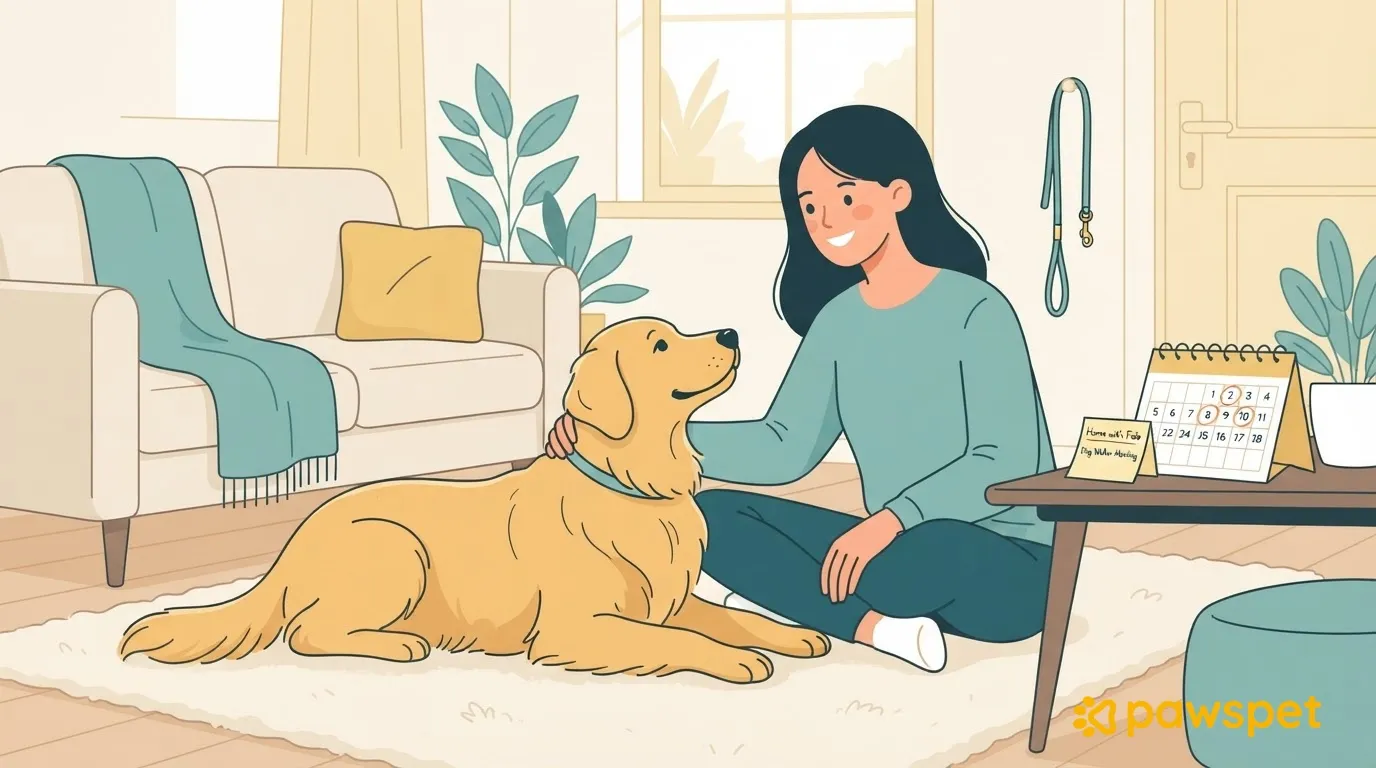
To make it work, treat the first few weeks as a small project: create a calendar and a backup plan for every absence. Working away from home isn’t something to feel guilty about; it’s simply a starting point.
Before setting a date: what to ask the shelter
An adult dog already has habits and reactions, and the shelter knows some of them; you’ll discover the rest once you’re home. Ask:
- what a typical day looks like, including meal and walk times;
- whether the dog has ever lived in a home;
- whether the dog has ever been left alone in a home environment: sharing a kennel with other dogs is a different experience;
- how the dog reacts when the volunteers leave.
The answers will help you tailor your plan: what step to start with for absences and how quickly to progress.
Choosing an arrival date and time off
It’s better for your dog to arrive at the beginning of a few days when you can be around, such as a long weekend or a few days off, rather than right before a busy week or a trip. Don’t spend those days just being together: practice the routine you’ll follow later.
- Get up, go for walks, and feed your dog at the times you’ll keep once you’re working.
- Set aside moments when you’re in another room while your dog is doing something else.
- Avoid being together constantly and then suddenly disappearing on your first day back at work.
If your dog arrives during the warmer months, schedule walks during the coolest parts of the day.
Building up to the first absences
Move on to the next step only if your dog stays calm during the previous one; otherwise, go back a step.
- Step outside the door for a few moments, then come back in.
- Go out briefly to run small errands.
- Try longer absences only if the short ones have gone well.
Leave and return without dramatic farewells: coming and going should feel normal. Leave something safe to chew only if the shelter confirms your dog can handle it without problems. An audio or video recording can help you understand how your dog spends time when you’re out.
There’s no single number of hours that works for every dog: it depends on age, health, habits, and history.
Preparing your support network in advance
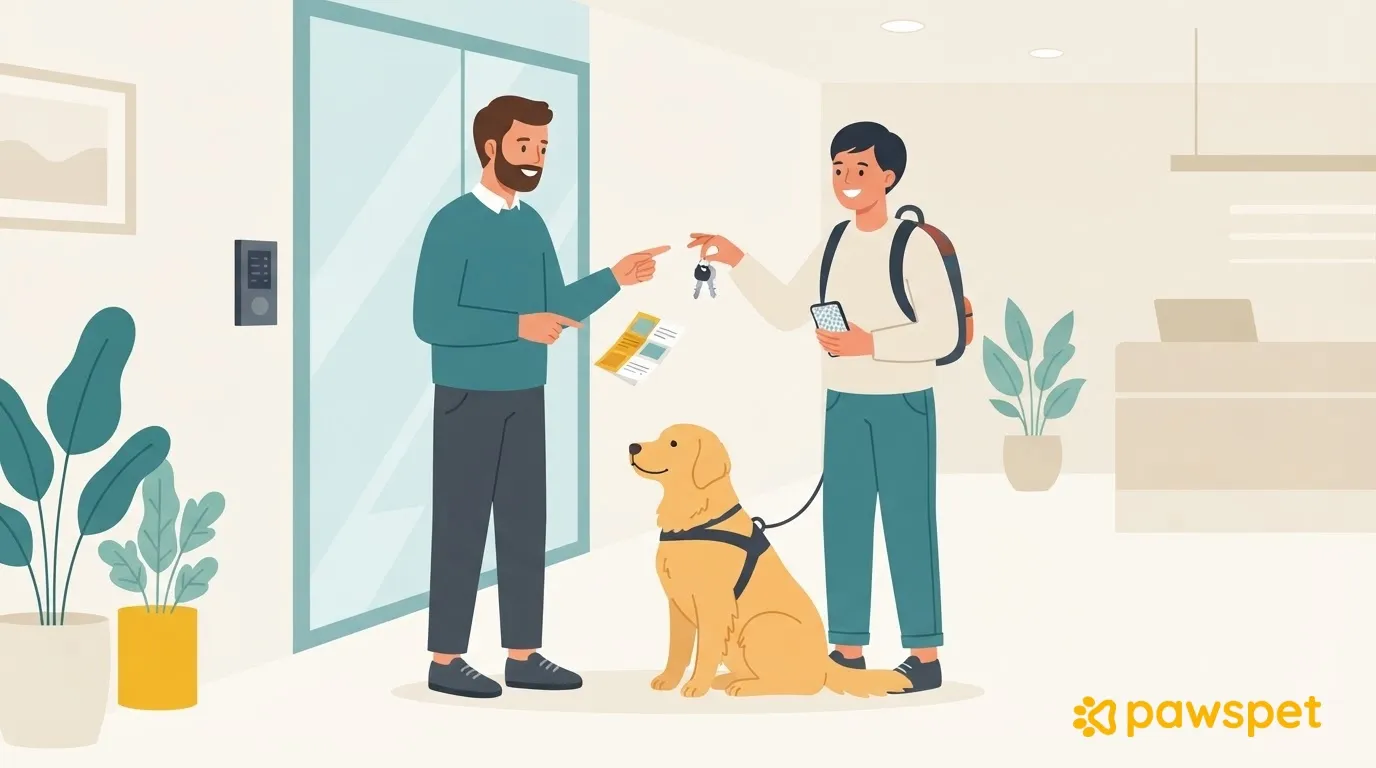
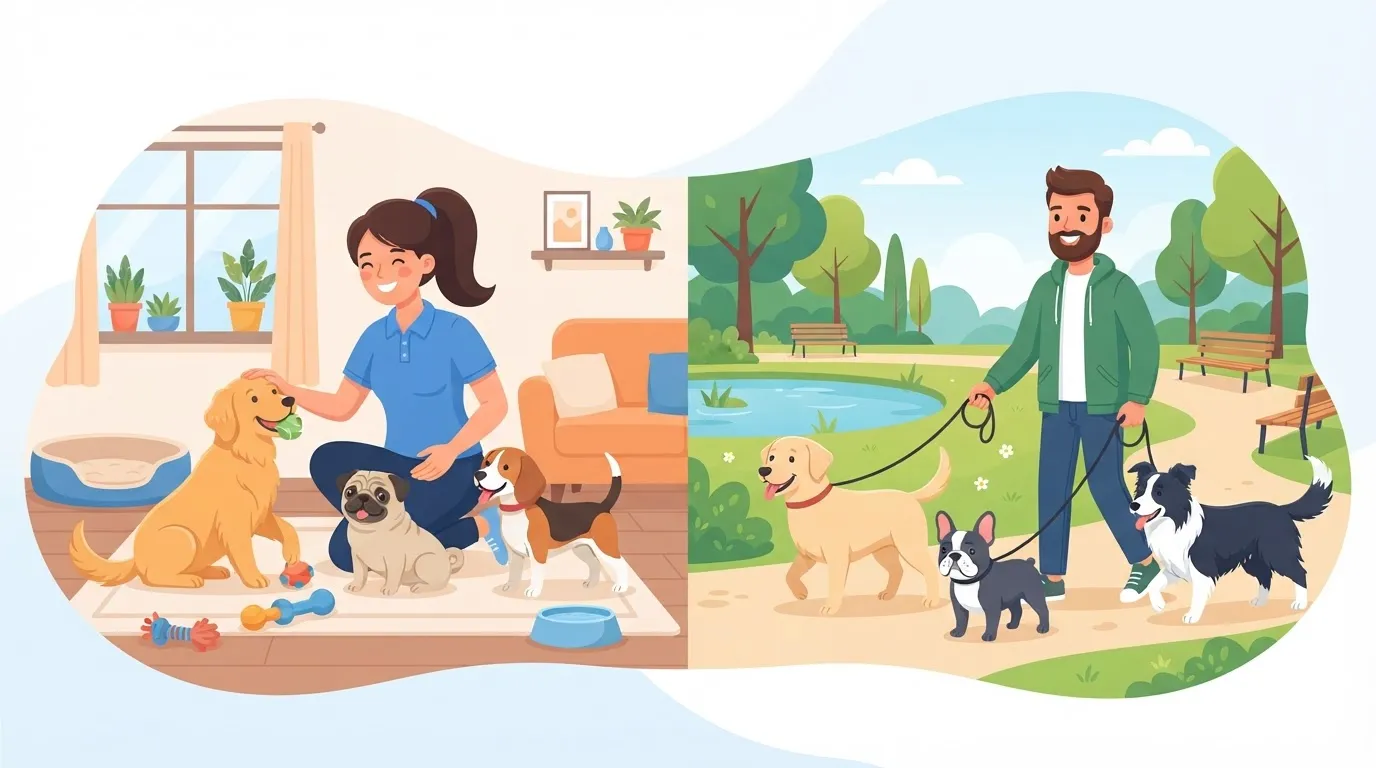
Think about who can cover a lunch break or a long day: a family member, neighbor, dog walker, or pet sitter. Introduce your dog to these people before you need their help, with a few walks together while you’re there. A doggy daycare, on the other hand, should only be considered after your dog has settled in and with advice from someone who knows them.
If you need help beyond your circle of acquaintances, you can search the PawsPet marketplace for services such as “Dog walking,” “Pet sitting,” or “Doggy daycare” near you, filter by distance and rating, and check each provider’s profile for working hours and reviews. You can only chat with a provider after placing an order, so you’ll need to book a short service to make initial contact. Hours and reviews can help you choose, but they don’t guarantee availability or reliability.
Vacations and unexpected events in the first few months
If summer vacation is coming up, decide now whether your dog will come with you or stay with someone they already know. Avoid making your dog’s first experience away from home happen right after adoption, while they’re still settling in. If your trip is too soon, consider delaying your dog’s arrival until after your vacation.
Also prepare a backup plan for unexpected events: illness, overtime, and business trips. Write down a name and contact details for each situation, and let the person know in advance.
What to leave for someone helping you
Give the person helping you a written list with:
- your dog’s routine and wake-up, walk, and meal times;
- the food and quantities recommended by the shelter or veterinarian;
- rules, such as not letting your dog off leash or allowing contact with dogs they don’t get along with;
- known fears and places they might escape from;
- your contact details, as well as those of the veterinarian and shelter;
- what to do if your dog escapes or becomes unwell.
Once you’ve created your dog’s profile in PawsPet, you’ll find “Collaborators” in the three-dot menu. You can add someone who’s helping you if they have a PawsPet account, and choose what they can view or edit from your dog’s profile, health, and activities. For people who don’t have PawsPet, there’s “Sharing”: a public, read-only link with your dog’s profile and health summary. The link works for anyone who receives it and may also show the microchip number and location, if entered, so share it only with people you trust. Documents such as the passport aren’t included in the link, and you can’t make them visible to collaborators through the app either. If you deactivate the link, it stops working; if you reactivate it, the same code makes it valid again.
When to ask for help
When your dog is left alone, don’t ignore these signs: prolonged vocalizing, damage focused on doors and windows, toileting only when you’re away, attempts to escape, or self-inflicted injuries. Don’t punish your dog: it won’t address the cause. Talk to your veterinarian to rule out physical causes, and consult a behavior professional. If your dog has hurt themselves, don’t wait: call the veterinarian right away.
Here’s your next step: write out the calendar for the first two weeks today, noting who will help you and a backup plan next to every absence.