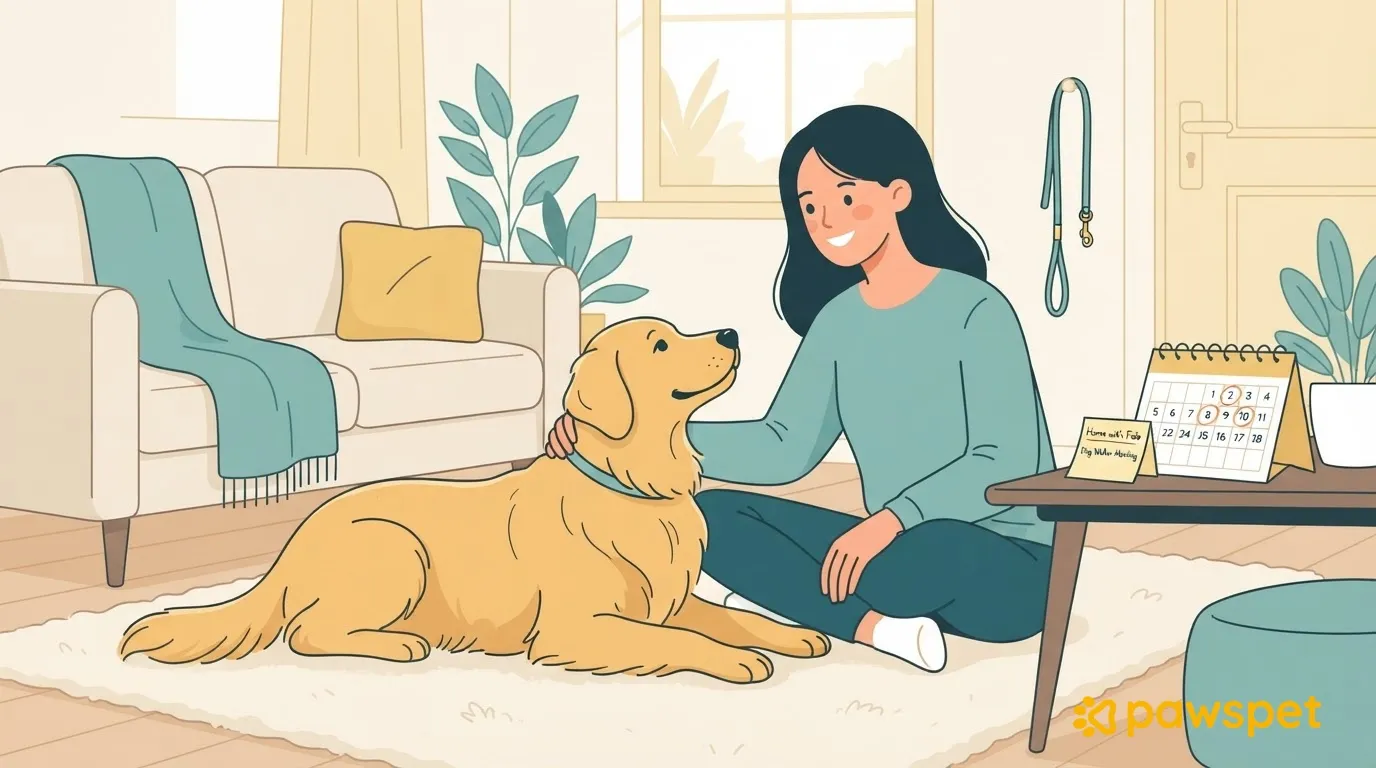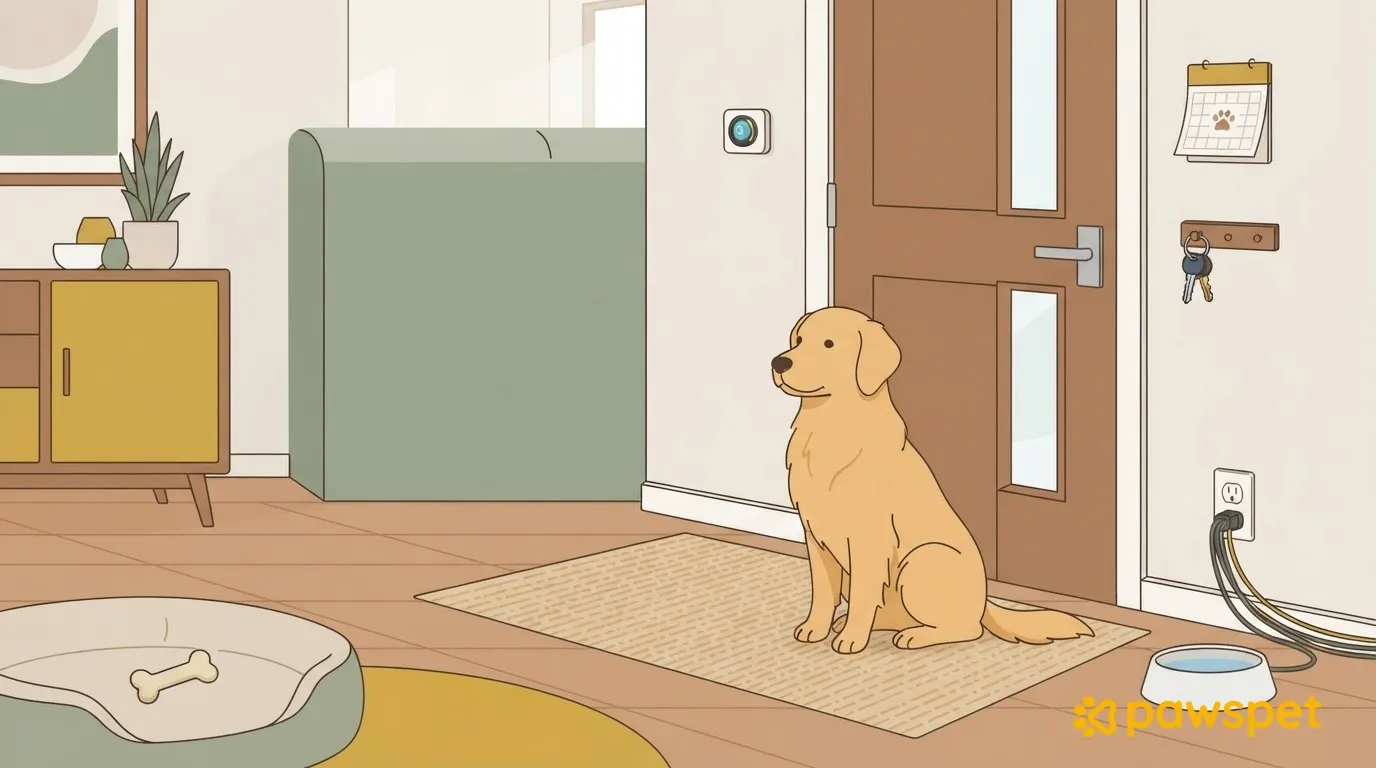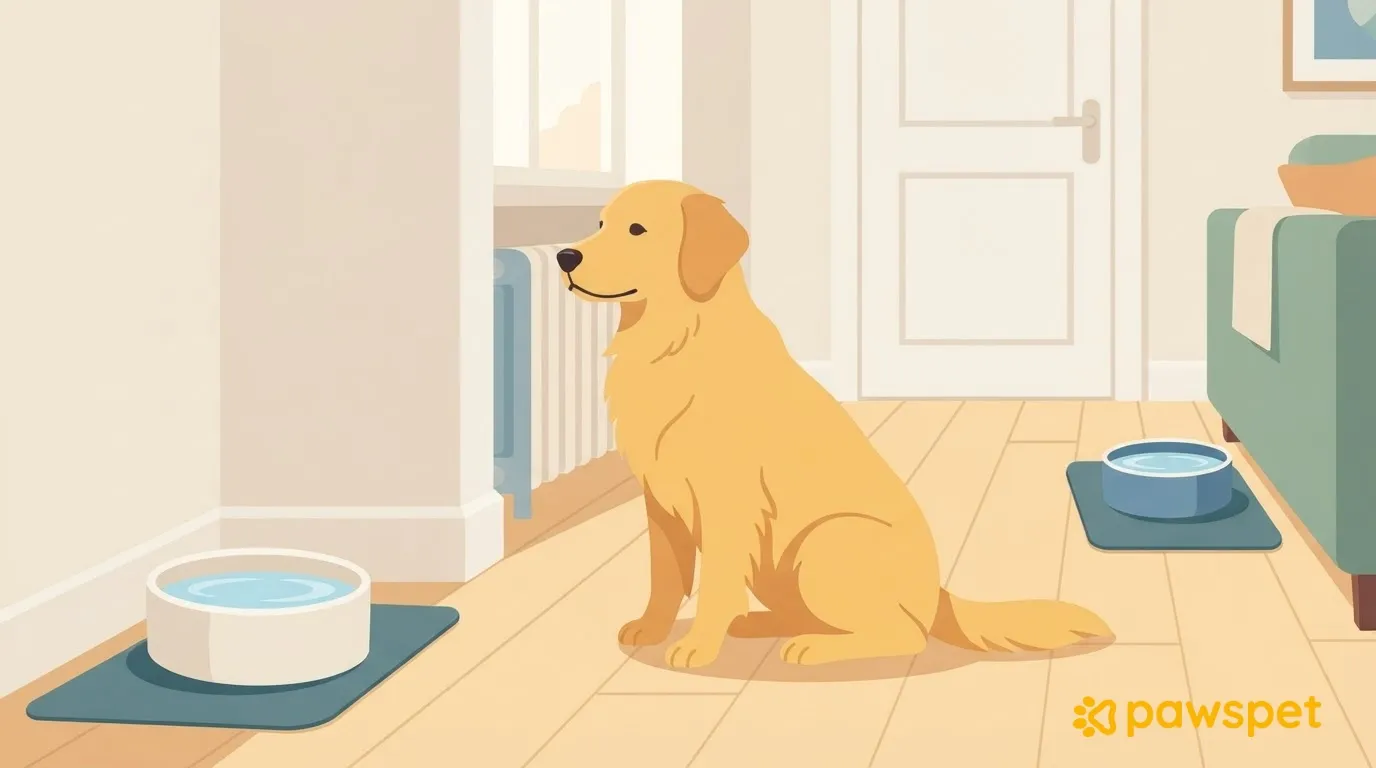
If your work schedule is changing and your dog will be home alone for more hours than before, you need to make water access reliable. Set up at least two water stations in the area where your dog stays, use stable bowls away from direct sunlight and radiators, keep doors open, and provide fresh water before you leave. Before the first full day, test everything with a trial run on a day off. If you’ll be away for a long time, arrange for someone to stop by midday. A long absence also raises questions about bathroom breaks and companionship, which we address here only in practical terms.
The short answer
- At least two water stations, in different places within the area where your dog stays.
- Stable bowls: heavy or spill-proof, on a nonslip mat.
- The right location: away from direct sunlight during your absence and from radiators or heaters that are on.
- Open doors and fresh water: use doorstops in rooms you pass through and fill the bowls before leaving.
- Do a trial run on a day off; for long absences, arrange for someone to stop by midday.
Do a trial run before the first day
Choose a day off and set up your home as you will on workdays: bowls in place, doorstops installed, fresh water ready. Take a photo of the water level in each bowl so you have an accurate reference when you get back. Then leave for about as long as you expect to be away, or for as long as you can if that isn’t possible.
When you return, check for these signs before putting anything back in place:
- how much water is missing compared with the photo;
- whether there are splashes or puddles around the bowls;
- whether a bowl has been moved or tipped over;
- whether a door has closed and blocked access to a water station.
Note what you find and try the solutions in the following sections one at a time. If you make a significant change, repeat the trial run.
Where to put the bowls when you’re away for a long time
Put the bowls in the area where your dog will spend time alone, away from doors that slam. Then check two things:
- Sunlight. Avoid spots that get direct sunlight during the hours you’ll be away, and check them at those times: a shady corner in the morning may be in full sun in the afternoon, warming the water.
- Heat. Keep bowls away from radiators and heaters, which may still be on while you’re out in late winter.
Don’t leave bowls inside a carrier or crate unless the model is designed to hold them in place. Use doorstops in rooms you pass through: a door can close in a draft and block access to a water station.
If a bowl tips over or empties
No accessory can guarantee that accidents won’t happen, but these choices can help limit the effects of a mishap:
- a heavy ceramic or stainless-steel bowl with a rubberized base;
- a spill-proof bowl or holder;
- a nonslip mat with a raised edge to help keep the bowl in place and contain splashes;
- a second water station in another room or corner of the area, so water is still available if one bowl tips over or empties.
An electric fountain makes sense only if your dog is already comfortable using one. Keep the cord out of reach, and always leave a regular bowl beside it in case the power goes out.
If your dog plays with the water or empties the bowl every time, ask a dog trainer how to manage the behavior without punishment.
When you need help midday
For long absences, someone you trust—a family member, neighbor, or dog walker—can stop by midday to refresh the water, dry up any puddles, and take your dog outside. Leave simple written instructions:
- where the bowls are and how many there are;
- how to wash them;
- what to check: water level, puddles, moved bowls, closed doors;
- who to call if your dog won’t drink or seems unwell: your number and your veterinarian’s.
If you don’t have anyone who can stop by midday, use the «Services» tab in the PawsPet app to search for dog-walking services and check whether any are available in your area.
Signs to watch for in the first few weeks
If you often find the bowls empty and your dog is drinking much more than usual, or if the water stays untouched for days, talk to your veterinarian.
Damaged items, unusual accidents in the house, or neighbors reporting barking may suggest that water isn’t the only concern. In these cases, ask a veterinarian or dog trainer for advice rather than jumping to conclusions.
Checklist before you leave
- At least two water stations, with fresh water.
- Stable bowls on a nonslip mat.
- No bowls in direct sunlight or near radiators or heaters that are on.
- Doorstops in place so no door can close.
- A photo of the water level taken before you leave.
- If you’ll be away for a long time, the person stopping by midday has written instructions.
Schedule your trial run now: choose your next day off and put it on your calendar.