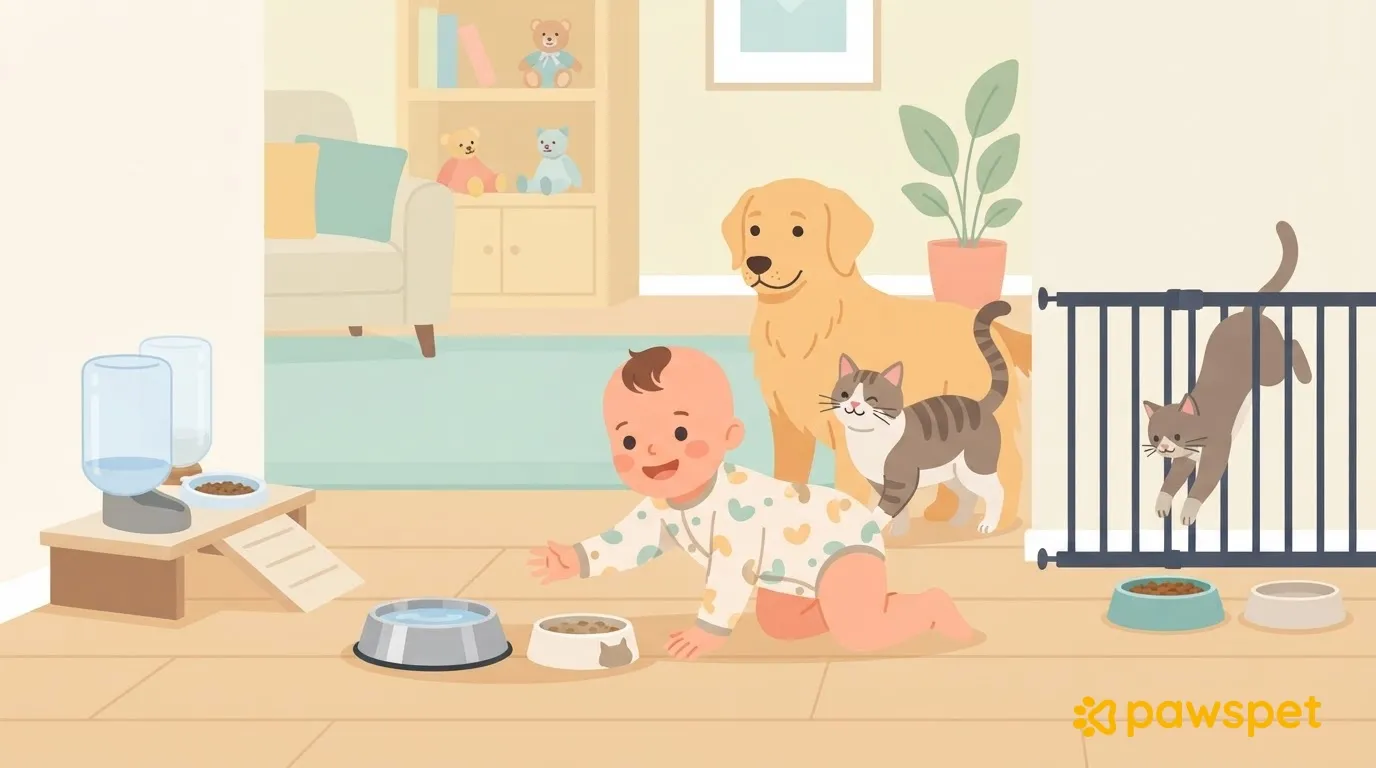
When your baby starts crawling or moving around independently, the water bowl becomes irresistible: they play with it, put their hands in it, knock it over, maybe try to drink from it, and leave the floor wet. A baby gate, piece of furniture, or door can keep your baby away from your pet’s water station—not keep your pet away from its water. Choose a spot your baby can’t reach but your dog or cat can use comfortably, and move the bowl gradually.
The rule: separate your baby from the water station, not your pet from its water
Taking the bowl away or putting it out only at certain times isn’t a solution: your pet needs to be able to drink when it needs to, not just when it’s convenient for us, and a system that depends on everyone remembering will eventually fail.
The goal is to reduce unsupervised contact between your baby and that part of the home. Instead of hiding the bowl, set up a quiet spot that your pet can always access and your baby can’t reach. But no barrier replaces your supervision: never leave your baby and pet alone together.
Three placement options
Behind a baby gate
Choose a hallway, kitchen, or room your baby doesn’t go through, and block access with a baby gate. Your pet must be able to get in whenever it wants: for cats, there are gates with a small pet door—choose one that’s sturdy and the right size. If your dog can’t get through, the bowl must already be on the dog’s side of the gate.
Up high, for your cat
A stable shelf or piece of furniture that your cat can reach easily can hold its water bowl out of your baby’s reach. Don’t use this option for an older cat or one that has trouble jumping. Use a heavy bowl that won’t fall if your cat bumps it.
In your pet’s room
If there’s a room your pet mainly uses, you can put the water there. Leave the door ajar and hold it open with a doorstop, or provide an opening designed for your pet. Always check that your baby can’t get through the same opening: if they can, this solution isn’t enough on its own.
In summary:
| Solution | Suitable for | Watch out for |
|---|---|---|
| Behind a baby gate | Dogs and cats, in an area your baby doesn’t go through | A sturdy gate of the right size; free access for your pet |
| Up high, for your cat | Agile cats that can climb without difficulty | Difficult jumps for older cats; a heavy bowl that won’t fall |
| In your pet’s room | Dogs and cats that already use a room of their own | Door held open with a doorstop; opening your baby can’t get through |
How to move the bowl without stopping your pet from drinking
Moving the water bowl works best when you do it gradually:
- Set up the new spot before removing the old one: fresh water, a stable bowl, and plenty of time for your pet to find it.
- For a few days, leave the old bowl out too, but only when you’re there to supervise: water should always be available in the new spot.
- Remove the old bowl once you see your pet using the new one without hesitation.
- Change one thing at a time: don’t move the water, food, bed, and litter box all on the same day.
- For cats, keep the water away from the litter box.
- Watch to see whether your pet drinks as usual. If it avoids the new spot or drinks less, go back to the previous step; if the reduction continues, talk to your veterinarian.
Floors, cords, and everyday hygiene
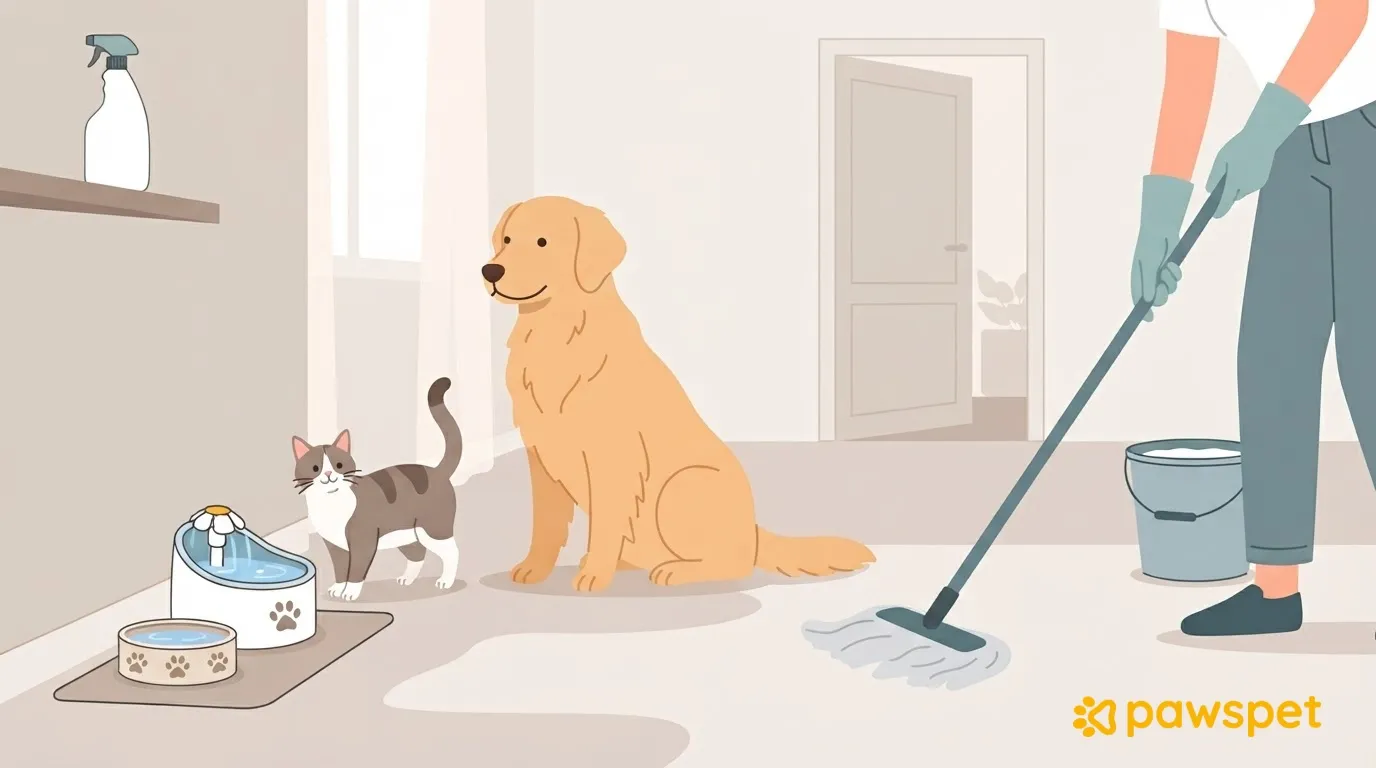
- Dry floor. Put a mat with a raised edge under the bowl and wipe up splashes and puddles right away. Keep mops and buckets out of your baby’s reach.
- Cords. If you use a water fountain, keep the cord and outlet out of your baby’s reach. If that isn’t possible, replace the fountain with a bowl for a while.
- Hygiene. If your baby has touched or drunk your pet’s water, wash their hands and face; if you have any concerns about their health, ask your pediatrician. Wash the bowls with a sponge used only for them.
If your dog or cat stiffens near the bowl
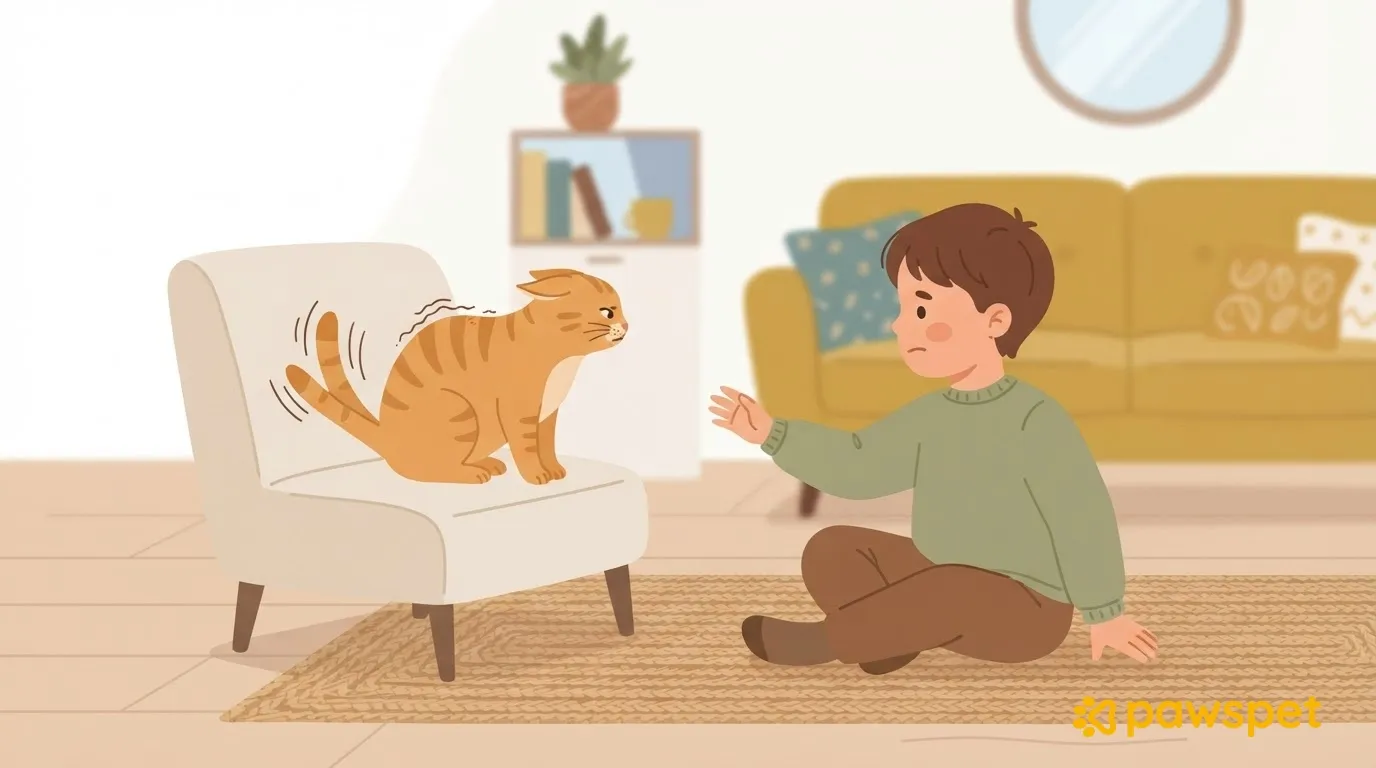
When your baby approaches the water station, a tense pet may freeze, stare at your baby, stiffen its body, growl or hiss, or suddenly move away. If this happens:
- Calmly separate your baby and pet, without shouting or making sudden movements.
- Don’t punish your pet: it’s telling you how it feels.
- Never leave your baby and pet unsupervised, even for a moment.
Then ask a dog trainer, behavior consultant, or veterinarian for advice, and explain what happened and when. If you’re not sure who to contact, you can search for dog trainers and behavior consultants on PawsPet and read reviews before choosing.
New water station checklist
- Out of your baby’s reach
- Always accessible to your pet
- Fresh water in a stable bowl
- Dry floor, with a mat that has a raised edge
- Cords and outlets protected or out of reach
- Old bowl removed only after your pet has adjusted to the new one
Do today: Find a spot in your home your baby can’t reach and put the second bowl there.