You’ll be returning to the office in September, every day or on a hybrid schedule: now is the right time to prepare your dog, while you’re still working from home. After weeks of almost constant company, this will be a major change to their routine, but you can manage it with small, predictable steps.
The plan in brief: observe how your dog behaves when you’re not in the same room, use work-from-home days to practice short separations, arrange someone to care for them, and do a trial run before you return. How much lead time you need depends on your dog, so don’t chase a deadline: start now and move ahead only when the previous step goes smoothly.
How your dog behaves when you’re not in the same room
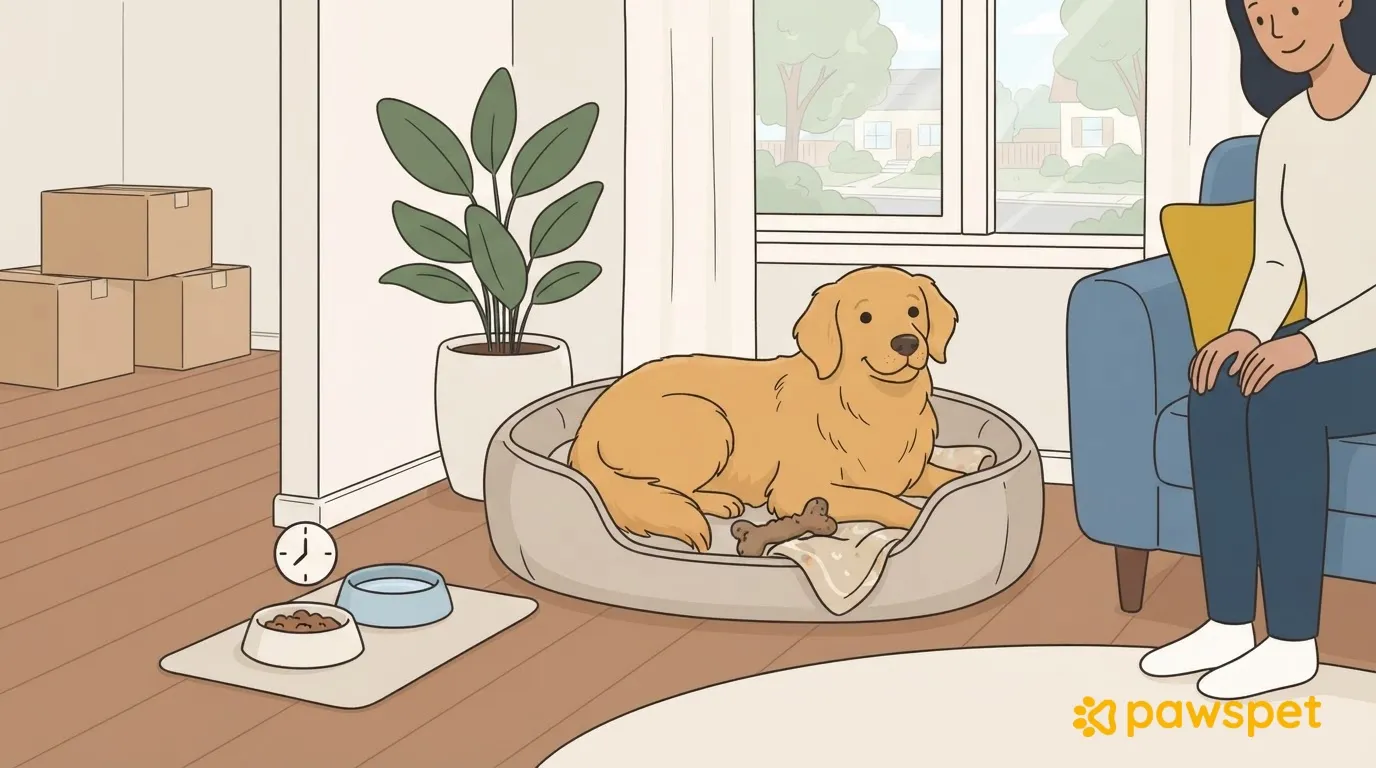
Before you practice anything, see where you’re starting from. During a call, close the office door and notice how your dog behaves; also try a short trip out, such as going to the store. To see what they do when you’re away, you can leave your phone or a camera in a room and review the footage calmly.
Signs that deserve attention include:
- prolonged vocalizing, such as barking, whining, or howling that doesn’t stop;
- scratching or damage near doors and windows;
- going to the bathroom indoors only when you’re away;
- very intense agitation when you return.
These observations aren’t meant to make a diagnosis. However, if the signs are pronounced, involve your veterinarian or a behavior professional before extending the time you’re away. There’s a dedicated article about separation anxiety here on the blog.
Short separations during work-from-home days
Meetings and work blocks are ready-made training opportunities. Set your dog up in a comfortable area with a calm activity that’s suitable for them, and close the door or gate for part of a call; if they stay calm, make the next separation a little longer. Their reaction matters, not the clock: if they get agitated, go back to the previous step, and if their distress is pronounced, don’t extend the separation and ask for help as described above.
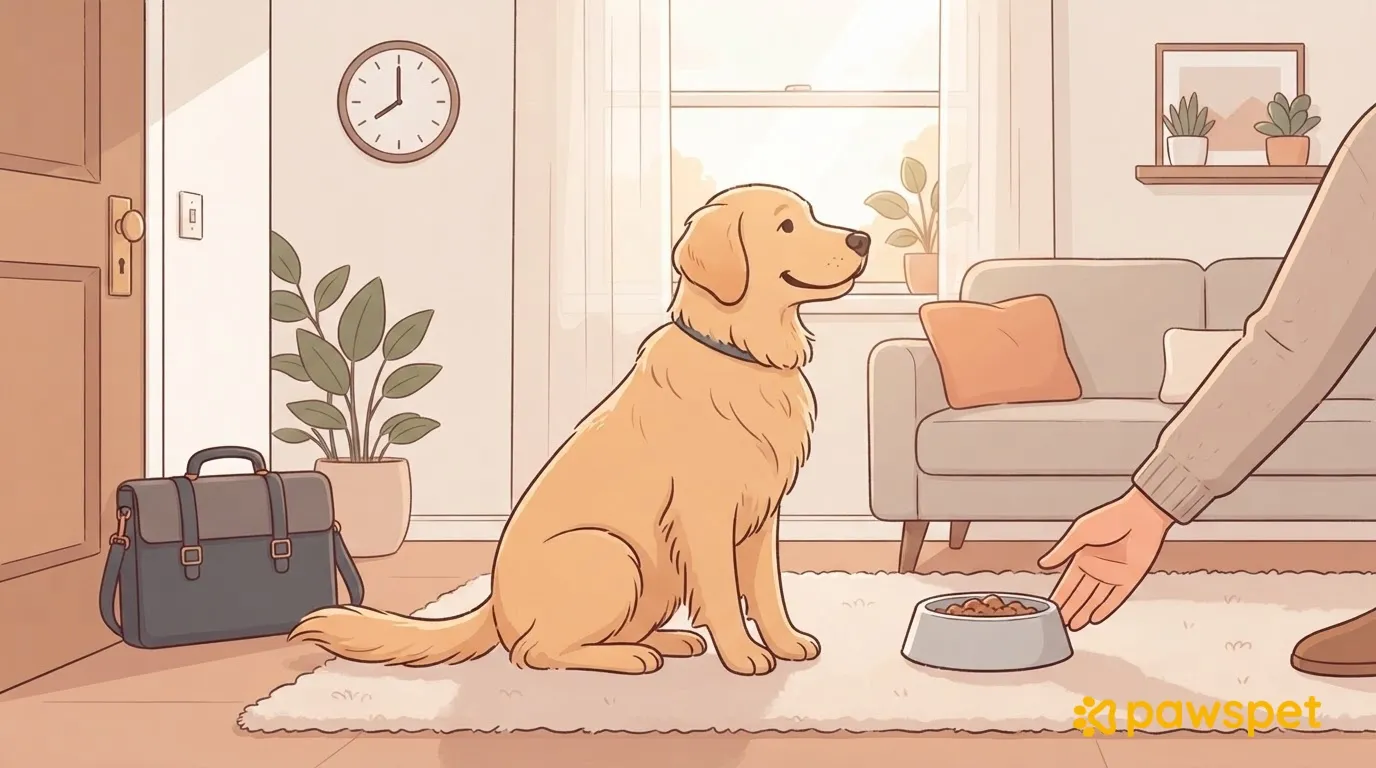
Add short outings and keep departures and returns low-key: no long goodbyes and no celebrations when you arrive. Work on departure cues, too: pick up your keys or put on your shoes from time to time, then stay home, so these actions don’t become a ritual that always signals you’re leaving.
Never scold your dog when you get back, whatever you find: make a note of what happened and compare it with the signs listed above. Leave chew items unsupervised only if they’re safe for your dog.
Who will care for your dog when you’re out all day
On long days, your dog will need someone besides you. Choose based on their needs:
- Midday dog walker: breaks up the wait with an outing and some exercise, but doesn’t cover the rest of the day.
- Daycare: your dog spends the day with company; it’s suitable for dogs who are comfortable around other dogs.
- Pet sitter: someone dedicated to your dog, useful if they need more individual attention.
- Family member or neighbor: someone you trust, but you’ll need clear agreements about times and a backup for when they can’t be there.
Whichever option you choose, arrange an introductory meeting with your dog and a trial before you return: this lets you see how they react and make adjustments calmly. To get started in time, in the «Services» tab of the PawsPet app you can search for dog walkers, daycare, and pet sitters by choosing the type of service («Walk», «Daycare», «Pet sitting») and the area; chat with the provider opens only after an order is placed, and availability isn’t guaranteed.
Trial run with the new schedule
In the last few weeks before you return, gradually shift your wake-up time, morning walk, meals, and evening outing toward the new schedule. Then spend at least a full or half day away from home while your dog stays with the person who’ll care for them: when you return, see how your dog is doing, ask how it went, and adjust anything that didn’t work. The closer the trial is to a real day, the more useful it will be: same times, same rules, same person.
In the late-summer heat, schedule longer outings during the cooler parts of the day.
Written instructions for your dog’s caregiver
Even someone experienced won’t know your dog’s habits. Write a simple page with:
- times for walks, meals, and rest;
- type and amount of food, as determined by you or your veterinarian;
- rules for walks on leash and interactions with other dogs;
- your dog’s signs of stress;
- veterinarian and emergency contact details.
There’s a dedicated article here on the blog about keys and contracts with a dog walker.
You can also share your dog’s profile alongside the instructions: in PawsPet, you can add that person as a pet collaborator. In the app, open the pet’s profile, then ⋮ » «Collaborators» » «Add collaborator» and search for them by name or email. They need a PawsPet account. Before confirming, choose for each area whether to grant view-only or editing access: permissions start with view-only access to health information already selected. Access stays active until you remove the collaborator, and collaborators can’t see documents or the passport in the app.
Alternatively, from ⋮ » «Sharing» you can enable a public read-only link. Anyone who opens it can see basic profile information, including the microchip and location if entered, as well as a health summary: share it only with those who need it and turn off sharing when it’s no longer needed, bearing in mind that if you turn it back on, the same link becomes valid again.
During the work-from-home days you have left
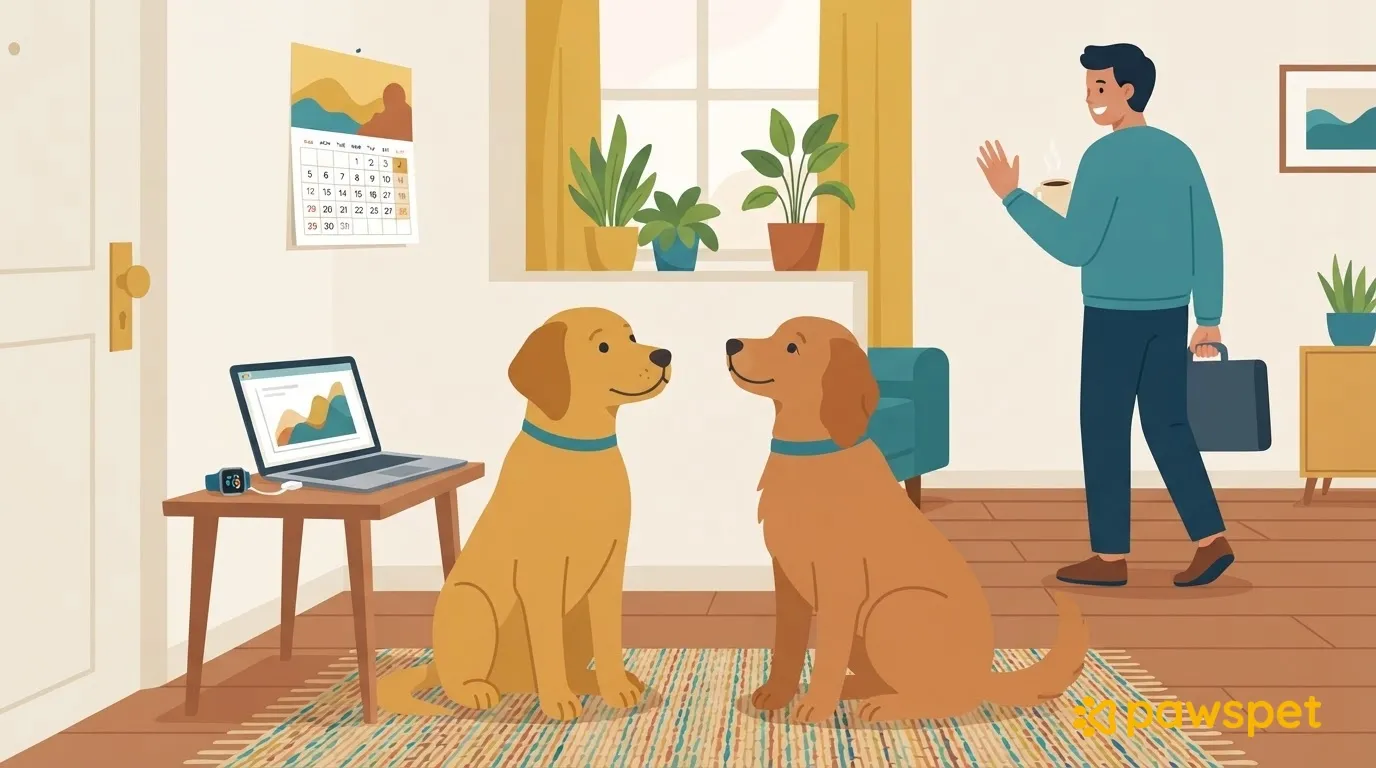
If you work a hybrid schedule, don’t go back to being with your dog constantly on the days you’re at home. Keep practicing separations and maintain a schedule similar to office days: wake-up, walks, and meals at the same times, and some periods of the day when your dog stays in their area while you work. This makes the difference between days at home and days away less pronounced.
Three things to do this week:
- Observe: during a call, close the office door, or go out to run a quick errand, and note how your dog reacts.
- Practice: include a short, low-key separation every work-from-home day, and extend it only if your dog seems calm.
- Arrange care: choose who will look after your dog on long days and set up an introductory meeting.