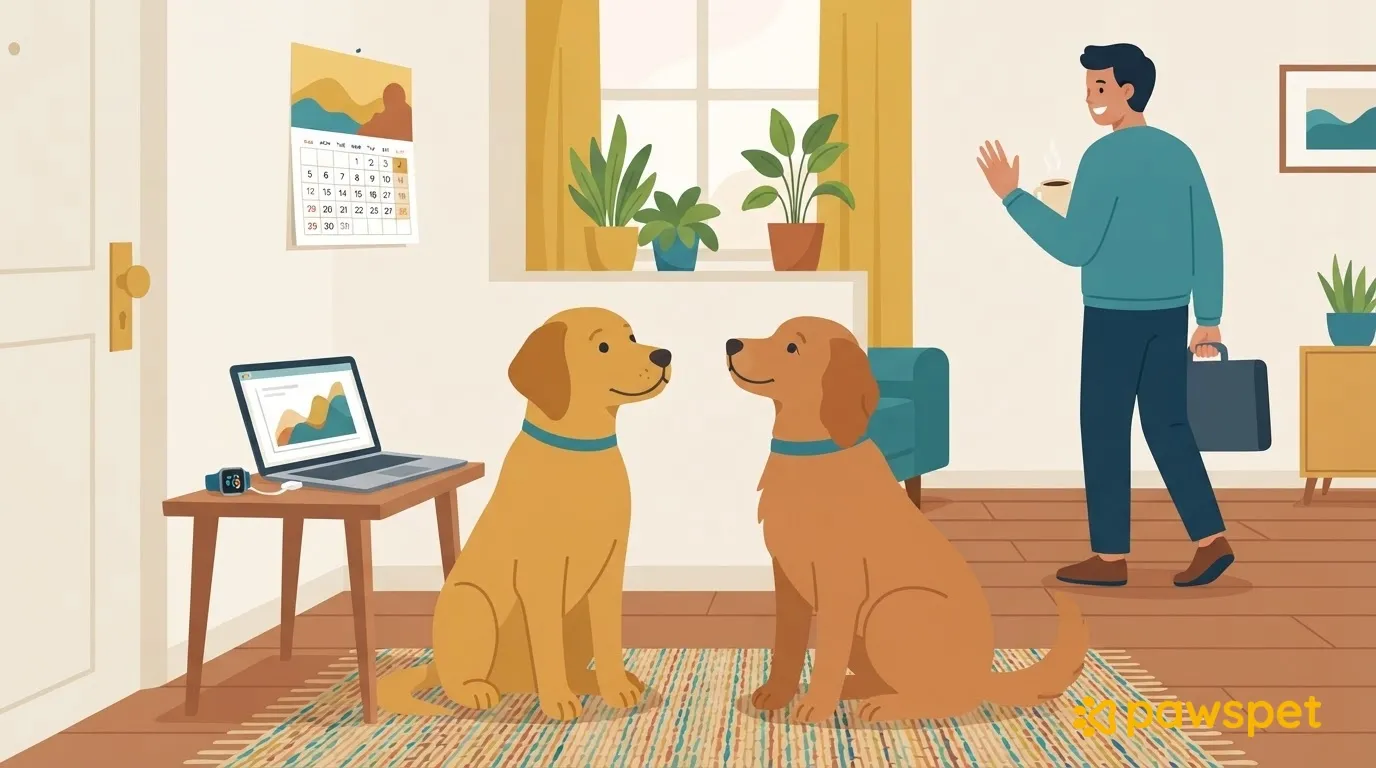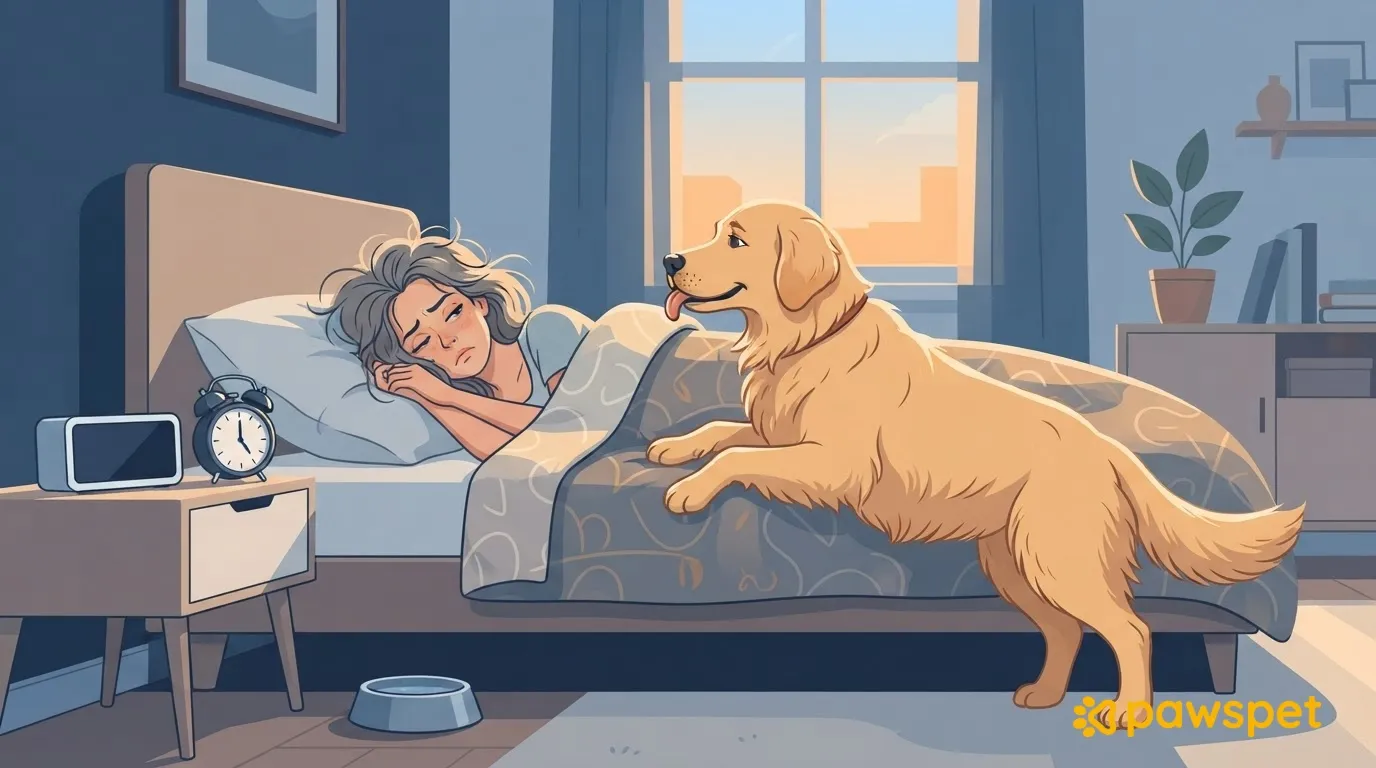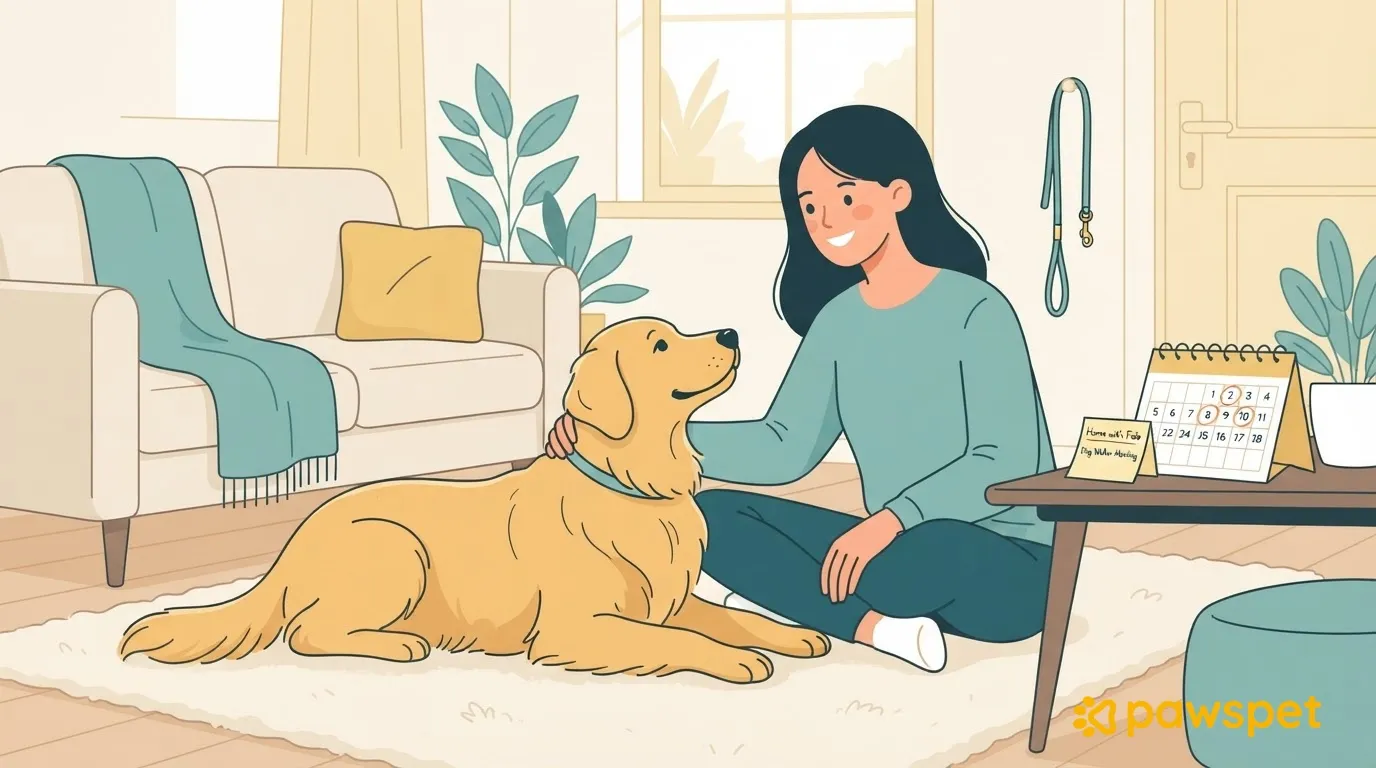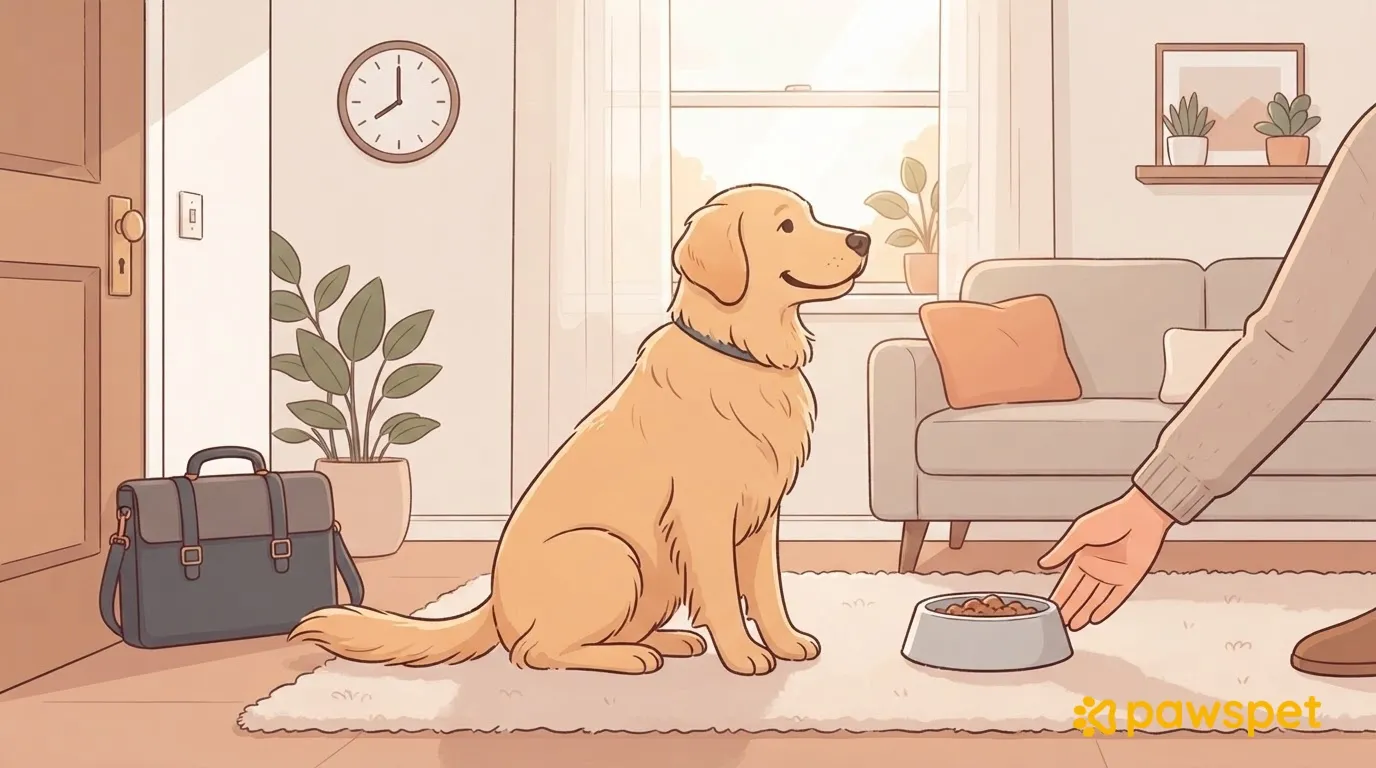
To help your dog get used to spending mornings alone again, start a few days before you return to work: gradually move wake-up, walk, and meal times back to their weekday schedule, reintroduce short absences, and do a practice run of the morning routine. Then keep an eye on the first week so the return to work doesn’t pile every change onto the same day.
What changes for your dog when the holidays end
During the holidays, your dog may have had you around all the time, with later wake-ups, meals and walks at varying times, visitors, and unusual noises. When you return to work, your presence, the order of the morning, and the length of time your dog is alone all change at once. Your dog won’t necessarily struggle with it: the plan is meant to spread these changes over several days.
Get wake-up, walk, and meal times back to their weekday schedule
Choose your workday wake-up time and move toward it in small steps: waking up 15 minutes earlier each day is one example, not a rule. Gradually shift walks and meals toward their weekday times too, repeating the same sequence each morning.
Then keep meal times and the last evening walk consistent. Agree on the schedule with anyone who helps care for your dog. Use the table as a guide, not a deadline.
| When | What to change |
|---|---|
| 4–5 days before | Start moving wake-up time closer to the weekday schedule and resume your usual sequence. |
| 2–3 days before | Continue with the schedule and add short practice absences. |
| The day before | Repeat the morning at the actual time, without adding other changes. |
| The first week | Keep the sequence consistent and note any difficulties. |
To keep the routine consistent when family members take turns, you can create recurring weekday walks and meals in the PawsPet app, set an alert, and check today’s summary on the Home screen. Notifications will arrive only if you have granted the app system permission.
Reintroduce absences gradually
After a walk, once your dog is calm, step out briefly and come back. Increase the duration only if the previous practice went well; don’t extend it just to keep to the schedule. Keep departures and returns low-key.
During practice, notice how your dog reacts to the sounds of you leaving and, in the first few minutes, whether they vocalize or keep trying to get to the door. If they have trouble settling, go back to an easier practice.
You can leave a chew or a toy with some of their food only if you have already tried it while you were present and it is safe for them. Don’t treat it as a solution to distress. If your dog has already shown severe distress when left alone, ask your veterinarian for help before returning to work instead of tackling it on your own.
Do a practice run of the morning
The day before, repeat the whole morning at the actual time, from waking up to leaving the house. Include an absence of a few hours only if you have already gradually worked up to that length of time: don’t skip steps.
Check:
- whether you have enough time for your dog’s walk;
- when your dog settles after the walk;
- what is within your dog’s reach;
- who takes care of the walk and meal if the adults leave at different times.
In January, the first walk is often in the dark: leave a few extra minutes, rather than squeezing everything in to be on time.
The first week: what’s normal and when to ask for help
More sleep and enthusiastic greetings when you return can be part of a change in routine; on their own, they aren’t enough to indicate a problem. Look at the overall picture and note what happens on workdays.
Pay attention, especially if these signs happen repeatedly:
- neighbors report vocalizing;
- damage near doors or windows;
- accidents indoors in a dog who didn’t have them before;
- refusing food when left alone;
- heavy drooling or minor injuries.
If you notice injuries or significant signs of distress, contact your veterinarian right away; don’t wait. If signs keep recurring, talk to your veterinarian first to rule out physical causes, then consider support from a dog trainer or behavior consultant. These signs aren’t enough to make a diagnosis.
Choose your weekday wake-up time today and try the first morning routine tomorrow.
FAQ
Returning to work tomorrow: what can I do in a few hours?
Plan a slightly longer but calm walk that fits your dog’s habits, and a short practice absence if possible. Keep your goodbye low-key. If your dog will be alone for a long day, arrange for a family member, neighbor, or dog walker to visit halfway through the day.
Should I keep the same schedule on weekends?
You don’t need to stick to the exact minute: try to keep wake-up, walk, and meal times from shifting too much, so you don’t have to reset the routine every Monday.