Agree on a pickup time with the person handing over the dog that leaves you free for the rest of the day. Travel with the dog secured and a second person in the car. Once you arrive, take a walk around the neighborhood first, then calmly go inside without visitors, keeping to a schedule similar to the one the dog is used to.
Arrangements to make beforehand
Before pickup, clarify these points with the person handing over the dog:
- Time. Morning or early afternoon is best, on a day when you can stay home: that gives you time for a walk, a meal, and an unhurried evening.
- Last meal and last outing. Ask when the dog last ate and went outside.
- Food. Find out what food the dog eats and, if possible, ask for a small supply so you avoid changing it suddenly along with everything else.
- Medication. If the dog is receiving treatment, ask how to continue it and follow the veterinarian’s instructions.
- Collar and harness. Ask what sizes the dog currently uses so you can bring the right ones.
- Known fears. Find out whether the dog is afraid of cars, stairs, noises, people, or other dogs.
- A familiar item. If possible, bring home a blanket or toy with a familiar scent.
The most common mistake is arranging pickup late in the day or on a day full of commitments: that leaves only a few hours for a walk, a meal, and the night.
What to pack
- harness and non-retractable leash;
- ID tag with your phone number;
- water and a travel bowl;
- waste bags;
- a cover for the car;
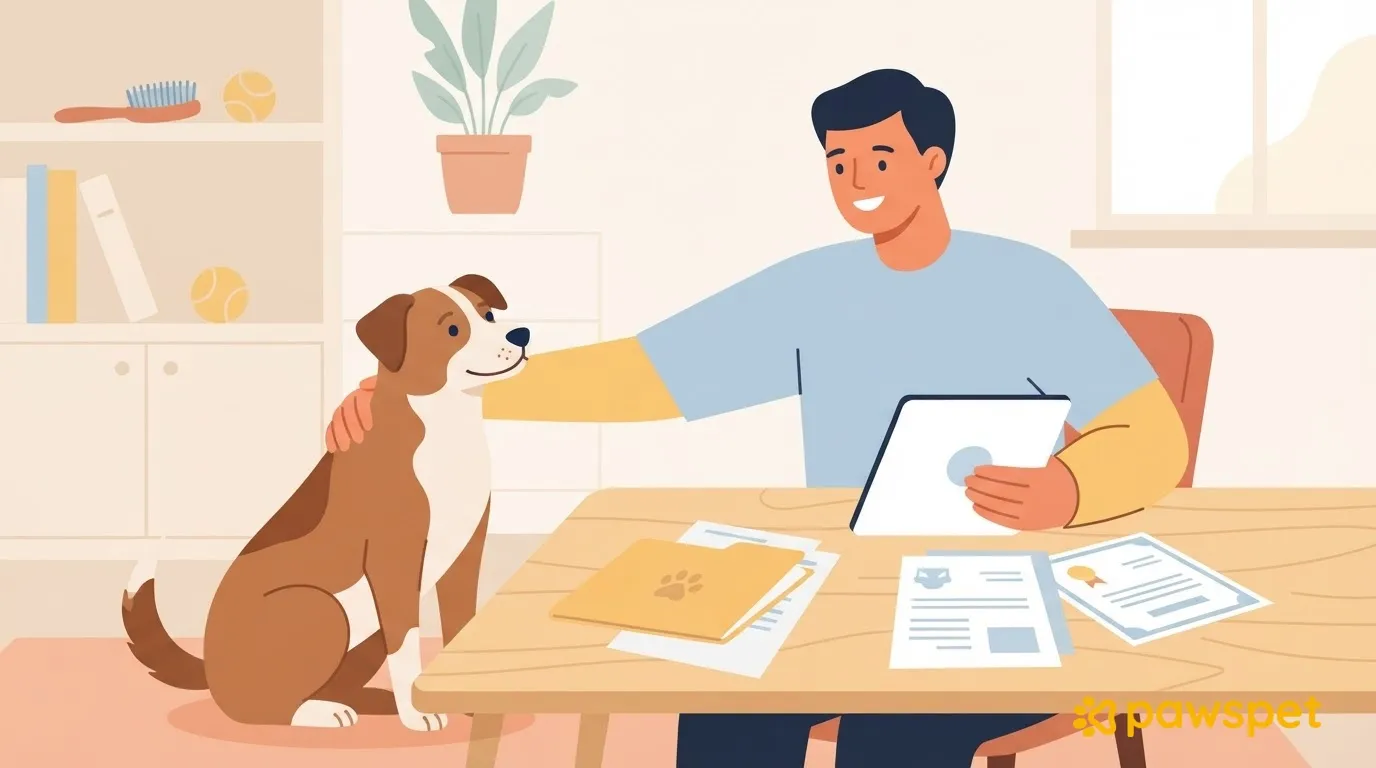
- a folder for the documents you’ll be given (ask in advance which ones).
Before you leave, check that the harness cannot slip off backward: if it can, adjust it or replace it.
Traveling by car with a dog you don’t know
- Keep the dog secured. The dog must be restrained so it cannot move around the car, or be placed in a carrier suitable for its size.
- Bring someone along. Take a second person: one drives while the other stays with the dog.
- Leash on before opening the door. Attach the leash before opening any car door, both when setting off and when arriving: a frightened dog may escape at these moments.
- Windows. Open them just enough to let air circulate, never enough for the dog to lean out.
- Go straight there. No errands: drive directly home.
- Never leave the dog alone. Don’t leave the dog alone in the car, especially on hot days.
If the dog pants heavily, drools, or vomits, stay calm and stop as soon as possible in a safe place; if you’re concerned, call the veterinarian.
Walk first, then go inside
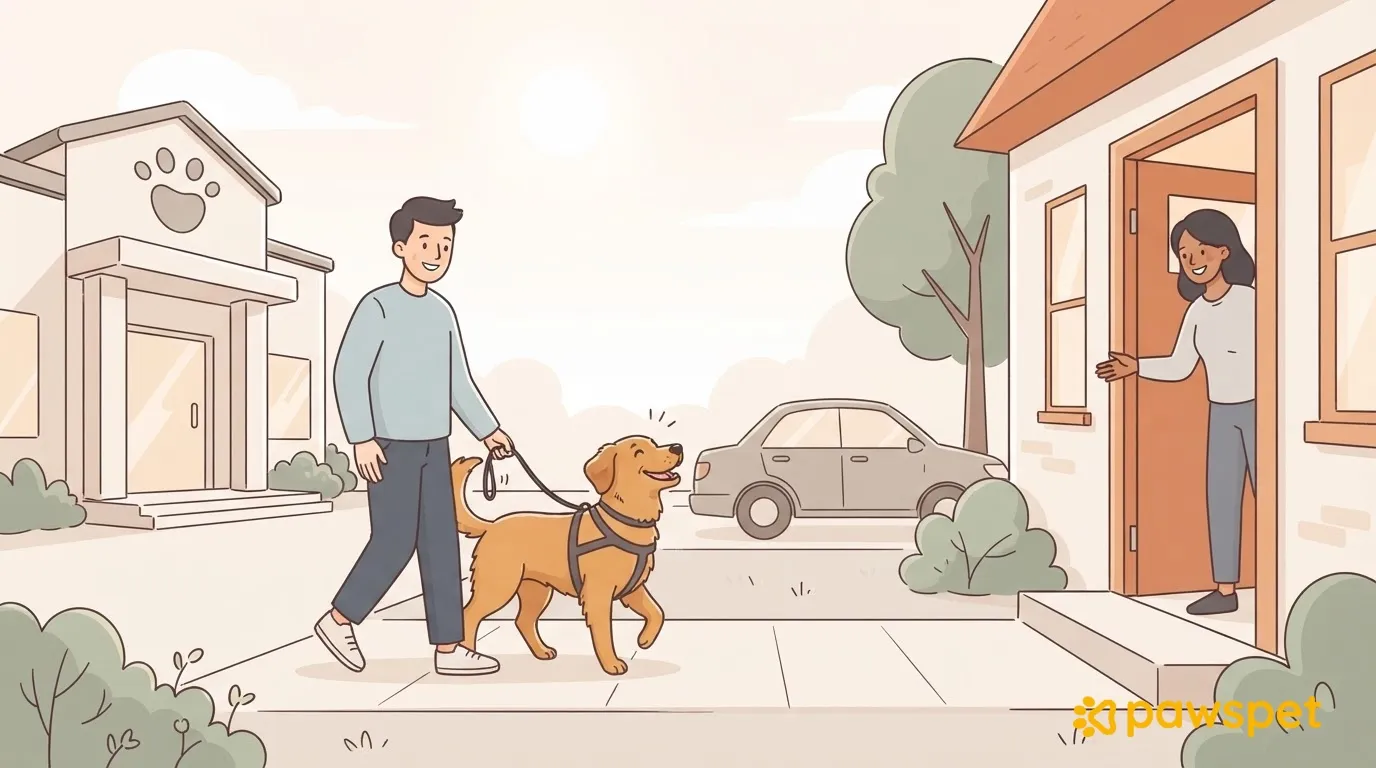
As soon as you arrive, park and take a quiet walk around the neighborhood: the dog can relieve itself and sniff the surroundings. Then go inside with the leash still attached and let the dog explore calmly, showing it the water and the quiet area you’ve already prepared.
No welcoming committee: family and friends can wait. Children should greet the dog while sitting down and let the dog approach them.
The rest of the day and the first night
The most common mistake here is doing too much. Offer a meal at the usual time and, if the dog doesn’t eat right away, don’t insist. Keep activities to a minimum and let the dog rest freely: let it sleep and look around. No bath or grooming on the first day.
The dog should sleep in the place the family decided on in advance. If it whines or makes noise, don’t punish it: everything is new, and it needs time to settle in. In the days that follow, to keep walks and meals at the times the dog is used to, you can create recurring activities with reminders in the PawsPet app.
What to expect and when to call the veterinarian
The dog may be tired or very agitated, hide, eat little, or have accidents in the house. These can be reactions to a new environment, not a judgment on the adoption.
Call the veterinarian right away if you notice repeated vomiting or diarrhea, blood, difficulty breathing, marked lethargy, if the dog won’t drink, or if anything concerns you. For fears or intense reactions in the following weeks, consult a dog trainer or a behavior consultant.
If you adopt through a PawsPet listing
When the person handing over the dog accepts your request, the handover is arranged and the transfer is completed on the «Ownership transfer» screen: the person handing over the dog and the person receiving it check off a checklist (for example, having met the dog in person, verified the microchip, received the health booklet and documents, and read the health declaration) and confirm the handover. Confirm only after the handover has taken place: a confirmation cannot be undone. The full microchip number is visible only to the two parties; after both have confirmed, the dog appears in your profile with its health history. The transfer in the app does not replace the procedures required by your local pet registry; clarify these with the person handing over the dog or with the veterinarian. The app also provides a dispute option for the person receiving the dog, but this applies only to paid transfers: it does not offer protection for a free adoption.
The night before: final check
Before going to bed, check off these five items:
- pickup time confirmed with the person handing over the dog;
- bag ready by the door;
- car prepared: cover laid out and carrier or another way to secure the dog in place;
- quiet area set up at home, with water;
- veterinarian’s number saved in your phone.
As far as possible, keep the pickup day free of other commitments.