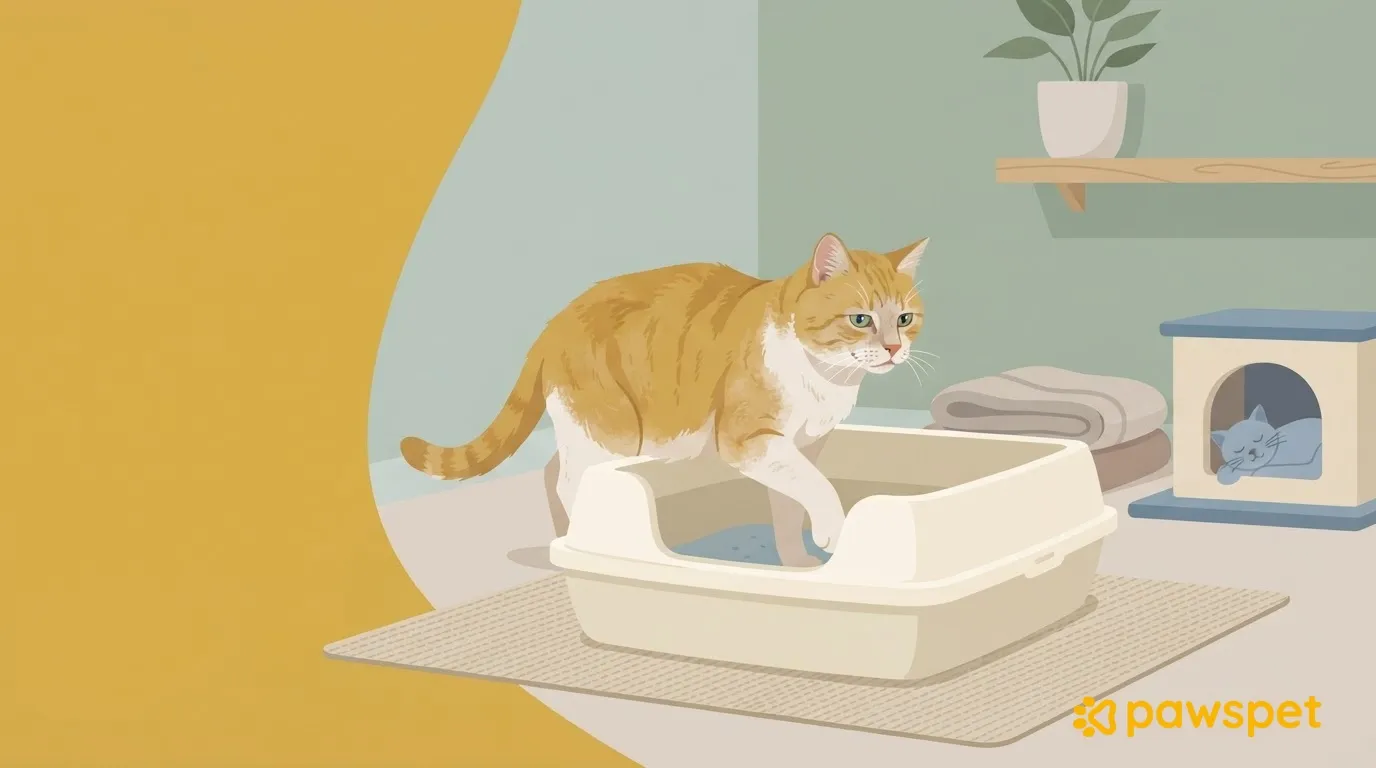
Make the litter box easy for your senior cat to reach and use: a low entry, room to turn around, on the same floor where they spend the day, and a clear, well-lit route. In the meantime, note any changes: going outside the litter box can also have physical causes, so adjustments can help but do not replace a veterinary checkup. If your cat strains without producing urine, contact the vet immediately: do not treat it as an accessibility issue.
Why the litter box becomes difficult to use
Stepping over a high edge, crouching, and turning around in a small space can become difficult when movement is stiffer. Climbing stairs, walking on a slippery floor in front of the entrance, or navigating a long, dark route at night can also make the litter box harder to use.
Observe where your cat hesitates, stops, or looks for another way, without forcing them. The amount and appearance of urine and stool may also change: report these differences to the vet, not just incidents outside the litter box.
How to make the litter box easy to use
Low entry and room to turn around
Choose a litter box with a lowered side and enough room for your cat to get in and turn around without bumping into the edges.
A wide, low-sided container with an opening on one side can also work. If you adapt one by cutting it, smooth or cover the edges well so they do not scratch. If the litter box is covered and your cat hesitates, remove the lid and see if access becomes easier.
Litter and cleaning
Do not switch litter suddenly. To try a new type, put it in a second litter box next to the old one, keeping the usual litter in the first box. Observe which one your cat chooses without immediately removing the familiar setup.
Scoop clumps every day and wash the container with mild-scented cleaners. Avoid changing the container, litter, and location at the same time; otherwise, it will be harder to tell which change helps.
A secure footing
Place a non-slip mat in front of the entrance and check that it stays in place. Also make sure the container does not move when your cat gets in.
Do not compensate for a high edge with unstable steps: access should be simple, with no objects to climb over.
Where to put it: floor, route, and lighting
Set up at least one litter box on the same floor where your cat sleeps and eats, so they do not have to use the stairs to reach it. If your cat spends time on multiple floors of the home, provide an accessible setup on each floor.
Choose a quiet spot, but not an isolated place in the basement or at the bottom of the stairs. The route should be clear of furniture to walk around and doors that might close: a doorstop can help. At night, a soft light keeps the route illuminated without leaving the room in darkness.
If you want to move the litter box, set up the new location first and remove the old one only once your cat is using the new one.
What to track for the vet
For one or two weeks, note what changes from usual, adding the date, but do not delay a checkup to complete the log. Record what you see without assigning a cause.
| What to observe | How to record it | Example note |
|---|---|---|
| Urine clumps | Number and size compared with usual | “More clumps than usual, but smaller” |
| Stool | Frequency, consistency, and any straining | “Less frequent and harder; strained” |
| Posture | Difficulty crouching, urinating while standing, or on the edge | “Stayed standing, with urine on the edge” |
| Accidents | Where, what time, and on what surface | “At 9 p.m., on the tiles in front of the litter box” |
| Unusual color or traces of blood | What you saw and when | “In the morning, a pinkish mark on the litter” |
| Litter box behavior | Time spent, vocalizing, repeated entries and exits | “Stays inside longer than usual” |
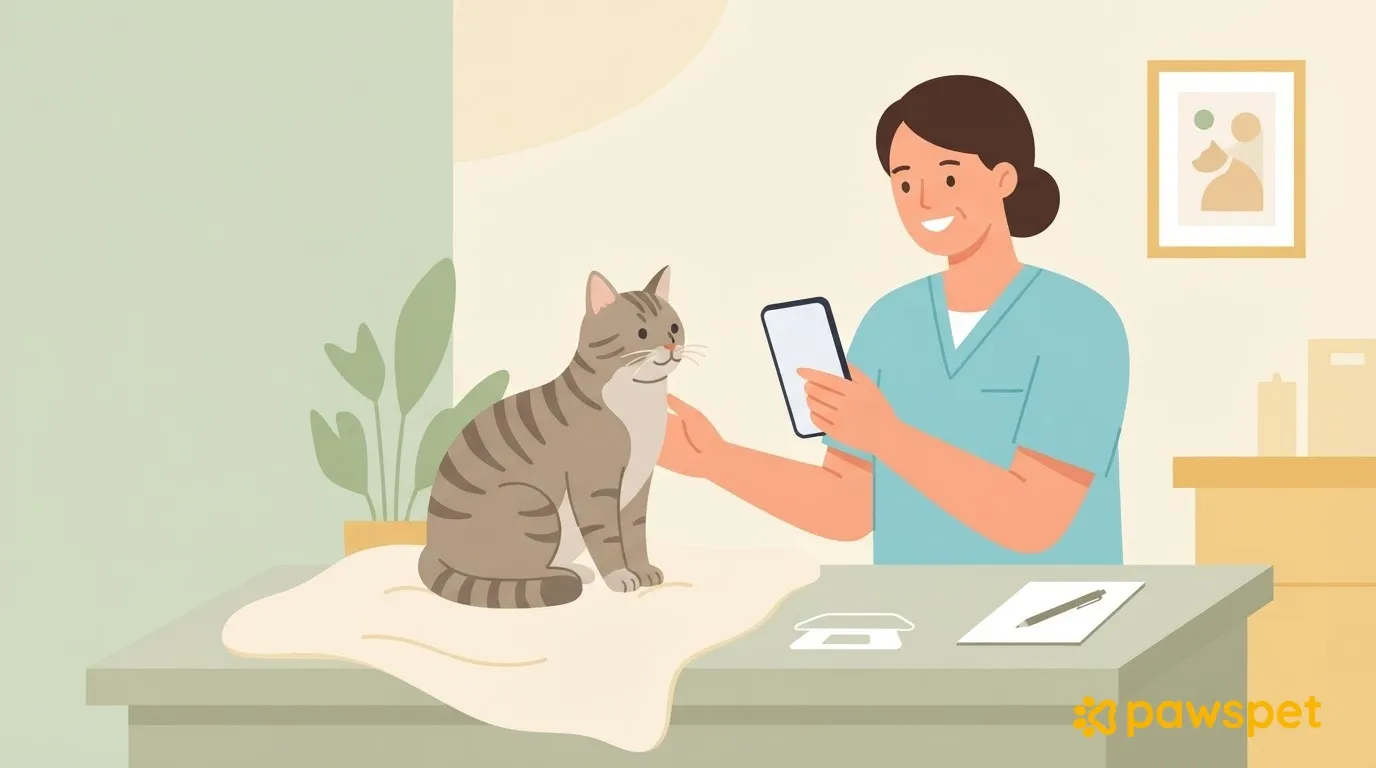
Take a photo only when it helps clarify a detail that is difficult to describe. You can also use your phone to record a short video of your cat going in and out of the litter box: keep it on your device to show during the appointment.
To find notes and photos easily at the appointment, in the PawsPet app on your phone you can create an “Other” entry in your cat’s “Health” section, with a date, notes, and attached photos, then add later incidents as dated notes via “Updates” → “New.”
When to call the vet right away
Do not wait if you notice:
- repeated straining with little or no urine;
- going in and out of the litter box without producing anything;
- vocalizing or obvious pain;
- a lot of blood;
- lethargy, refusing food, or repeated vomiting.
In these cases, contact your vet or an emergency veterinary service right away, without waiting for the scheduled appointment. Do not waste time recording images or completing the log.
Next step
Today, choose one practical change: lower the entry or add a litter box on the floor where your cat lives. For the following week, note how they get in, how they position themselves, and where any accidents happen. Bring your notes, useful photos, and videos to the next appointment, even if access seems to have improved. The goal is to make movement easier and give the vet a clearer picture, not to attribute everything to age.