If your older cat is jumping less and less, don’t assume it’s just old age: it could be a sign of physical discomfort that a veterinarian should assess. In the meantime, stable steps, nonslip ramps, and beds at floor level can help them reach their favorite spots with less effort, and observing how they move can make the vet visit more useful. If they suddenly can’t get up or are dragging their legs, call the vet right away.
Signs to watch for when jumping and moving
Changes happen gradually, and it’s easy to get used to them. Watch to see whether your cat:
- looks at the landing spot for a long time before jumping;
- makes several attempts or gives up;
- climbs in stages, using intermediate furniture;
- climbs down slowly or lands heavily;
- avoids stairs;
- seems stiff after resting;
- plays less;
- changes sleeping spots, choosing the floor more often;
- neglects grooming the fur on their back and sides.
These are observations to share with the vet, not a diagnosis: if you notice any of them, schedule a checkup, even if your cat seems fine.
How to make favorite spots accessible
The goal is to replace one high jump with several lower steps, or with an alternative at floor level.
Intermediate steps
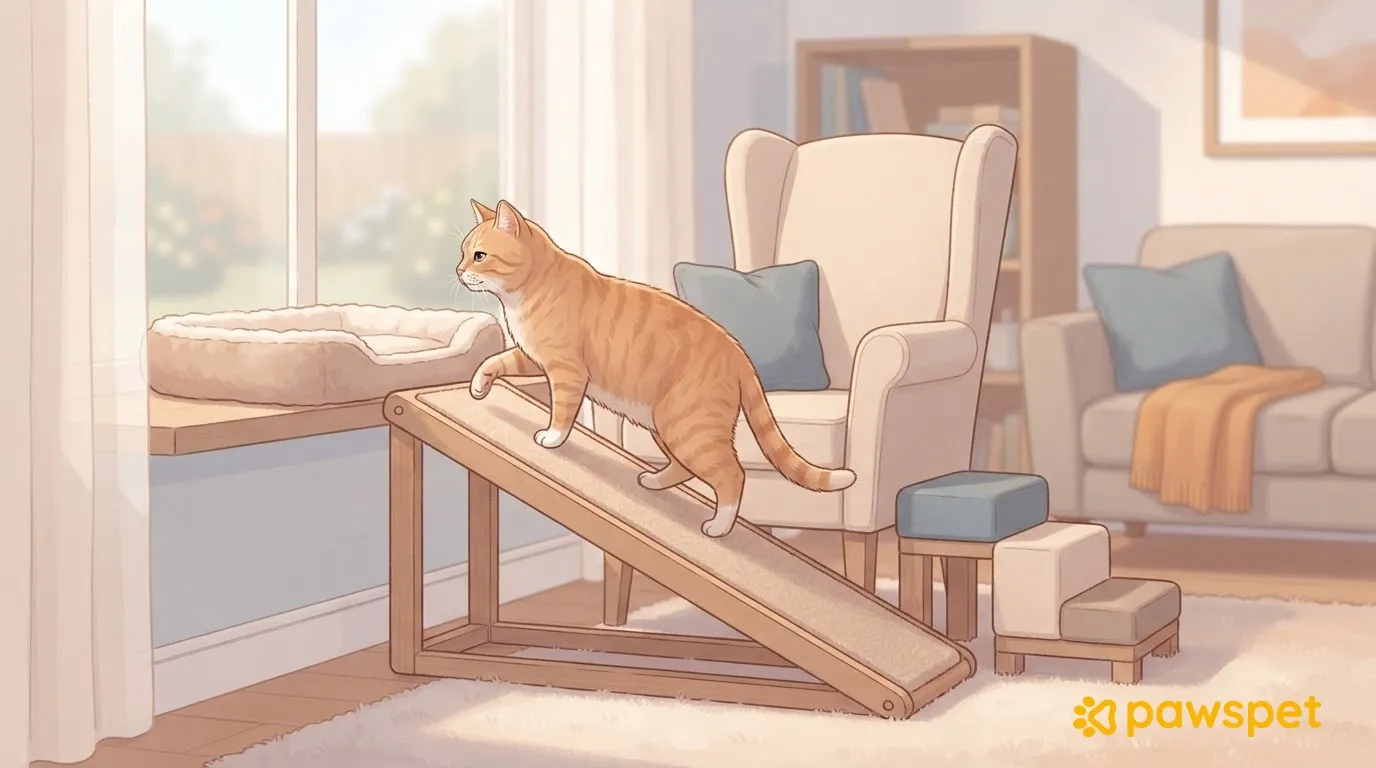
To help your cat reach the bed or sofa, a stool, ottoman, sturdy storage box, low piece of furniture, or small set of steps can serve as a step. They need to be stable: nothing that wobbles or slips when your cat climbs onto it. Before offering one, push it with your hand to check that it stays put. Place them a short distance apart: each step should be lower than the jump your cat has stopped making. Cover the surface with fabric or a piece of carpet that provides grip. Always leave them in the same place so your cat knows where to find them.
Ramps
Choose a ramp with a gentle slope, a nonslip surface, and enough width to help your cat feel secure. It must be firmly secured: if it moves while your cat is climbing, they may get scared and give up. Put it where they usually climbed. Introduce it calmly, letting them sniff and explore it, and place a treat or their favorite toy at the top. Don’t push them or lift them onto the ramp: you could hurt or frighten them. Until they use it comfortably, don’t remove the stable steps they already know.
Alternatives at floor level
Sometimes the best solution is to stay at floor level. A soft bed at the foot of the bed or sofa lets your cat stay close without climbing up. Near their favorite window, you can place a low, stable seat, keeping the window closed or protected. A blanket in the spot where you find them most often makes the place they’ve already chosen more comfortable.
Safe floors and pathways
Everyday steps matter too, especially on smooth floors. It helps to:
- lay nonslip rugs or runners securely along regular routes and in front of places your cat climbs up;
- keep pathways clear and leave a soft night-light along the way to their favorite spots;
- put beds with low sides in quiet places, away from drafts.
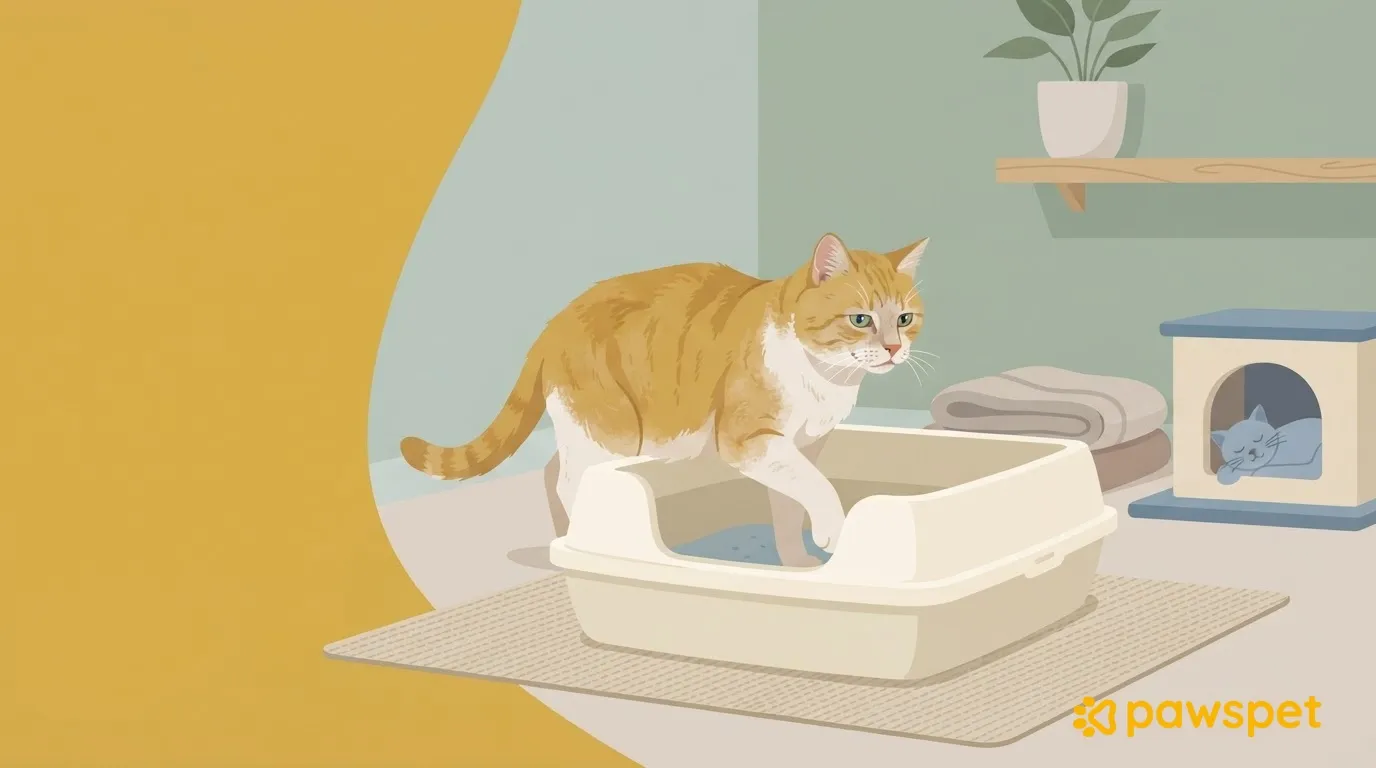
Water, food, and the litter box deserve a separate guide: for now, just make sure they’re accessible without jumping and close to where your cat rests.
When to contact the vet right away
Call your vet or an emergency veterinary service right away if your cat:
- suddenly can’t get up or can’t use one or more legs;
- drags their hind legs;
- has sudden, significant limping;
- cries out or shows pain when you touch them;
- has had a fall;
- is breathing heavily.
If you’re not sure whether a sign is urgent, call the vet anyway and describe what you’re seeing.
Don’t give painkillers or other human medications without your vet’s direction: some are dangerous for cats.
What to observe and bring to the appointment
Before the appointment, make a note—even just on your phone—of:
- when you first noticed the change;
- which jumps your cat avoids and which they still make;
- whether things seem better or worse at certain times of day;
- any falls.
Add a few short videos filmed at home: your cat walking, attempting or giving up on a jump, using the stairs, and using the ramp. Many cats move very little or differently than usual at the clinic, while a video shows how they move in everyday life. Film your cat’s whole body in sufficient light: a few seconds is enough.
Prepare a few questions for the vet, too:
- Which home adjustments would help?
- Which signs mean they should be checked sooner?
- How should we track movement and weight over time?
- How often should they have a checkup?
If you don’t have a regular vet yet or traveling makes your cat anxious, you can search for vets in the “Services” section of the PawsPet app, including with the “At Home” option, and check each service’s availability and reviews. Results depend on your area.
Next step
Choose the spot your cat cares about most and add a stable step or an alternative at floor level. Watch how they use it for a few days without forcing them: if they hesitate, make the step lower or switch to a floor-level option. Then bring your notes and videos to the appointment so the vet can start with what’s really happening at home.