If your senior cat seems to be eating less, drinking more, or leaving food in the bowl, two steps can help turn impressions into data. Put food and water where your cat spends the day, without jumps or stairs, and measure and record how much your cat eats and drinks for one or two weeks, always the same way. Then you can tell the veterinarian, “They’re drinking about twice as much as they were ten days ago” instead of “I think they’re drinking more.”
Where to Put Food and Water
Start with the feeding and water stations before you begin measuring: this helps your cat reach food and water without effort and keeps conditions consistent for every measurement.
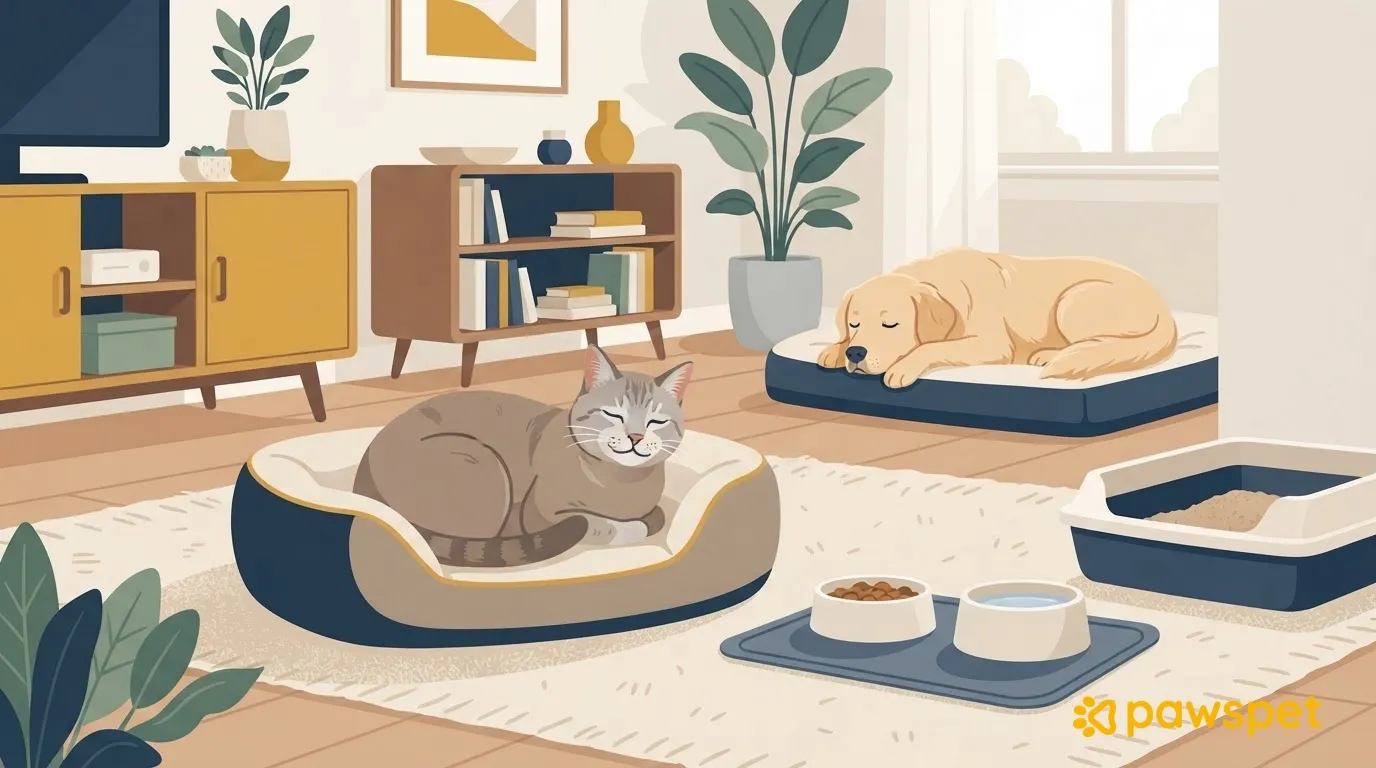
- If the bowls are on the kitchen counter or upstairs, move them to the same floor as your cat and near the places where they rest.
- If you keep them up high to keep them away from other animals, provide an alternative your cat can reach from the floor.
- Add more water stations in different rooms.
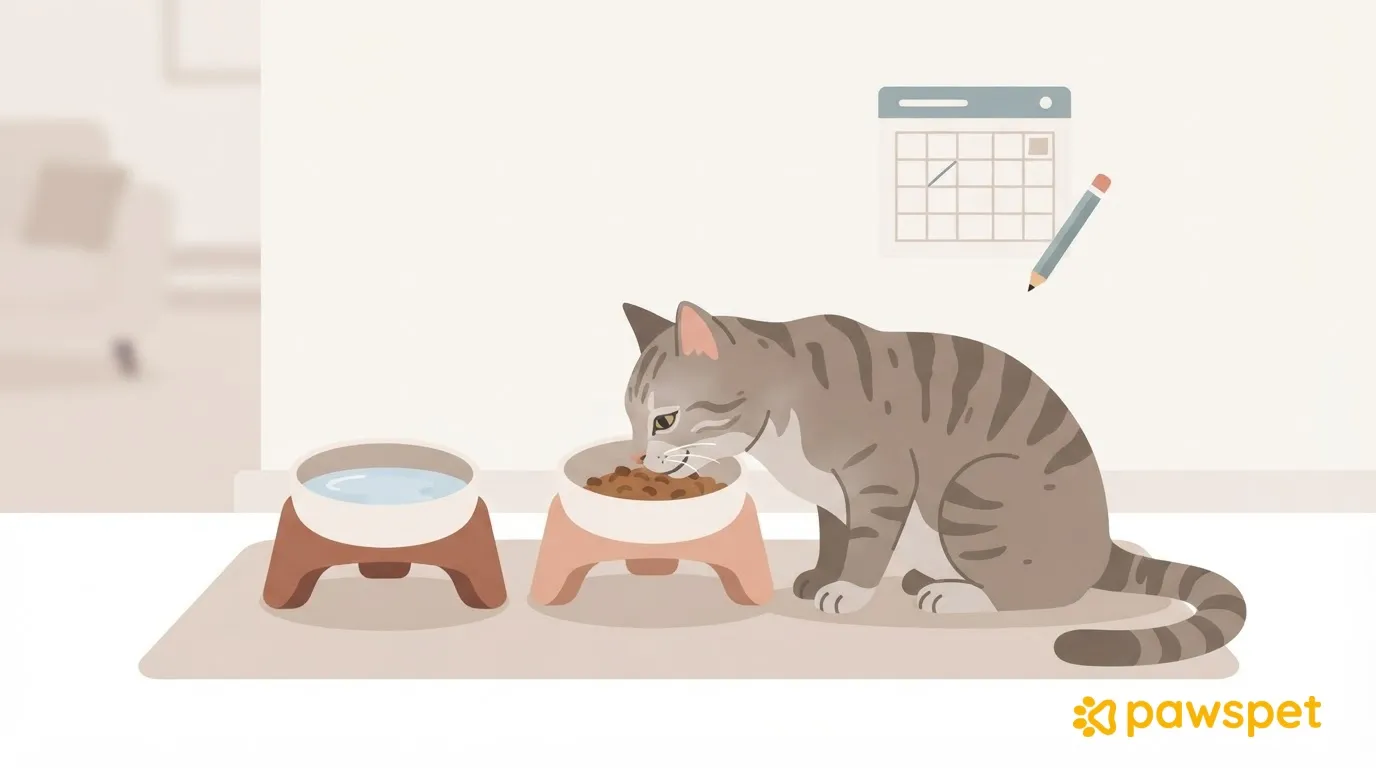
- Put a nonslip mat under the bowls, which should be stable and easy to clean.
- Choose a quiet corner away from foot traffic.
- On warmer days, check more often that the water is fresh and there is enough of it.
There’s no one rule for bowl height—try it and see: some cats with stiff movements seem more comfortable eating from a bowl raised slightly on a stable stand. Try it for a few days and see whether your cat eats more easily; if you don’t notice a difference, go back to the low bowl.
How to Measure How Much Your Cat Drinks
- Choose a bowl and a measuring cup or graduated jug, and always use the same ones.
- At the same time each day, pour in a known amount of water—enough that the bowl won’t run dry—and record it.
- The next day, before refilling, pour the remaining water into the measuring cup and check how much is left.
- The difference between what you poured and what remains is an estimate of how much your cat drank. Write it down next to the date, then start again with a known amount.
To make the estimate more reliable:
- Put a second identical bowl with the same amount of water in a spot your cat can’t reach, preferably in the same room. The amount it loses there is evaporation: subtract it from the estimated consumption.
- Measure the water at every station in the house, not just one. Note if you see your cat drinking elsewhere (from the faucet, for example) or if a bowl is knocked over: that day’s reading will be less reliable.
- If other animals drink from the same bowls, the estimate won’t be reliable.
- If you use a water fountain, at least note when you refill it and how much water you add.
- Wet food contains water too: if the amount of wet food changes, how much your cat drinks from the bowl may change as well, so make a note of it.
What matters here is the trend over time, not a single reading: your veterinarian will interpret it.
How to Record What Your Cat Eats
The method is the same for food: use a kitchen scale to weigh what you put in the bowl and then what’s left over. Also note how many meals your cat eats and any new preferences—for example, if they eat only wet food and leave the kibble.
Tell your veterinarian if, during a meal, your cat:
- walks up to the bowl and leaves;
- chews on one side;
- drops food;
- shakes their head;
- eats much more slowly than usual;
- vomits after eating.
These behaviors can have different causes, including problems in the mouth, which your veterinarian can assess. Don’t change your cat’s food without discussing it with them, and if you do make a change, do it gradually.
To keep everything together, a simple diary with one line per day is enough: date, water poured and left over, food served and left over (wet and dry separately), weight if you measured it, and notes about meals and anything that changes, such as moved bowls or a new food. To help you remember to measure every day, you can create a recurring activity in the PawsPet app (tab “Activities,” button “+,” row “Repeat” with “Every N days”) with a reminder: if notifications are on, it will remind you to check, but you’ll need to record the readings yourself.
Weight Completes the Picture
Weigh your cat regularly using the same scale and at the same time of day, and record the date and weight. Weighing yourself alone and then holding your cat and subtracting the two readings only captures obvious changes: for small changes, you’ll need a scale designed for small animals or a check at the clinic.
What to Report and When Not to Wait
Bring the diary of water, meals, and weight to the appointment, and mention changes in the litter box, such as more or larger clumps and different stools, without interpreting them. If your cat chews strangely, a short video of a meal can show what’s difficult to describe in words.
If what you’re seeing worries you, don’t wait until you’ve finished the diary: make an appointment and keep recording. Contact your veterinarian right away instead of waiting for the appointment if your cat:
- stops eating;
- doesn’t drink;
- vomits repeatedly;
- seems very lethargic;
- strains in the litter box without producing anything.
Next Step
Today, move or add a station your cat can reach from the floor, near where they rest. Tomorrow morning, start the diary: measure the water, weigh the food, and record the readings. In one or two weeks, you’ll have comparable numbers to bring to your veterinarian.