A senior cat needs two things: a home base of their own, reachable without jumping, with food, water, a litter box, and a bed; and meals separated from those of other pets. Then monitor their weight and behavior: a senior cat who is struggling may withdraw quietly instead of protesting, making it easy to miss the problem.
Signs They’re Losing Access to Resources
There doesn’t need to be an open conflict, or even aggression from the other pet: small, repeated changes are enough. Watch for whether your cat:
- eats quickly or moves away from the bowl when the other pet arrives;
- finds the bowl already emptied by the dog or young cat;
- loses weight;
- waits a long time before entering the litter box, or goes outside it;
- avoids certain rooms or routes;
- sleeps in unusual places;
- hides, or hisses when the other pet comes near;
- is subjected to play that has turned into chasing.
Some of these signs, such as weight loss or going outside the litter box, may also have health-related causes: we’ll come back to that at the end.
A Home Base They Can Reach Without Jumping
You probably already know the classic advice: put the bowl on a piece of furniture, and add shelves and high-up hiding places. But that advice assumes your cat can jump well. A senior cat who jumps less than before, or can no longer jump, stays on the ground: they can’t reach the bowl or the high-up hiding places they once used to escape, while the young cat gets there with ease. So a solution meant to protect them ends up excluding them.
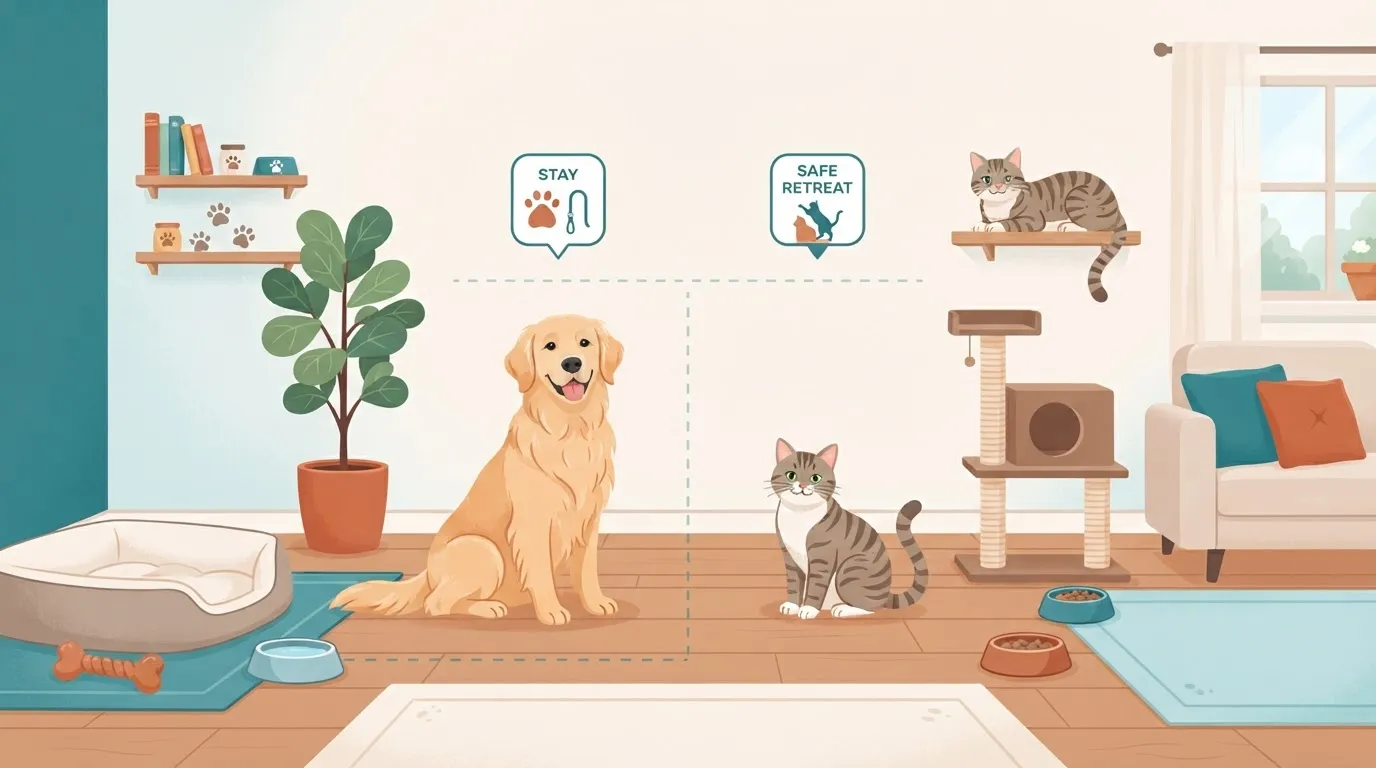
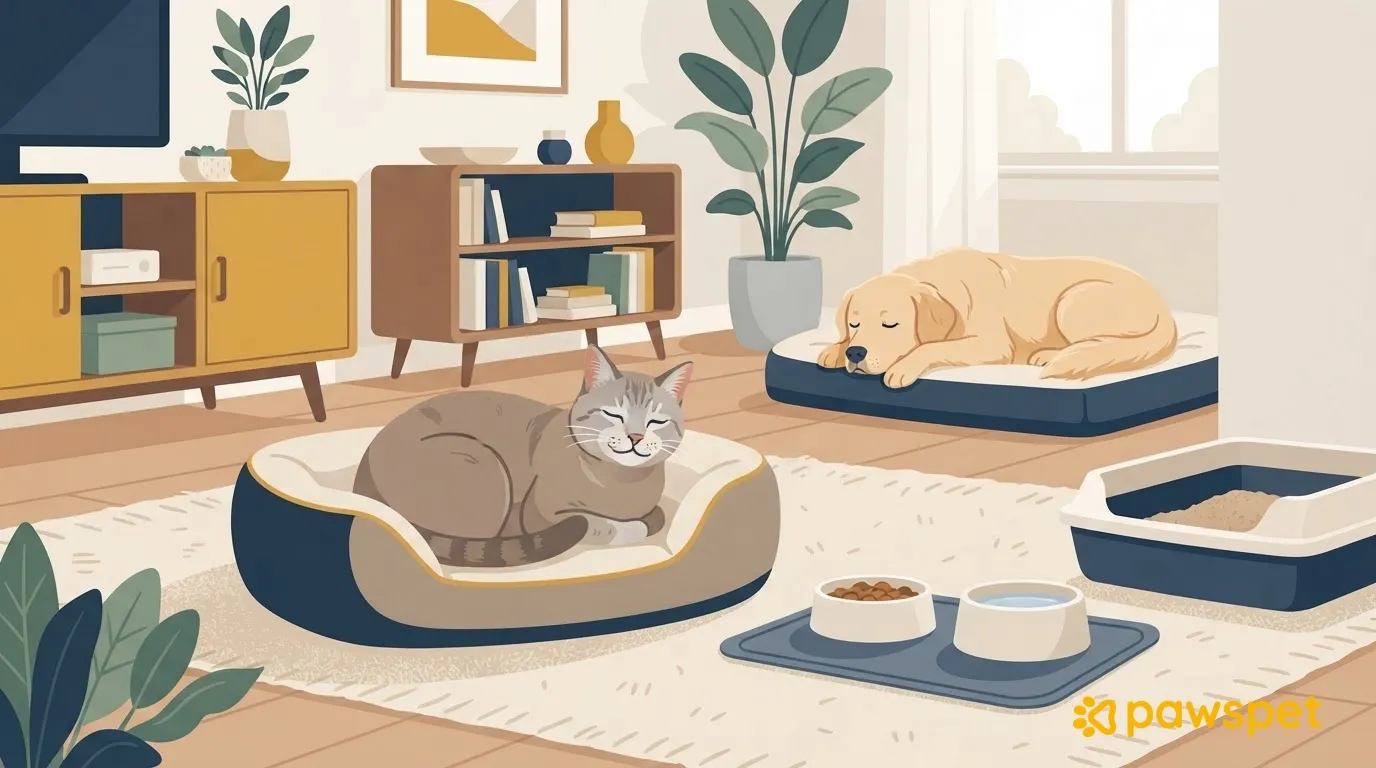
Choose a quiet room or corner and place food, water, a litter box, and a soft bed there, all at floor level. Your senior cat should be able to eat, drink, use the litter box, and rest without jumping or being disturbed. This shouldn’t be an isolation room, though: they need to be able to come and go as they please.
If the other pet is a larger dog, a baby gate or a securely propped-open door with a cat-sized gap at floor level may work: only the cat can get through. Test it yourself: your cat must be able to pass without getting stuck, and the dog must not be able to squeeze through or move the barrier. This won’t work with another cat, since the opening would let both cats through: in that case, separate meals and duplicate resources in several places around the home are key.
When a gap isn’t enough, as with another cat, you can consider cat flaps and bowls that open only for an authorized pet, for example by recognizing its microchip. They require gradual training, and there’s no guarantee they’ll be compatible with your cat and their microchip: read the instructions and keep an alternative ready until your cat uses them confidently.
Meals Without Competition
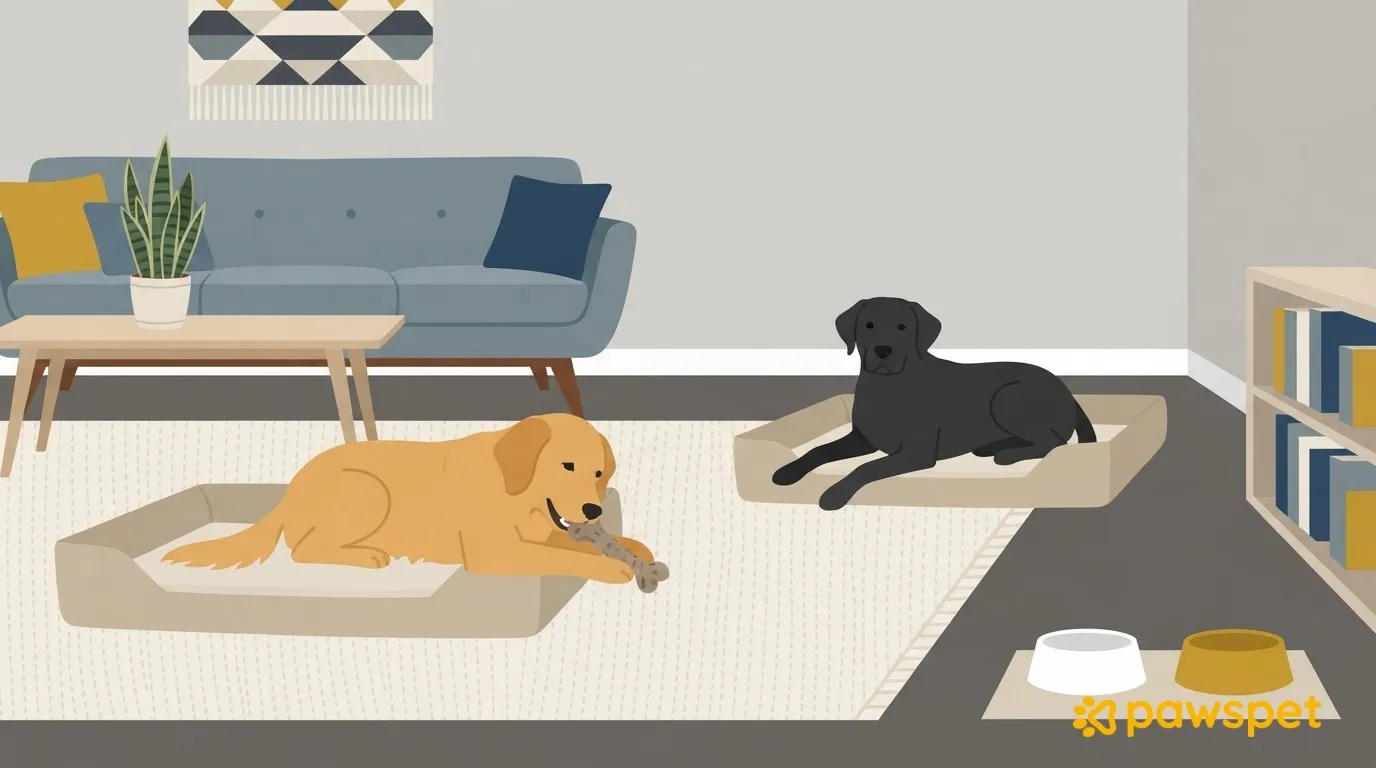
If the dog eats the cat’s food, raising the bowl won’t help: your senior cat may no longer be able to reach it. It’s better to feed the pets separately, in different rooms or behind a closed door during mealtimes, and serve their meals at the same time so no one has to wait while watching the other eat.
Stay nearby while your cat eats and, if the other pet tends to empty their bowl, pick it up as soon as they’re finished. If your senior cat eats slowly or in small meals, ask your veterinarian how to manage feeding rather than leaving food out for everyone all the time.
For water, provide several spots around the home, including at least one in the home base. If everyone drinks from the same bowl, you can’t tell how much your cat is actually drinking, and you may miss a change.
Protected Litter Boxes and Resting Places
Provide several litter boxes in different parts of the home, including at least one in the home base. Place them where your cat always has an exit route: avoid dead ends and alcoves with only one exit, where another pet waiting at the entrance could trap them.
For resting, give your cat soft beds of their own at floor level, both in the home base and wherever they already like to rest. Choose tucked-away but open spots: your cat should be able to see who’s coming and leave if they want to. If another pet takes over their beds, guide that pet elsewhere without scolding them.
Play between a senior cat and a young cat, or with a dog, can turn into chasing. Calmly interrupt it without shouting or punishment, and offer alternatives: play sessions with chase toys for the young cat, and walks and activities for the dog. This gives the other pet a different outlet for their energy.
The Same Rules for the Whole Family
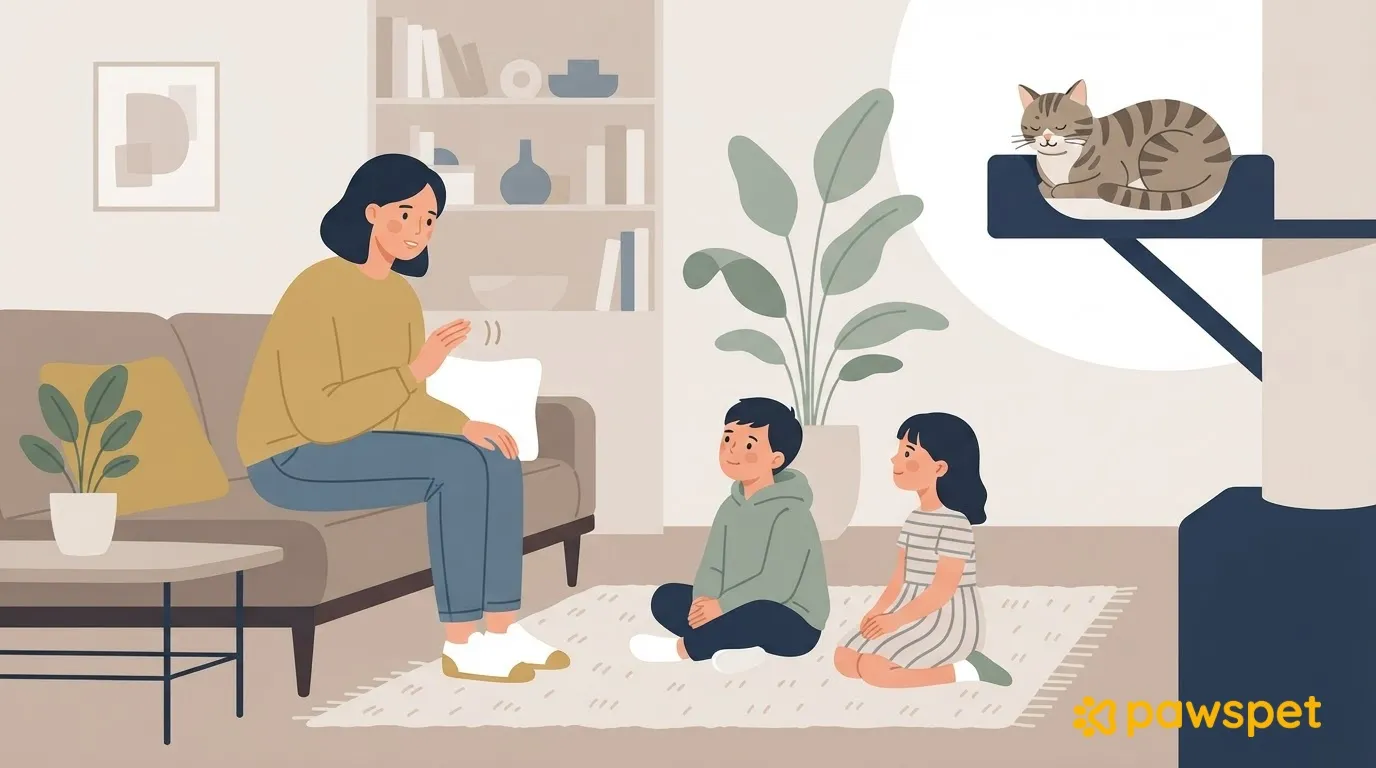
The rules work when everyone follows them: agree on who feeds the pets and where, which doors stay closed, and where play happens.
Then record each pet’s weight separately and always using the same method, along with any tense incidents, including the date and location. This helps you see where conflicts start and gives you concrete information to share with your veterinarian. If several people live in your home, you can share the senior cat’s profile in the PawsPet app so everyone can view the same information: from the ⋮ menu on the profile, choose “Collaborators,” add your family members (they must already have a PawsPet account), and decide whether they can only view or also edit health information (including measurements) and activities.
When to Ask for Help
Injuries, limping, or obvious pain after a conflict require immediate contact with your veterinarian: don’t wait to see if it gets better.
If your senior cat is hiding much more than before, losing weight, or changing their litter box habits, schedule a veterinary appointment and bring your notes on weight and incidents; also mention if they’re jumping less and less. If tension or aggression continues despite the changes, talk to your veterinarian and consider consulting a feline behavior professional as well.
For two days, watch where conflicts start: food bowls, litter boxes, or routes through the home. Then start with your senior cat’s home base, with food, water, a litter box, and a bed at floor level.