The most helpful thing you can do for a senior dog who slips is create continuous, non-slip routes between their bed, food and water bowls, the door, and the area where you spend time together, securing rugs firmly and keeping their paws tidy. You don’t need to cover the whole house: start with the routes they use every day. But if slips become more frequent or your dog struggles to get up, they need to see a veterinarian.
Observe where your dog slips for two or three days
Observe your dog’s usual movements without making them walk on purpose where they lose their balance. Note where they get up, slow down, or change direction, as well as where they hesitate and where they prefer to stay.
Draw a simple floor plan and mark the routes between their familiar spots. Note specific signs: paws spreading apart as they get up, hesitation at the entrance to a room, or a consistent preference for a rug. The map will help you decide which routes to cover instead of placing rugs at random.
Create continuous, stable routes
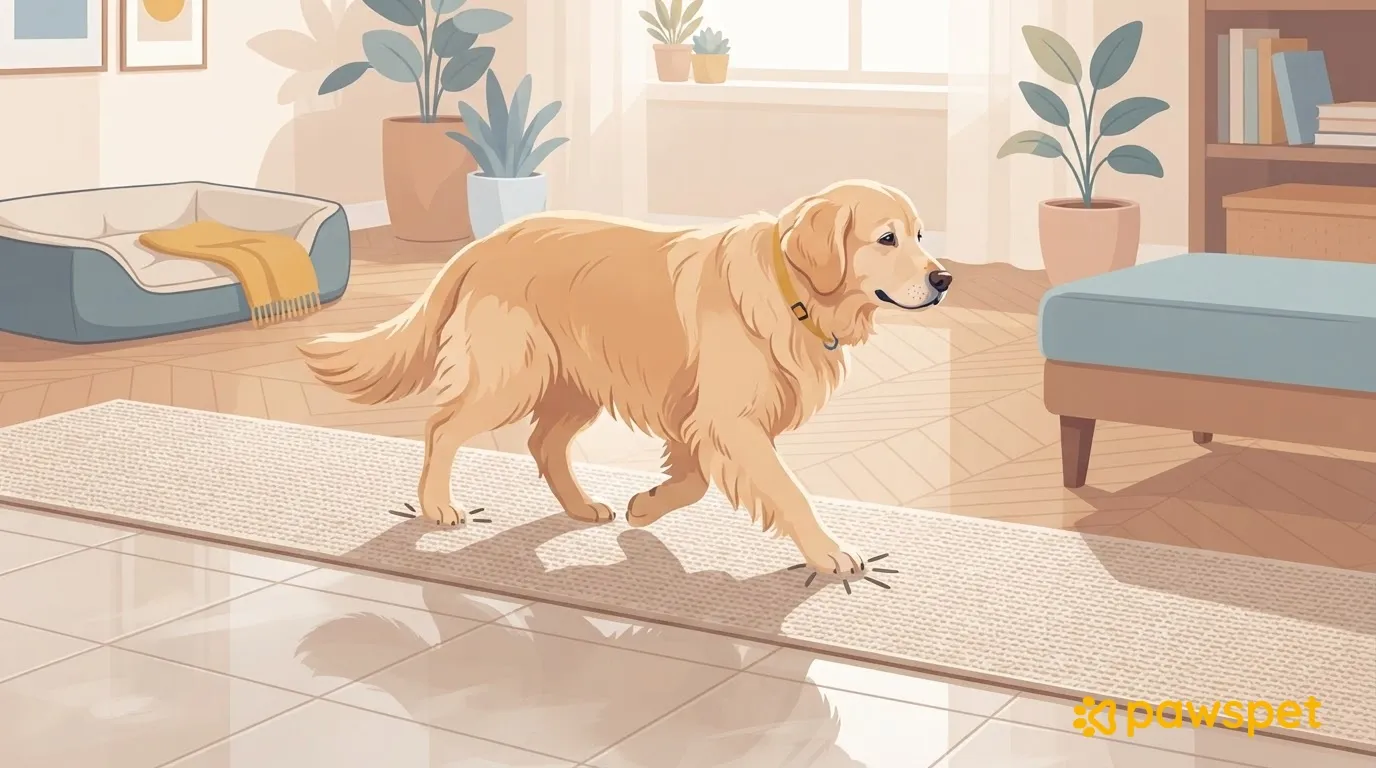
Place runners or rugs with non-slip backing along the routes you marked, covering turning points too and leaving no islands of smooth flooring between one secure foothold and the next. You could also consider interlocking rubber or foam mats: choose washable models and check that they stay connected and lie flat.
A rug that slides can be more dangerous than a bare floor. Put a non-slip rug pad underneath and, if needed, use tape suitable for both the rug and the floor to secure the edges; check that it can be removed without damaging the surface. Try pushing the rug with your foot from several directions: it shouldn’t slide or curl up. Choose rugs with low, flat edges.
For example, in the hardwood-floored hallway between the bedroom and kitchen, choose one well-secured runner, not two small rugs with a smooth patch between them. Check the fastenings again after moving or washing the rugs.
Key areas: bed, bowls, entryway, kitchen, and bathroom
- By the bed: Place a non-slip surface large enough for your dog to put their paws on while getting up.
- Under the bowls: Use a rubber mat that won’t move and will catch splashes; still wipe up any water.
- At the entryway: Put down a large, stable doormat and keep a towel nearby to dry your dog’s paws when they come in.
- In the kitchen and bathroom: Dry wet areas right away and keep the route clear.
During spring cleaning, as with everyday cleaning, keep your dog out of a freshly mopped room until the floor is dry. In high-traffic areas, choose products that don’t leave a shiny film.
Keep paws tidy: nails and fur between the paw pads
Long nails and fur covering the paw pads can reduce traction, so check them regularly. For nail trimming and paw-pad grooming, rely on a groomer or veterinarian, especially if your dog is sensitive to touch or struggles to stay on their feet for long.
Some dogs tolerate non-slip socks or boots, while others don’t. They need to fit properly, be used for limited periods, and be checked against your dog’s skin: don’t force your dog to wear them, and don’t treat them as a substitute for stable routes.
To have your dog’s nails and paw-pad fur trimmed without a tiring trip out, you can search for «Grooming» services in the «Services» section of the PawsPet app, using the «Delivery method» filter set to «At home».
When slipping is a sign to tell your veterinarian about
If your dog slips more often, struggles to get up, drags their paws, falls, or avoids walking or lying down, contact your veterinarian for an examination. Don’t wait until you’ve finished making changes at home.
Share specific observations: where it happens, when, how long it’s been going on, and what has changed. Also mention whether the problem occurs only on wet surfaces or on dry ones too. Making the floor more stable is a practical aid, not a diagnosis or treatment.
In one afternoon
- Observe a familiar route and note where your dog hesitates.
- Cover the main route without leaving smooth stretches between rugs.
- Secure the rugs and edges, then check with your foot that they don’t slide.
- Check your dog’s nails and paw fur and, if needed, arrange professional grooming.