Choose a sturdy, stable carrier that lets your cat stand up, turn around, and lie down, with both front and top openings (ideally, the top half can be removed). Reliable fasteners and ventilation on several sides matter too, along with easy cleaning and fitting it securely in the car. The material is a trade-off that depends on how you’ll use it most. These are practical criteria to check before buying, not a ranking of models.
The right size
A cat carrier is the right size when your cat can stand up, turn around, and lie down inside. More space doesn’t necessarily mean more comfort: in a carrier that’s too large, your cat may slide from side to side with every turn or sudden stop.
Measure your cat while standing, both in length and height, and compare the measurements with the stated interior dimensions, making sure there’s room to move. If you have a kitten, consider its adult size and, while it’s still small, reduce the extra space with a folded blanket. If you have multiple cats, you’ll need one carrier for each: travel stress can make even cats that usually get along feel tense.
Openings: front, top, and removable lid
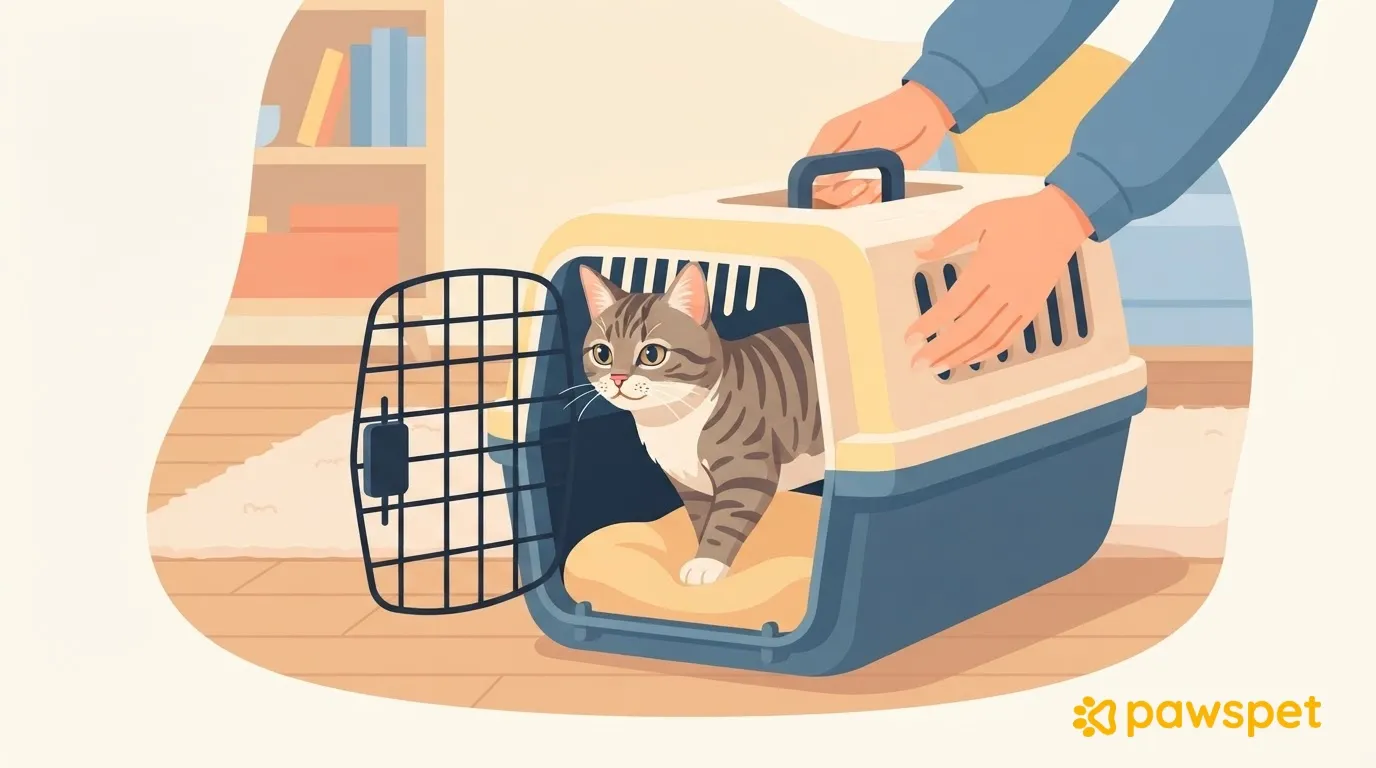
With only a front opening, getting a cat who doesn’t want to go in or come out often means pushing, pulling, or tipping the carrier. A carrier with a top opening lets you place your cat inside and lift them out without these maneuvers.
If the top half also comes off (a carrier with a removable lid), ask the veterinary clinic whether your cat can stay in the bottom half during the exam. The vet makes that decision, but a removable design leaves this option open. At home, the base without the lid can serve as a bed during the early stages of getting your cat used to the carrier, so it doesn’t become something that only appears before a vet visit.
Construction, fasteners, and ventilation
The base should be flat and stable so the carrier doesn’t wobble. The walls shouldn’t bend when you press on them: a structure that gives way can press in on your cat.
The door is the critical point: it shouldn’t open if the carrier is bumped or your cat pushes it with a paw. The fasteners should be easy to operate but secure enough not to come undone. Look for ventilation openings on several sides, not just the front, and check that there are no sharp edges or protruding screws. The handle should be sturdy and securely attached.
If you can, test the fasteners and handle in the store: open and close them several times, then lift the carrier. If you buy online, inspect everything as soon as it arrives, before using it with your cat.
Material: what to consider
There’s no single right choice of carrier material for everyone: hard plastic and soft fabric involve trade-offs in sturdiness, washability, weight, bulk, and the durability of zippers and mesh. A rigid carrier tends to be sturdier and easier to wash, but weighs more and takes up more space; a soft carrier tends to be lighter and easier to store, but you’ll need to check the zippers, mesh, and seams carefully.
Consider how you’ll use it most: your priorities will differ for short car trips, walking with the carrier, or storing it in a small space. Whatever the material, the base should be easy to clean and dry thoroughly, since mishaps can happen after a trip. For train or air travel, the transport company may have its own carrier requirements: check them in advance, before you buy.
In the car and by hand
In the car, the carrier shouldn’t move: check whether it can be secured with a seat belt or placed stably in the space in front of the rear seats.
When carrying it by hand, a sturdy handle matters, but you should also be able to carry it with both arms, close to your body, without it swinging with every step. Consider the total weight with your cat inside, not the weight of the empty carrier: that’s what you’ll actually be carrying, perhaps from the parking lot to the veterinary clinic.
Checklist before buying
| Criterion | What to check |
|---|---|
| Size | Your cat can stand, turn around, and lie down; room to move within the stated interior dimensions; adult size for a kitten; one carrier per cat |
| Openings | Front and top openings; removable top half |
| Construction | Flat, stable base; walls that don’t bend |
| Door and fasteners | Doesn’t open if bumped or pushed by a paw; fasteners are easy to use but secure |
| Ventilation and finish | Ventilation openings on several sides; no sharp edges or protruding screws |
| Material | Sturdiness, weight, bulk, zippers, and mesh for your intended use; easy-to-clean base |
| Train or air travel | Check the transport company’s requirements in advance |
| In the car | Can be secured with a seat belt or placed stably in front of the rear seats |
| By hand | Sturdy, securely attached handle; can be carried with both arms without swinging; weight considered with the cat inside |
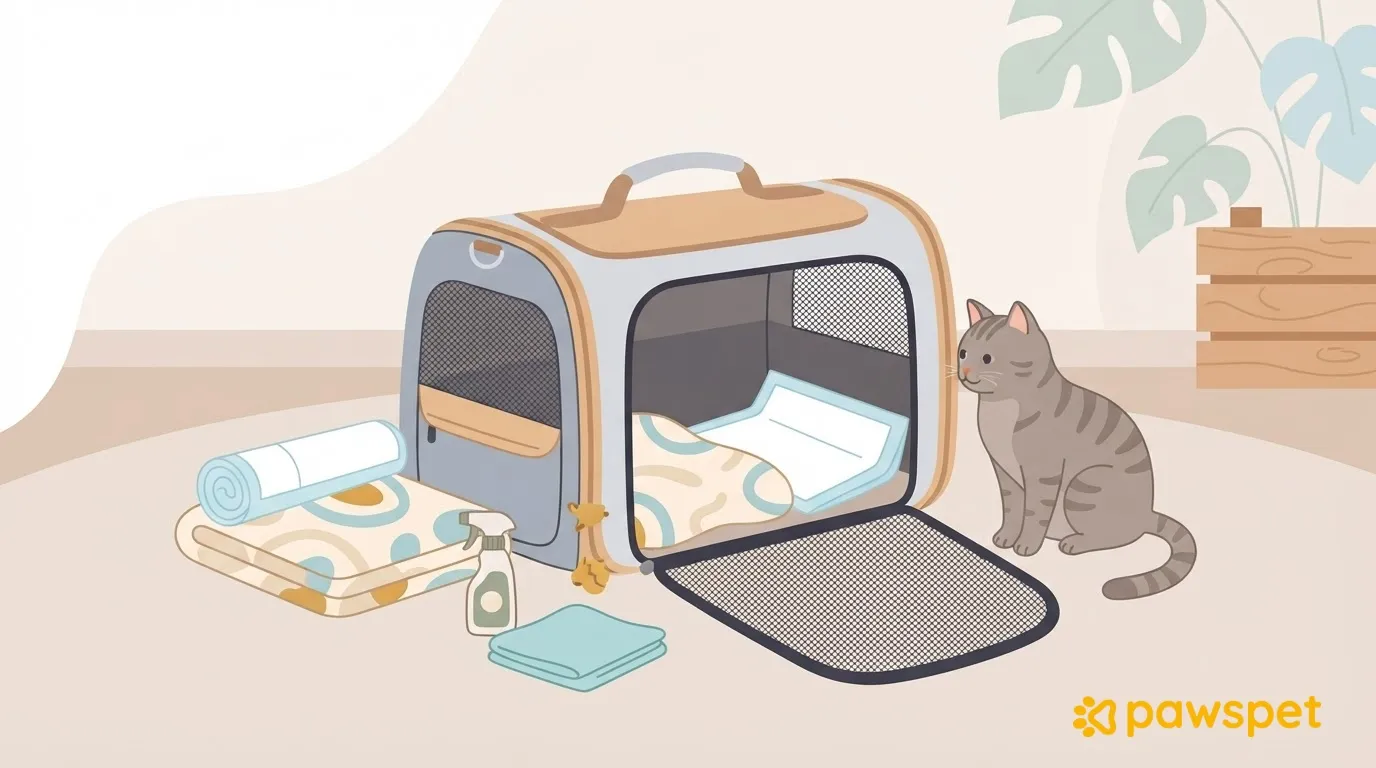
Once you’ve bought it, don’t put it away in the basement: leave it open in a room your cat uses, with a piece of fabric that smells like home inside. It’s the first step toward getting your cat used to it gradually, at their own pace.
Frequently asked questions
How do I check a used or hand-me-down carrier?
Check that the structure is intact (cracks, seams, zippers) and that the door and fasteners work. Before using it, clean everything thoroughly, including the corners.
Should I cover the carrier during the trip?
A lightweight cloth draped over part of the carrier can reduce visual stimuli. Always leave the air vents clear.