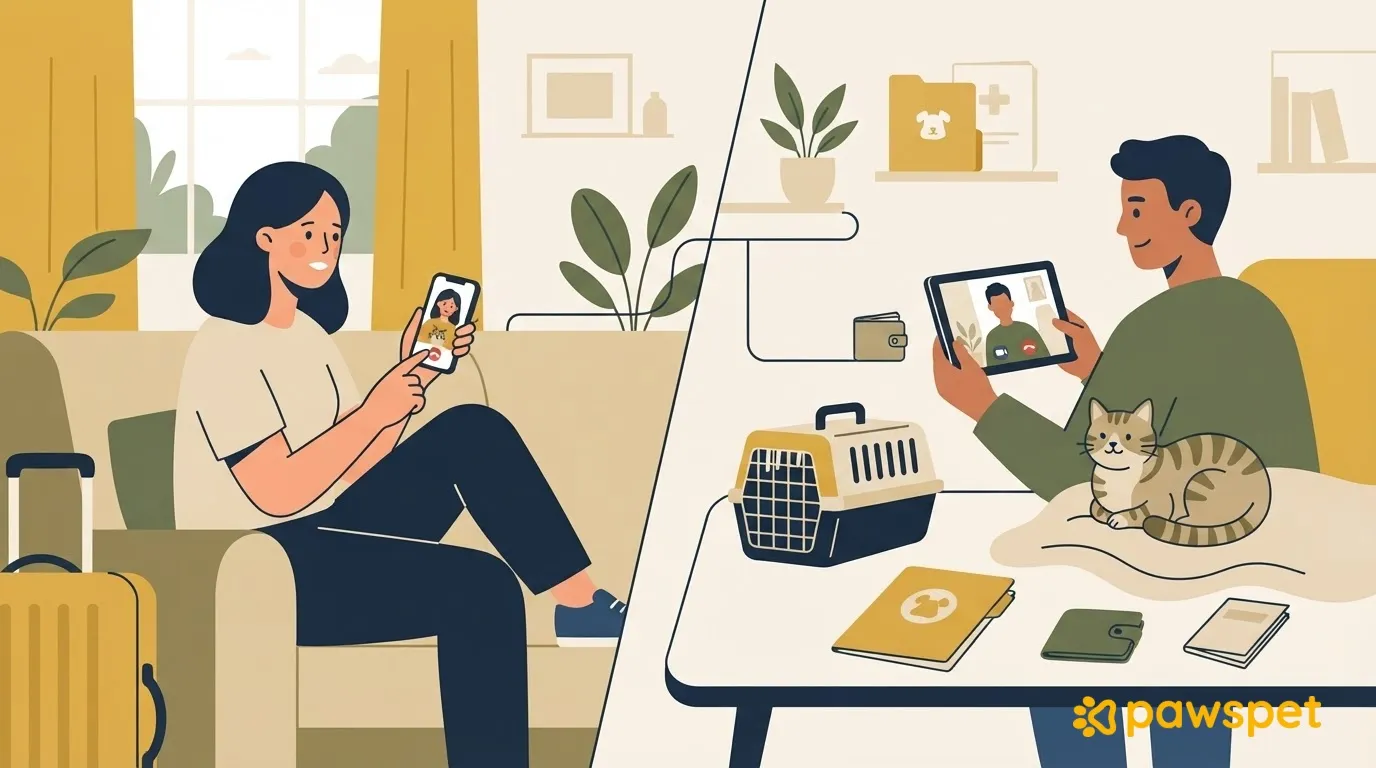
Make a backup plan for a cat emergency before you leave, not on your phone when you’re already far away. That way, if something happens, the person caring for your cat knows who makes decisions and who will take the cat to the vet. Write down four things: who will step in and who is the backup, which veterinarian to call, how the clinic handles consent and payment, and what needs to be within reach. Add one communication rule: in an emergency, the caregiver calls the veterinarian first, then you. You might be on a flight or out of range; waiting for your reply could waste valuable time.
Who will step in and who is the backup
Write down three roles, each with a name and phone number:
- Caregiver: the friend, family member, or cat sitter who visits your home and, if needed, takes the cat to the vet.
- Backup: a second person with a key who can arrive quickly and take over when the caregiver can’t come.
- Decision-maker if you don’t respond: for example, a family member who knows they must make the choice on your behalf.
Also add who to call about problems at home. Then ask everyone to save all these numbers in their phones: when a cat is unwell, looking them up on a piece of paper wastes time.
Veterinarian, consent, and payment: clarify these in advance
Choose two contacts and verify them yourself by phone before you leave:
- your regular veterinarian, including their opening hours;
- an emergency clinic near home, with its phone number and hours checked for the days you’ll be away: hours can change in summer.
Then ask both clinics how they handle an appointment requested by someone other than the owner: who signs the consent form, how they contact you, and how payment works. Practices vary from clinic to clinic, so one clinic’s answer doesn’t apply to the other.
Agree with the caregiver on how much they can spend without reaching you, and write the limit next to the phone numbers: a clear limit avoids hesitation.
If you don’t yet have a regular veterinarian near home, before you leave you can look for one in PawsPet’s «Services» tab by choosing «Veterinarian» and setting «Search area» and «Distance»: you’ll have a name to call for the checks above.
What to leave within reach
Prepare these items and show the caregiver where they are:
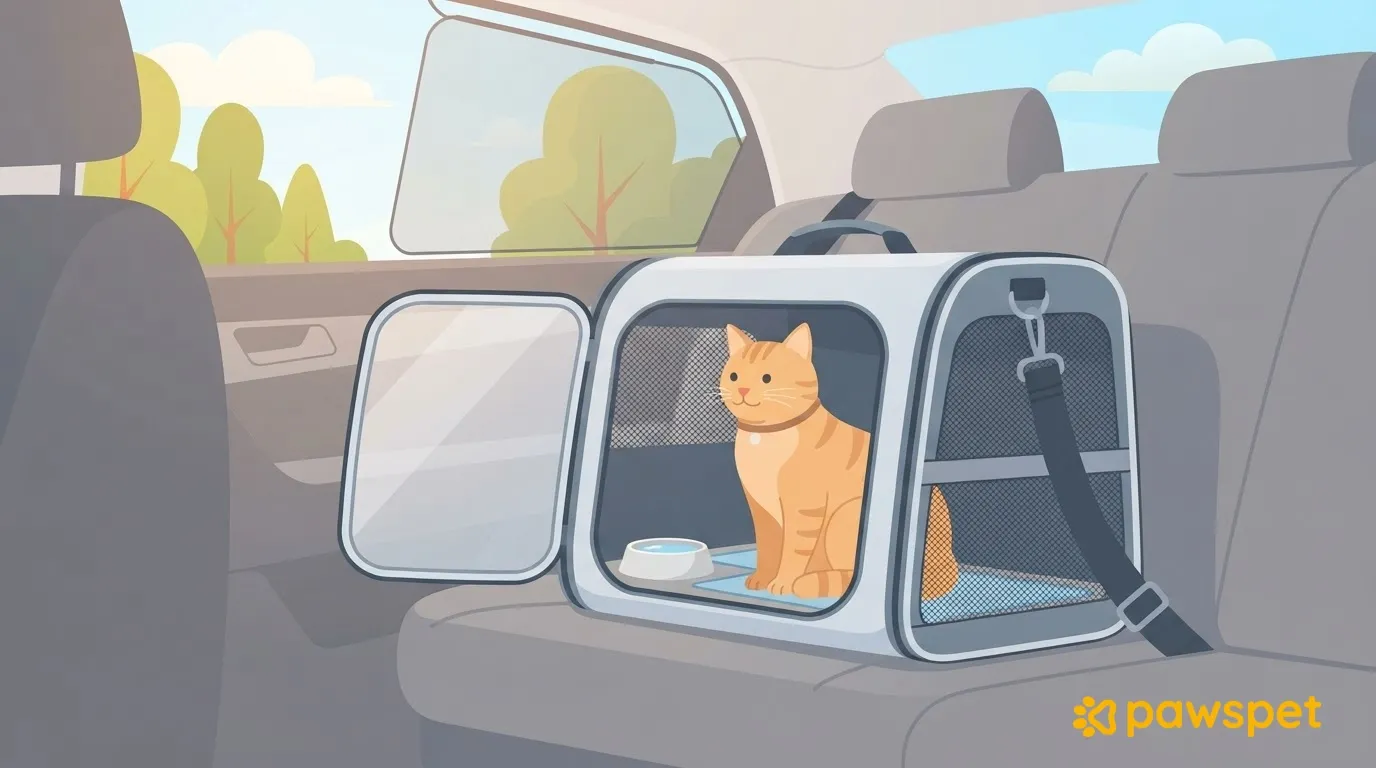
- the carrier, already assembled and in a place everyone knows;
- a recent photo of your cat;
- a sheet with health information and contacts, kept with the care instructions;
- a paper copy of the health record or pet passport.
With PawsPet, you can activate a read-only public link. First update allergies and treatments in your cat’s «Health» profile; then, from the ⋮ » «Sharing» menu, turn on sharing and send the link with «Share». The recipient can open it in any browser, even without an account, and see your cat’s photo, name, breed, some identifying details (including the microchip number, if entered), and a health summary: diets and treatments, allergies and their severity, vaccines and their status, illnesses, and injuries. The caregiver can then show it to the veterinarian.
The link doesn’t show uploaded documents, and neither can someone you invite as a collaborator on the profile see them: a paper copy is still necessary. Anyone with the link can see the profile, including the location if you’ve entered it: share it only with the caregiver and turn off sharing when you return.
If your cat is unwell
Write these steps in the plan for the caregiver:
- Observe the cat and place them in a quiet room without forcing them.
- Call the regular veterinarian or, if the clinic is closed, the emergency clinic: describe what you see and follow their instructions.
- If the cat needs to be moved, use the carrier and ask the veterinarian where to go.
- Let the owner know as soon as possible.
Don’t wait—call the veterinarian or emergency clinic right away if you notice any of these signs:
- straining to urinate without producing anything;
- labored breathing or breathing with an open mouth;
- repeated vomiting;
- wounds or trauma;
- the cat can’t get up;
- untouched food and no signs of use in the litter box.
This list isn’t complete and isn’t intended to diagnose: if in doubt, call.
If your cat can’t be found or has gotten out
First, ask the caregiver to search the home carefully, with doors and windows closed: check closets, spaces behind appliances, balconies, and closed rooms.
If the cat has really gotten outside, the caregiver should let you know immediately (if you don’t respond, the person designated to decide on your behalf), search calmly around the home, and alert neighbors and the veterinarian. That’s why you should have a recent photo and the microchip number ready; the shared link shows it if it has been entered.
Before you leave, ask the veterinarian how to report a missing cat in your area and write the answer in the plan.
If the caregiver can’t come or something goes wrong at home
If the caregiver can’t visit, the backup takes over and lets everyone know, including you, so the cat isn’t left without a visit because everyone assumes someone else has gone. If your caregiver is a professional you booked on PawsPet, coordinate in the order chat: open the order from Profile » «Completed orders» and go to the «Chat» tab.
If something goes wrong at home, such as a power outage on a hot day, a water leak, or a broken window, first secure the cat in a closed room, then call the person you designated for household problems. That person handles the problem; the caregiver’s responsibility is the cat.
To finish, write the backup plan at the bottom of the care instructions sheet (roles, phone numbers, spending limit, and steps for the three situations) and review it with the caregiver and backup before you leave.