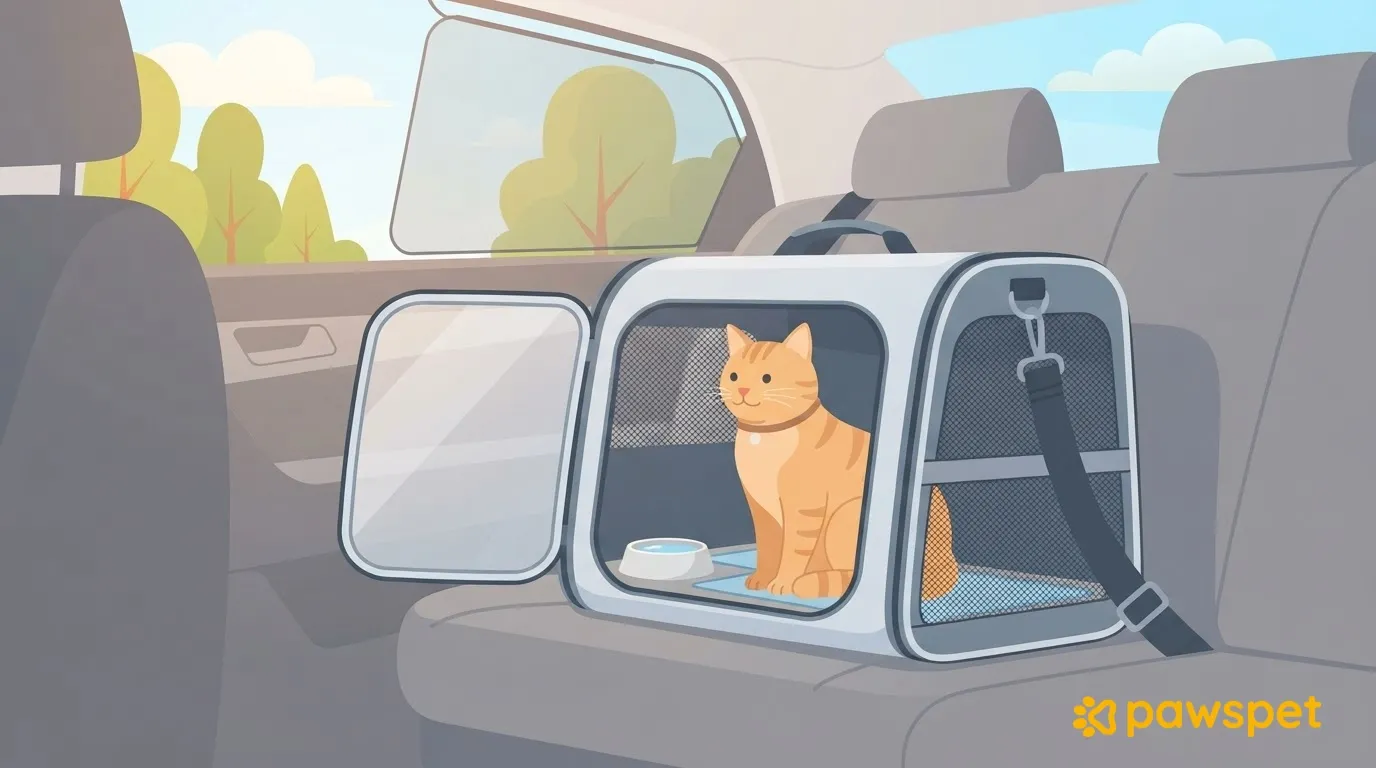
A cat in a carrier cannot move away from the heat, so in summer, cool hours, short journeys, a car cooled before the cat is loaded, lightweight fabrics, and unobstructed ventilation openings are especially important. Never leave your cat alone in a parked car, even for a few minutes. If your cat starts breathing with its mouth open or shows other signs of distress, stop somewhere cool and call a veterinarian immediately.
Why heat is harder to handle inside a carrier
A carrier is an enclosed space with limited airflow. Outside it, a cat can look for a cooler spot; inside, it cannot. In addition, the stress of traveling adds to the heat and can make the situation harder to tolerate.
Some cats may cope less well with heat: cats with flat faces, older cats, overweight cats, and cats with heart or breathing problems. If your cat falls into one of these categories, talk to a veterinarian before a long trip. The guidance in this article is general and does not replace their advice.
Can the trip be avoided or postponed?
Before making all the arrangements, ask yourself whether moving your cat is necessary right now. For a non-urgent appointment, ask your veterinarian whether it can be scheduled for early morning or evening, or postponed until a cooler day; if it is urgent, do not delay and ask how to proceed.
For a short vacation or a few days with relatives, keep in mind that cats are often very attached to their territory: your cat may be better off at home with someone experienced with cats coming to care for them. You may not find someone available for the exact dates you need, so it is best to plan ahead. To explore this option, in the “Services” tab of the PawsPet app you can search for a “Pet sitting” service in your area, filter by “At home,” and check “Availability” and “Reviews” before booking.
Preparing the carrier and route
If the trip is unavoidable, get everything ready before you leave:
- Check the forecast and travel during the coolest hours of the day.
- Choose a route with shaded stretches and places to stop.
- Put a lightweight fabric in the bottom of the carrier instead of thick blankets.
- If you want to provide shade, use a light-colored, lightweight cover over only part of the carrier, without blocking the ventilation openings.
- Bring water, a small bowl for stops, and a spare absorbent pad.
- Keep your veterinarian’s number handy and, for long journeys, the number of a clinic along the route.
During the trip
By car
- Cool the car before putting your cat inside.
- Secure the carrier so it cannot move, away from direct sunlight coming through the windows.
- Do not point the air conditioning directly at the carrier.
- At stops, offer a little water. Open the carrier only with the doors and windows closed so your cat cannot escape.
- Never leave your cat alone in a parked car, even for a few minutes.
On foot, on public transport, and while waiting
If you need to walk part of the way, choose the shortest route and stay in the shade. Carry the carrier with both arms, keeping it steady, and never set it down on hot asphalt or in direct sun. If you have to wait, look for a cool place: at a clinic, ask whether you can wait in a quiet, cool area. For public transport, check the rules and conditions directly with the operator.
Warning signs: what to do right away
Check how your cat is doing at every stop. In hot weather, these are warning signs:
- breathing with the mouth open or panting;
- excessive drooling;
- unusual agitation;
- weakness or lethargy;
- very red gums.
If you notice even one of these signs:
- Stop and take your cat to a cool, shady place.
- Open the carrier only in a secure, enclosed space.
- Call a veterinarian immediately—your own or the nearest clinic if you are far from home—and follow their instructions.
- Do not try drastic remedies, such as ice or immersion in cold water.
Today, save your veterinarian’s number in your phone and choose the coolest time to leave.
Frequently asked questions
Does covering the carrier help or make things worse?
A light-colored, lightweight cover can provide shade, but it should cover only part of the carrier and must not block the ventilation openings. Covering the entire carrier reduces airflow, so it is best avoided in hot weather.
Is it better to travel at night?
Traveling at night or during the coolest hours is usually a good choice because it avoids the hottest part of the day. However, it is no guarantee: it can still be hot after sunset, so the other precautions still apply. For a long trip, ask your veterinarian for advice.