Fear of the carrier is often learned: to a cat, the carrier only appears before unpleasant experiences, so it ends up predicting them. You can reduce this fear by changing what the carrier means through tiny steps, always staying below the point at which your cat becomes scared. In the meantime, necessary vet visits should not be postponed, but planned differently. If the fear is intense or physical signs appear, it’s time to involve your vet.
Why the carrier is scary
If your cat runs away, hides, or hisses as soon as the carrier appears, they’re often not reacting to the object itself, but to what they’ve learned to expect. Possible associations include:
- leaving for a vet visit, because the carrier only appears at that time;
- being chased around the house or forced inside;
- a trip when they felt unwell, for example because of nausea;
- smells from the clinic that may linger on the fabric;
- unpleasant handling when they arrive.
There’s another possibility, too: hidden pain can make any contact unpleasant, including being picked up and put inside. That may not be the cause, but your vet should rule it out.
How intense is the fear?
Use the table to compare your cat’s reaction when they see the carrier. Not all signs need to be present: go by the most severe one you see.
| Intensity | Signs | What to do |
|---|---|---|
| Mild | Looks at it from a distance and avoids approaching | Start at a distance where your cat stays calm |
| Moderate | Hides when they see it, crouched body, low tail | Increase the distance and start again from where they relax, with shorter sessions |
| Intense | Hisses, growls, tries to escape or scratch; urinates, defecates, or vomits from fear | Stop and talk to your vet before continuing on your own |
Reset the cues and start from a distance
There’s a step-by-step guide on the blog for cats who aren’t afraid of the carrier. This calls for a different approach: counterconditioning, which means pairing the carrier with something pleasant.
Change its location, smells, and routine
Remove the carrier’s old cues:
- move it to a different spot in the house;
- wash it with products that don’t have strong scents and let it air out;
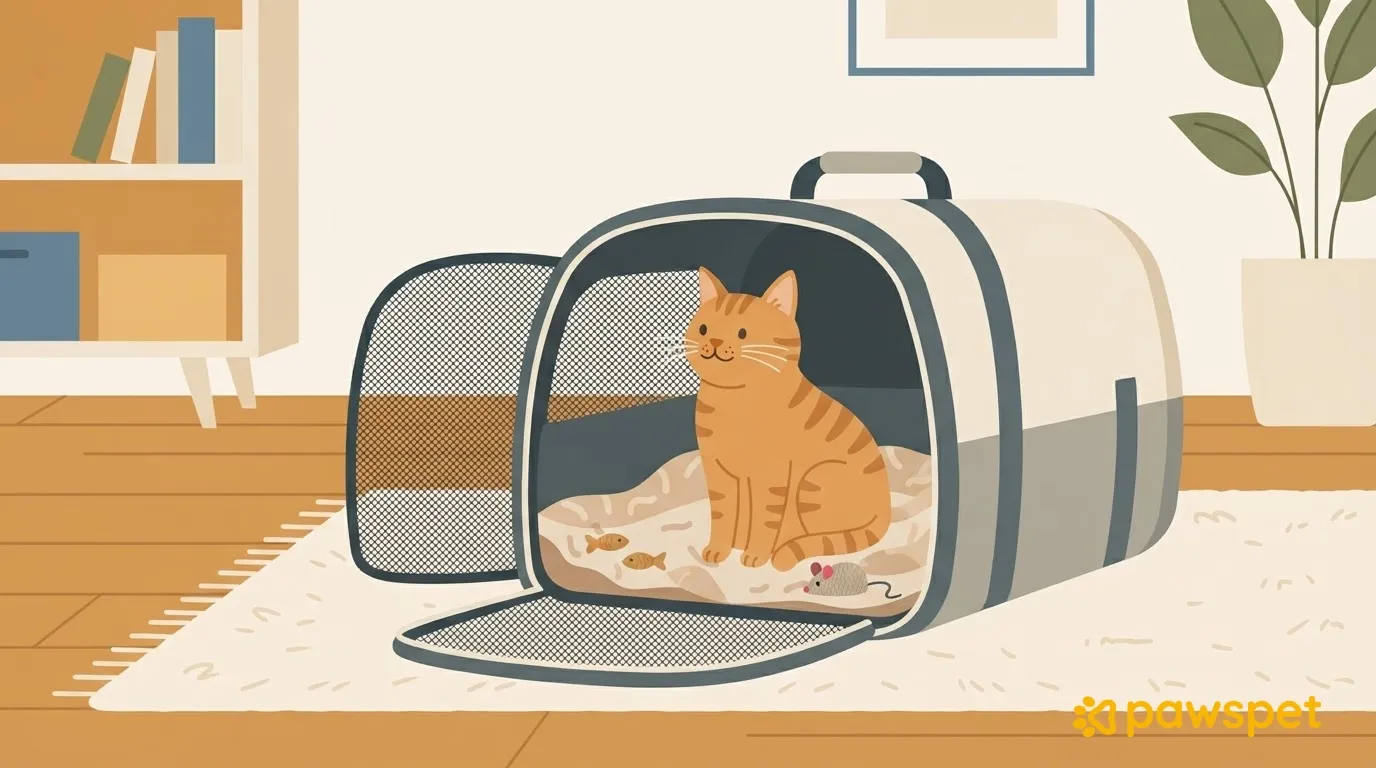
- put a familiar-smelling fabric inside, such as a blanket your cat already uses;
- stop bringing it out only before trips: leave it available all the time;
- if it comes apart, offer just the bottom half as a bed.
Stay below the threshold
The threshold is the point where your cat shifts from calm to showing signs of fear. The distance from the carrier helps you stay below that point:
- start at a distance where your cat stays calm, without hiding or crouching;
- from there, toss highly appealing treats toward the carrier without asking them to go inside;
- keep sessions very short and end while things are still going well;
- in later sessions, move a little closer only if the last one went well; if signs of fear appear, go back to the last easy distance;
- don’t close the door until your cat goes in on their own and stays relaxed.
After a setback
After a vet visit or a bad trip, your cat may take a step backward. Don’t scold or punish them: return to an easy distance where they stay relaxed, and start again from there.
When to ask a vet or behaviorist for help
Ask for help if the fear is intense, if physical signs appear, such as urinating, defecating, or vomiting from fear, if your cat shows aggression, if things get worse despite your efforts, or if the behavior changes suddenly.
Your vet can assess your cat’s health and, if appropriate, suggest ways to make visits less stressful, while a behavior consultant can create a plan tailored to your cat. In the «Services» tab of the PawsPet app, you can search for a vet or a behavior consultation near you, filter by «At home» and check availability and reviews before booking; services vary by area.
If you need a visit before you’re finished
If the visit can’t be postponed, plan it to avoid chasing or forcing your cat:
- When you book, explain that your cat is afraid and ask your vet whether a home visit is possible.
- The night before, prepare the carrier open, with a familiar fabric inside, in a small room without hiding places.
- On the day of the visit, calmly bring your cat into the room for a positive reason, such as a treat or a game, and close the door: no chasing around the house.
- If the top comes off, place your cat in the bottom half and put it back on. A towel can help you lift them gently.
- If your cat tries to scratch or bite, don’t insist; call your vet to ask what to do.
- At the clinic, ask if your cat can stay in the bottom half and wait in a quiet corner. Never tilt the carrier to get them out.
- When you get home, let your cat come out on their own and put the carrier back in its new spot.
You can start with just one thing today: observe how close your cat can be to the carrier while staying calm, and start from there.
Frequently asked questions
Should I buy a new carrier?
It may help because you’re starting with an object that has no associations. But without gradual acclimation, the problem may come back: even a new carrier can become a cue if it only appears before vet visits. If you buy one, use the same steps.
How long does it take?
It varies a lot from cat to cat, and there’s no way to promise a timeframe: what matters is staying below the threshold and moving at your cat’s pace.