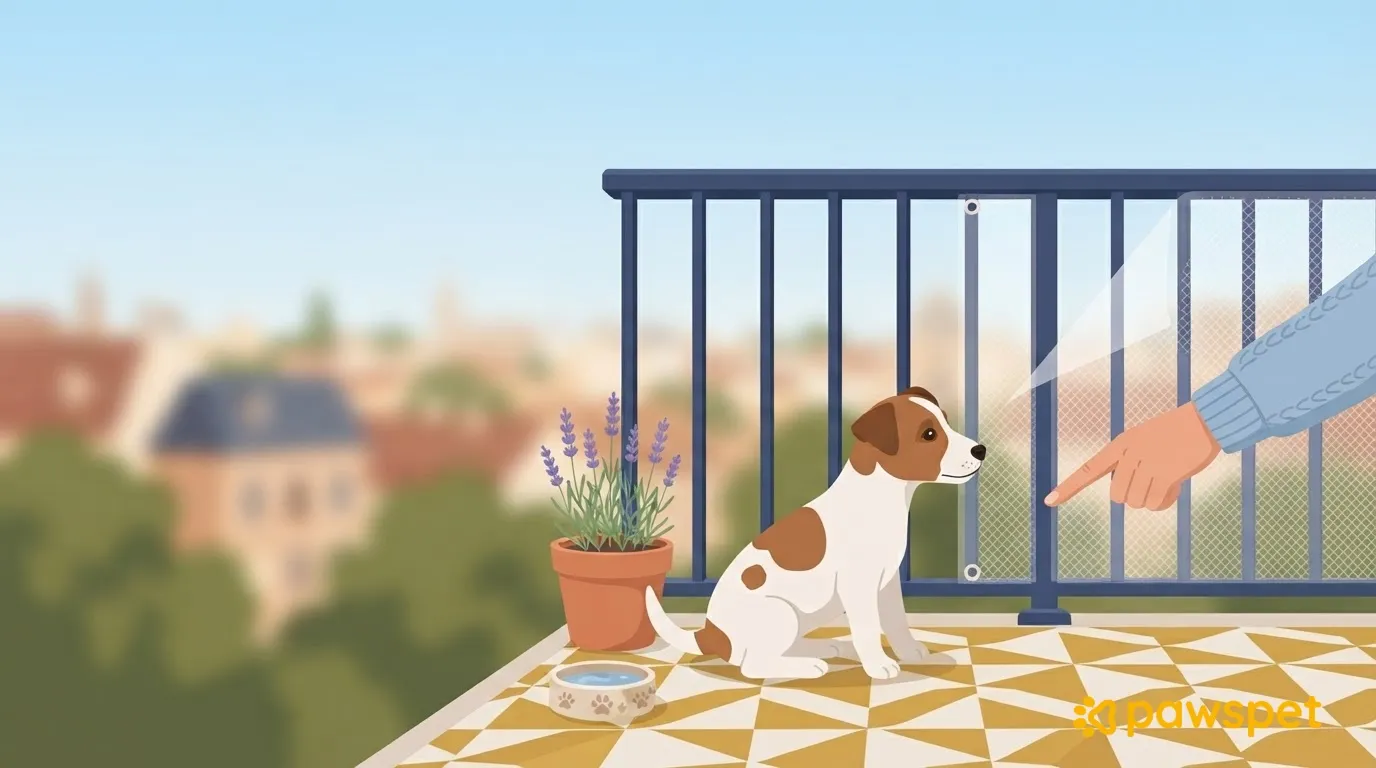
A puppy or small dog may squeeze its head and body between the bars or underneath the railing, and use pots and chairs as steps. Before letting your dog out, check for gaps and climbable objects, keep them under constant supervision, and if openings remain, ask a professional how to close them.
Inspect the railing with your dog beside you
Start with your dog on a leash beside you, in an area away from the edge. If you cannot keep them away from the spots you need to check, bring them inside while you measure. Use a tape measure to record the gaps and compare them with your dog’s build, considering their head, shoulders, and chest.
Make a complete inspection, without stopping at the middle section:
- between each bar, along the entire railing;
- underneath the railing, down to the floor;
- at the sides, toward neighboring balconies;
- between the railing and the wall, including the joints at the corners.
Watch where your dog tries to put their head, but do not let them squeeze into openings or test whether they can get through. Even a solid or glass balustrade may have gaps at the sides or underneath: a continuous surface is not enough to rule them out.
If an opening gives you any reason for concern, do not let your dog onto the balcony until it has been assessed by a professional. Repeat the check as your puppy grows and after changes to the furniture.
Objects that turn the balcony into a set of steps
Planters, pots, chairs, small tables, storage containers, and drying racks can become footholds for climbing. Look at objects placed next to one another, too: removing only the one closest to the railing may not be enough if a series of steps remains.
Move portable items away from the railing and check the whole area again. Also consider fixed features, such as the air-conditioning unit outdoors: do not improvise changes to the installation. If climbable objects remain accessible near the railing, do not let your dog out until the problem has been resolved.
Store cleaning and gardening products elsewhere, out of your dog’s reach: do not leave them on the floor or on accessible shelves.
Patio door: teaching your dog to wait at the threshold
An open patio door should not mean free access. Establish a simple routine: open the door only when you know where your dog is, let them out when invited, and bring them back inside and close the door before you get distracted or walk away.
To practice waiting, start with the door closed and reward your dog for staying inside near you. At first, reward even a very brief wait, then gradually increase the time. Introduce movement of the handle and small openings only after gaps and climbable objects have been addressed, and with your dog on a leash; reward them for waiting without moving forward. If they rush ahead, stop the exercise and start again with an easier step.
If your puppy bolts outside every time, a dog trainer can help you work on this together. The exercise helps build a routine, but it does not replace adequate barriers and supervision.
For help with waiting, you can search for dog trainers and behavior consultants in the «Services» tab of the PawsPet app, filtering by service type: «Training», «Behavior consultation», or «Obedience training».
Supervision and the hottest hours
The balcony is a place to spend time together, not somewhere to leave your dog alone, even after closing off the gaps. Avoid the balcony when it is exposed to the sun during the hottest hours; before going outside, check with your hand whether the floor is hot, and skip it if it is too hot. When you are outside together, provide shade and water, and go back inside before you need to turn your attention to something else.
When to ask a professional to close the gaps
If there are still openings your dog could get through, stop allowing access to the balcony and contact a locksmith, window-and-door installer, or installer of mesh and panels. Take photos and measurements of the problem areas so you can explain what needs to be assessed during the site visit.
Before agreeing to any changes, ask your landlord for permission if you rent, and check with the building manager for any restrictions in the condominium rules.
When discussing the work, ask:
- How can the gaps at the bottom and sides be closed without damaging the railing?
- Will holes need to be drilled, or will other work be needed at the fixing points?
- According to the manufacturer, can the proposed material withstand bites and scratches?
- What checks and maintenance will it need over time?
- What does the warranty cover, and what does it exclude?
Once the work is complete, check the corners and any remaining openings again with the professional. No barrier makes a balcony completely safe: supervision is still necessary.
This week, walk around the balcony with a tape measure and your dog on a leash, mark the gaps, and decide whether moving objects is enough or whether you need a site visit.