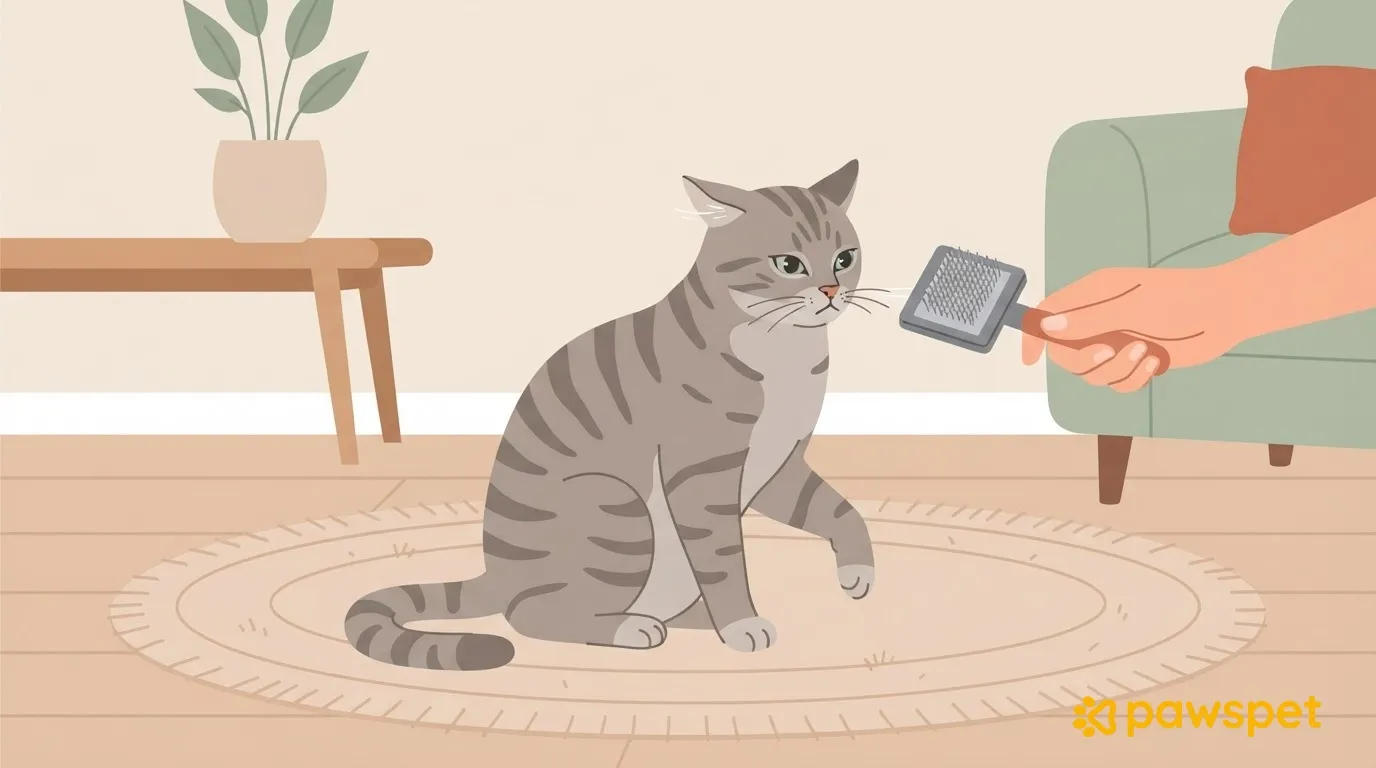
If your cat won’t let you brush them, don’t hold them down or try to finish the job at any cost. First, rule out pain and check that the tool isn’t pulling at their coat; then start again with very short sessions on areas they accept, stopping before they become uncomfortable and gradually increasing the amount. Success means ending a session on a good note, not brushing the entire coat at once.
Signs of discomfort: stop before a bite
Watch your cat from the very first touch instead of waiting for them to hiss or bite. During brushing, look out for these possible signs of discomfort:
- tail swishing or thumping;
- skin along the back twitching;
- ears rotating or flattening;
- body stiffening;
- head turning toward your hand;
- trying to move away;
- sudden licking.
At the first sign, calmly remove the brush and give your cat space. Don’t scold them or try “just one last stroke.” You don’t need to find out how much more they can tolerate: you already have a reason to end the session. Next time, offer a shorter touch or go back to an area they’ve already accepted.
Before training, rule out physical causes
A refusal that appears suddenly or is limited to a specific spot should be assessed by a veterinarian before you keep trying: it may be due to pain or irritated skin. Explain when it started and which areas or movements trigger the reaction, without trying to diagnose the problem yourself.
Also check for knots and mats: they pull at the coat and can make every stroke painful. Have them loosened or removed by a groomer who works with cats, or by your veterinarian, before you begin getting your cat used to brushing. Going over the same mat repeatedly is not an exercise in learning to tolerate the brush.
Finally, consider the tool. If it’s stiff or catches in the coat, consider a gentler alternative, such as a rubber grooming glove or a wide-toothed comb. The key is how it moves through that coat without pulling: changing tools doesn’t justify continuing contact your cat refuses.
A step-by-step approach
Choose a time when your cat is relaxed or seeking contact, in a place where they feel safe and have a clear way to leave. Don’t force them into your lap or wake them suddenly to brush them.
Have something they really enjoy ready: a small food reward, preferably from their daily ration, a game, or the petting they seek.
-
Let them see and sniff the brush. Keep it in view and let your cat approach it, rather than bringing it toward them. After they’ve sniffed it, offer a reward. You can end the session right here.
-
Try the back of the tool. Briefly rest it on their cheeks or neck, but only if those are areas they accept. Remove it and reward them: there’s no need to brush yet at this stage.
-
Make one or two strokes, then stop. Stay on a preferred area and end the session while your cat is still calm. Don’t add more strokes to “make the most of the moment.”
-
Do a little more in the same area. Once the previous step is accepted calmly, add a few strokes. Don’t increase the duration and the number of areas at the same time.
-
Introduce a new area. Do this only when the previous one is accepted without signs of discomfort. Start with minimal contact on the new area: accepting the brush on the neck doesn’t mean accepting it everywhere.
If your cat moves away, the session ends there. Don’t follow them with the brush or a treat to keep going. You can repeat the same step over several sessions or go back a step: every cat has their own pace, and there’s no guaranteed timeline for results.
If there’s no progress: who to involve
If weeks pass without improvement, check in with your veterinarian again and consider a behavior professional who works with cats. If fear or aggression increases, ask for help sooner rather than waiting.
Describe when your cat refuses: when they see the tool, at the first touch, or after a few strokes. This information is more useful than simply saying, “They won’t let me brush them.”
If mats need to be removed right away, however, contact a groomer who works with cats or your veterinarian—not more force at home.
To find this support, in the PawsPet app you can filter “Services” by “Behavioral Consultation” and read descriptions and reviews to see whether there are professionals who work with cats in your area.
Maintaining progress
Keep sessions short and regular, always within what your cat accepts. Even when things are going better, stop before they become uncomfortable: a good session isn’t an opportunity to catch up on all the brushing still to be done.
For the belly, tail, and hind legs, you may need to accept partial grooming. Some areas can be left to a professional or checked visually only, if they don’t need treatment. This doesn’t mean ignoring mats or irritated skin: in those cases, ask for help instead of forcing your cat.
Don’t brush your cat right before something they dislike, such as going into the carrier. Next time your cat is relaxed, try one stroke on their preferred area and stop there.