If your cat stays perched on a piece of furniture, races through rooms, or ends up in a corner when the dog approaches, the priority is to make sure there is always a way out. Start by observing, not shopping: notice where your cat stops and where it gets stuck, then create stable, connected routes up high, leave multiple escape routes in shared rooms, and set up a dog-free area with water, food, a litter box, and a place to rest. No one should force them to be close: your cat must be able to watch the dog from a safe spot.
First, observe where your cat stops and gets stuck
For a few days, change nothing and look at your home from your cat’s level. The only exception: if the dog chases your cat, interrupt the situation immediately. In the meantime, note:
- where your cat watches the dog from (a piece of furniture, a windowsill, a staircase);
- where it gets stuck or ends up in a corner;
- which routes it races through: hallways, doorways, spaces between furniture and walls;
- where the dog usually lies down.
Mark everything on a simple floor plan, even a hand-drawn one. Put new spots where your cat already tries to spend time, not where they seem most convenient to you.
Routes up high: continuity, height, and stability
The goal is for your cat to cross the room without coming down near the dog. Check these criteria:
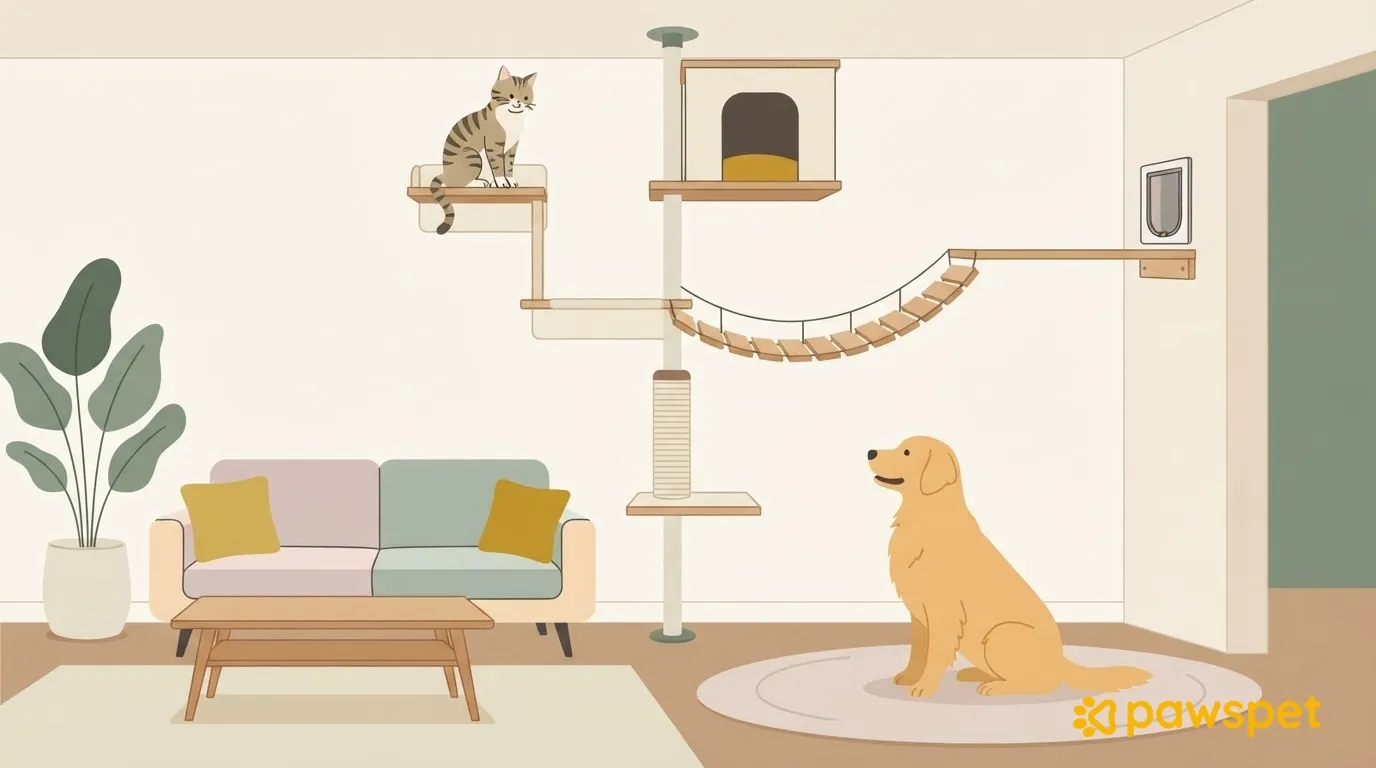
- Continuity: connect a chair, piece of furniture, shelf, and cat tree so your cat can move from one spot to another without touching the floor.
- Height: beyond the dog’s reach, based on its size and ability to jump.
- Stability: secure shelves and cat trees to the wall according to the manufacturer’s instructions; make sure furniture used as a stepping point does not wobble; use non-slip surfaces.
- Space: enough room to turn around and lie down.
- Ways down: more than one way to get down from each spot, so your cat does not feel trapped up high.
- The dog’s bed and bowls: keep them away from climbing and exit points.
As spring arrives, windows are left open more often: if a route passes near a window, make sure it is secured.
Escape routes at floor level and hiding places
Your cat must also be able to choose where to go at floor level.
- Leave more than one exit in shared rooms: if a piece of furniture creates a dead end, move it.
- Secure open doors so they cannot close behind your cat.
- Provide hiding places such as boxes, tunnels, or covered beds that your cat can reach but the dog cannot.
- Keep your cat’s routes clear of the dog’s bed, carrier, and toys.
A dog-free safe space
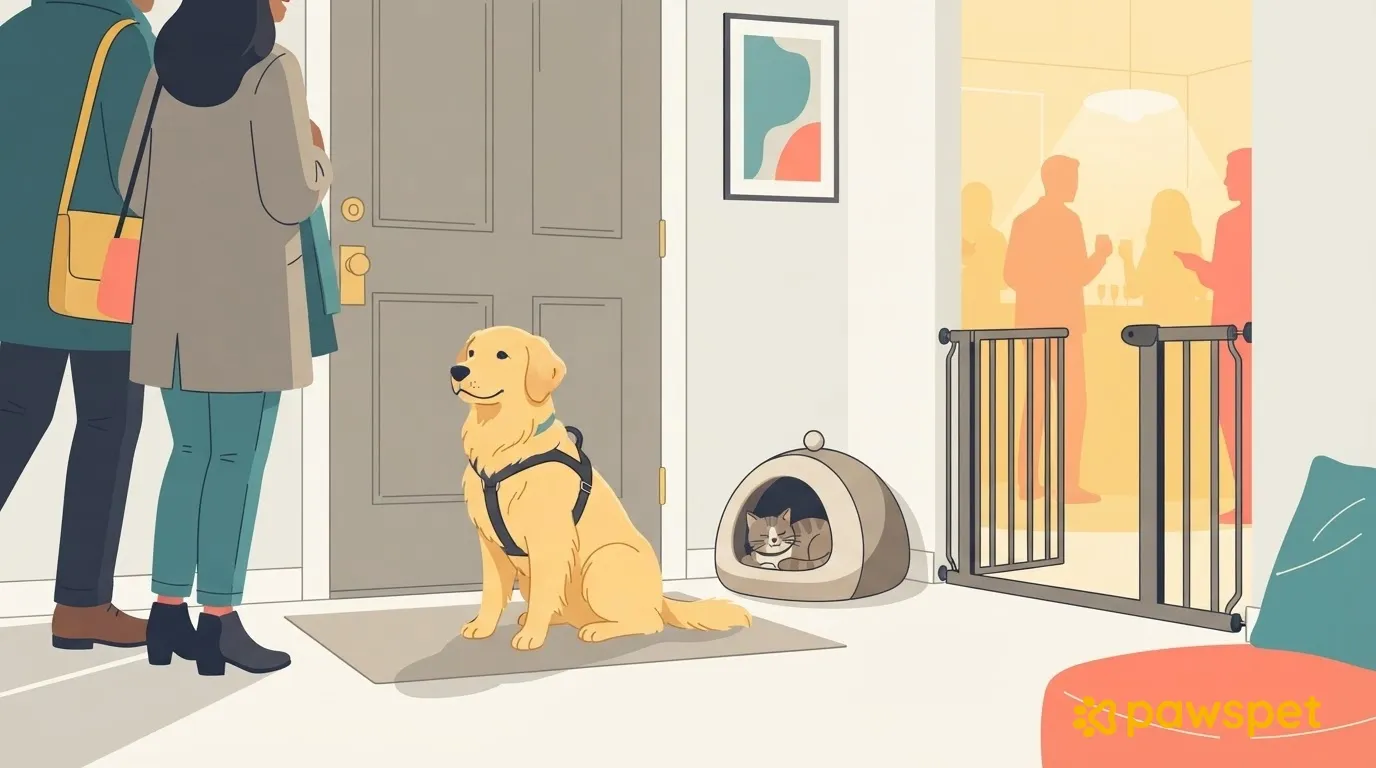
Choose a room or corner to protect with a baby gate that has a cat pass-through, or with a door held slightly open. Make the opening and gap suitable for both animals: your cat must be able to pass comfortably, but the dog must not. Put water, food, a litter box, and a high-up resting spot inside.
Let your cat decide when to come out. Do not pull it out of hiding places or carry it over to the dog.
How to tell if the setup is working
Positive signs: your cat uses the routes up high, rests in the dog’s room while staying visible, and moves around without rushing.
Signs not to ignore: it stays hidden almost all the time, uses only a few rooms, eats less, or stops using the litter box.
If your cat stays hidden or uses only a few rooms, reduce the time it spends sharing space with the dog, add high-up spots or escape routes, and observe again after a few days. If its appetite or litter box habits change, contact your veterinarian: the change may not be due to the dog alone. If the distress continues, consider consulting a trainer or feline behaviorist.
If your cat is older or does not jump as well as before, add steps or ramps between levels; if the change is recent, schedule a veterinary visit.
Three actions for this week:
- Draw a floor plan showing where your cat gets stuck.
- Set up the first stable route up high.
- Add an escape route in the most-used room.
Frequently asked questions
How high should the shelves be?
There is no one-size-fits-all measurement: it depends on how high your dog can actually reach. Watch how far it reaches when standing on its hind legs or jumping onto a sofa, then keep the spots where your cat passes and rests above that limit, with some extra clearance. A small but agile dog may be able to reach higher than you think.
My cat ignores the new shelves: what should I do?
Move them to places where you already see your cat resting or watching, using the floor plan as a guide. Check that they are stable and non-slip, then wait without forcing your cat or putting it up there: let it choose when to try them.