When your dog chases the cat at home, each chase makes the next one more likely. That is why the first step is to prevent opportunities with barriers and supervision. Then, at a distance, teach your dog something to do instead of chasing: look at the cat and come back to you, or stay on a mat. Reduce the distance only when your dog remains calm and your cat is free to move away.
Why you should stop chases right away
For some dogs, chasing is rewarding in itself, so each repetition reinforces the habit. The cat, on the other hand, experiences the incident as a threat and may change its behavior: hiding, avoiding certain rooms, or changing when it eats or uses the litter box. There is also a risk that either pet could get hurt during a chase, from a fall, scratch, or bite. So it is best to step in early instead of hoping it will go away on its own.
Managing your home: prevent opportunities to chase
Until your dog has learned an alternative, prevent every opportunity in advance:
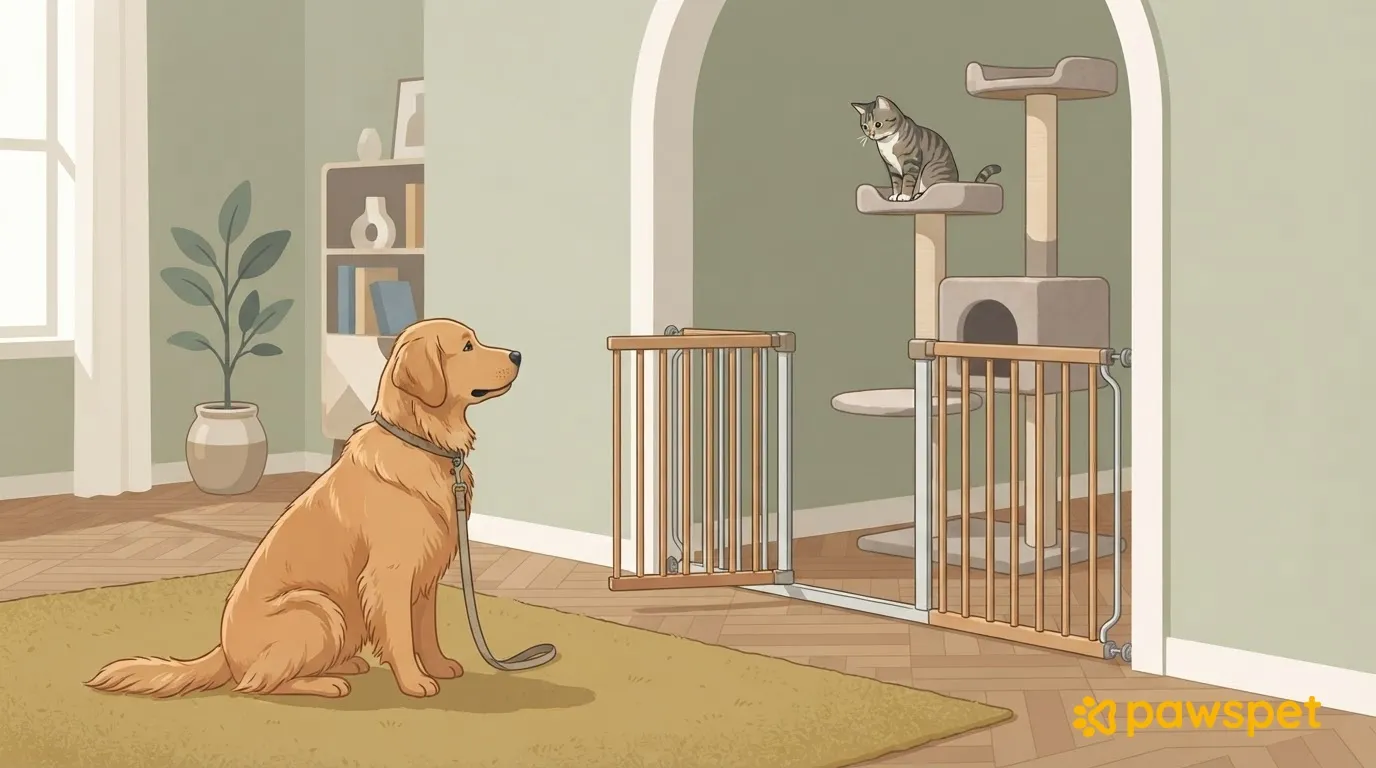
- Separate their spaces with baby gates or doors so each pet has an area of its own.
- Keep the dog and cat apart whenever no adult can supervise, even for a few minutes.
- When they are together, use a leash or lightweight long line attached to a harness and held by an adult. It is there to prevent chasing, not to correct the dog. Never leave it attached to the dog without supervision: it could get caught on something.
- Give your cat escape routes: shelves, cat trees, or other elevated paths, and keep passageways clear in shared rooms.
- Put the dog's mat somewhere that does not block the cat's routes.
- Before they spend time together, give your dog a suitable activity, such as a walk or a scent-search game.
Avoid using a crate or carrier as a shortcut unless your dog is already used to it.
The exercise: look at the cat and come back to you
The goal is for your dog to learn to stay calm when it sees the cat and look to you. Always work at a distance, with the cat free to leave.
Prepare the session
Keep your dog on a leash or behind a baby gate, with highly appealing treats close at hand. The cat must be free to climb up high or leave: never restrain or bring the cat closer. Choose a time when your dog is calm and keep sessions short. Watch the cat, too: if it stiffens, hides, or leaves, end the session.
Find the right distance
Start at a distance where your dog notices the cat but still takes treats and responds to its name. If your dog stares, stiffens, pulls, or barks, you are too close: move farther away and start again.
Reward your dog for looking away
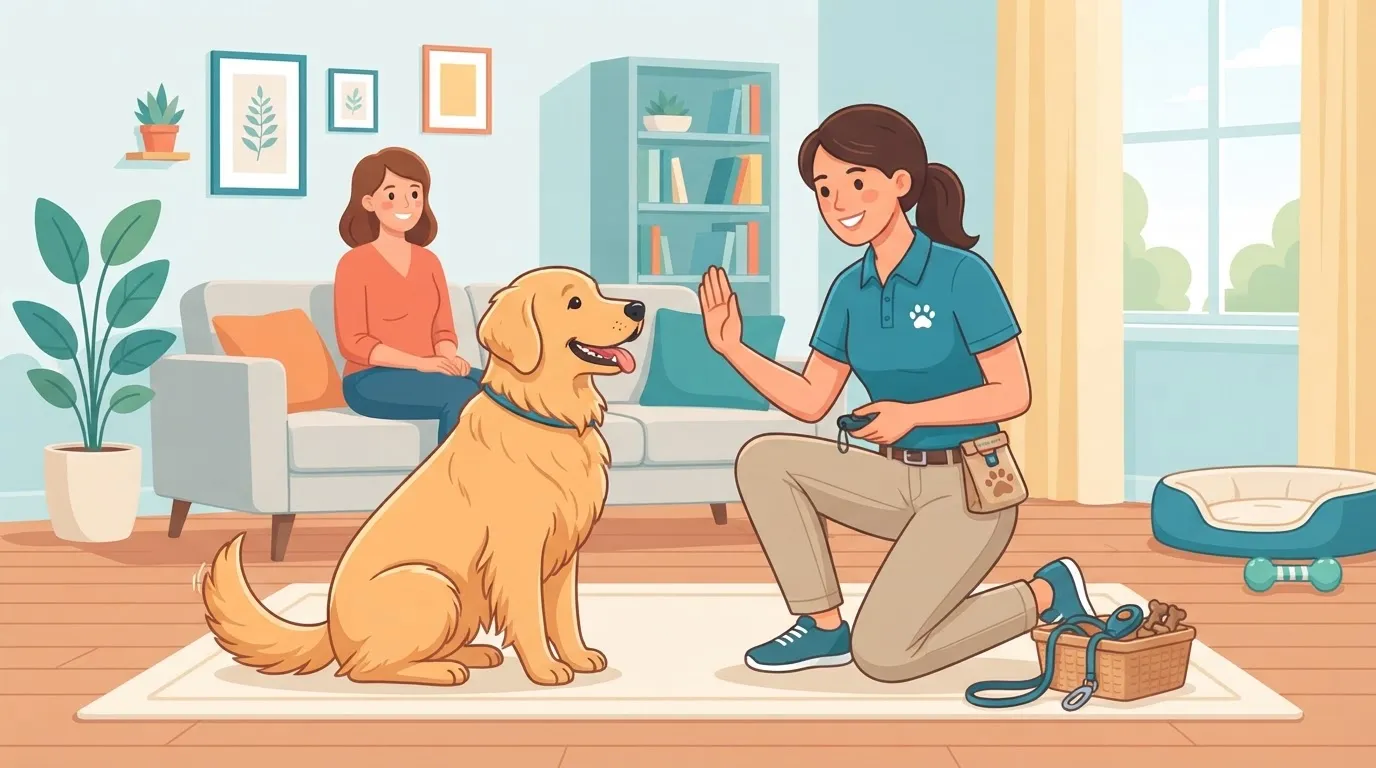
When your dog looks at the cat and then looks away or turns toward you, mark the behavior with the same word each time (for example, “yes”) or a clicker, and give the treat on the side opposite the cat. Alternatively, reward your dog for lying on the mat while the cat moves around. If your dog does not yet know how to stay there, teach that first without the cat.
When to move forward
Reduce the distance, or try with a cat that moves around more on its own, only after several calm sessions in a row. There is no set number that works for every dog; what matters is how your dog responds. After an overexcited episode, go back to the previous step. End each session before your dog gets worked up.
What to avoid
- Punishment, yelling, spraying water, leash jerks, or aversive tools such as shock or spray collars: these can increase tension and do not teach your dog what to do instead of chasing.
- Holding the cat near the dog, even just to introduce them: the cat cannot escape and remains exposed.
- Letting them work it out on their own: without supervision, the chasing will happen again.
- Rewarding your dog while it is worked up: you could end up rewarding that state.
- Shutting the cat in a room without its essentials: water, food, a litter box, and a quiet place must always be available.
When to ask a professional for help
Contact a dog trainer, a behavior consultant, or a veterinarian with expertise in behavior if your dog:
- stares at the cat for a long time and crouches as if preparing to pounce;
- lunges at the baby gate;
- tries to grab the cat;
- cannot eat or respond to its name, even at a distance;
- shows no progress after several weeks of consistent work.
If either pet is injured, contact your veterinarian right away. To find a dog trainer or behavior consultant, you can browse the training and behavior consulting services on PawsPet and read each provider’s profile before deciding.
Where to start this week
- Divide the house with baby gates or doors and decide who will supervise when the pets are together.
- Prepare appealing treats and a mat.
- Do two or three short sessions at a distance, with the cat free to leave.
- Record the distance, reactions, and how each session ended to help decide whether to move forward.
Frequently asked questions
My dog just wants to play. Do I still need to stop it?
Yes. If the cat runs away, hides, or stiffens, it is not shared play: the cat experiences it as a threat, even if the dog is having fun.
How long should I keep them separated?
There is no set timeframe: it depends on how the sessions go. Until your dog consistently stays calm, continue keeping them in separate areas and using a leash when they are together. If the chasing starts again, go back to the previous step.