When several pets at home eat different foods—a dog and a cat, two cats of different ages, or one pet eating food recommended by a veterinarian and another that does not—the starting point is simple: give each pet a designated feeding spot, separate them if needed, and have someone present during meals. Also use separate, labeled containers and scoops, because mix-ups can happen in the pantry too. If one pet eats food intended for another, or skips a meal, involve your veterinarian.
Separate feeding stations: rooms, heights, and doors
The first step is to keep the pets in different places while they eat. The basic options are:
- separate rooms, or a closed door during the meal to keep them apart;
- a baby gate, if the pet you want to keep out cannot get over it;
- bowls placed well apart, so each pet stays in their own area and you can see them all.
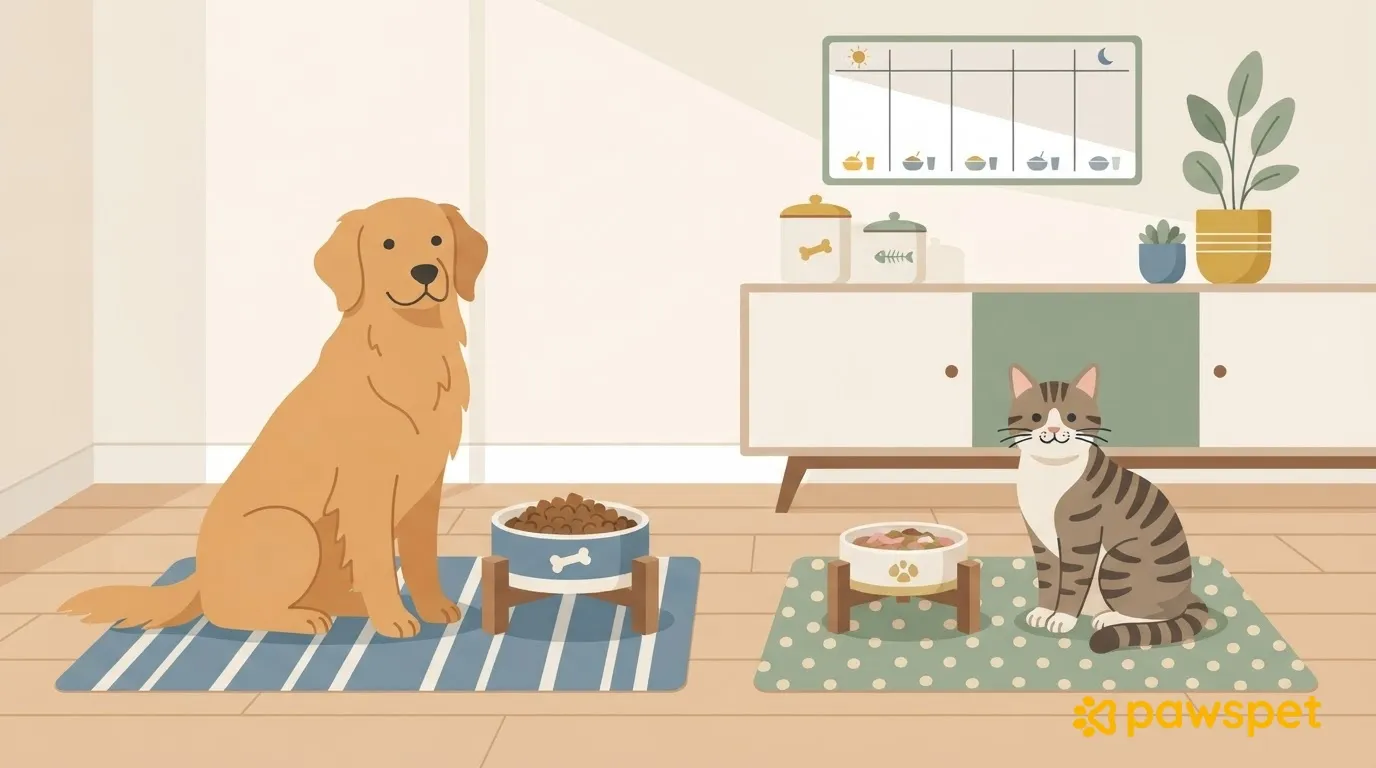
If a dog and a cat live together, you can also put the cat’s bowl in a stable, elevated spot that the dog cannot reach. This only makes sense if the cat can get there easily: it may not be suitable for an older cat or one with mobility difficulties, and separate rooms may be a better choice. Keep in mind that this only protects the cat’s food: if the dog’s bowl is on the floor, the cat can still reach it.
Whichever option you choose, always give each pet the same spot and an identifiable bowl, by color or shape. That way, anyone helping at home will know where to serve each pet.
There are also bowls that open only for the recognized pet. If you consider one, check how it actually works and whether your pet gets used to using it: it is an option to try carefully, not a guarantee.
Supervised meals and picking up bowls
A separate feeding station works best when you are present. Serve meals at the same time in different places, so no one has to wait by another pet’s bowl, and stay until everyone has finished. Take the pet who finishes first to another room so they cannot reach the others’ leftovers. If you cannot be there, explain the same routine to whoever takes your place: the same feeding stations and the same rule of staying until the meal is over.
If the plan calls for scheduled meals, pick up bowls with leftovers at the end of the meal. A bowl left on the floor remains within reach of a pet who should not eat from it, and picking it up lets you see right away who has not finished their meal.
If, instead, your veterinarian has agreed that one pet should have food available at all times, separating the spaces becomes the main safeguard: place that bowl where the other pet cannot reach it. Which feeding method is right for each pet is a decision to make with your veterinarian; here, the only concern is making sure each pet eats their own food.
Separate supplies and scoops for each pet
Keep each type of food in its own container, labeled with the pet’s name and the name of the food, and never mix different foods in the same container. Also assign each pet their own scoop and keep it with their supplies, so whoever serves the meal does not have to remember which scoop belongs to whom.
Keep shopping lists and reorders separate by product too. When a supply is running low, note the pet it is for, so whoever shops does not pick up the wrong package.
To give anyone helping at home a reference for each pet, you can note their food in each pet’s profile in the PawsPet app. In the “Health” tab, open “Diet, therapies and treatments,” tap “Add,” choose “Diet,” enter the food’s name and the amount recommended for that pet (including the veterinarian’s instructions, if any), and save. You can add any allergens under “Allergies and intolerances.”
A family member, or someone caring for your pets while you are away, can view this information if they have a PawsPet account and you have added them as a collaborator: from the profile’s ⋮ menu, under “Collaborators,” enable only “View” under “Health,” and they will be able to read the information without changing it. This is a reference, not a monitoring system: a person still needs to serve and supervise the meal.
If one pet eats another pet’s food
It can happen even with a careful routine. If it does, note when it happened, what was eaten, and where the bowl was, then look for the point where the routine broke down (the room, the time, the height, or a door left open) and fix that.
Talk to your veterinarian if it happens repeatedly, if one pet has eaten food recommended for another, or if a pet who has food recommended for them eats something else or skips their own meal. If a pet seems unwell afterward, do not wait: contact your veterinarian right away.
If you notice growling near the bowls, one pet blocking another’s way, or other signs of tension, separate the pets during meals and ask a behavior professional for help.
Today, draw a map of mealtimes at home, even if it is just a table with one row for each pet: where they eat, when, with which container and scoop, and who is responsible for the meal. Post it near the bowls so everyone at home can find it.