Choose a cat harness based on measurements taken at home and a design made for cats. Then adjust it, try it indoors, and introduce it in short stages, using treats. Go outside only once your cat is relaxed wearing it: not all cats accept a harness, and you should never use one to tie your cat up or leave it on when they are alone. Buying a harness and getting your cat used to it are parts of the same process: at the store, ask how the adjustments and fastenings work instead of simply looking for the best-selling model.
Before going to the store: measurements and information to bring
Use a soft tape measure to measure two things: your cat’s neck circumference and chest circumference, just behind the front legs. The tape should fit snugly without squeezing. If your cat won’t stay still, try again during a quiet moment and offer a treat. Make a note of their weight too, if you know it.
Sizes vary from one model to another: compare your measurements with the manufacturer’s size chart, and don’t assume the same size will fit every model.
Also bring a photo of your cat and a brief description of their temperament and habits: Do they let you handle them? Are they comfortable in a carrier? Are they frightened by noise? Add where you would use the harness, such as for vet visits, travel, or short outings in a secure area. This information can help the store staff make a recommendation.
Questions to ask the store staff
Write them down before you go so you don’t forget any:
- Is this model designed for cats?
- How many adjustment points does it have, and where are they?
- How does it fasten, and how loud is the fastening? Ask to hear it: some cats are startled by ripping or clicking sounds.
- How should it be washed, according to the care label?
- If it doesn’t fit, can you exchange it for another size? Ask about the store’s policy and keep your receipt.
- Which leash would work well with it? For the first practice sessions, choose a lightweight, fixed-length leash that’s easier to manage.
There are wrap-style and vest-style models: there’s no one option that works for every cat, so ask which one is easiest to adjust to your cat’s measurements. Ask the staff to show you the adjustments on the harness itself. If you’re not convinced by the answers, you can put off buying one—there’s no rush.
How to check that the harness fits well
Once you’re home, try the harness in a quiet, enclosed room. It should fit snugly without squeezing: check with your fingers that there’s a little room, and follow the clearance recommended by the manufacturer. It shouldn’t rub under the front legs, and your cat should be able to walk, sit, and turn freely.
Then watch what happens when your cat backs up or twists: if the straps slide toward their head, adjust the harness again or consider another size. Never assume your cat can’t slip out of it—check the fit on your cat. Keep the test brief and remove the harness as soon as you’ve finished checking it. If your cat won’t tolerate even this check, move on to the acclimation steps below and try the fit check again later.
Getting your cat used to it at home, one step at a time
Each step may take several short sessions: move on to the next one only when your cat stays calm.
- Leave the harness near your cat’s resting spot and reward any sign of interest.
- Place it on their back for a few seconds without fastening it, give a treat, then take it off.
- Fasten it for a few seconds during a pleasant activity, such as play or mealtime, then take it off.
- Gradually increase the time, always under supervision.
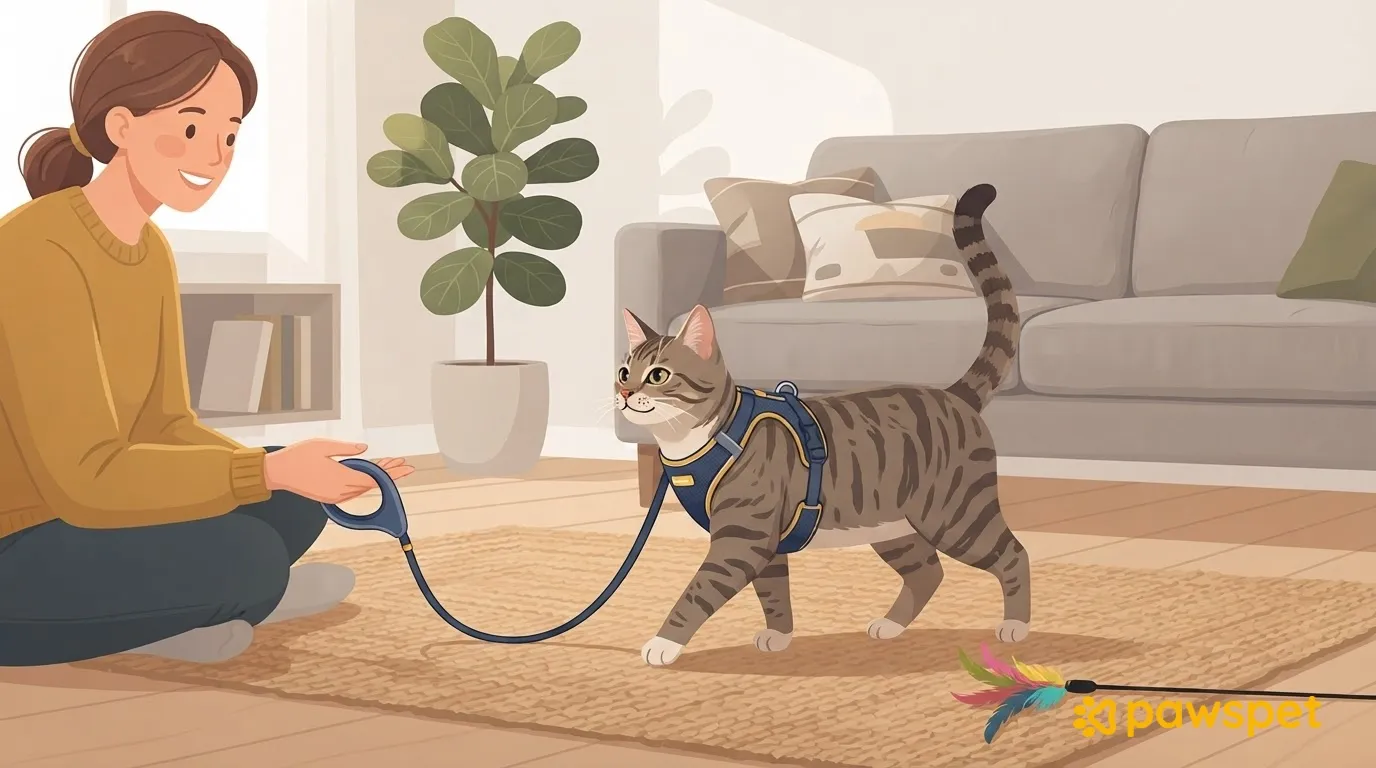
- Attach the leash and let it hang loose, then hold it and follow your cat without pulling.
Don’t force your cat: go back to the previous step if they freeze, flatten themselves against the floor, walk close to the ground, try to slip out, swish their tail, or pin their ears back. The pace varies from cat to cat: there’s no set number of days that works for every cat. If your cat remains very stressed, it’s best to stop or ask a veterinarian or feline behaviorist for advice.
To help you keep up with short sessions, you can create a recurring activity in the PawsPet app, such as “Harness practice”: from the «Activities» tab in the bottom bar, tap the yellow «+», choose «Home training» under «General», select your cat under «Pets», set the frequency under «Repeat», and choose a notification using the bell and «Set», then tap «Save». Mark each completed session by tapping the circle and any skipped sessions with «Ignore»: the reminder can help you stay organized, but it doesn’t replace observing your cat.
First outings: safety rules
Going outside isn’t a requirement: if your cat doesn’t accept the harness, choosing not to go out is perfectly valid. If you want to try, follow these rules:
- Go out only once your cat is relaxed wearing the harness indoors, and check the fit again before every outing.
- Choose a quiet, secure area, away from traffic and off-leash dogs.
- Stay beside your cat at all times, and attach the leash only to the harness.
- Never tie your cat to an object or leave them alone wearing a harness and leash.
- Go back inside before your cat gets frightened, and remove the harness indoors.
Before your first outings, ask your veterinarian whether your cat needs any checks or precautions, and make sure their registered identification details, such as microchip information if they have a chip, are up to date.
Tonight, take the two measurements and write down the questions to bring to the store.