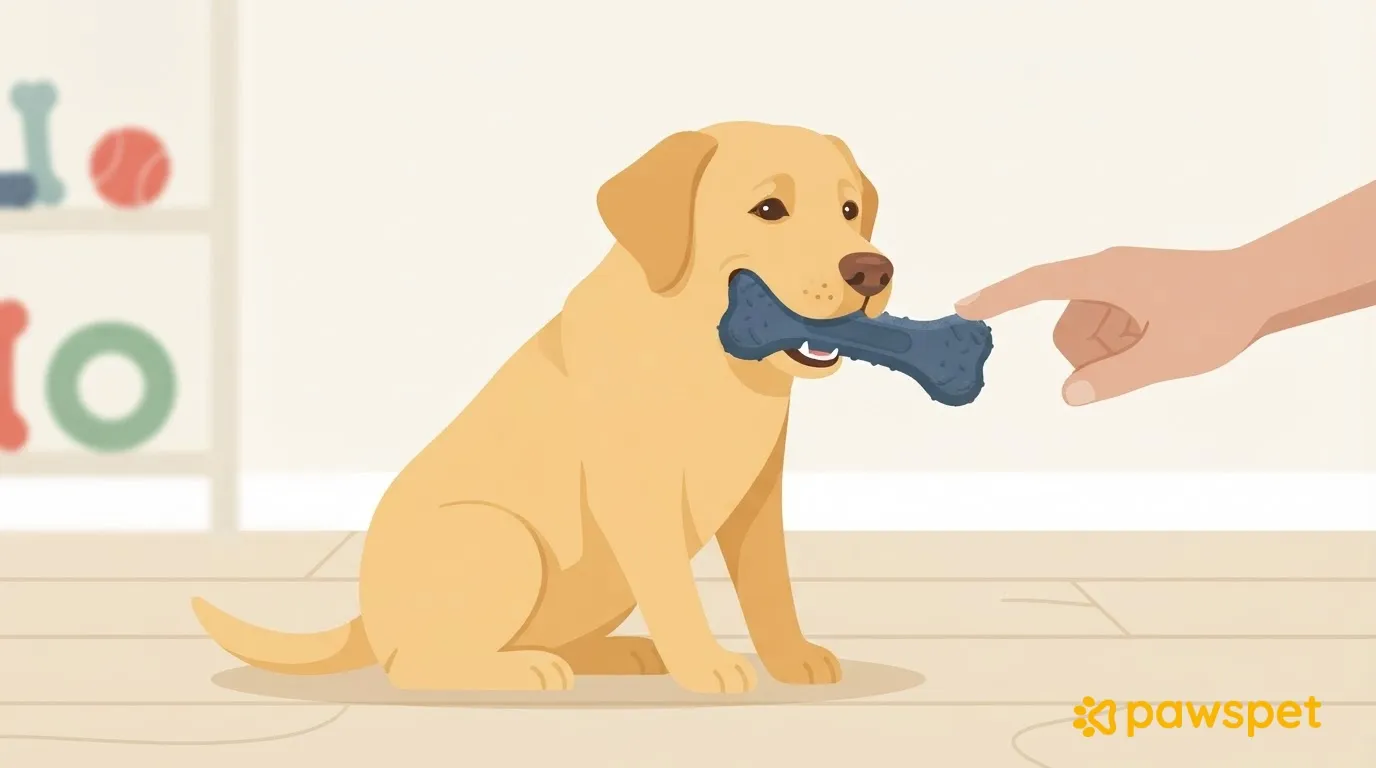
Choose a chew toy that is large enough that your dog can't swallow it, suits the way they chew, and has no parts that come off easily. Try it out under supervision and take it away as soon as it cracks, frays, loses pieces, or wears down until it can fit entirely in your dog's mouth. No toy is safe for every dog, so it's important to ask the right questions at the store and check toys regularly at home.
What to tell the store staff about your dog
The most useful information to bring to the store is how your dog has worn down or destroyed previous toys. Tell them:
- size, weight, and age;
- play style: whether they chew calmly, destroy toys quickly, carry them around, tug, or fetch;
- history: whether they have ever pulled pieces off or swallowed pieces of a toy;
- other dogs at home: whether they compete over toys;
- any advice from your veterinarian.
Bring the most worn toy with you, or a photo of it: it shows how your dog chews better than any description.
Questions to ask before you buy
Ask the store staff and compare their answers with the label:
- Which dogs does the manufacturer recommend it for, based on size, age, and chewing style?
- Does it have parts that could come off, such as squeakers, eyes, tags, seams, or stuffing?
- What does a label such as “durable” mean for this toy? Does it apply to a dog that chews like mine?
- According to the manufacturer, can my dog have it when alone, or should it only be used under supervision?
- What warnings are on the label?
- Can it be washed? How?
- Is it a chew toy or a toy to use with you for tug and fetch?
If the store staff can't answer, read the label and warnings yourself. If in doubt, choose another toy. Bones and edible chew treats are a separate topic and aren't covered in this guide; ask your veterinarian about those.
First use: watch how your dog uses it
Stay with your dog during the first few play sessions; don't leave them alone with a new toy. Watch for pieces coming off, attempts to fit the whole toy in their mouth, or swallowing pieces. If this happens, take the toy away; if you think they may have swallowed a fragment, go straight to the last section. Take extra care with a puppy: they grow quickly, so check from time to time that the toy hasn't become too small.
Put tug and fetch toys away after use: they're for playing with you, not on their own. For chew toys, if the manufacturer's instructions aren't clear, let your dog use them only when you can keep an eye on them. Keep just a few toys out at a time and rotate them: it's easier to check each one than a basket that's always full.
If your dog growls or stiffens when you approach the toy, don't snatch it away: ask a dog trainer or behavior consultant for help.
Wear checks: when to replace a toy
Look at the toy after every play session and give it a closer check regularly. Take it away and replace it if you notice:
- cracks or cuts;
- missing pieces;
- sharp edges;
- fraying threads or fibers;
- visible stuffing or squeaker;
- deformations;
- a toy worn down so much that it fits entirely in your dog's mouth.
The rule of thumb is simple: if in doubt, take it away. If a piece is missing and you can't find it, assume your dog may have swallowed it and go to the next section.
For hygiene, wash the toy only as directed by the manufacturer and let it dry completely before giving it back to your dog. Pay extra attention to toys used outdoors, which get dirty more easily.
If you think your dog swallowed a piece
Contact your regular veterinarian right away or, outside office hours, an emergency veterinary service or animal hospital, even if your dog seems fine. In the meantime:
- don't induce vomiting or give any home remedies on your own;
- bring the toy and any pieces you found, or take photos, to show what's missing;
- note when it happened, if you know, and what you observed, so you can tell the veterinarian.
Signs to take seriously and report to the veterinarian right away:
- repeated vomiting or attempts to vomit without bringing anything up;
- abdominal pain;
- lethargy;
- refusing food;
- difficulty passing stool.
These signs aren't a diagnosis, and even if none are present, your veterinarian can tell you what to do.
To help prevent this, start today: set aside the most worn toy in your home, out of your dog's reach, and bring it with you next time you shop.