Smart litter boxes can reduce the time spent on daily cleaning and help keep your cat’s environment more orderly. However, choosing a smart cat litter box does not mean relying blindly on automation: safety, your cat’s habits, and maintenance remain essential considerations.
A well-chosen self-cleaning litter box can be convenient, but it should adapt to your cat and your home, not the other way around.
How a self-cleaning litter box works
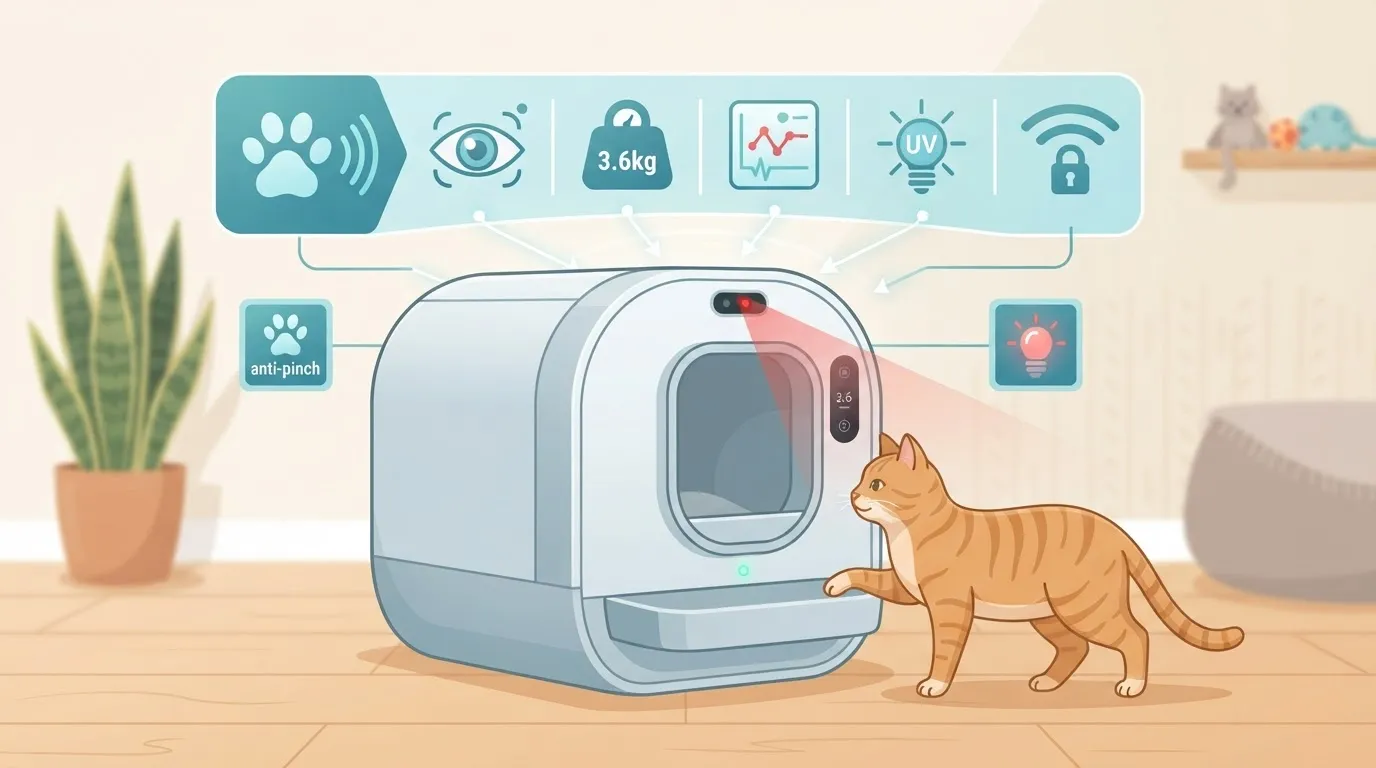
Automatic litter boxes collect waste after use through a sifting, rotating-container, or raking cycle. Clean litter is separated from clumps, which are then moved into a collection drawer or bag.
The cycle can start in several ways:
- After a time interval, allowing the cat time to leave.
- Through weight or presence detection, using integrated sensors.
- From an app, in Wi-Fi-connected models that may send notifications about the collection container or the number of visits.
- Manually, when the owner chooses to start the cleaning cycle.
Innovation in feline hygiene is not limited to waste removal. Some devices record how frequently the litter box is used or report changes in routine. This data can be useful for observing behavioral changes, but it does not replace daily attention or veterinary evaluation if you have health concerns about your cat.
Safety sensors: what they should detect
Self-cleaning litter box safety depends above all on the device’s ability to stop or prevent a cycle when the cat is nearby, enters the box, or returns while it is operating.
Automatic litter box sensors may include weight-detection systems, infrared sensors, optical barriers, or locking mechanisms. Not all models use the same technology, so before buying, read the manual carefully and check how the system responds when the cat is present.
In particular, check that the litter box:
- immediately stops moving if it detects the cat;
- does not start cleaning while the cat is in the access area;
- has a sufficiently wide, unobstructed opening;
- has moving components that are protected and difficult to reach;
- retains its safety functions after a brief power interruption;
- allows automatic startup to be disabled during the initial setup.
Even the best electronic system requires supervision. During the first few days, watch your cat as they explore the new litter box and do not force them to enter. If your cat seems frightened, hesitant, or starts looking for unusual alternatives, stop using the automatic function and proceed more gradually.
Automatic litter box limitations to consider
The limitations of automatic litter boxes are not the same for every household or every cat. The animal’s size, age, personality, and physical condition can significantly affect the experience.
For example, a covered or bulky model may be unsuitable for large, elderly, or mobility-impaired cats. The cleaning cycle’s noise may disturb sensitive animals. Some cats simply prefer a traditional, open, predictable litter box.
Before choosing, consider these practical points:
- Litter compatibility: some litter boxes require specific materials or clumping litter with particular characteristics.
- Complete cleaning: the waste drawer must be emptied, but the box, sensors, and moving parts also require periodic cleaning.
- Available space: measure the area, including drawer access, the cat’s entry space, and the power outlet.
- Number of cats: an automatic litter box does not always eliminate the need for multiple stations, especially in homes with several animals.
- Recurring costs: bags, filters, compatible litter, and replacement parts can add up over time.
Technology is an organizational aid, not a reason to ignore the litter box for days. Checking the container, odor, and cat’s behavior every day remains a good habit.
Gradual introduction and daily checks
To encourage acceptance, place the new litter box where the previous one was or in a quiet area away from food bowls, busy walkways, and noise sources. At first, keep the clean old litter box available as well.
You can follow this sequence:
- keep the smart litter box switched off for a few days;
- add a small amount of the cat’s usual litter;
- let your cat sniff and use it without starting any cycles;
- activate automatic mode only once your cat enters and leaves naturally;
- check every day for blockages, residue, or persistent odors.
A sudden increase in litter box visits, difficulty urinating, vocalization, or elimination outside the box deserves attention. Do not automatically blame the new device: contact a veterinarian if you notice unusual or persistent signs.
PawsPet can help you organize reminders for cleaning, litter changes, and routine checks, so the convenience of automation does not make you lose sight of daily care.
Smart litter box FAQ
Is a smart litter box safe for every cat?
Not necessarily. It should be chosen based on your cat’s size, age, mobility, and sensitivity to noise. Very young kittens and fragile animals require particular caution and supervision.
Can I eliminate manual cleaning completely?
No. A self-cleaning litter box reduces the need to collect clumps every day, but the container, sensors, and box still need to be cleaned regularly according to the manufacturer’s instructions.
Can app data indicate health problems?
It may highlight changes in your cat’s habits, but it cannot provide a diagnosis. If you notice significant changes in litter box use or behavior, ask your veterinarian for advice.