Every veterinary clinic has its own rules about who can bring a dog or cat and what they can authorize. So the first step is to call your clinic, not to download a form you found online: ask how it handles appointments when the owner is not there. Then you need four things: written authorization with clear limits, a spending limit, an agreed payment method, and a summary of your pet's health information.
This is useful if you're going away for a few days, and also if you simply want to be prepared for an unexpected situation. Without these arrangements, the authorized person (the trusted person or pet sitter taking your pet in) may arrive at the clinic without knowing what they can authorize, without health information, and without a way to pay. One thing does not change: in an emergency, go to the vet immediately; sort out the paperwork afterward.
What to ask the clinic before you need to
Call or ask during your next appointment. These are open questions: each clinic handles things differently, so write down the answers.
- Do you accept written authorization? In what form?
- Does the authorized person need to show ID?
- Can you call me to confirm a test or treatment?
- How can payment be made if I am not there?
- Which clinic do you refer to after hours?
- Can you note the name of the authorized person and the backup contact?
The answers will tell you what to include in the authorization.
What to include in the authorization
A clear document helps prevent misunderstandings at the clinic. Include:
- your details and contact information, including a second phone number;
- the details and contact information of the authorized person and backup contact;
- your pet's details: name, species, microchip number;
- the clinic's contact information and, if they have given you one, the contact information of the clinic they refer to after hours;
- the period of validity, with start and end dates;
- what the authorized person can do: bring your pet in, receive information, and authorize appointments and tests up to the spending limit;
- what always requires your direct consent (procedures, hospitalization, irreversible decisions) and who should decide if you cannot be reached;
- date and signature.
This list is not a template guaranteed to have legal validity: it is a way to put your arrangements in writing. If the clinic has its own form, use that. For more sensitive decisions, agree with the vet on what to do if you cannot be reached.
Spending limit and payment
The spending limit is the threshold beyond which the authorized person must contact you before approving anything else. There is no one amount that works for everyone: take into account what you can afford, your pet's age and known health conditions, and the costs you can ask the clinic about for an appointment and common tests. A limit that is too low could delay treatment, while one that is too high could leave you with an unexpected bill. Write the limit in the authorization and specify whether it applies to the total or to each individual item. If the expected cost exceeds it, the authorized person should call you before proceeding.
For payment, start with the answer the clinic gave you. If the authorized person pays upfront, write down that you will reimburse them and when. Ask them to keep receipts and invoices and send you copies. If your pet is insured, check your policy terms to see what you need for a possible reimbursement claim, and do so before you leave.
Health information to bring
Put together a summary for the authorized person, including:
- current treatments, as prescribed by the vet;
- allergies and medications to avoid;
- most recent vaccinations;
- known health conditions;
- recent tests;
- recent weight;
- vaccination record or pet passport.
If the information is already in PawsPet, the authorized person can view it in the app on their own phone only if you add them as a pet collaborator with viewing permission for the «Salute» area: from the pet's profile, tap ⋮ in the top right, then «Collaboratori» and «Aggiungi collaboratore». They must already have a PawsPet account, because search only finds registered users, and access does not expire automatically: remove them when you return. In the app, your pet's documents, including the passport, are not visible to collaborators: provide a separate copy of the vaccination record and passport, along with the summary.
To keep the summary up to date, you can collect treatments, allergies, vaccines, appointments, and tests in the «Salute» section of PawsPet: «Storico» can be filtered by type and date, so finding the most recent vaccine or test is quicker.
At the clinic: what the authorized person does
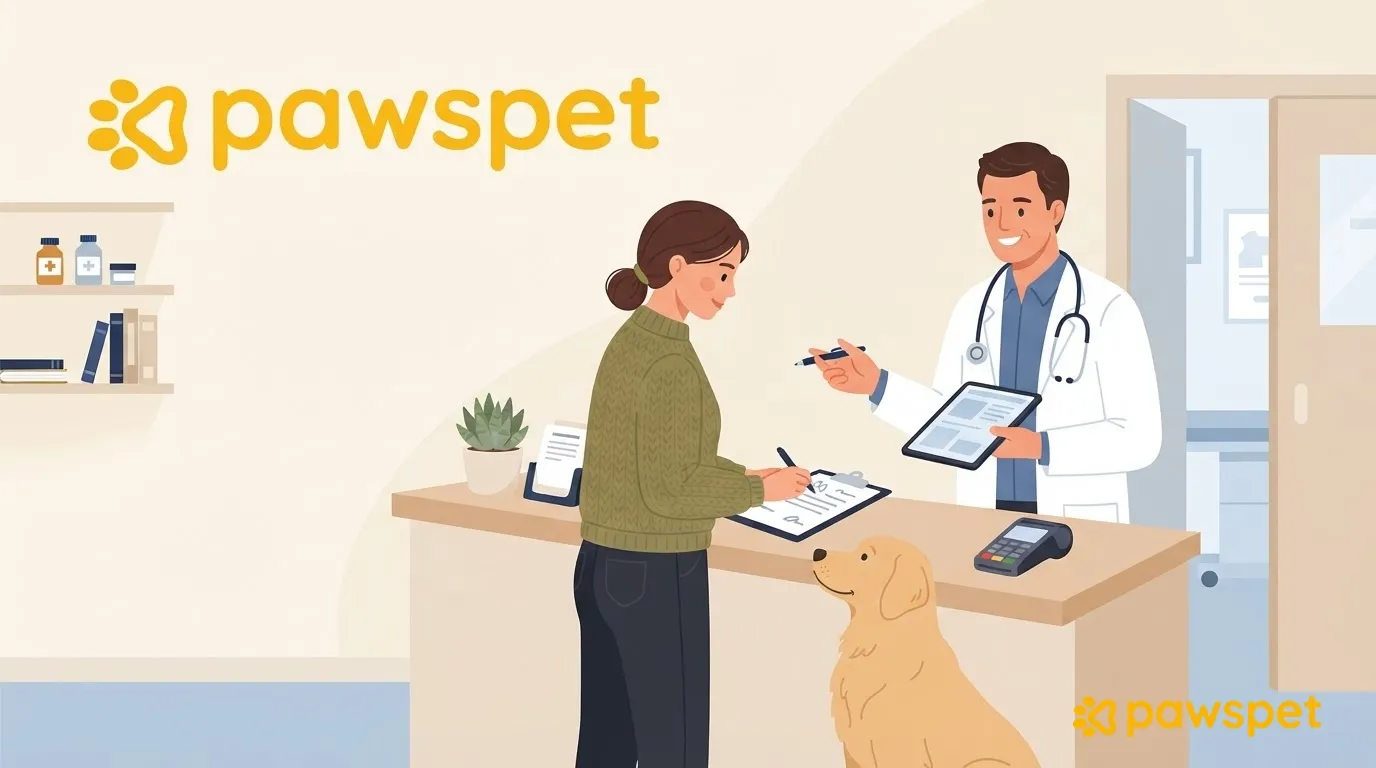
As soon as they arrive at the clinic, the authorized person should:
- say they have written authorization and show it;
- call you before any decision that exceeds the spending limit or is reserved for you and, if you do not answer, try the backup contact;
- write down what the vet says and ask for written instructions for when your pet goes home;
- keep the receipts;
- update you as soon as possible.
Clinical decisions are the vet's responsibility: the authorized person brings your pet in, listens, relays information, and authorizes care only within the limits you set in writing.
Checklist to complete this week
There are only a few steps, which you can take care of well before you leave:
- Call the clinic and write down the answers.
- Write and sign the authorization, or complete the clinic's form.
- Give it to the authorized person and to the clinic if it accepts it in advance, along with copies of the documents.
- Agree on a spending limit and payment method.
- Update your pet's health information and summary.
Frequently asked questions
Can a professional pet sitter take my pet to the vet?
Only if this is specified in writing in your agreement with the professional and the clinic accepts it. First ask the professional whether this is included in the service they provide and under what conditions, then give the clinic their name.