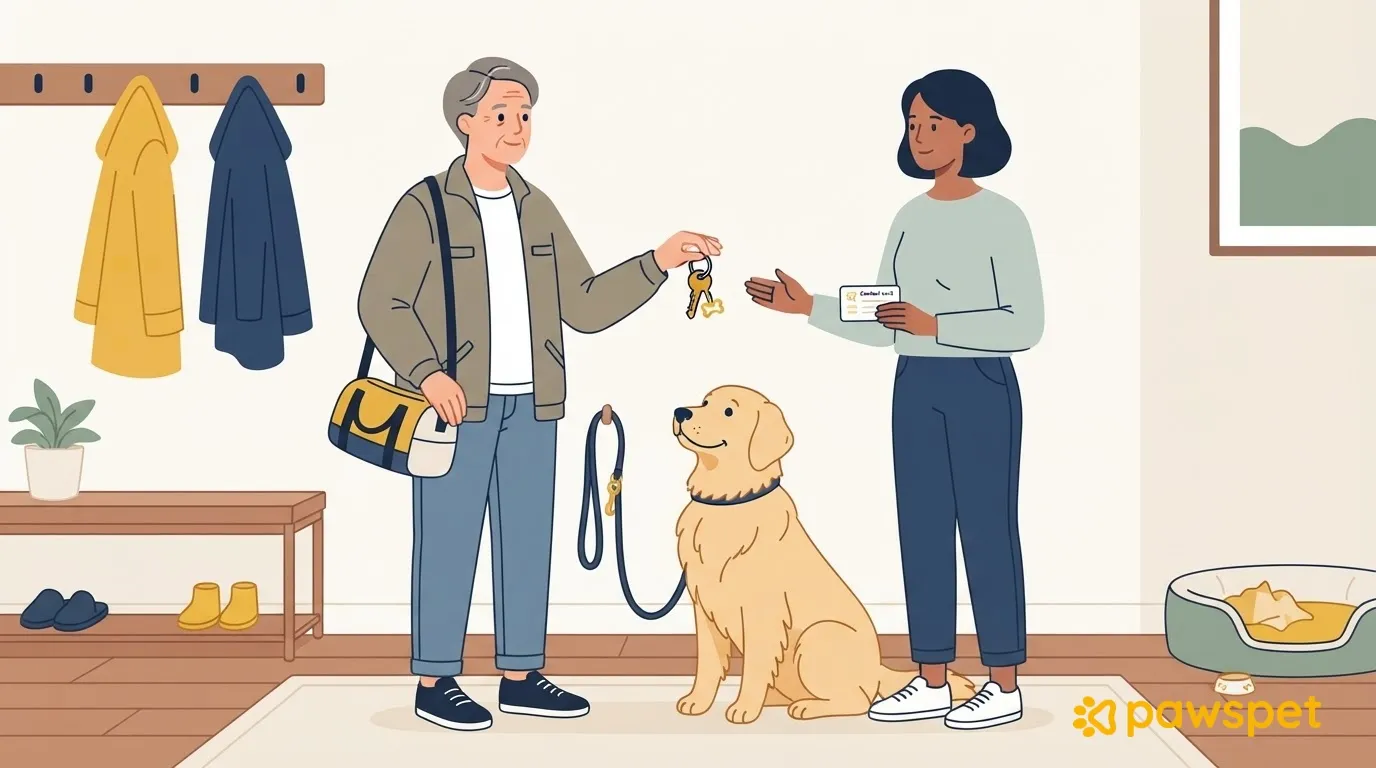
A verbal promise is not enough. If a serious illness, loss of independence, or death meant you could no longer care for your pet, your family or those close to you would have to decide quickly, without knowing what you would have wanted. To avoid this, you need four things: a trusted person who has explicitly agreed, a backup, a document listing routines, health information, and your wishes that your family knows where to find, and some thought about how the costs will be covered.
A will and other legally binding arrangements should be discussed with a notary or lawyer. Here, we focus on the practical side—the part you can organize right away, on your own.
This is not the same as leaving them with someone for a few days
Someone who looks after your pet while you travel or during a temporary emergency does so for a limited time, following your instructions and knowing you will return. This is different: the person you choose will take your pet in for the rest of their life, which changes the criteria. No one will be perfect in every respect, but it is worth considering:
- space and lifestyle: a home and daily routine suited to your pet's habits;
- the person's age and health, so they can care for your pet for years;
- other pets or children in the home, and how they might get along with your pet;
- whether they can afford to support your pet;
- whether their personality is a good match for your pet.
How to choose someone and ask them
Start with someone who already knows your pet and whom your pet is happy to approach: a friend who has looked after them before, or a relative who sees them often. Then match the person to your pet's actual needs. An older cat who needs daily treatment requires someone who is often at home and willing to provide regular care; a young, very active dog needs someone with the time and energy to exercise with them.
Ask in person and without rushing. Explain what it would really involve: not a few weeks, but years. Make it clear from the start that they can say no without feeling guilty: a yes given out of politeness may not last. Talk about routines and expenses, without quoting figures, and try asking simple questions: “Would you feel comfortable taking them in?”, “What would change in your daily life?”, “What if your life changed—for example, if you moved or started a new job?”
Because life can change for the person who said yes, too, choose a backup and ask them the same questions, with the same freedom to say no. Having an alternative means you do not have to start over when there is less time to find someone.
What to put in writing
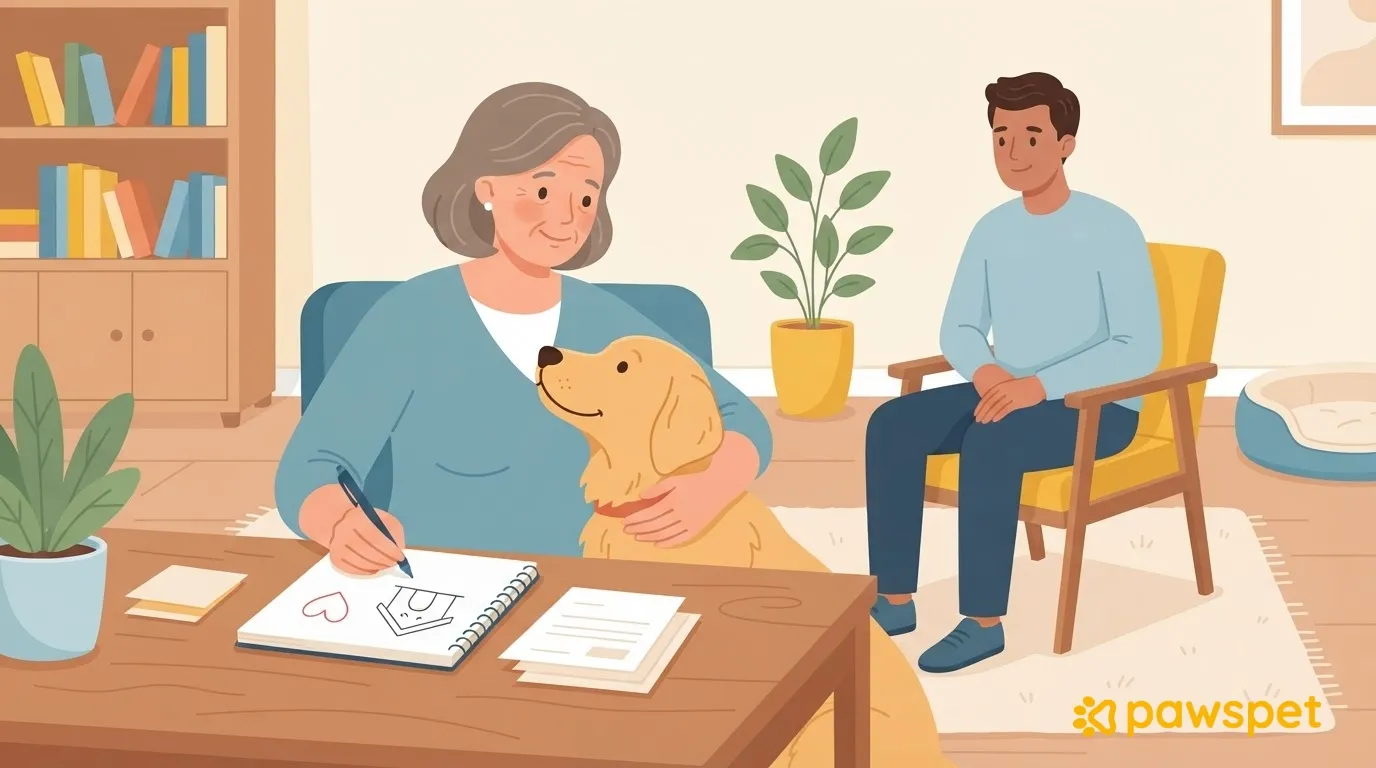
A clear sheet of paper is worth more than lots of verbal recommendations. Write down:
- who should take your pet in and who the backup is, with their contact details;
- routines and personality: meal times, walks, fears, and what helps them feel calm;
- health: current treatments, allergies, and the name and contact details of their regular veterinarian;
- where to find documents, their health booklet, and any insurance policy;
- practical wishes, such as keeping two pets who live as a pair together;
- who to notify: family, the veterinarian, and the person who usually cares for your pet.
Give a copy to the person you have chosen and let your family know where to find the original: a document no one can find helps no one. These are practical instructions; to make them legally binding, you need advice from a professional.
So the person who will take your pet in can learn about their health history now, you can add them as a collaborator on your pet's profile in the PawsPet app, with permission to view only the Health section. They can check vaccinations, treatments, allergies, and history without changing anything: this is for their information, not a substitute for an agreement with them. Three things to know: the person must already have their own PawsPet account; documents and passports uploaded to the profile are not visible to collaborators, so keep paper copies too; access remains active until you remove them.
How to plan for expenses
Taking in a pet for years comes with a cost, and anyone who says yes must be able to manage it comfortably. List the expenses to consider: food, routine veterinary care, any ongoing treatments, and insurance, if you already have it. Then discuss them openly with your chosen person and the backup: you do not need to give figures, just make sure the commitment is manageable. If you are thinking of setting aside money or assets for the person you have chosen, any arrangement must be drawn up with a notary or lawyer, not simply noted on the sheet.
If no one can take your pet in
It may turn out that no one you know is able to take your pet in. If so, find out well in advance from local animal welfare organizations or shelters how fostering works: they may not be able to take your pet, but you will know what to ask and whom to contact. Note down whom to contact in the document and keep the details up to date. Deciding in advance is better than leaving the choice to unprepared family members, who would have to find a solution quickly without knowing your pet's routines.
Keep the decision up to date
A plan written once and forgotten can quickly become outdated. Review it when your health, the chosen person's life, or your pet's needs change as they age, and update the sheet, replacing any copies you have already handed out. If you gave someone access to your pet's profile on PawsPet and they are no longer involved, remember to remove them from the “Collaborators” list. Make sure your pet sees the person you have chosen from time to time, too: go for a walk together or spend an afternoon at their home. The better they know each other, the easier a future transition will be.
To get started, just take one step: choose someone this week and set up a conversation.