If you suddenly end up in the hospital or have an accident away from home, no one may know there’s a pet waiting for you at home. You can prepare for this with four things: a trusted person who can access your home, a backup, a notice that travels with you, and instructions for the first 24 hours. You can get it all ready in an afternoon with one conversation and a few items.
Who to choose as your trusted person
Think of a specific person and check that they meet these criteria:
- They live or work close enough to get there in a reasonable amount of time: a colleague ten minutes away is more useful than a dear friend an hour’s drive away.
- They’re reachable in the evenings and on weekends, too. Someone who only answers during office hours might not be there when you need them.
- Your pet knows them and lets them approach. A wary dog won’t let someone they’ve never met put a leash on them.
- They can handle that species and size. A large dog that pulls on the leash takes strength and practice to manage; a cat that hides under the bed takes patience.
- They don’t have any limitations that would prevent them, such as a cat hair allergy or a schedule that conflicts with the dog’s walks.
Choose a backup, too: someone different who doesn’t share the same potential emergencies as you. For example, don’t choose a partner you travel with: if something happens to both of you, neither of you can take care of the pet.
What to agree on in one conversation
Ask clearly and make it easy for them to say no: people are more likely to accept a clear, limited task than an open-ended commitment. Then agree on these five points:
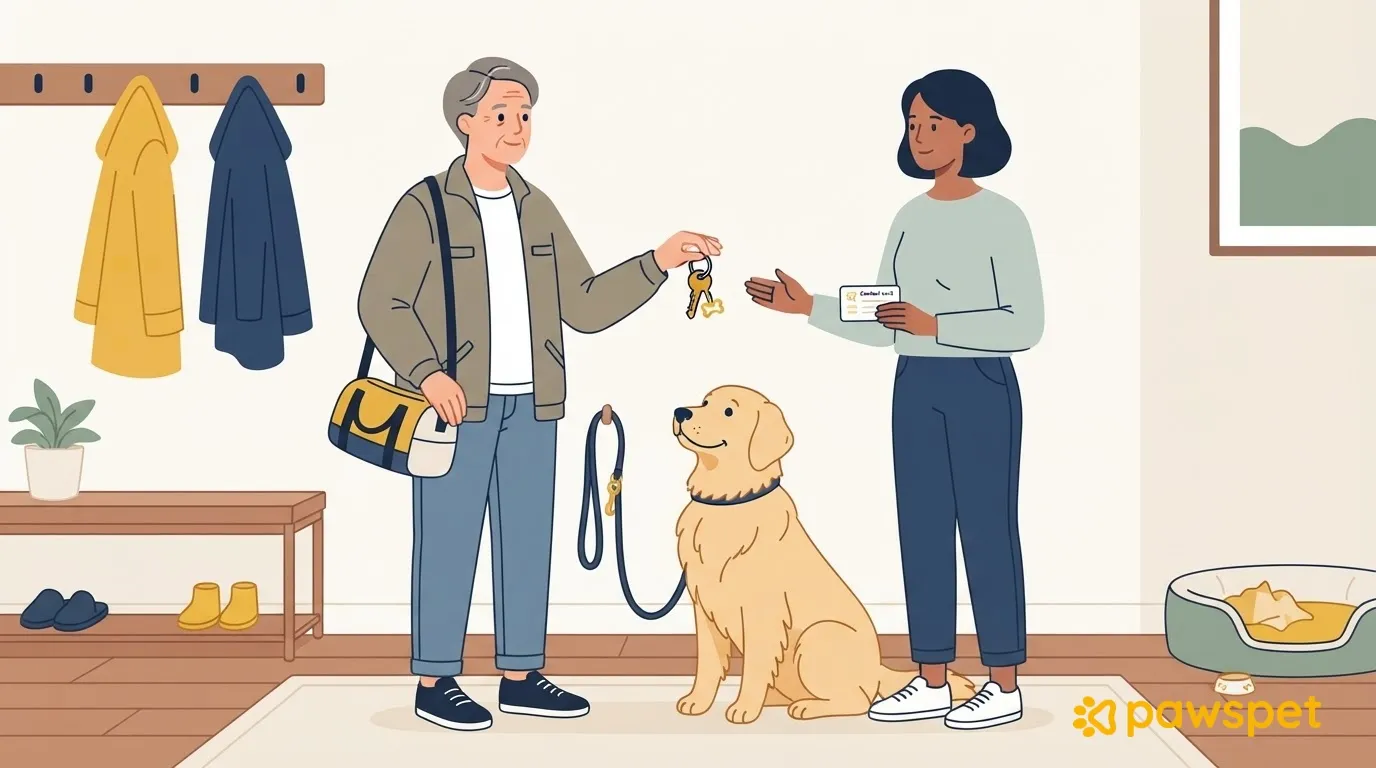
- Keys. Give the person (and, if possible, the backup) a copy, or leave one in an agreed-upon place—never hidden outside the door.
- Signal. Decide what should trigger them to step in, even when you can’t call. If you live alone, it could be an agreed daily message: if it doesn’t arrive, the person calls you and, if you don’t answer, goes to your home. You decide the time and how long to wait.
- Duration. How many days they can take care of your pet, and who takes over after that.
- Expenses. How they’ll pay upfront for food and litter and get reimbursed, and how much they can spend at the vet without asking you.
- Who to notify. For example, family members and your veterinarian.
Finally, do a trial run: have them visit and enter on their own, find the food, carrier, and leash, and prepare a meal. You’ll find out what’s missing before you need it.
How to let people know there’s a pet home alone
The plan only works if someone knows when to put it into action. Use three tools: two travel with you, and one stays at home.
A card in your wallet, next to your ID. For example:
Don’t write your full address alongside the fact that your home is empty: if you lose your wallet, anyone who finds it could get that information. The person with the keys already knows your address.
Your phone. If it has a section for emergency contacts or information, add the same note there.
A sheet of paper inside your home, near the door, for anyone who comes in: names and numbers to call.
The card helps, but there’s no guarantee anyone will read it, which is why the agreed signal matters, too.
The first 24 hours: what the person who steps in should do
A simple sequence for someone entering your home:
- Go in and check that your pet is okay.
- Give them fresh water and a meal, following the instructions.
- Take the dog outside or clean the litter box.
- If there are medications, give them only as written instructions from the veterinarian say—don’t improvise.
- If they notice signs of illness, contact the veterinarian.
- Notify the backup and, as soon as possible, you.
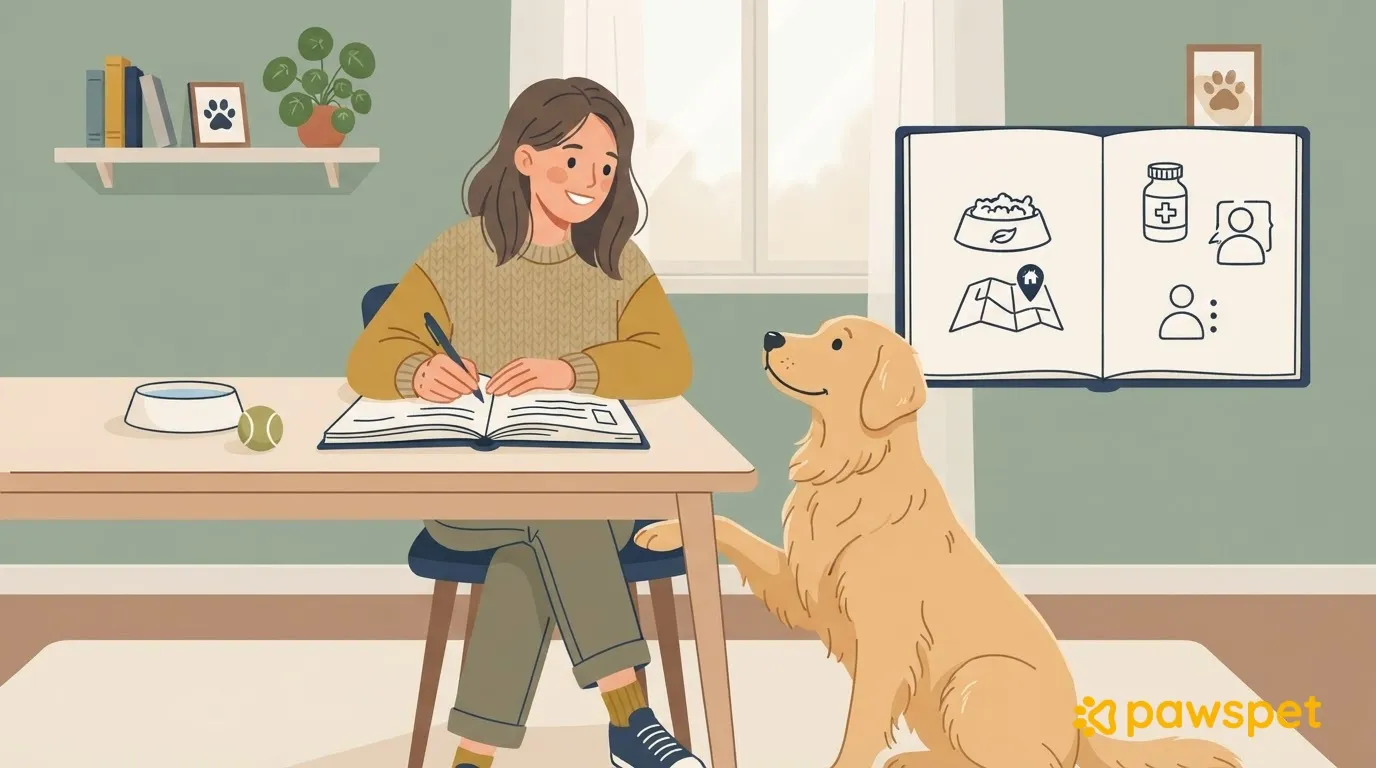
Everything works better if they can find the pet’s routine and useful contacts written down when they come in.
To let your trusted person know about treatments and allergies without having to look for paperwork, you can add them as a pet collaborator in the PawsPet app. From the pet’s details, tap ⋮ » «Collaborators» » «Add collaborator» and grant only «View» under «Health». Three things to know: the person must already have a PawsPet account; documents and passports aren’t visible to collaborators, so keep a separate copy; access stays active until you remove them. If they don’t have an account, you can use a read-only link instead (⋮ » «Sharing»), which also shows treatments and allergies. However, anyone with the link can also see the microchip and location, if those details have been entered.
Keep the plan up to date
Review everything when you change your phone number, home, or treatment, or when you get a new pet. Check in with your trusted person from time to time to make sure they’re still available. If you choose someone else, get the keys back and, if you added the previous person on PawsPet, remove them as a collaborator.
To get started today:
- Choose a trusted person and a backup, and ask if they’re available.
- Give them the keys.
- Write the card.
- Schedule a trial visit.
What if you don’t have anyone nearby?
Suggest a mutual arrangement with a neighbor: you each keep the other’s keys and learn the other person’s pet’s habits. Alternatively, agree in writing on availability with a professional, such as a pet sitter, and check beforehand that they’re available in the evenings and on weekends, too: this depends on the services available in your area.