How often should you stop with your dog? There’s no number of hours that works for every dog. Start with your dog’s habits, mark several possible stopping points before you set off, and repeat the same safe routine at every stop. Never leave your dog alone in the car. This matters especially on the highway, where you can’t just stop wherever you like.
How many stops do you need? Start with your dog’s habits
In the days before your trip, notice how often your dog usually goes outside and write down the typical time between outings. Use that as your starting point. On a trip, plan to stop a little earlier rather than later, and adjust your plan for:
- Age: Puppies and older dogs usually need more breaks.
- Health: If your dog has a specific condition, ask your veterinarian what to do.
- Mealtimes and scheduled medication: A stop can coincide with those times.
- Heat: On hot days, plan stops in the shade.
- Travel tolerance: If your dog gets restless or whines, stop sooner.
Then divide the route into stages and mark several stopping options for each one, even if they’re close together. If your dog is restless, stop at the first; otherwise, continue to the next, rather than looking for a place at the last minute.
Where to stop: practical guidelines
Choose rest areas or service areas with a green space away from traffic lanes, or quiet parking lots; in summer, look for some shade too. When you arrive, park in the quietest area, away from entrances, fuel pumps, and vehicle maneuvers. Don’t stop on the roadside on a whim: it’s not a suitable place to let your dog out.
Read the signs and, if you want to take your dog into a café or shop, ask first whether dogs are allowed. Don’t assume they are.
A safe routine for getting your dog out of the car
Repeat these steps at every stop, in the same order, even when you’re in a hurry or your dog seems calm:
- Park away from moving traffic.
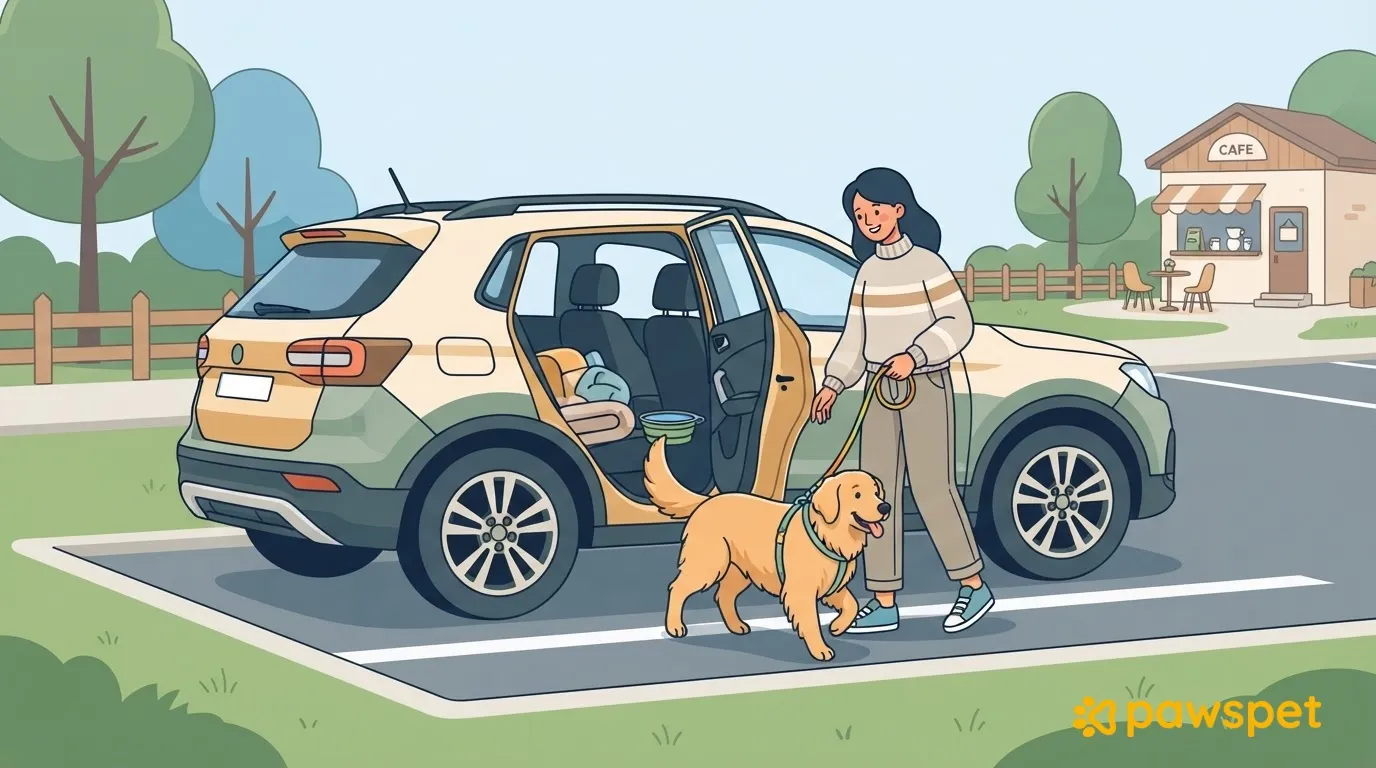
- While your dog is still secured in place, attach the leash to the harness before opening the car door or carrier.
- Open the door on the side away from traffic and let your dog out from there.
- Keep the leash short around cars that are maneuvering.
- Lock the car before walking away.
- To get back in, repeat the steps in reverse: keep the leash short until you reach the car, get in on the protected side, and unclip the leash only once your dog is back in place.
Attach the leash before opening the door because, as soon as it opens, even a calm dog may dart out among moving vehicles. If your dog does get away, an ID tag with your phone number and up-to-date contact details linked to the microchip can help.
What to do during a break: bathroom needs, water, exercise, and timing
Take a short walk on leash and bring bags to pick up after your dog. Offer water from home in a bowl, give your dog a few minutes to stretch their legs, and allow a moment to settle before setting off again. If your dog gets carsick, talk to your veterinarian before the trip.
For meals and medication, follow your dog’s usual routine and your veterinarian’s instructions: a stop is an opportunity to stick to them. To time a break around an already scheduled dose, you can set up a diet or medication as “Recurring” in the PawsPet app (the pet’s “Health” tab), with the administration time and “Set reminder.” If notifications are enabled, you’ll receive a reminder at the selected time. It’s an extra aid, but it doesn’t replace your attention.
Your breaks, without leaving your dog alone in the car
A parked car is not a place to leave your dog, even for a short time. In summer, heat is a serious risk, with specific precautions to know before setting off; but stress, escape attempts, and theft are concerns in other seasons too.
If there are two of you, take turns: one person stays outside with the dog while the other takes a break. If you’re traveling alone, favor stops where your dog can stay with you outdoors, and plan your own breaks at the most suitable areas you chose in advance. If the area you picked isn’t suitable, continue to the next one already marked on your route.
At night and in emergencies
At night, choose well-lit areas and use reflective or light-up accessories on your dog’s leash or collar so they remain visible. Keep everything you need for breaks in the passenger compartment, not under the luggage: water, a bowl, a spare leash, and bags.
In a long traffic jam or if the car breaks down, follow road safety instructions for people and let your dog out only if necessary, always on leash and away from the roadway.
Before setting off, mark possible stops along your route and pack a bag for breaks that you can keep within easy reach.