If you're traveling with your dog in summer, set off during the coolest hours and cool the car before letting your dog in. Check that cool air reaches the spot where your dog will travel: the back seat, cargo area, or carrier. Stop in the shade and offer water, and call a veterinarian right away if you notice signs of overheating. Never leave your dog alone in a parked car, not even for a few minutes and not even with the windows open.
Your dog's spot: cool air needs to reach it
Think of the car as a microclimate to check at every point: the cool air you feel in the front may not reach the place where your dog will be. Turn on the air conditioning a few minutes before setting off, and only let your dog in once the car is cool, while it is parked in the shade.
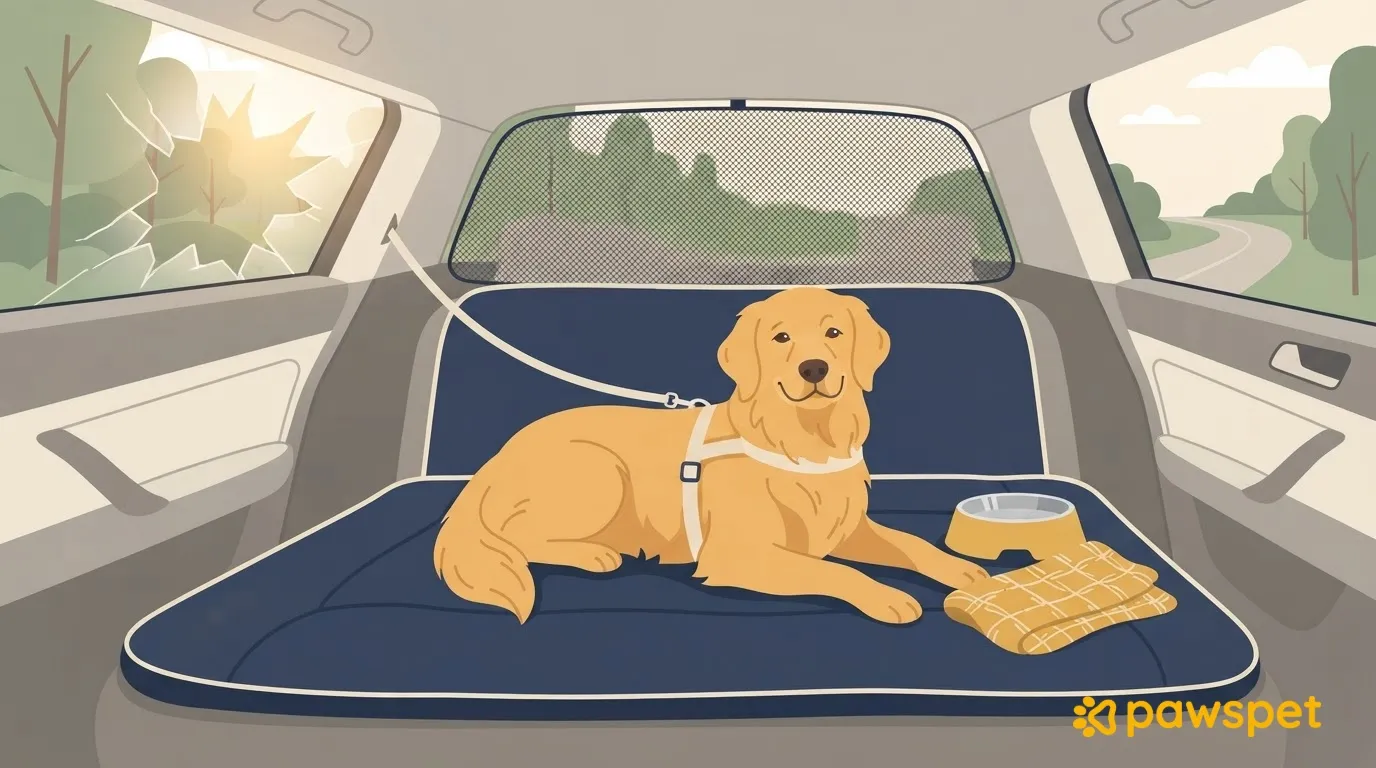
Air circulates differently in every car, so test it without your dog and check the exact spot where your dog will travel with your hand or a cabin thermometer:
- Back seat: Feel the air at your dog's height, both sitting and lying down.
- Cargo area: Test it with the luggage already loaded, since bags can block airflow.
- Carrier or crate: Put it where your dog will travel and check the air at the openings, which must remain clear and never be covered by blankets or luggage.
Sunshades on the rear windows are fine as long as they don't reduce the driver's visibility. Plastic, metal, and buckles left in the sun can get hot: touch them with the back of your hand before letting your dog in.
Timing, route, and a veterinarian to contact
Set off during the coolest hours, usually early in the morning or late in the evening, and avoid busy traffic periods when you can, as you could end up stopped in the sun. Mark shaded stops with room for your dog to get out.
Some dogs tolerate heat less well: puppies, older dogs, short-nosed dogs, overweight dogs, and dogs with heart or breathing problems. If your dog is in one of these groups, talk to your veterinarian before planning a long trip.
Save your veterinarian's number. Before you leave, also look for a veterinarian or emergency veterinary clinic in the area you're visiting and call to check opening hours and availability: if your dog gets sick far from home, that's not the time to search for contact details. To start looking for veterinarians near your destination, go to the «Services» section in PawsPet, choose «Veterinarian» as the service type in the filters, and set the «Search area» to your destination address: you'll see professionals listed in the app, but their availability isn't guaranteed.
During the drive: steady airflow and keep an eye on your dog
Keep the air conditioning or ventilation running consistently. If you move luggage or adjust the vents, repeat the hand test at your dog's spot. Cooling mats, vests, and other cooling accessories are no substitute for shade, cool air, and water.
Keep your dog safely restrained and with their head inside the car: with the window open, they could be hit in the face by objects or debris, and they may try to get out.
Offer water in a bowl at every stop, even a short one. If you have a passenger, ask them to keep an eye on your dog and let you know if they notice anything unusual. If you're driving alone, check on your dog in the mirror only when it's safe to do so. If you can't see them from your seat, plan more frequent stops.
If you're stuck in traffic in the sun, keep the cooling on and pull off at the first suitable place for a break in the shade.
Stops and arrival: never leave your dog alone in a parked car
A dog left in a car is in danger, even for a short time: a parked car heats up quickly, even in the shade and with the windows cracked. This applies even if you're just stopping for a coffee or a quick errand.
Plan breaks so you can take your dog with you, or leave them outside the car in the shade with someone accompanying them; if you're traveling alone, choose stops where you can stay with them. Look for grassy shaded areas and check the asphalt with the back of your hand: if it's too hot for you, it's too hot for your dog's paws too. When you set off again, cool the car down before letting your dog back in.
When you arrive, take your dog out first and bring them somewhere cool, then unload the luggage.
Signs of overheating: what to do right away
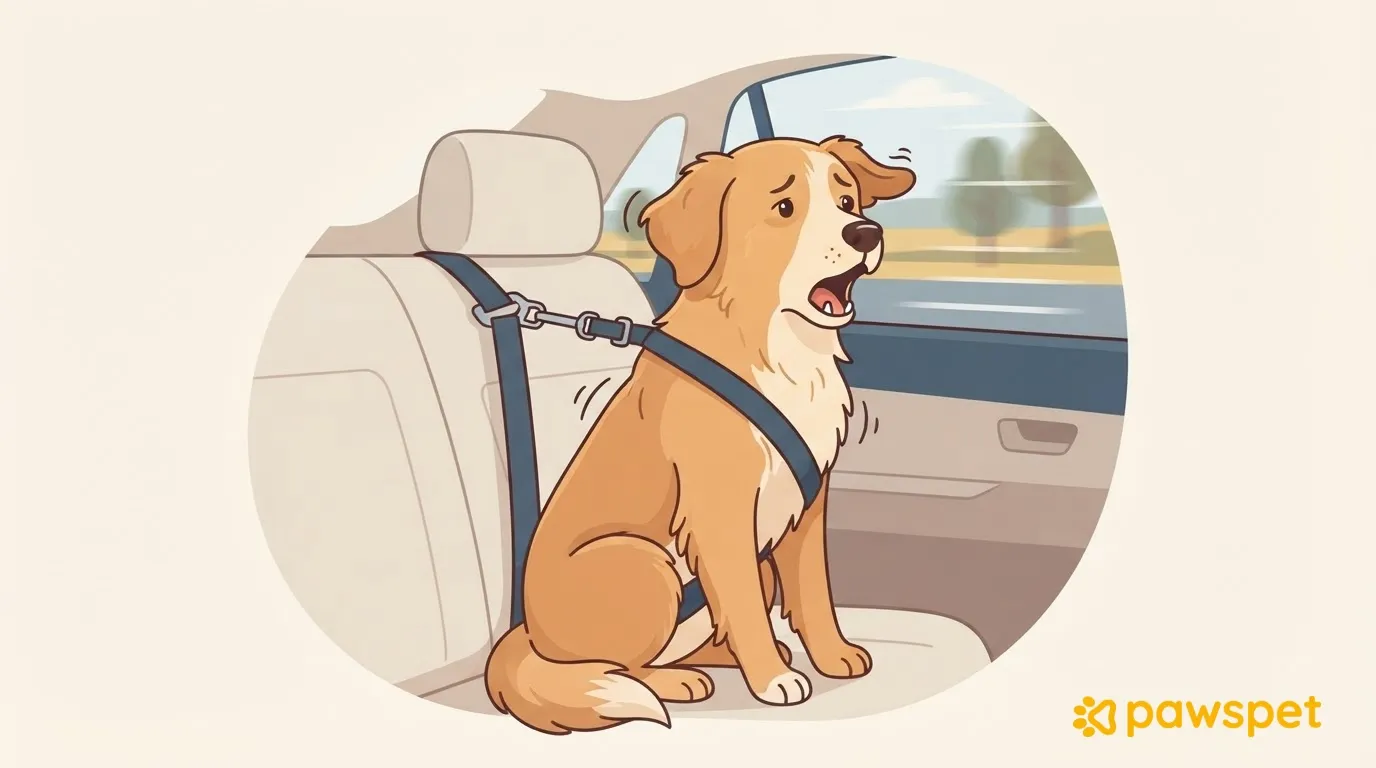
Heatstroke is a veterinary emergency. Even one of these signs needs immediate attention, during the trip or after arrival: panting that doesn't settle, excessive drooling, agitation or weakness, difficulty standing, vomiting, or an unusual tongue or gum color.
- Stop as soon as it is safe to do so.
- Take your dog to the shade or somewhere cool.
- If they are alert, offer water without forcing them to drink.
- Wet them with cool, not cold, water.
- Call your veterinarian or an emergency veterinary clinic right away, even if your dog seems to be recovering, and follow their instructions.
Checklist before you set off
- Enough water and a bowl within easy reach.
- Leash in the passenger compartment, not under the luggage.
- Sunshades on the rear windows without reducing the driver's visibility.
- Airflow tested at the spot where your dog will travel.
- Shaded stops marked along the route.
- Your veterinarian's number and the number of a veterinary clinic near your destination saved in your phone.
- Departure planned for the coolest hours.
Today: test the airflow without your dog and mark shaded stops along your route.