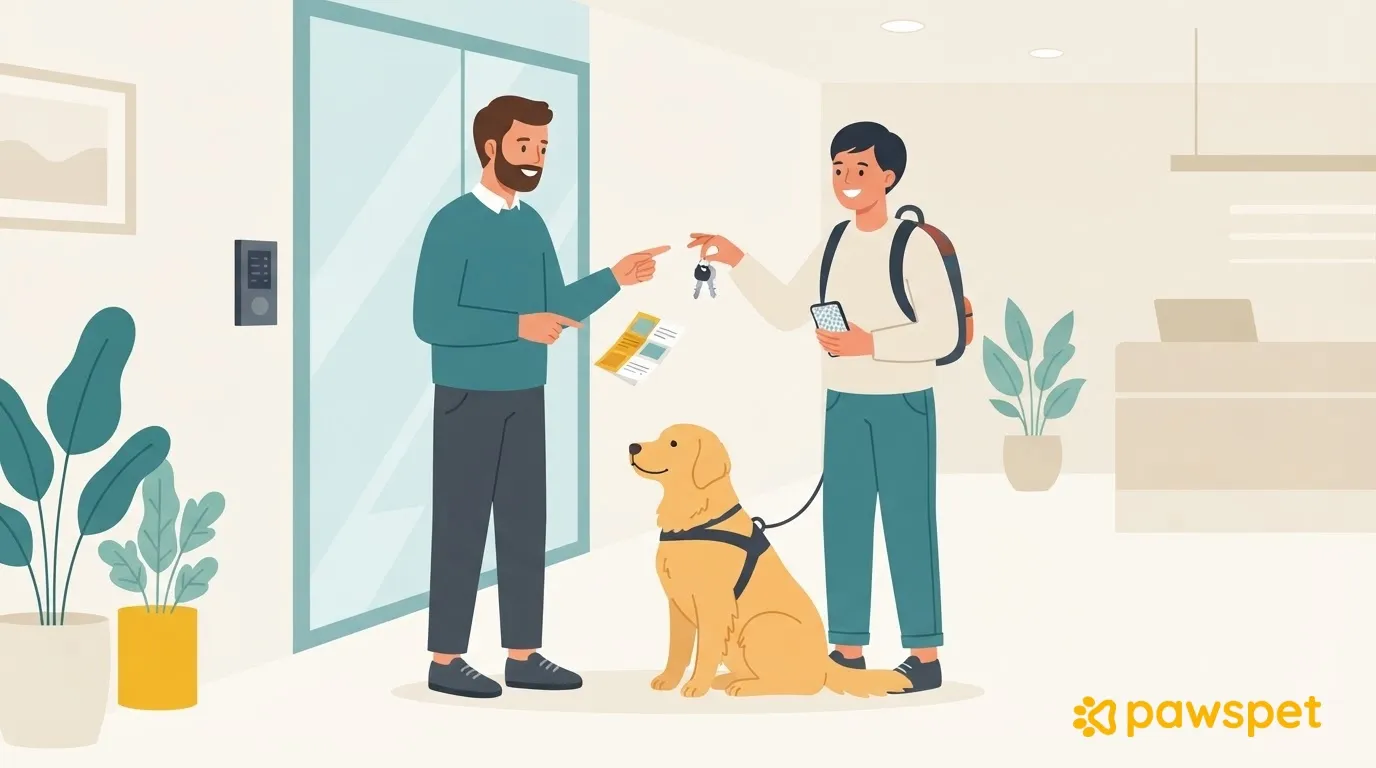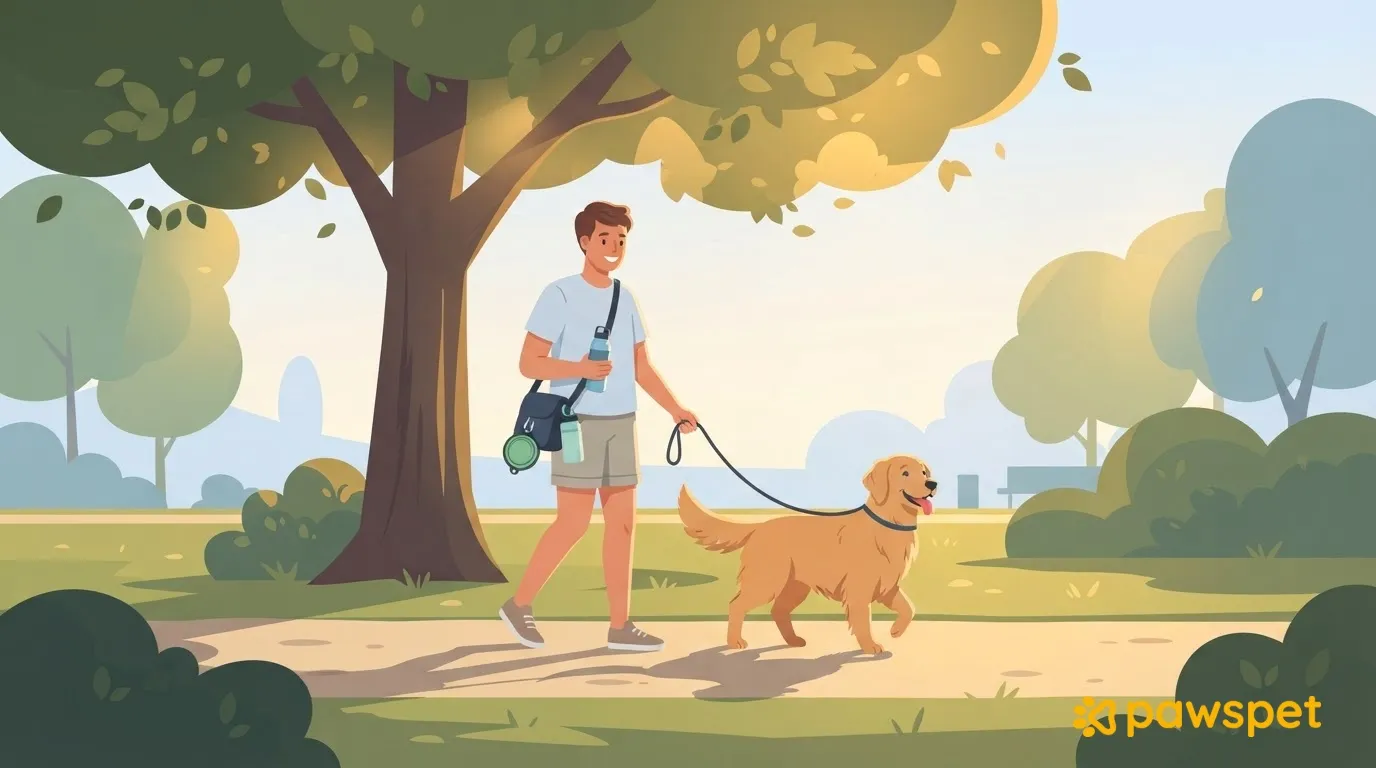
Schedules and walk durations set during cooler months can easily stay the same when the weather turns hot, and the person walking your dog may not know when to stop. Before hot days arrive, it’s worth agreeing in writing on four things with the person caring for your dog (dog walker, pet sitter or family member): when to go out, how long and how, what to bring, and when to stop. They should also know what makes your dog more sensitive to heat.
Agree on walking times and type of outing
The first step is to move walks to the coolest times of day. Ask the person walking your dog whether their schedule allows it: don’t assume it does, and if changing the time isn’t possible, work together to find an alternative rather than leaving the schedule as it is.
Then set a maximum duration for hot days and change the type of outing: instead of one long walk, take shorter, calmer outings where your dog can sniff and walk slowly. Here are some suggested messages to copy and adapt:
- Starting in June, the midday outing will be short: just a bathroom break, in the shade.
- On hot days, the long walk will be replaced by two short outings, one early and one in the evening.
- If a cooler time isn’t possible, the outing will be just for bathroom needs, and we’ll talk about it.
If the person walking your dog takes several dogs out together, agree on a slower pace, a shorter duration and no intense play for your dog.
What to bring and what to check
A short list to share with whoever walks your dog:
- Fresh water, with a bowl or bottle, to offer at every stop.
- Shady routes and breaks in the shade.
- Check the ground before walking on it: place the back of your hand on the pavement for a few seconds. If it feels uncomfortable to your hand, it’s too hot for your dog’s paw pads, so change route.
- No running or ball throwing during hot hours.
- Never leave your dog in a car, even for a quick stop, if the person walking them is travelling by car.
Information about your dog the walker needs to know
Some dogs may be more affected by heat, including puppies, older dogs, overweight dogs, dogs with short muzzles, dogs with heart or breathing problems, or dogs receiving treatment. Ask your veterinarian which precautions apply to your dog and who to call when the clinic is closed, then put all the details in writing in your agreement.
The person walking your dog needs:
- age and current weight;
- known conditions and current treatments;
- guidance received from your veterinarian;
- the number for your regular veterinarian and whom to call when the clinic is closed;
- what your dog’s usual behavior is like, so they can spot anything unusual.
To avoid rewriting your dog’s age, weight and conditions each time, in PawsPet you can enable a read-only link from your dog’s profile (⋮ menu » “Sharing”). It can also be opened by someone who doesn’t have the app, and shows basic details such as date of birth and weight (recorded under “Measurements”), plus a health summary with diets and treatments, allergies, vaccines, illnesses and injuries. Alternatively, add the person walking your dog from the ⋮ menu » “Collaborators” and give them view-only access to the “Health” area, if they have a PawsPet account.
The link remains active until you deactivate it. If you turn it back on, the code is the same as before, so an already-shared link will work again. Anyone who has the link can open it, so deactivate it when the arrangement ends.
Signs that mean it’s time to stop and what to do
Write down in your agreement when the outing should end. General signs to stop include:
- panting that doesn’t settle after a break;
- weakness or staggering;
- refusing to continue;
- vomiting;
- behavior that’s unusual for that dog.
The plan to agree on is simple: take the dog into the shade right away, offer water without forcing them to drink, call the veterinarian and follow their instructions, then let you know. It’s not the walker’s job to determine whether the dog is suffering from heatstroke. Their job is to stop and call, without waiting to see if it passes.
The agreement message
Summarize everything in a written message. Here’s a template to adapt:
Read it over together with the person walking your dog, and update it whenever their treatments, age or habits change. To get started, send it this week and take a walk together at the new time: that way, you can check whether the route, shade and breaks really work.