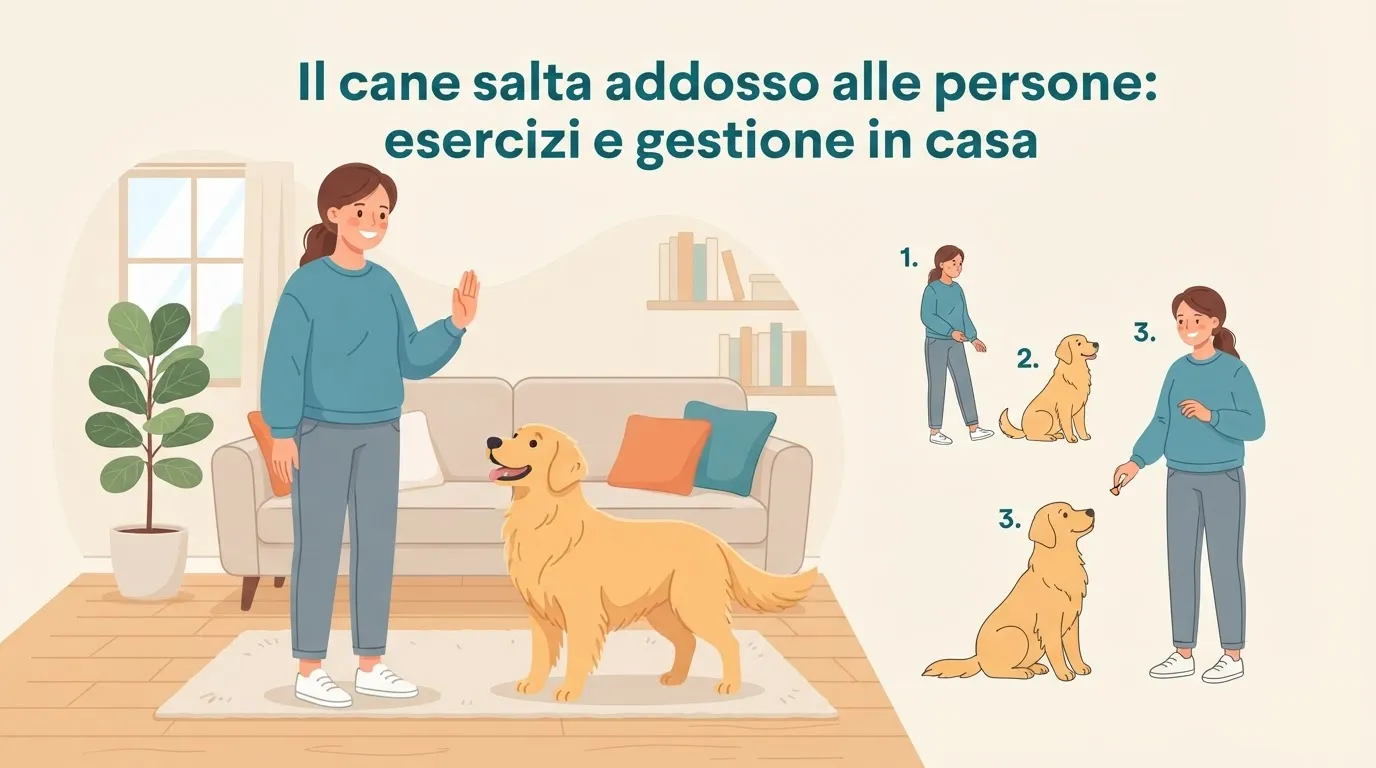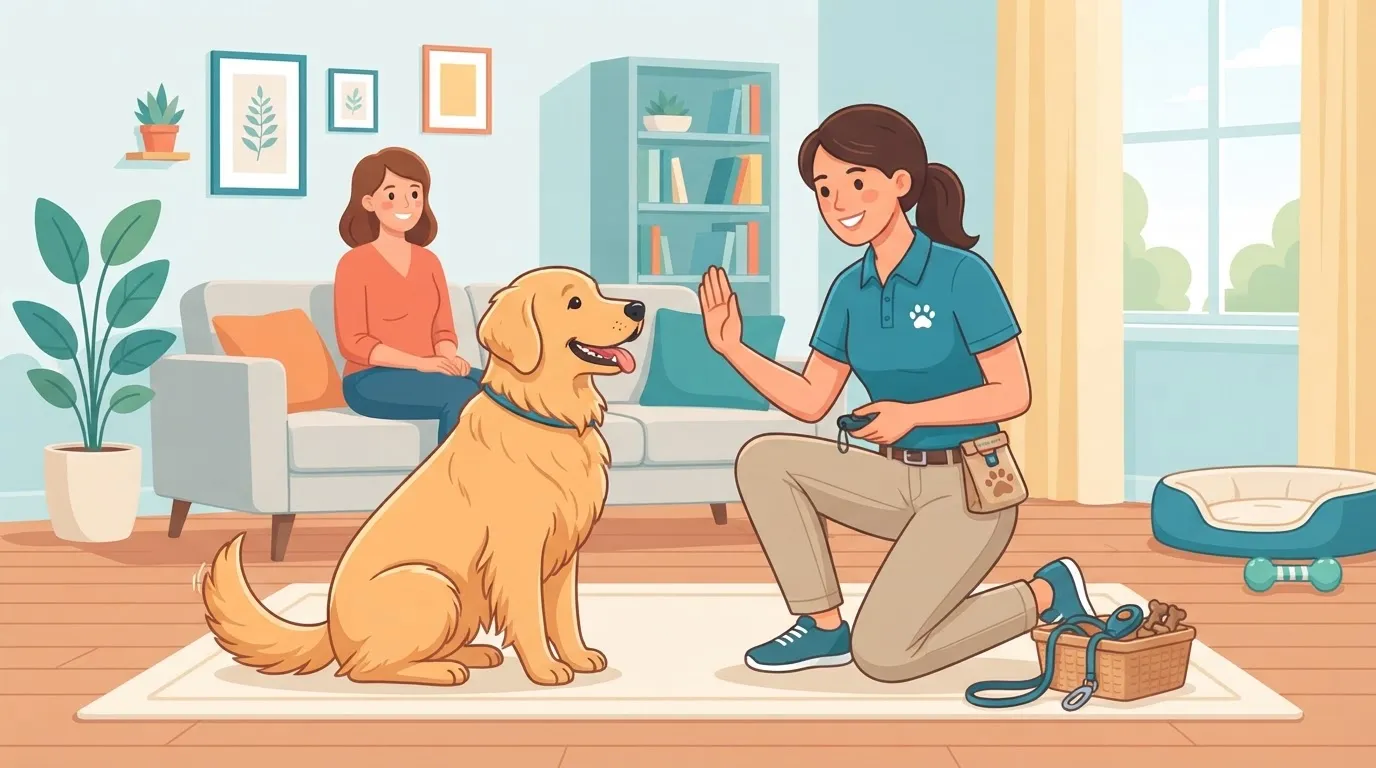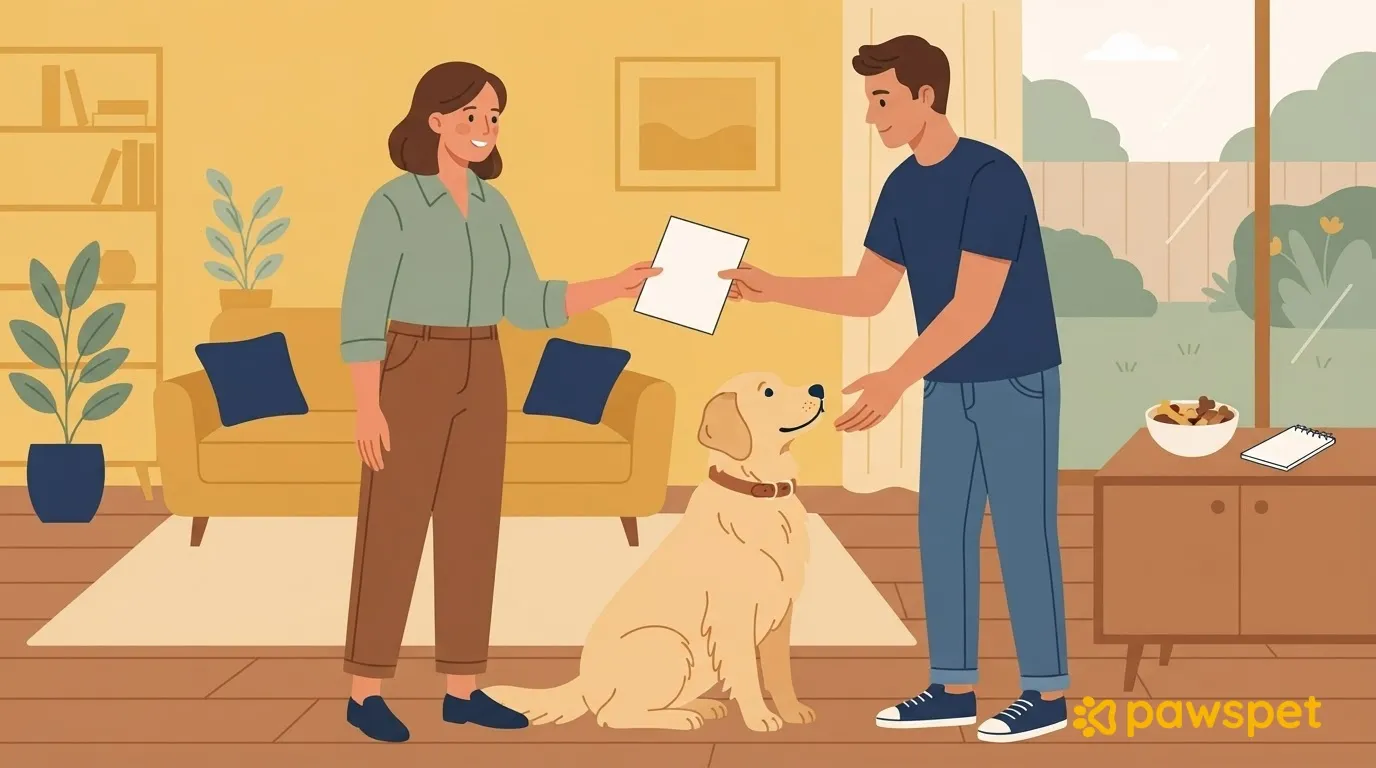
For your dog to receive the same cues from dog sitters, dog walkers, and family members, you need three things on one sheet: the exact words and gestures for each cue, what to reward and how, and the rules for home and walks. Then spend a few minutes practicing, with the person who will care for your dog using the cues in front of you.
Why the words need to be the same
A dog used to hearing “here” may not understand that “come” means the same thing. If “down” means “get off the couch” to you and “lie down” to the dog sitter, the same word has two different meanings, and your dog won’t know what to do. Tone and gestures are also part of a cue and should remain consistent. And if the couch is off-limits with you but allowed with someone else, your dog may not understand which rule applies.
The cue chart
Turn the cues you have taught your dog into instructions another person can follow: one word per cue, the gesture, what your dog does, and, if it lasts over time, the release cue. The rows are examples: replace them with your dog’s cues.
| Cue (exact word) | Gesture | What the dog does | Notes for the person using it |
|---|---|---|---|
| “Here” (recall) | Hand moves toward your chest | Comes back and stops near you | Say it once in a cheerful tone; reward the arrival |
| “Sit” | Open hand moves upward | Sits down | Reward once the dog is sitting |
| “Stay” | Open palm facing the dog | Stays still until released | Ask for a short time; always end with “free” |
| “Free” (release cue) | Arms open | Can move and leave the position | Also use it to end waiting at the door |
| “Leave it” | Closed hand in front of the nose | Moves away from food or objects on the ground without taking them | Reward when the dog turns toward you |
| “Easy” | Palm facing down | Slows down and keeps the leash loose | Never jerk the leash; reward a loose leash |
| Do not use | – | – | Cues the dog sitter must not use: for example, an outdoor recall cue if it is not reliable |
Rewards and food: what is allowed
At the top of the sheet, write down allergies and intolerances, including foods to avoid. In PawsPet, if you turn on “Sharing,” allergies and intolerances recorded in the “Health” profile appear with their severity in the link: a read-only page with the health summary, visible to anyone who has the link and deactivatable whenever you want. Then write:
- Type of reward: only those you leave; praise or play, too, if your dog finds them rewarding.
- How many: write a maximum number per outing, chosen by you and deducted from the amount agreed on with your veterinarian.
- Where to keep them: in a pocket or closed treat pouch, out of your dog’s reach.
- When: after a cue is followed, never to make your dog stop pestering.
- Not allowed: human food, leftovers, treats offered by passersby.
House and walking rules
Write down what is and is not allowed:
- Couch and bed: yes or no, and which cue means your dog should get down.
- Front door: wait before going out, if you have taught this, until hearing “free.”
- Greetings: who can greet your dog and how (paws on the ground, no jumping up); greetings with other dogs only if agreed.
- Leash: where your dog walks and what to do if they pull, for example, stop and start again when the leash is loose.
- Toys: which are allowed and which are not.
- Unwanted behaviors: ignore them, or calmly interrupt and ask for an alternative behavior your dog knows, then reward it.
Never do: use physical punishment, jerk the leash, shout, use tools that cause pain or fear, or introduce new cues without agreement.
Practicing together and a session with a trainer
Before the first time you leave your dog in someone’s care, arrange a short practice session with your dog in the places where you will use the cues:
- Demonstrate each cue in the chart, with its word and gesture.
- Have the dog sitter repeat each cue and correct differences in tone or gesture.
- Agree on how to flag questions, for example, with a message, rather than improvising.
If your dog is already following a training plan, if several people take turns caring for them, or if some rules are difficult to maintain, consider a session with the dog trainer and all three of you. The trainer can help refine the chart and practice the cues with you. The dog sitter’s attendance must be arranged with the trainer and is not guaranteed: the chat with the trainer opens only after you book. To choose a trainer, search for “Training” or “Obedience training” services in the PawsPet marketplace and read the descriptions and reviews before booking.
After the first week
Ask the dog sitter:
- which cues worked;
- where your dog hesitated;
- which rules were difficult to maintain.
Update the chart with the answers, correcting anything that was misunderstood. If the dog sitter prefers other methods, calmly clarify what is non-negotiable (no physical punishment, leash jerking, or shouting) and where there is room for flexibility; if you cannot agree, consult the trainer or consider someone else.
Fill out the sheet today, starting with the chart, and leave it by the leash or send it to the dog sitter before the practice session.