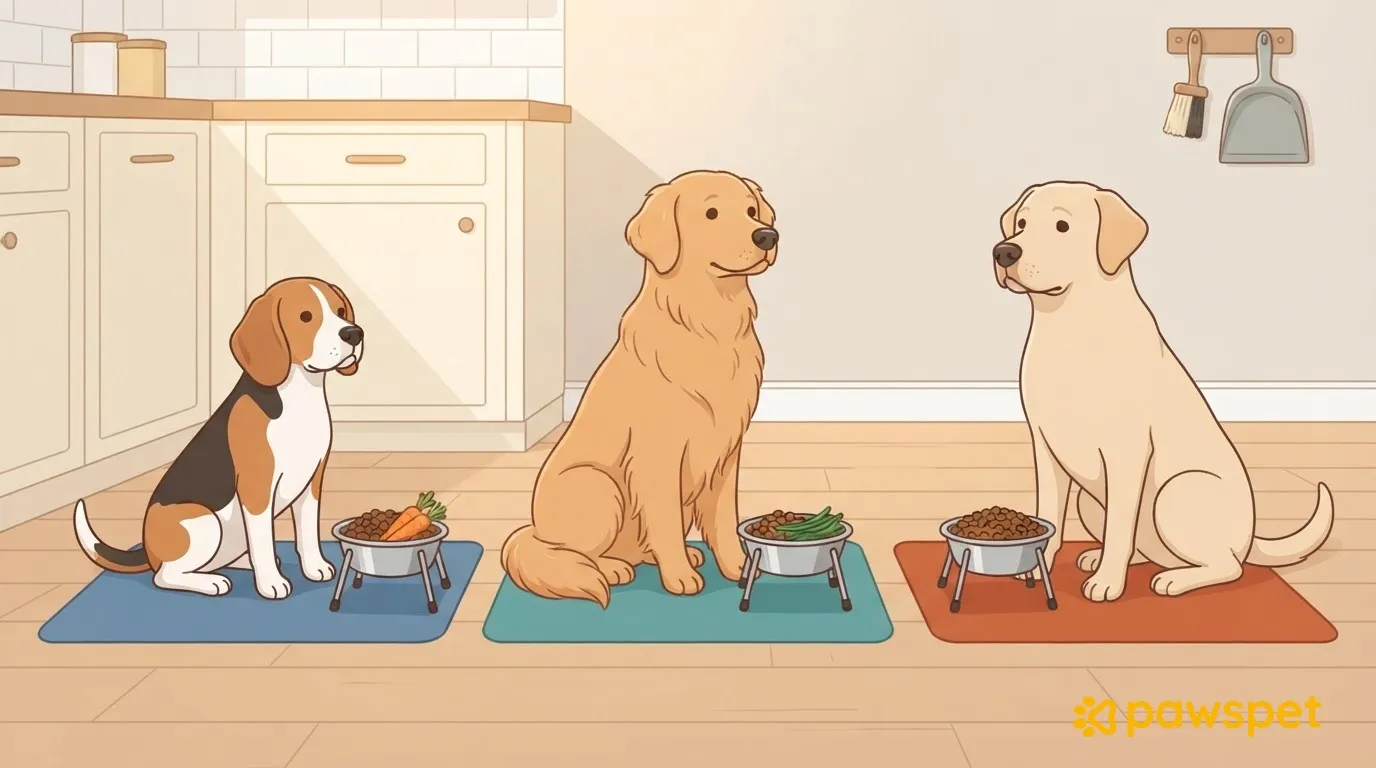
If one dog eats quickly and goes to steal the other dog's food, or if your dogs follow different diets, the solution is organization. Each dog should have a fixed feeding station, far enough away that they cannot reach the other dogs' bowls, and eat at set times under your supervision; when the meal is over, pick up the bowls.
Keep food, portions, and treats separate for each dog, and let your veterinarian decide the type and amount of food. Mealtime is something to organize, not a race to see who gets there first: a few consistent rules are all it takes.
Why leaving the bowl full all the time makes things harder
Leaving a bowl full all the time is not necessarily wrong, but with multiple dogs it creates a few challenges:
- You don't know who ate what. If everyone has free access to every bowl, a nearly empty bowl doesn't tell you which dog ate.
- The fastest eater gets more. A dog that finishes quickly may move on to the other dog's bowl, leaving the other dog with less.
- A loss of appetite can go unnoticed. This is something to tell your veterinarian about, but it's hard to spot if you don't know how much each dog has eaten.
- Diets get mixed up. A puppy's food, a senior dog's food, or food recommended by the veterinarian can end up in the wrong bowl.
How to set up feeding stations
Each dog has their own spot, always the same one, and eats at set times. If there isn't enough space between them in one room, use different rooms. Then, at each meal:
- Separate the dogs: use a closed door, a baby gate, or a crate the dog already knows.
- Serve the meals: put all the bowls down at the same time or always follow the same order. The order doesn't have any special meaning: what matters is that it's predictable.
- Stay nearby: don't leave until everyone has finished.
- Pick up the bowls: as soon as a dog stops eating, pick up their bowl, even if there's food left, before opening doors or gates again.
If one dog finishes first and goes to the other dog's bowl
If it's always the same dog that finishes first and heads for the other dog's bowl, the solution is to remove the opportunity: keep that dog in their room or behind the gate until the other dog has finished and their bowl has been picked up. In the meantime, offer a quiet activity, such as resting on their bed with one of their toys.
If your dog eats very quickly, slow-feeder bowls are another option. That's a separate topic: they're an additional aid, not a substitute for a separate feeding station.
Different diets without mix-ups
When dogs follow different diets, for example a puppy and an adult dog, there's a risk they may eat each other's food. A few habits can help reduce that risk:
- Separate, labeled containers with each dog's name.
- One measuring scoop for each dog, kept in their container.
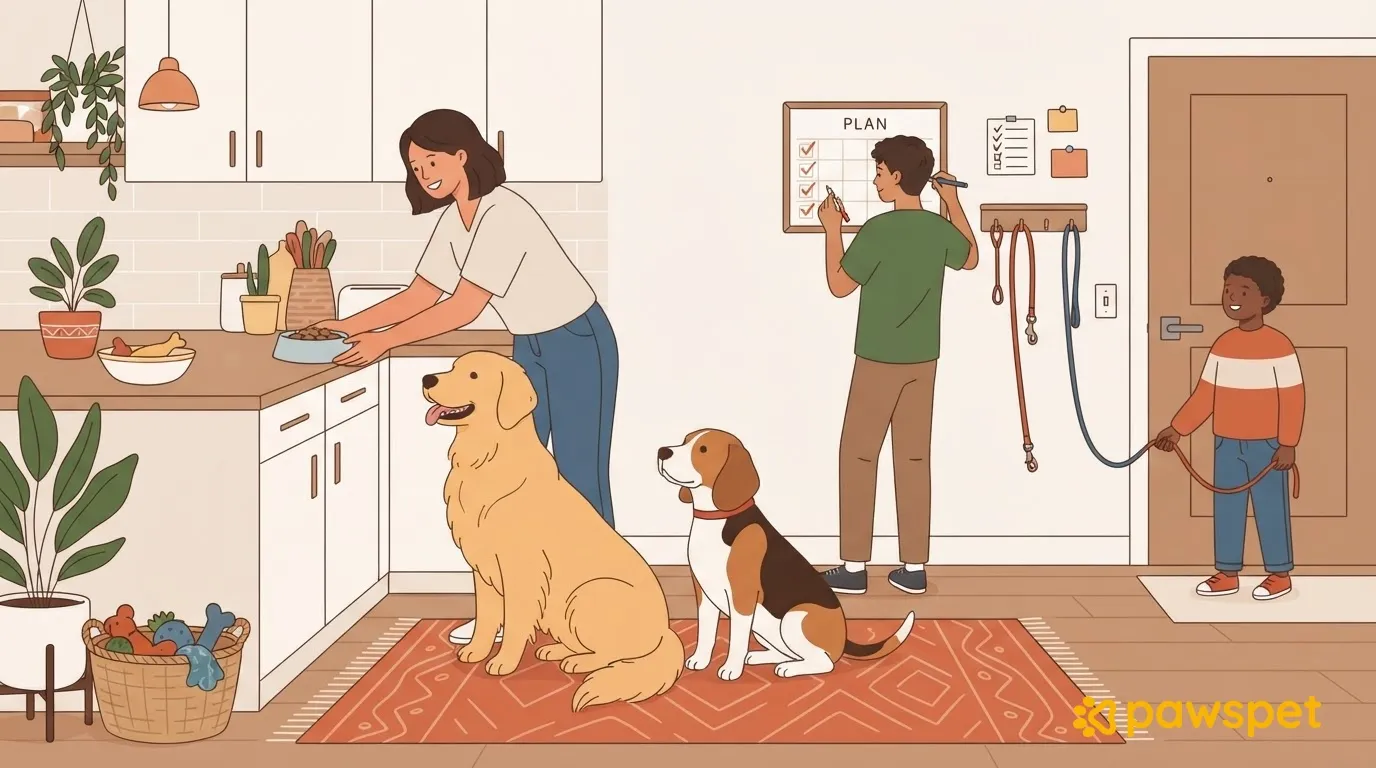
- A written chart near the food cupboard showing what, how much, and when each dog eats, according to the veterinarian's instructions.
- Give treats and chews separately, each dog at their own feeding station.
- Keep water available in several places around the home, so no one has to go through another dog's feeding area to drink.
- Never share supplements or medication: what's prescribed for one dog should not be given to the other.
If a dog is on a veterinarian-recommended diet or has an intolerance, separation needs to be strict: keep feeding stations well apart, pick up bowls right away, and don't offer any food outside the plan. If one dog still eats the other's food, ask your veterinarian for guidance.
Whoever prepares the bowls needs a reference for each dog, and you can also keep one in the PawsPet app: in each dog's profile, record their diet in the «Diet, therapies, and treatments» section of «Health» (you enter the amount, as indicated by the veterinarian), their «Allergies and intolerances», and their weight under «Measurements». If you set the diet as «Recurring», you can also turn on «Generate activity reminders». A family member invited as a collaborator can see this information only if they have the «Health» permission.
What to watch for at every meal
Take a minute at each meal to look at each dog:
- Leftovers and appetite: whether each dog finished, left any food, or ate more slowly than usual.
- Weight over time: record it at regular intervals and review the trend with your veterinarian, without changing portions on your own.
- Tension near the bowls: a dog staring at the other, stiffening, growling, or eating faster when the other dog approaches.
If you notice these signs of tension, increase the distance right away or feed the dogs in separate rooms, and contact a dog trainer or behavior consultant. Don't try exercises on your own.
If a dog vomits, has diarrhea, or shows other signs of illness after eating the other dog's food, or stops eating, contact your veterinarian.
For the next meal, decide where each dog will eat, write down each dog's feeding plan, and watch for a week to see who leaves food behind.