The person caring for your pet can do a better job with a written page than with a long explanation on drop-off day. Prepare specific schedules, ready-portioned food, written instructions from the veterinarian, an honest picture of your pet’s behavior, and contacts who can actually be reached.
One-page sheet: a typical day with times
Write your pet’s name and the dates of the stay, then outline a typical day. Here’s a template to adapt, repeating a line for each meal:
- [time] wake-up: [usual outing or activity].
- [time] meal: [amount] of [food].
- [time] outing or play: [duration and habits].
- [time] rest: [place and habits].
- [time] bedtime: [evening routine and sleeping arrangements].
Add familiar words or commands and what helps your pet settle down. For a cat, note their usual litter box and litter, favorite hiding places, and tolerance for handling.
Food: ready-portioned and labeled
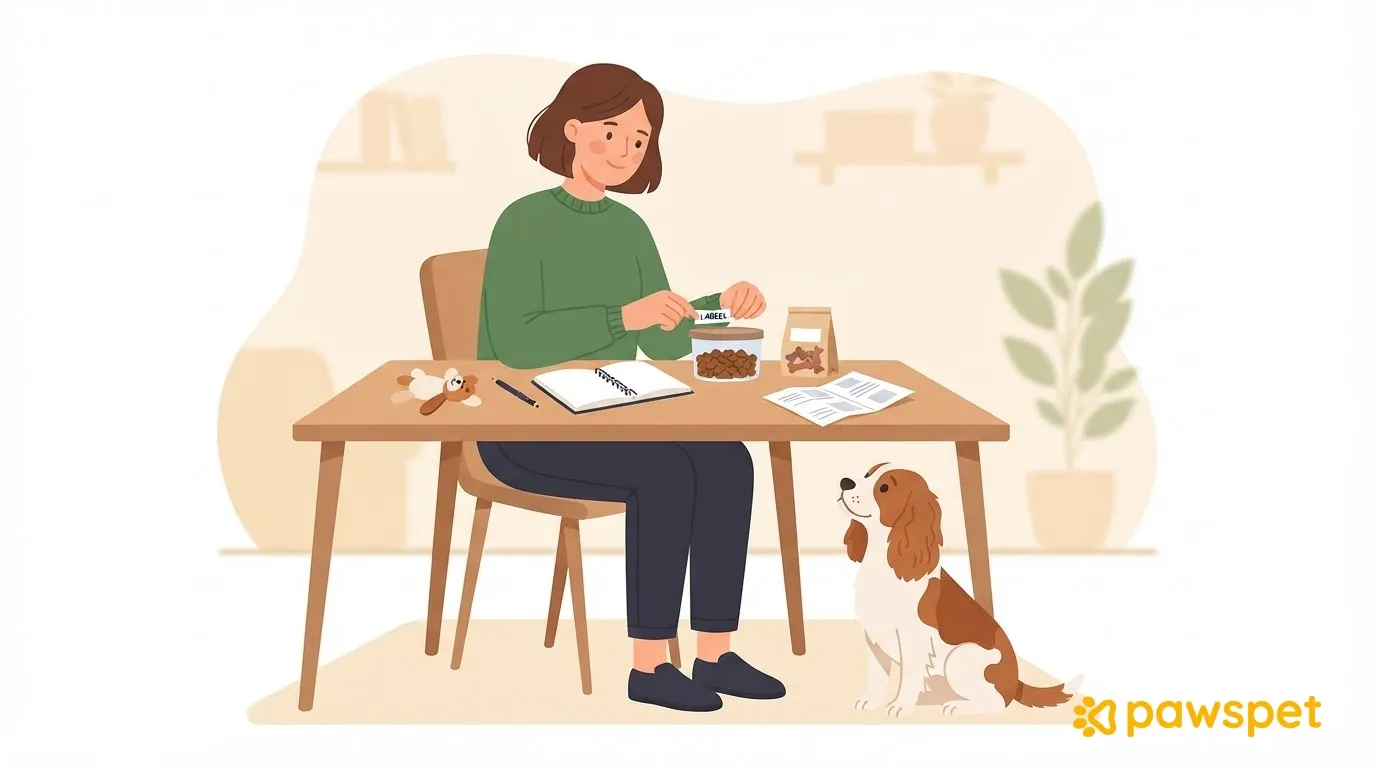
If the facility allows it, bring your pet’s usual food already divided by meal or day. Label each package with name, day, and meal. Specify the amount in grams or measuring scoops, noting which scoop to use, and list any permitted treats.
Write down what to do if your pet refuses a meal and when to contact you, based on what you have agreed with the facility and veterinarian. For a specific diet prescribed by the veterinarian, include their written instructions.
Treatments, allergies, and documents: put everything in writing
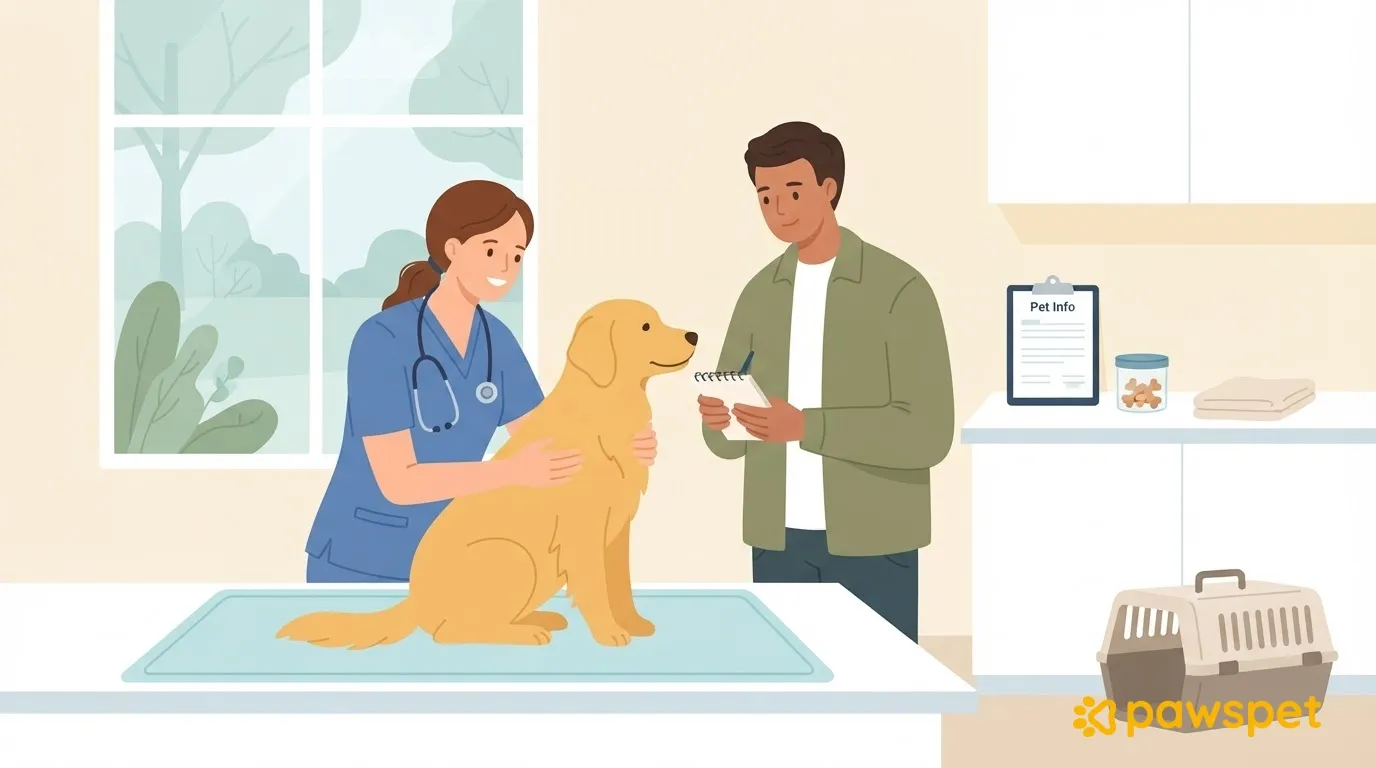
Bring medications in their original packaging, in a quantity sufficient for the stay; agree with the veterinarian on any extra supply. Include their written instructions: medication name, times, and how to administer it. Add how your pet usually takes it, without changing the instructions.
Mention known allergies, recent issues, and the contact details for your regular veterinarian. Ask the boarding facility in advance which vaccination and treatment documents it requires, and prepare the requested copies.
Behavior: details you shouldn’t leave out
Being honest protects your pet and the other guests. Give specific examples of:
- reactions to unfamiliar dogs or cats;
- attempts to escape;
- behavior when someone approaches food or toys;
- fears of thunderstorms, noises, or people;
- handling your pet does not tolerate.
Describe what happened and in what situation: that’s more useful than “good with everyone.”
Contacts, emergencies, and updates: decide before you leave
Leave two contacts who can be reached, preferably one who lives near the boarding facility, as well as your regular veterinarian’s details. Be specific about when you can actually be reached during your trip: flights, time zones, and periods without network coverage.
Agree in advance on:
- who to call if you don’t answer;
- what you authorize the facility to do in an emergency and how to inform you;
- how to handle unexpected expenses;
- the names of people authorized to pick up your pet;
- how often and through which channel you want updates, with or without photos.
These arrangements should not delay contacting a veterinarian in an emergency.
Share health information from your phone with PawsPet
In the PawsPet app, open ⋮ » «Sharing» from your pet’s profile and turn it on: you’ll get a public, read-only link that can be opened without the app or an account. Anyone with the link can view it.
The page shows a photo, name, breed and, if available, sex, date of birth, weight, microchip, color, and location. It includes a summary of diets and treatments, allergies with their severity, vaccinations with their status, illnesses, and injuries. It does not show documents or a passport. Check the “Location” field before enabling sharing.
Turn sharing off after the stay. If you turn it back on, you’ll reuse the same code, so the old link will work again too.
If the staff member has a PawsPet account, you can use ⋮ » «Collaborators» » «Add collaborator»: search for and select the person, leaving only “View” under “Health,” without “Edit.” General viewing remains enabled at all times. Access does not expire automatically: remove the collaborator after the stay. Collaborators cannot view the documents in your pet’s profile or the passport either.
If uploaded, the health record and passport can be shown from «Profile» » «Documents» tab; still prepare any copies required by the boarding facility.
You can record your pet’s diet, including amounts, and allergies under “Health.” Keep the information up to date; amounts and times should still be included on the written page. If you book through PawsPet, also include the essentials in the notes for the provider when placing the order.
To give the staff an up-to-date health reference, you can use the shared PawsPet profile with read-only permissions or link alongside the written instructions.
Drop-off day: what to review together
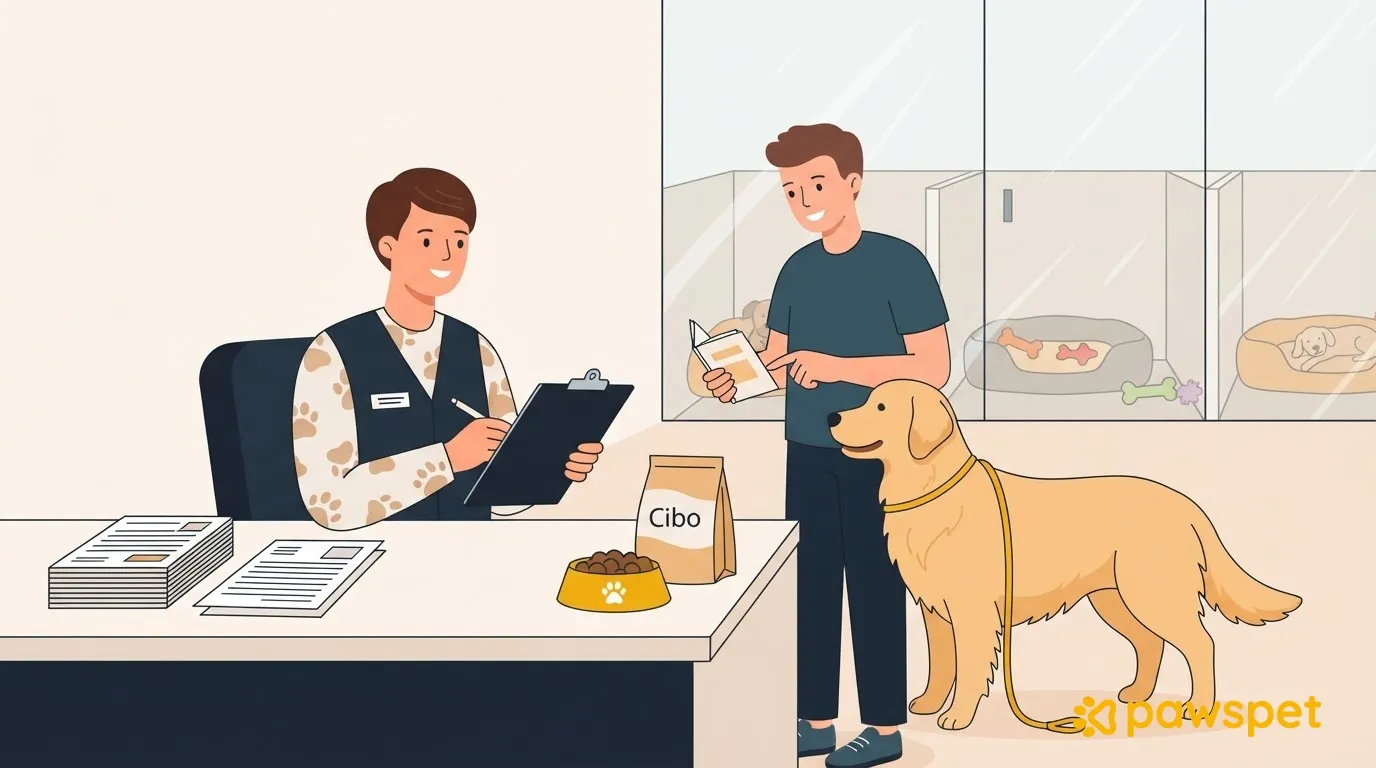
At check-in, go through these points with the staff:
- Routine sheet handed over.
- Food labeled and permitted treats listed.
- Medications in original packaging with veterinary instructions.
- Required documents available.
- Emergency contacts and authorizations confirmed.
- Preferences for updates agreed on.
- People authorized to pick up your pet listed.
- Items left behind listed and approved by the facility.
Review meals, treatments, and contacts with the staff in particular. Clear up any questions right away, before saying goodbye to your pet.