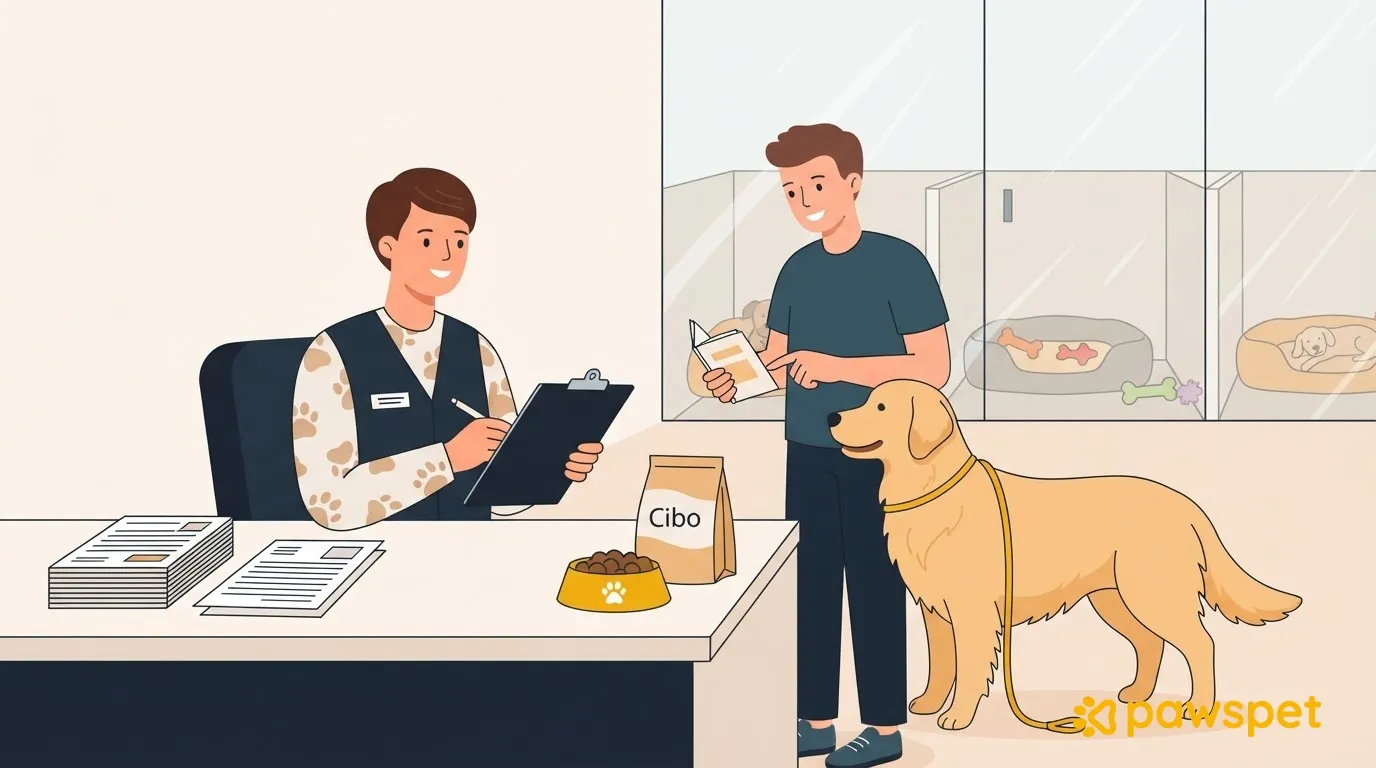
If you run a boarding facility for dogs and cats, prepare the end-of-stay report before the pickup appointment, not after the client has already arrived. Give the client a verbal summary of three key points and a written report on one page using the same headings every time. Record facts and dates, without diagnoses or vague reassurances such as “everything went well.”
Essential items in the report
Keep one page for each guest, dog or cat, and have each shift record what happens: before pickup, all you should need to do is review and complete it. The headings are always the same:
| Item | What to write |
|---|---|
| Dates and duration | Check-in, pickup, and number of nights. |
| Food | How the pet ate compared with the agreed plan; any leftover food returned. |
| Toileting | Walks and litter box: if anything differed from the habits reported at check-in, write when and how often. |
| Sleep and behavior | Observed facts, not judgments: how the pet slept and behaved. |
| Activities and socializing | Walks and play; socializing with other guests, if applicable. |
| Health | What you observed, with the date, without diagnosing. If you contacted the veterinarian: date, reason, what was done, and who was notified. |
| Treatments | Doses given according to the written instructions received; doses that could not be given, with the reason; any remaining medication returned. |
| Weight | At check-in and pickup, only if this is part of the service and measured on the same scale; report it as a fact, not a judgment. |
| Belongings and documents | What you return, checked against the list completed at check-in. |
| Notes for the next stay | What worked and what to change. |
Writing observations: facts, dates, no diagnoses
A vague sentence leaves the owner with only an impression; a factual sentence gives them dates and facts that may also be useful to their veterinarian. Here are three rewrites:
- “was sad for the first few days” becomes “for the first two days, the pet ate about half of each portion and preferred to stay in its own space; from the third day, it ate the full portion and had two play sessions outdoors.”
- “had a dirty ear” becomes “on [date], the pet shook its head often; we did not clean or treat the ear; you can decide whether to discuss it with your veterinarian.”
- “the treatment went well” becomes “doses were given every morning and evening according to your written instructions; on [date], we could not give the evening dose because the pet refused it; we notified you at [time].”
Do not downplay things (“it was probably the heat”) or cause alarm (“the pet seemed unwell”): report what you saw, when you saw it, and what you did. Do not suggest treatments, set weight thresholds, or list symptoms to interpret: interpretation is up to the owner and their veterinarian.
An organized ten-minute handover
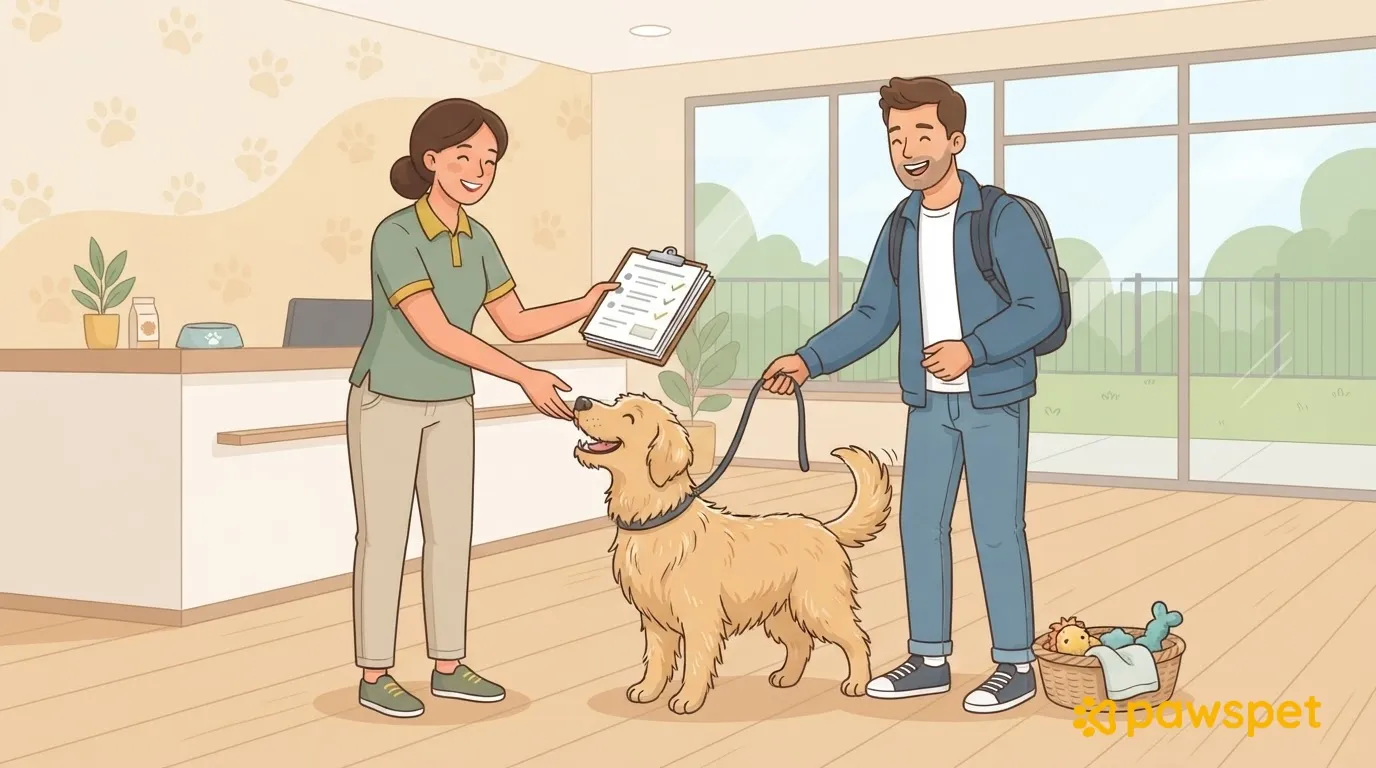
With the report ready, aim for a handover of about ten minutes, always in the same order:
- Check that the person picking up the pet is among the authorized people listed at check-in; if not, do not hand over the pet before contacting the person who made the booking.
- Hand over the pet.
- Verbally share the three key points: what the client needs to know right away, such as a skipped meal, a dose that could not be given, or contact with the veterinarian.
- Return belongings, food, medication, and documents, checking them off against the list completed at check-in.
- Give the client a written copy of the report, on paper or digitally.
- Ask the client to confirm receipt of the belongings and medication.
Final confirmation is a good organizational practice: it clarifies what has been returned. Choose how to collect it, verbally or in writing. Schedule pickups in booked time slots and decide in advance how to handle delays.
After the handover: what to ask and what to keep
Ask the owner to let you know through the agreed channel over the following days if they notice anything at home; record it with the date, without drawing conclusions. Do not promise follow-up calls you cannot guarantee: instead, specify the channel and realistic response times.
Keep a copy of the report in the client’s file and update the preferences for the next stay: what worked and what to change.
If you use PawsPet Business
This method works on paper, too. With PawsPet Business, you can use the Calendar to schedule pickup: in the “Calendar” tab, tap “+” to open “New appointment.” Select the client with “Choose client” (or create one on the spot, with the consent checkbox), then select their pets. If you do not choose a service option, enter a “Title.” Then set “Start” and choose a “Duration” from the options shown, from 15 to 240 minutes. If two pickups overlap, the appointment is still saved and the “Overlaps” notice appears: decide whether to reschedule it. After pickup, open the appointment and mark it as “Done.”
For a booking received through PawsPet, once the service is complete, open the order (accepted or in progress), tap “Update status,” then “Mark as delivered.” In the optional “Message” field, write a two-line summary: it appears in the order history, which is also visible to the client, who then confirms with “Confirm delivery.” You can attach the full report as a document or photo in the order’s “Chat” tab, if the order has a linked conversation; attachments require an internet connection. When pickups are concentrated into a few hours, having appointments, clients, and pets in the same calendar helps you keep the day organized.
A template to prepare today
Create a template today using the headings in the first section and share it with every shift. Try it out for three handovers, note what is missing and what is unnecessary, then revise it. Keep it to one page: it is easier to hand over, read, and show to the veterinarian.