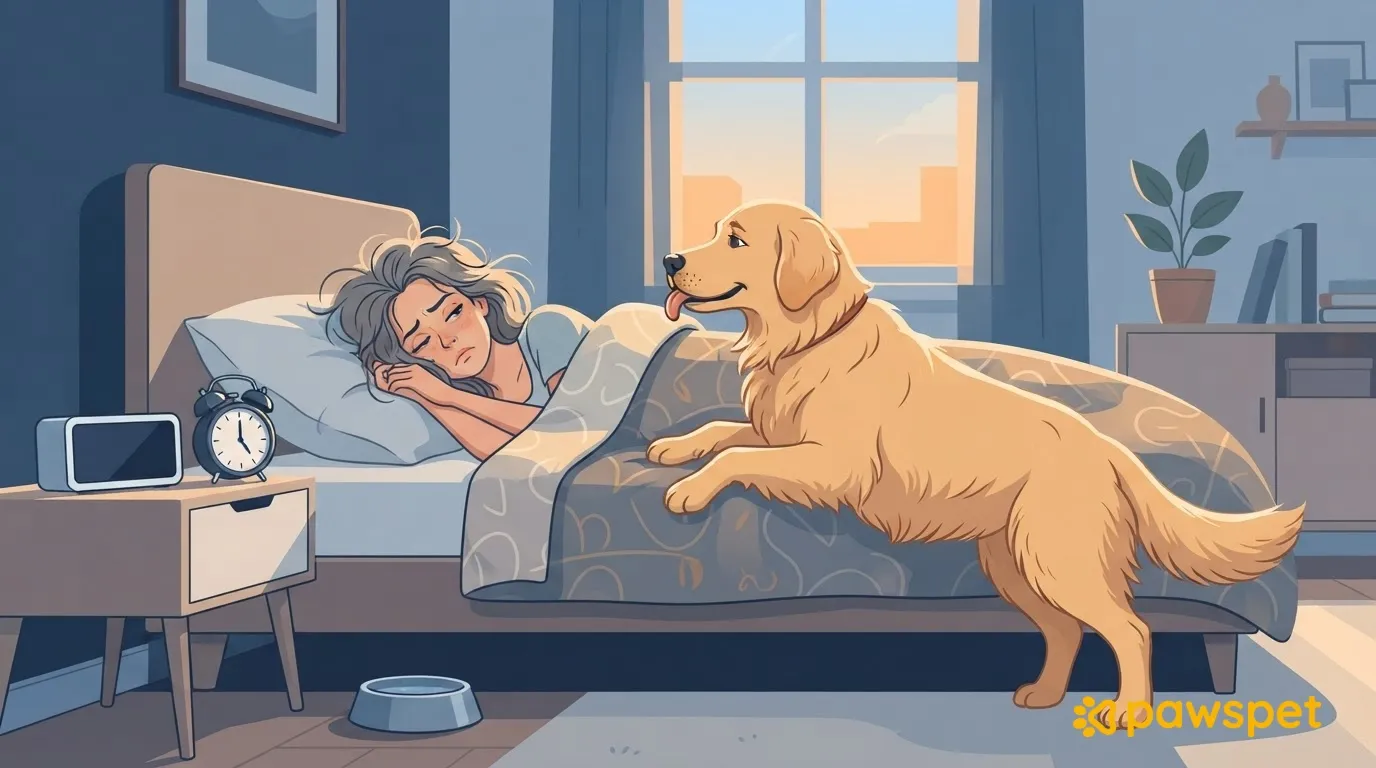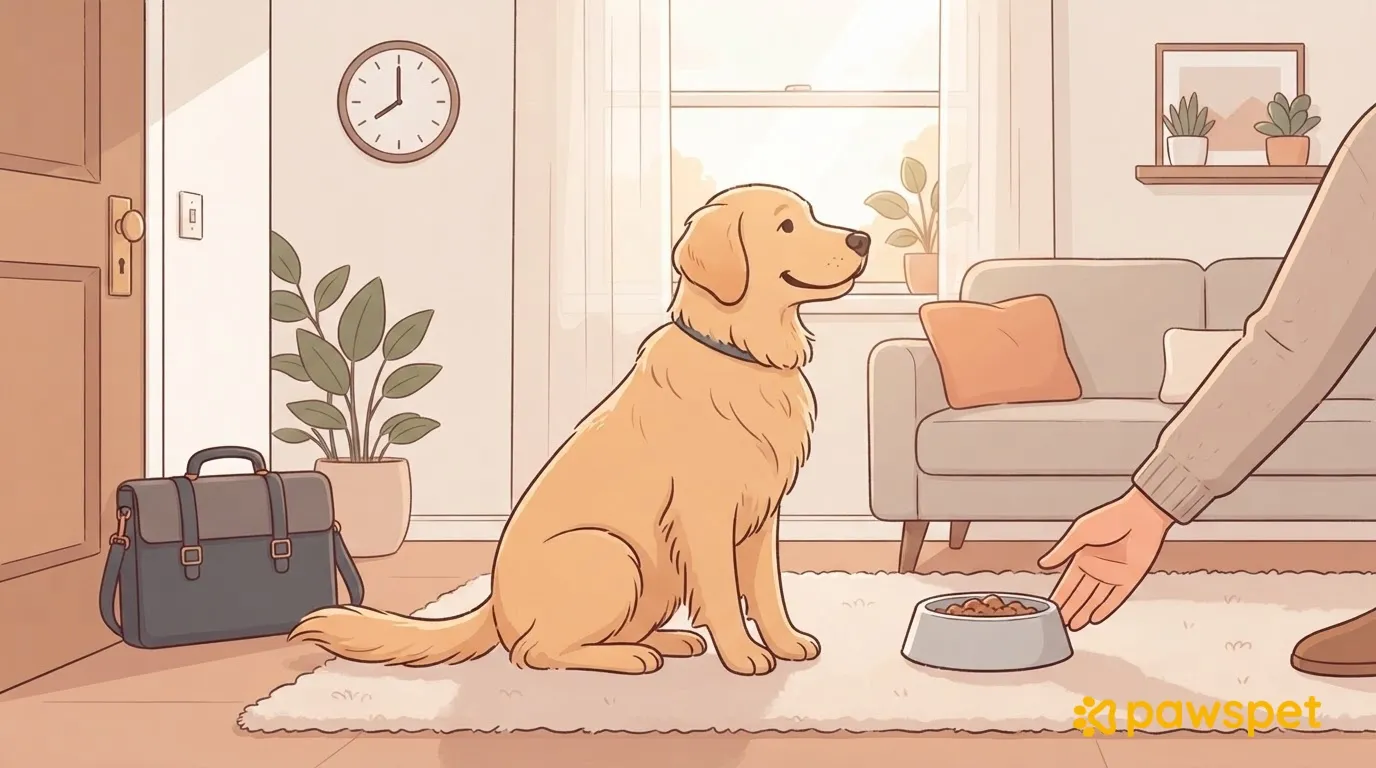
For breakfast, a healthy adult dog should have a consistent mealtime that fits your schedule for leaving home. Plan meals and walks around your dog’s routine, avoiding vigorous activity right after a large meal. Any portion you offer in a safe food toy when you leave, if suitable for your dog, must also count toward the daily food allowance: it is not extra food.
Keep a consistent schedule, even on weekends
Start with the time you need to leave for work, then plan backward to fit in the walk, breakfast, and getting ready, without cramming everything into the last few minutes. A regular schedule can make hunger, bathroom needs, and departure time more predictable.
Choose a time window you can stick to, even on your busiest mornings. On weekends, keep changes to the schedule small instead of delaying breakfast just because you get up later. If your veterinarian has already set a specific routine, follow it.
Before or after the walk?
There is no single right order for every dog: consider the type of outing and your dog’s habits.
| Typical morning | Possible routine | Keep in mind |
|---|---|---|
| A quick trip outside for bathroom needs only | Outside → breakfast → quiet time → leave home | Make sure the time after the meal is genuinely quiet. |
| A long walk or energetic play in the morning | Activity → break → breakfast; or breakfast → interval recommended by your veterinarian → activity | Don’t cut breaks and intervals short because you’re in a hurry. |
| A dog that usually needs to poop soon after eating | Breakfast with some time to spare → brief trip outside | Don’t serve the meal just before you leave. |
It’s best to avoid running, ball games, and jumping right after a large meal. Ask your veterinarian what intervals to follow, especially if your dog is large or has had digestive problems: there is no standard waiting time that works for every dog.
How much to feed and who should feed
Breakfast is part of the daily food allowance. Follow your veterinarian’s advice, or use the food label as a starting point to discuss with them. Subtract food used in toys and treats given during the outing from the rest of the daily allowance. Measure the portion with the same tool each time, and monitor your dog’s weight and body condition over time with your veterinarian.
Agree on who will feed your dog, or use a shared, visible reminder, such as a box labeled “breakfast given” on a sheet of paper. This helps prevent meals from being served twice or skipped; children can help with adult supervision.
To track portions and meals served, you can record your dog’s diet in the PawsPet app. In the pet’s Health tab, enter the amount, set the recurring schedule with the time, and turn on reminders to check off under Activities after the meal; record your dog’s weight under Measurements.
Use part of breakfast when you leave
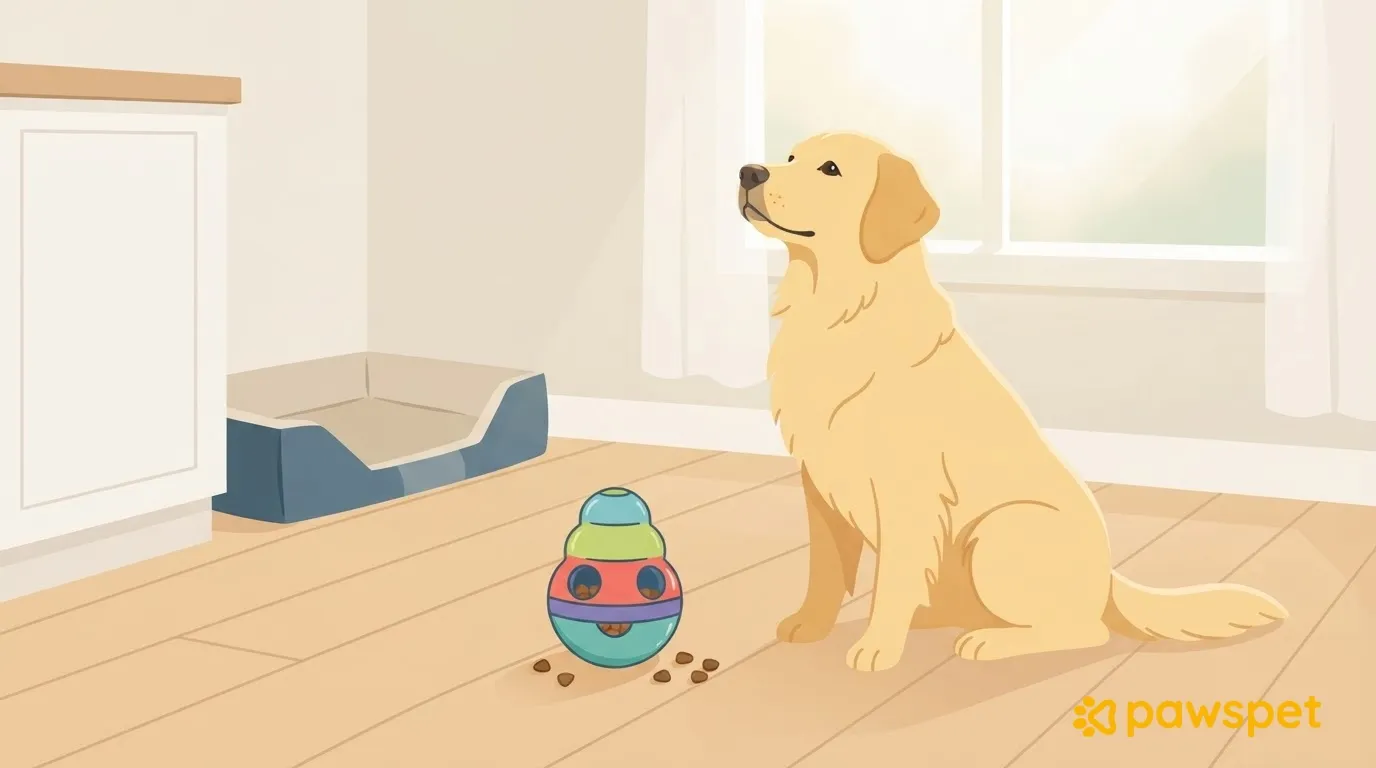
Set aside the portion for the food toy before filling the bowl, so it stays within the planned amount. Then take it step by step:
- Choose an option that suits your dog: food scattered on a clean surface, a snuffle mat, or a sturdy food-dispensing toy that is the right size for your dog.
- Try it several times while you’re at home. If you use an object, watch to make sure your dog doesn’t break it or try to swallow any pieces.
- Consider leaving the toy with your dog while you’re away only after these trials and if your dog uses it safely. Remove it if it gets damaged; if you’re unsure, don’t leave it with your dog alone.
- If you have more than one pet, separate them during meals to prevent tension around food.
- If your dog guards food or becomes stiff, don’t leave food toys out and ask a behavior professional for help.
- Offer the toy shortly before leaving, with a low-key goodbye.
The next step is simple: tomorrow, try the toy with a small part of breakfast while you get ready, staying at home.
FAQ
My dog doesn’t want to eat in the morning: should I worry?
Some dogs eat less soon after waking up. However, if the refusal is new, happens repeatedly, or occurs along with vomiting, diarrhea, or lethargy, contact your veterinarian: don’t automatically blame it on your family’s schedule.
Can I leave the bowl full all day?
Keeping the bowl full all the time makes it harder to tell how much your dog is actually eating and to track their daily food allowance. Ask your veterinarian whether this approach is right for your dog.