With an adult dog who is already used to going potty outside, the key is to make the outing predictable: the same time, the same route, a familiar spot, and a realistic buffer before work. You can then calmly pair a word with going potty, without ending the walk as soon as your dog has gone.
Why Your Dog Won’t Go in the Morning
On cold, still-dark mornings, see which of these situations you recognize in your routine:
- A different route every day, with new places to explore.
- Too many distractions: traffic, other dogs, and rush-hour noise.
- Tension on the leash: you pull or talk a lot to hurry your dog along.
- Heading straight back inside: if the outing always ends after your dog goes, they may learn to stall to make it last longer.
- Cold, rain, or wet grass, if your dog seems uncomfortable with them.
- Poor timing: it hasn’t been long since the last outing or meal.
A sudden change warrants a veterinary assessment: see the final section for signs not to ignore.
Same Time, Same Route, More Time to Spare
Go out soon after your dog wakes up, at as consistent a time as possible, including on weekends. Follow the same route to your chosen spot.
If your dog almost always goes while you’re heading back, make a note of the spot: you can choose it as your first stop instead of reaching it when you’re already out of time. Keep the potty outing separate from the longer walk, which you can schedule for another time of day.
Count backward from the time you need to close the door to leave for work. For example, if you need to leave at 8, allowing 20 minutes outside and 10 minutes to get settled when you return means heading out at 7:30. These are example times, not a time limit for your dog: use what you observe, including the walk after they go.
The relationship between meals and potty needs also varies from dog to dog: note what works for yours without expecting them to go on a schedule.
A Place and a Word for Potty Time
- Choose a spot. Look for a nearby, familiar, suitable area where dogs are allowed to go potty; always pick up after your dog.
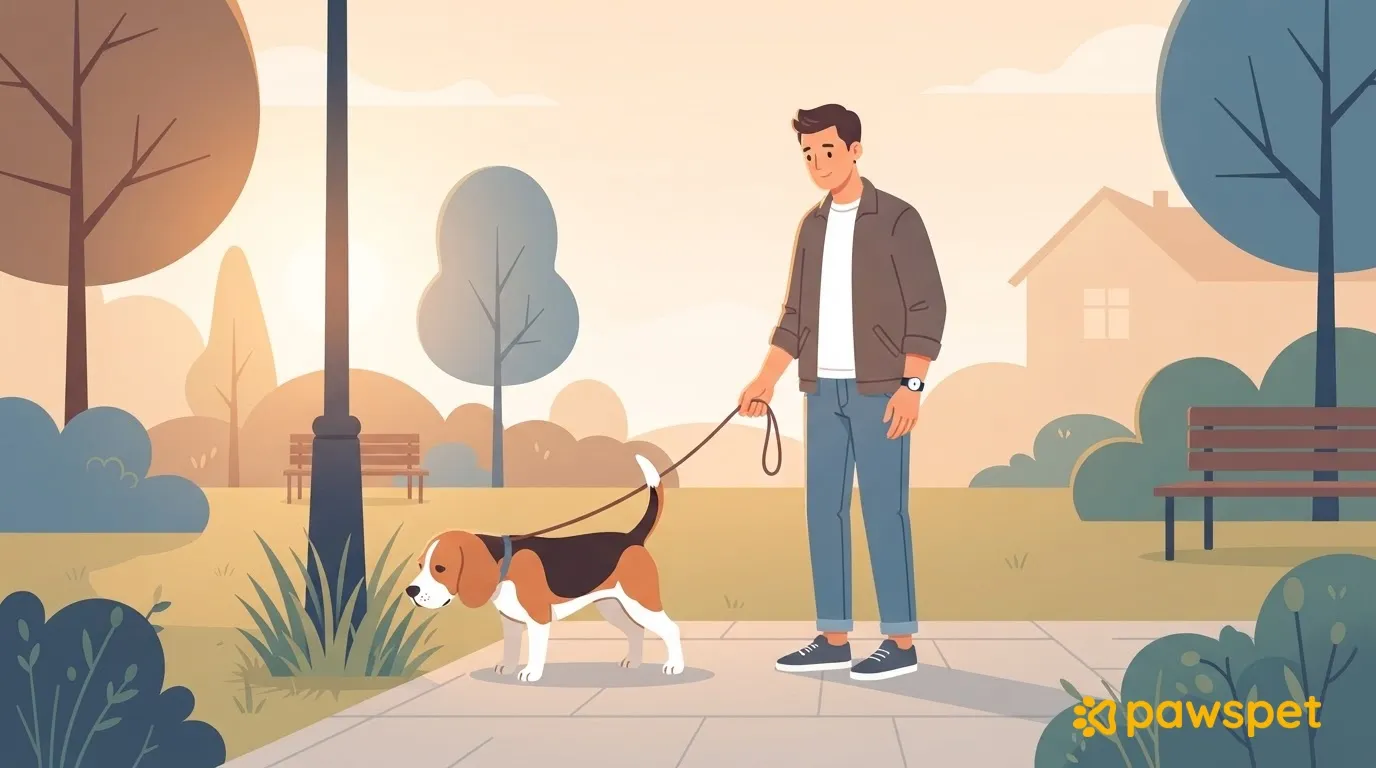
- Arrive calmly. Keep the leash loose, stand still or walk slowly within the same small area, and say little. Give your dog time to sniff without constantly changing locations.
- Pair a word with the action. When your dog starts to go, say a short, consistent word in a calm voice, such as “go.”
- Reward immediately afterward. As soon as your dog is finished, offer a treat from their daily food allowance, or praise them and let them sniff as you walk for a few steps.
- Repeat consistently. Keep the word and approach consistent on subsequent outings without prompting your dog constantly. You can practice on outings when you’re not in a hurry, too.
At first, the word should accompany your dog going potty: say it while they’re going, not beforehand to prompt them. Only once the association is strong, after many repetitions, can you try using it as a cue before they start. This isn’t a result to expect by a set deadline.
If you’d like a dog trainer to observe your routine and help you establish the association, you can look for training and behavior consultation services in the PawsPet app.
After Potty Time, the Outing Continues
After your dog has gone, add even a few minutes of sniffing or a calm walk: going potty shouldn’t always mean “straight back home.” Include this time in your initial buffer rather than treating it as extra time to cut every time.
Avoid scolding your dog for taking a long time, yanking the leash, or rushing back inside. If they haven’t gone and aren’t showing signs of discomfort, consider a second short outing before you leave. On long days, arrange help around the middle of the day rather than counting on your dog being able to wait.
Signs Not to Ignore and When to Ask for Help
Contact your veterinarian if you notice straining without results, blood, diarrhea, very frequent attempts, pain, persistent licking, or a clear change in habits. If your dog tries to urinate but can’t, call your veterinarian immediately: don’t wait for another outing.
If your dog freezes, trembles, or wants to go back inside because of fear of noise or traffic, ask a dog trainer for support. Do the same if, after several weeks of a consistent routine, the outing is still long and stressful.
If there are no physical signs that need to be assessed, the next step is simple: tomorrow, choose the spot, route, and word, then note how long it takes for a few days.