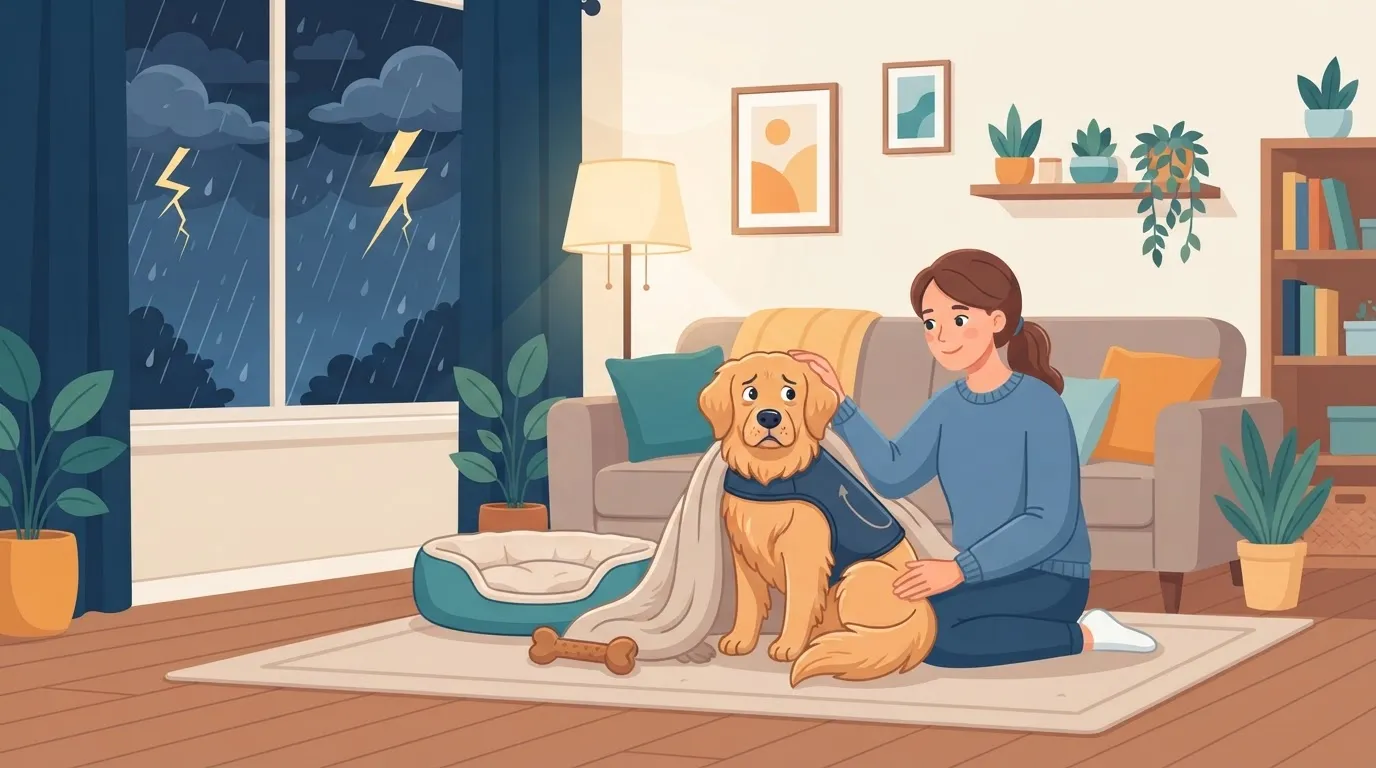
When a dog does not want to go outside, pulling or insisting can make the situation harder. Refusing a walk may be linked to fear, pain, changes in routine, or unpleasant experiences. Observing the context is the first step toward helping your dog calmly and safely.
Why does your dog not want to go outside?
A dog may stop at the door, pull toward home, or freeze during a walk for many different reasons. It is not necessarily “stubbornness”: often, the dog is communicating discomfort or uncertainty.
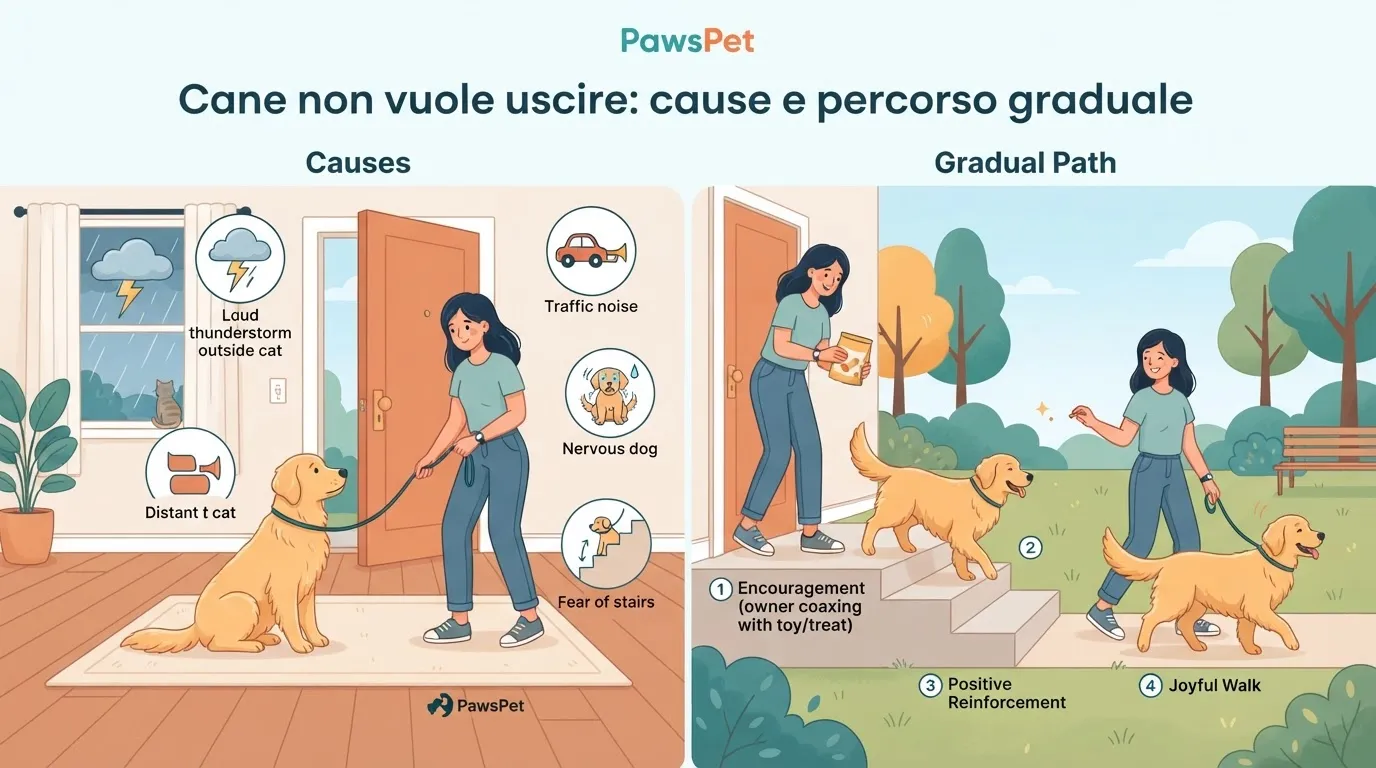
Common causes include:
- Fear of noises, people, or other animals, such as traffic, thunderstorms, roadworks, bicycles, or overly excitable dogs.
- Negative experiences, for example being startled near the entrance, having a difficult encounter, or falling.
- Pain or physical discomfort, especially if the change is sudden, your dog limps, moves stiffly, or avoids the harness and leash.
- An overly stimulating environment, which is common in sensitive or young dogs and dogs that have recently arrived in a new home.
- Changes in routine, such as moving house, new schedules, family members being away, or the arrival of other animals.
Understanding when your dog becomes afraid to go outside is more useful than immediately trying to interpret the behavior. Freezing in the same place each time may suggest an association with that location; refusing to go out everywhere calls for broader observation.
Observe the signs before you intervene
A dog that freezes on a walk rarely does so without showing earlier signs. Recognizing them allows you to stop before fear intensifies.
Look for behaviors such as:
- sudden slowing down or becoming completely still;
- a lowered body, tucked tail, or ears held back;
- panting unrelated to heat or exertion;
- repeatedly licking the nose, yawning, or shaking off;
- trying to return home;
- refusing treats they normally enjoy;
- barking, pulling hard, or searching for an escape route.
For a few days, note the location, time, length of the outing, and what happens just before your dog freezes. PawsPet GPS walks can also help identify routes or recurring difficulty points, without turning the outing into a task that must be completed.
If the refusal starts suddenly or is accompanied by pain, lethargy, changes in appetite, or difficulty moving, it is best to contact a veterinarian before working on the behavior.
How to help your dog get used to going outside gradually
When helping your dog get used to going outside, the initial goal is not a long walk. It is to make the small steps feel safe again. Move at your dog’s pace and return to the previous step if they show signs of tension.
A practical approach may look like this:
- Make preparation positive. Leave the harness and leash where your dog can see them without putting them on immediately. Associate them with pleasant moments, a calm voice, or small rewards your dog enjoys.
- Practice near the door. Open the door for a few seconds without forcing your dog to cross the threshold. Reward spontaneous interest and close the door calmly.
- Work toward very small goals. One step onto the landing, a few seconds outside the entrance, or a short stretch along a quiet path may be enough for the first sessions.
- Choose easy environments. Prefer quieter times, short routes, and areas with less traffic. Initially, avoid places where your dog has already felt afraid.
- Allow some choice. When it is safe to do so, let your dog sniff, pause, and set the pace. Exploration reduces pressure and supports confidence.
Reward the desired behavior while your dog is still relaxed, not only after they have overcome a difficult situation. If your dog refuses the reward, the environment is probably too challenging: increase the distance from the trigger or end the outing.
Mistakes to avoid during walks
Forcing a frightened dog beyond their tolerance threshold can make the problem more persistent. Some common actions, even when well intentioned, may increase fear of walks.
Avoid:
- pulling your dog with the leash or picking them up without necessity;
- scolding them for stopping;
- repeatedly exposing them to the feared trigger “to get them used to it”;
- changing your strategy, route, and rules every day;
- extending the outing when your dog is already highly distressed.
It is better to end a short outing on a manageable experience than to continue until your dog panics. Consistency matters more than the distance covered.
When to seek professional support
A qualified dog behavior professional can help you create a personalized gradual training plan, especially if your dog consistently avoids going outside, reacts intensely, or the issue limits everyday life. If you suspect pain or a physical condition, a veterinarian should be your point of reference.
Bring concrete observations with you: short videos, triggering situations, recent changes, and your dog’s reactions. Keeping reminders and health-management notes in PawsPet can make it easier to share useful information with professionals.
FAQ
How long does it take to help a fearful dog go outside?
It depends on the cause, your dog’s sensitivity, and how consistently you follow the plan. Some dogs improve with small steps in a short time, while others need a more gradual process. Avoid setting rigid deadlines.
Should I take my dog outside even if they freeze?
Daily needs still have to be met, but try solutions that reduce stress: shorter outings, quiet times, and less stimulating areas. If freezing happens often or starts suddenly, ask a veterinarian or dog behavior professional for advice.
Harness or collar: which should I choose?
The choice depends on the individual dog and on getting the right fit. In cases involving fear or pulling, a properly adjusted harness may provide more comfortable handling. If you are unsure, seek guidance from a professional.
Small, repeated steps build confidence over time. With PawsPet, you can organize reminders, monitor outings, and find professionals who can support your dog’s wellbeing.