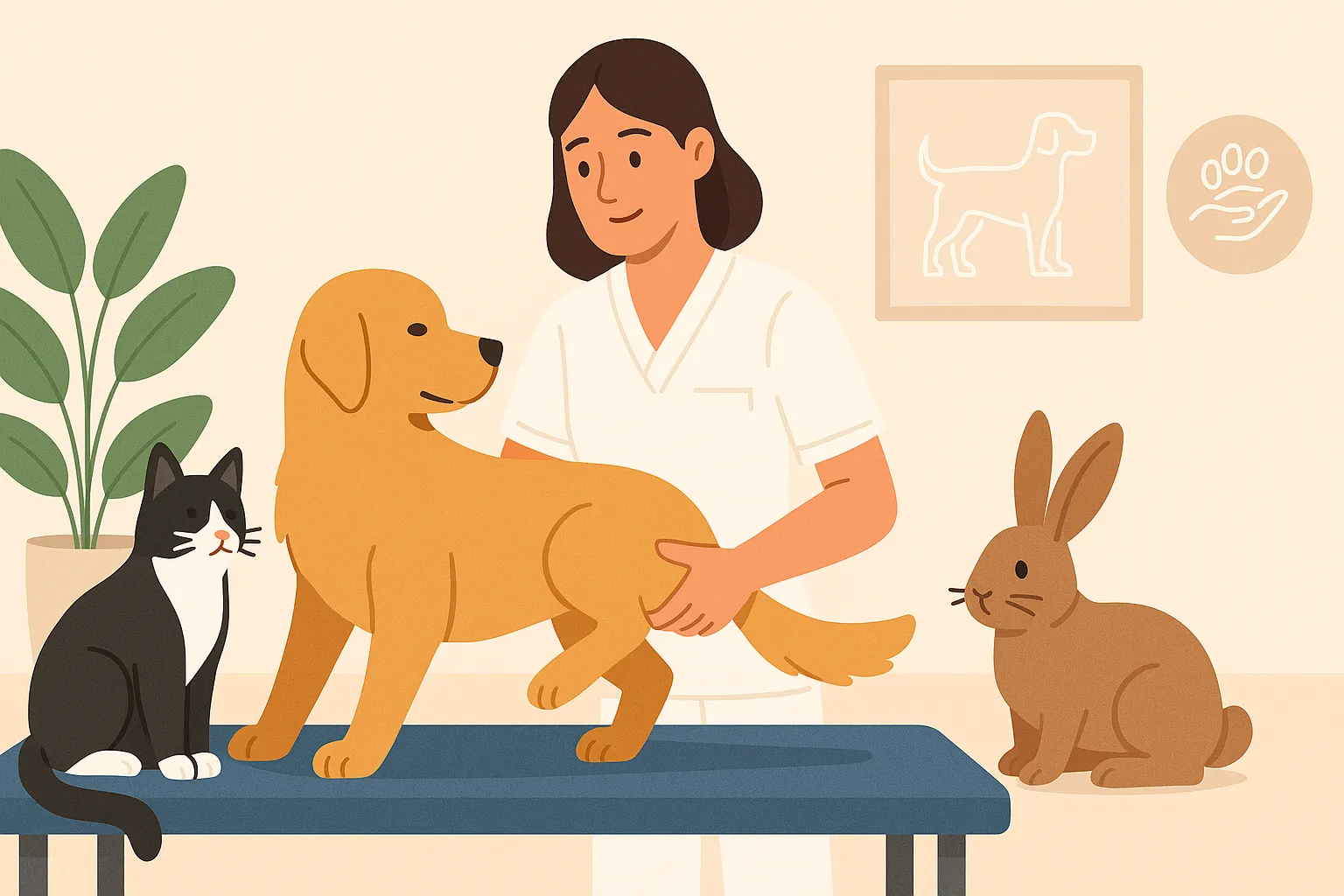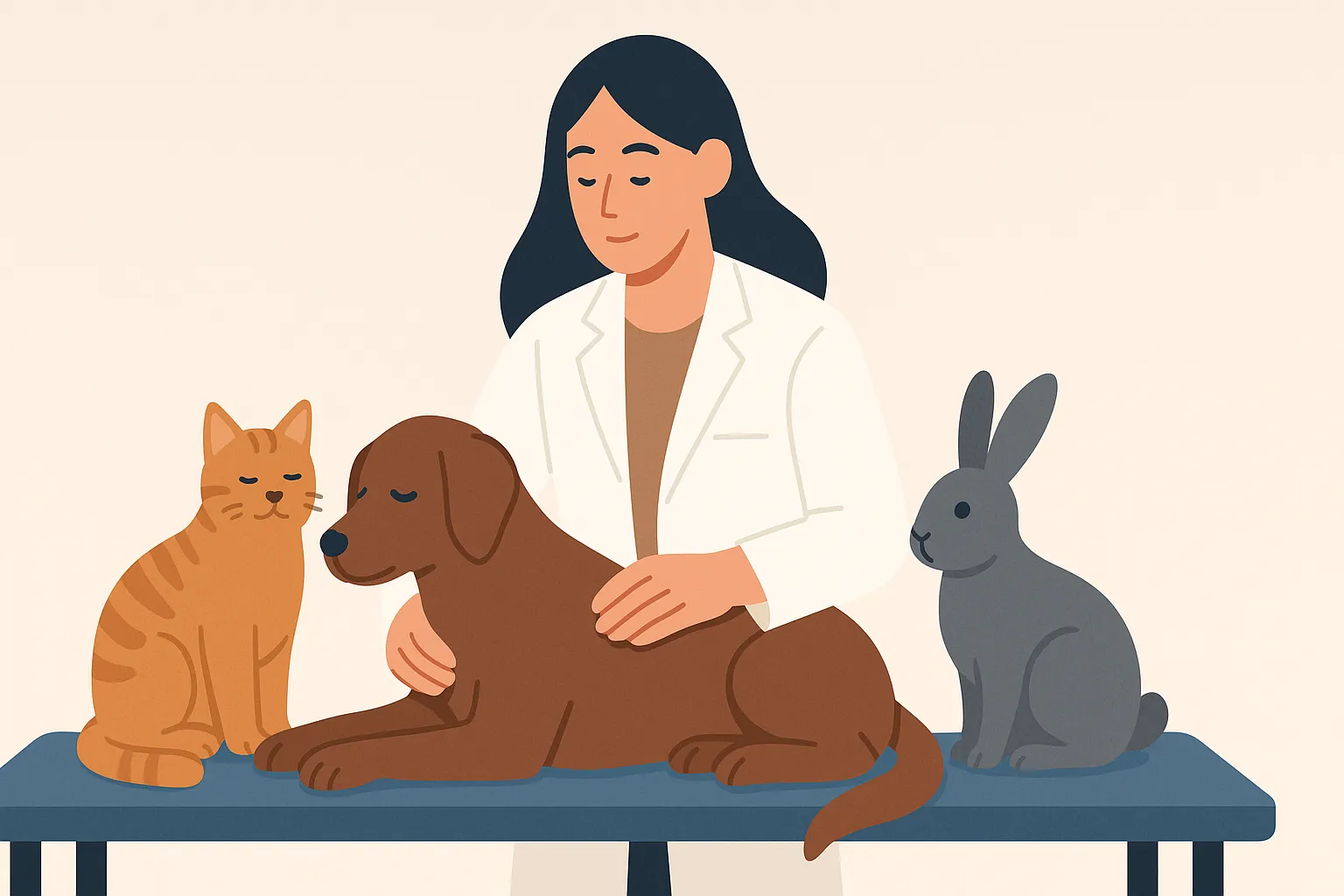
When your dog is limping “some days,” your cat no longer jumps like before, or a puppy grows up with a crooked posture, many owners wonder whether an animal osteopath could help. But what do they actually do? Is it safe? When does it make sense to book a visit, and how much does an animal osteopathy session cost?
In this practical guide, you’ll find a clear explanation of:
- what animal osteopathy is and how it works for dogs and cats
- in which cases it can be useful (and when it cannot)
- how to recognize a qualified animal osteopath
- how a session works, and what to expect before and after
- the average cost of an animal osteopath in Italy
- how to keep track of sessions and improvements with digital tools like PawsPet
What animal osteopathy is (and how it differs from veterinary medicine)
Animal osteopathy is a manual discipline that focuses on:
- assessing the mobility of joints, the spine, and soft tissues
- identifying tension, restrictions, or asymmetries
- supporting the animal’s overall well-being through gentle manual techniques
It is not an alternative to veterinary medicine, but rather a complementary support.
Animal osteopath vs veterinarian: role differences
-
The veterinarian:
- makes medical diagnoses
- prescribes medication, tests, and procedures
- manages emergencies, infections, acute and chronic conditions
-
The animal osteopath:
- does not make medical diagnoses
- does not prescribe medication
- works on mobility, posture, and musculoskeletal and fascial compensations
- can collaborate with the veterinarian to support the care plan
In practice: the veterinarian says “what is wrong” from a medical point of view; the animal osteopath focuses on how the dog or cat’s body moves and organizes itself, and tries to improve that aspect.
How osteopathy works for dogs and cats
Dog osteopathy and cat osteopathy sessions are based on manual techniques. These are not “relaxation massages,” but targeted maneuvers on joints, muscles, fascia, and, in some approaches, viscera and the cranium.
Basic principles of animal osteopathy
Animal osteopathy is built on a few key concepts:
- Body unity: a problem in one hip can affect the spine, shoulders, or even the way the animal places its front paws.
- Structure and function are connected: if a structure moves poorly (a stiff joint, a contracted muscle), its function is affected (pain, limping, limited movement).
- Self-regulation: the body is constantly seeking balance. The osteopath tries to remove the “stiffness” that gets in the way of this natural ability.
Common techniques used
Depending on the animal and the issue, an animal osteopath may use:
- Gentle joint techniques: light mobilizations of joints and the spine to improve range of motion.
- Fascial techniques: manual work on soft tissues (fascia, muscles, ligaments) to reduce tension and adhesions.
- Visceral techniques: delicate maneuvers on the abdomen and chest to encourage movement and proper organ mobility.
- Craniosacral techniques: light contact on the skull and spine, used in some osteopathic approaches, especially with puppies or very sensitive animals.
A good professional always explains what they are doing and why, adapting the pressure of the maneuvers to the individual animal: a young Labrador is not the same as a 4 kg senior cat.
When an animal osteopath is useful: the most common cases
Not every condition benefits from osteopathy, but there are situations in which it can be a valuable support, always in cooperation with the veterinarian.
1. Mobility issues and “mysterious” limping
Typical situations include:
- a dog that limps when cold, then seems to improve once it starts moving
- animals that avoid using one paw, but no fractures show up on X-rays
- stiffness when climbing stairs, jumping into the car, or onto the sofa
- changes in gait: short steps, arched back, rigid posture
In these cases, the osteopath may work on:
- compensations created to avoid pain (for example, leaning more on one side)
- chronic muscle tension
- joint restrictions secondary to old sprains or trauma
2. Post-operative care and rehabilitation (in coordination with the veterinarian)
After:
- orthopedic surgery (cruciate ligament, fractures, hip dysplasia procedures)
- spinal surgery
- major trauma (accidents, falls)
the body often develops compensations to protect the operated area. An animal osteopath, working together with the veterinarian and physiotherapist, can help:
- improve overall mobility
- reduce overload on healthy joints
- support a return to more harmonious movement
In these cases, the key word is integration: no DIY, but coordinated work between professionals.
3. Sports, work, and intense activity
For dogs involved in:
- sports (agility, obedience, canicross, flyball, disc dog)
- working activities (rescue dogs, search dogs, herding dogs)
- intense physical activity (long hikes, running with their owner)
an animal osteopath can be useful to:
- monitor musculoskeletal condition
- prevent overload
- correct small imbalances before they become real problems
Many owners of sport dogs include the osteopath on the team alongside:
- sports veterinarian
- physiotherapist/rehabilitation specialist
- dog trainer or instructor
4. Puppies and growth
In puppies (both dogs and cats), an osteopathic assessment may be considered when:
- obvious asymmetries are noticed (turned paw, very curved back, uneven weight-bearing)
- the puppy stumbles often or seems very uncoordinated (after neurological issues have been ruled out by the veterinarian)
- there have been trauma or falls in the early stages of life
Working at this stage, always after veterinary evaluation, can help:
- support more harmonious development
- reduce serious postural compensations in adulthood
5. Senior cats, arthritis, and “small changes”
Cats often hide pain. Some signs that may justify an osteopathic consultation (after a veterinary visit) include:
- they no longer jump onto shelves or beds where they used to go easily
- they make little “step-by-step” jumps instead of one clean leap
- they change the way they use the litter box (entering with difficulty, coming out slowly)
- they are less willing to be brushed on the back or near the hips
In senior cats with diagnosed arthritis and already on veterinary treatment, osteopathy can help:
- improve remaining mobility
- reduce morning stiffness
- support a more active daily routine
Cases in which osteopathy is NOT indicated
There are situations in which it is better not to contact an animal osteopath, at least not immediately:
- Emergencies: acute trauma, accidents, breathing difficulties, sudden crises — in these cases, only the veterinarian is needed, immediately.
- Infectious diseases, fever, acute conditions: the medical cause must be addressed first.
- Sudden severe pain: without a clear diagnosis, manipulation can be counterproductive.
- Bone tumors or suspected bone tumors: manipulations in the affected area are contraindicated, unless there are specific veterinary instructions.
If in doubt, the safest path is always:
- first visit to the veterinarian
- if appropriate, the veterinarian may recommend or authorize osteopathic support
What happens during a session with an animal osteopath
Knowing in advance how an animal osteopathy session works helps prepare your dog or cat and makes the experience less stressful.
First session: history and assessment
The first session is usually the longest one (45–90 minutes). It includes:
-
Gathering information
The osteopath will ask you to:- describe the animal’s medical history
- explain the current episode or problem
- list medications, supplements, and ongoing treatments
- show any reports, X-rays, or test results
-
Static and dynamic observation
The animal is observed:- standing still (how it places its paws, how it carries its back and head)
- in motion (walking, trotting, jumping if appropriate)
-
Manual assessment
The osteopath palpates:- muscles, fascia, and joints
- mobility of the spine, pelvis, and limbs
- any areas of tension, heat, or stiffness
Manual treatment
Only after the assessment does the actual manual work begin. During treatment:
- the dog or cat may stay on a mat on the floor, on the treatment table, or even on the floor itself, depending on the case
- the professional uses gentle techniques, adapting intensity and duration to the animal’s tolerance
- some animals relax a lot (yawning, drowsiness), while others may show some discomfort if sensitive areas are touched
It is important that the osteopath:
- always respects the animal’s tolerance limits
- pauses when needed
- never forces a movement if the animal strongly resists
After the session: what to expect
In the following days, it is normal to notice:
- greater tiredness or sleepiness (especially the same day or the next day)
- changes in movement: sometimes it takes a few days for the body to adjust to the new balance
- possible mild localized soreness
What the osteopath may ask you to do:
- limit intense activity or sports for a few days
- take shorter, more frequent walks for dogs
- observe and note changes in behavior or movement
How many sessions are needed?
There is no single answer: it depends on the issue, age, and goal.
As a general guide:
-
young dog with a mild acute problem (minor trauma, recent tension):
1–3 sessions may be enough, with follow-up only if needed. -
chronic problems (arthritis, old trauma, long-standing compensations):
an initial cycle is often needed (3–5 sessions), followed by periodic maintenance (once every 1–3 months, depending on instructions). -
sport or working dogs:
many owners choose scheduled check-ups (for example, every 2–3 months, or based on workload). -
senior cats:
a plan of gentle, regular follow-ups is often useful, evaluating the individual animal’s response over time.
It is important to be cautious of anyone who guarantees definite results in a fixed number of sessions: every animal is different, and symptoms may have many different causes.
How much does an animal osteopath cost? Price ranges in Italy
The cost of an animal osteopath varies depending on:
- city / geographic area
- the professional’s experience and training
- type of facility (private studio, veterinary clinic, home visit)
- session length (first visit vs follow-up)
Indicative price ranges
Average values (approximate):
-
First osteopathic visit:
- in a studio: about €60–100
- in a specialized veterinary clinic, with interdisciplinary assessment: up to €80–130
-
Subsequent sessions / follow-ups:
- in a studio: about €40–80
- packages of multiple sessions: sometimes discounts are offered if you book a cycle
-
Home-visit animal osteopath:
- usually an extra travel fee, for example +€10–30 depending on distance
- useful for highly stressed cats or animals with transport difficulties
These values can vary significantly between Northern, Central, and Southern Italy, or between large cities and smaller towns.
What is usually included in the price
In general, a session includes:
- history taking and manual assessment
- osteopathic treatment
- practical post-session advice
- sometimes a brief report or summary notes
Not included:
- diagnostic tests (X-rays, ultrasounds) — handled by the veterinarian
- drug therapies or supplements (prescribed by the veterinarian)
How to choose a good animal osteopath
This is the most delicate point: not everyone who calls themselves an “animal osteopath” has the same training. In Italy, the regulatory framework is evolving, so it is essential to be careful.
Practical criteria for choosing one
-
Specific training in animal osteopathy
Ask:- which school they attended
- how many hours/years of specific training on dogs and cats they completed
- whether they also have a healthcare background (e.g., veterinarian, physiotherapist, etc.)
-
Collaboration with veterinarians
It is a great sign if they:- work in a veterinary clinic or facility
- ask to see your veterinarian’s reports
- encourage you to speak with the treating veterinarian
-
Clarity about the limits of their role
A serious professional:- does not make medical diagnoses
- does not discourage veterinary medications or treatments
- does not promise to “cure” complex diseases with hands alone
-
Approach to the animal
Observe:- respect for the animal’s pace
- gentle handling, without excessive restraint
- willingness to stop a maneuver if the dog/cat is too stressed
-
Transparency about costs and treatment plan
They should:- clearly communicate the cost of each session
- give you a realistic idea of the likely number of visits
- agree with you on concrete goals (e.g., reduce stiffness, improve movement, etc.)
Quick checklist for evaluating an animal osteopath
Before booking:
- Do they have specific training in animal osteopathy?
- Do they collaborate with veterinarians or work in a veterinary facility?
- Are they clear about what they can and cannot do?
- Do they explain in understandable terms how the session works?
- Do they provide a clear estimate or price list?
After the first session:
- Did you receive explanations about what was done?
- Were you given instructions on what to observe at home?
- Was your animal treated with respect, without forcing anything?
If any answer leaves you unsure, consider getting a second opinion.
How to prepare your dog or cat for an osteopathy session
A little practical preparation can make the experience calmer for everyone.
Before the appointment
- Don’t arrive in a rush: it’s better to be at the clinic a few minutes early.
- Light meal: avoid feeding the animal immediately before the session; ideally leave 2–3 hours after a meal.
- Bring veterinary records:
- reports, X-rays, ultrasounds
- list of current medications
- Comfortable collar / harness: nothing too tight or restrictive.
For cats:
- use a covered carrier (with a cloth over it)
- place a towel or blanket with a familiar smell inside
- if the cat is very anxious, talk to the veterinarian first: sometimes pheromone diffusers or sprays are used.
During the session
- Stay calm: animals sense their owner’s emotional state.
- Avoid constantly stepping in: let the professional do the work, intervening only if asked.
- Keep any treats handy, but use them only if the osteopath thinks they will help.
After the session
- Follow any relative rest instructions: no park sprints right afterward.
- Observe for 2–3 days:
- how the animal moves
- whether it is more or less active
- any changes in sleep or mood
A useful idea is to keep a small health log for your pet.
How an app like PawsPet can help you manage sessions
Keeping track of veterinary visits, animal osteopathy sessions, physiotherapy, and medication can quickly become complicated. This is where digital tools like PawsPet can make organization much easier.
With the app, you can, for example:
- create a complete profile for your dog or cat (age, weight, known conditions)
- save the dates of osteopathy sessions and other treatments
- note:
- how the animal was moving before the session
- what changed after 2–3 days
- the advice you received from the osteopath or veterinarian
- set reminders for:
- periodic check-ups (e.g., one session every 2 months)
- related therapies (pain medication, supplements, physiotherapy)
This information, organized and always at your fingertips, is also valuable when:
- you change veterinarian or clinic
- you start a new path with a different animal osteopath
- you need to remember exact dates and reactions months later
Practical tips for integrating osteopathy into your pet’s daily life
An animal osteopath is just one piece of the overall well-being puzzle. Some everyday adjustments can make a big difference, especially for dogs and cats with musculoskeletal problems.
Home environment
- Non-slip surfaces: rugs or non-slip paths on tiles and very smooth parquet floors.
- Ramps: for getting onto sofas, beds, or into the car, especially for senior dogs or those with arthritis.
- Accessible litter box (for cats):
- not too high a rim
- easy-to-reach location without jumping
Movement and activity
-
Regular but moderate walks: three 20-minute walks are better than one 90-minute outing once in a while.
-
Avoid repeated jumps from high places (for both species).
-
If needed, talk to an experienced trainer or instructor about:
- warm-up and cool-down for sport dogs
- games and mental activities that do not overburden the body
Body weight
The best “ally” for joints and spine is an appropriate healthy weight:
- ask your veterinarian for your pet’s ideal weight
- monitor progress periodically
- reduce unnecessary treats and table scraps
The osteopath can help manage compensations, but no treatment can cancel out the negative impact of significant overweight on the joints.
Frequently asked questions about animal osteopathy
Is animal osteopathy recognized? Is it safe?
The Italian regulatory framework is evolving, but animal osteopathy is increasingly integrated into veterinary integrative and rehabilitation medicine pathways.
Safety depends on:
- proper case selection (not treating emergencies or conditions that have not been properly investigated)
- the training and experience of the professional
If you rely on an osteopath who collaborates with veterinarians and respects the limits of their role, the risk of significant unwanted effects is generally low.
Can an animal osteopath replace the veterinarian?
No. An animal osteopath:
- does not diagnose diseases
- does not prescribe medication
- cannot replace veterinary examinations and care
However, they can be a complementary support in paths involving:
- chronic pain management
- post-operative rehabilitation (on veterinary recommendation)
- improvement of mobility and quality of life, especially in senior or sport animals
How many osteopathy sessions are needed to see improvements in a dog or cat?
It depends on:
- the severity and duration of the problem
- the animal’s age
- any concurrent conditions
In some cases, a change is noticed after the first or second session; in others, especially chronic cases, improvements are more gradual and require a treatment cycle.
A serious professional will propose a personalized plan, reassessing the situation after each appointment.
Is osteopathy also useful for senior dogs and cats with arthritis?
In many cases it can be an interesting support, alongside veterinary treatments (medications, supplements, physiotherapy).
The realistic goal is not to “cure arthritis,” but to:
- improve remaining mobility
- reduce stiffness and compensations
- support a more active daily routine
Always after a veterinary evaluation and with a shared plan.
Conclusions: when it makes sense to try an animal osteopath
Animal osteopathy can be a valuable resource for:
- dogs and cats with movement problems or stiffness
- sport or working animals
- puppies with asymmetries during growth
- senior animals with arthritis and difficulty climbing, jumping, or walking for long periods
The key is to choose a qualified professional who works with your veterinarian and is transparent about methods, limits, and costs.
To follow your pet’s journey over time, it can be very helpful to:
- record veterinary visits, osteopathy sessions, and check-ups
- note changes in movement and behavior
- receive reminders so you don’t miss important appointments
You can manage all of this easily right on your smartphone with the PawsPet app, organizing your pet’s health, appointments, and well-being in one place.
If you’re considering an osteopathy path for your dog or cat, talk to your veterinarian and start tracking every step: it will be the best way to understand whether, over time, your friend is really feeling better.