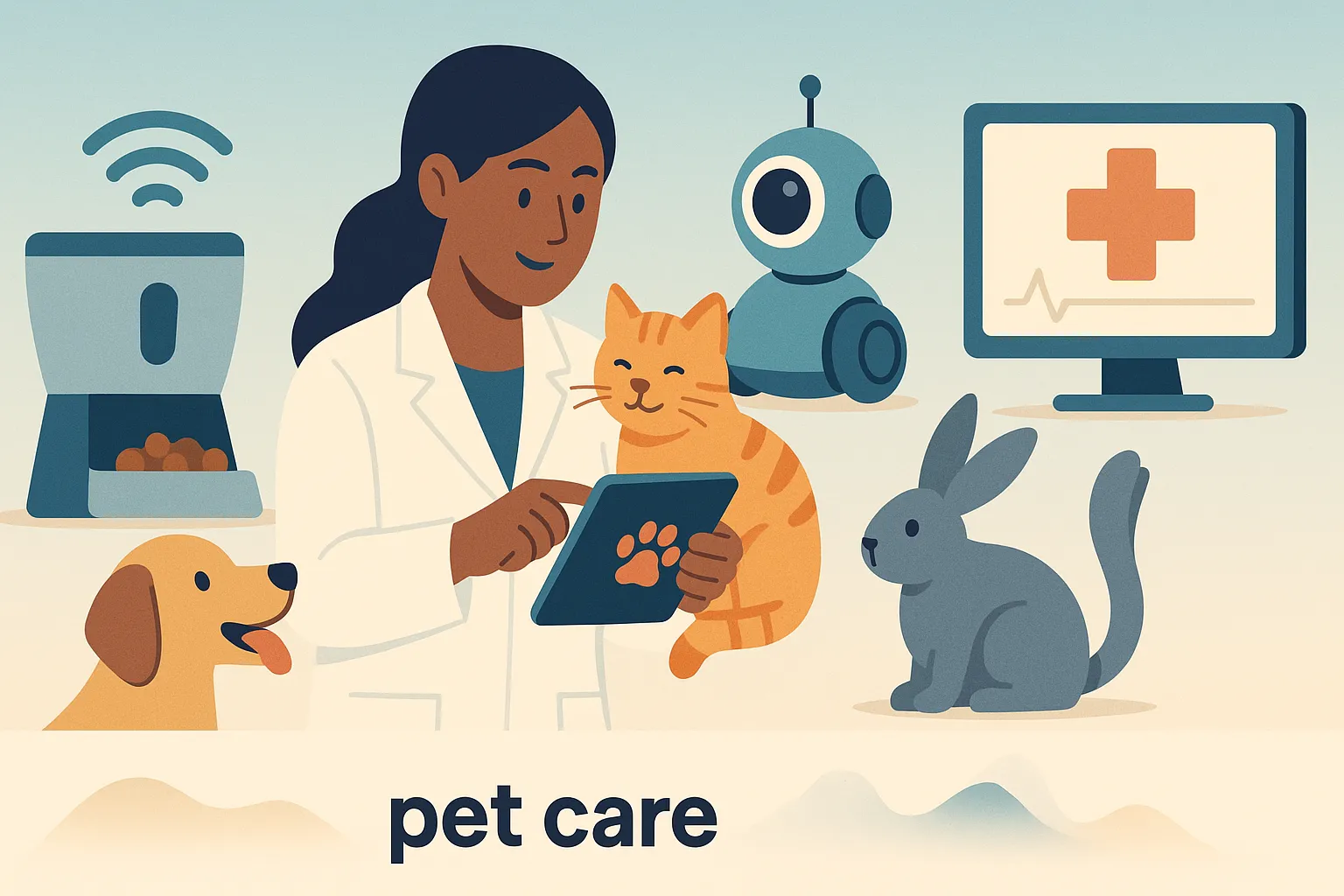
In recent years, pet tech has exploded: smart collars, GPS trackers for dogs, automatic food dispensers, smart fountains, cameras with microphones, and even self-cleaning litter boxes. The problem? The 2026 market is so broad that it’s easy to:
- spend too much on features you’ll never use
- buy unreliable gadgets
- choose devices that aren’t suitable for your dog, cat, or lifestyle
In this article, we’ll take a clear look at pet care trends for 2026: what really matters, what’s still immature, and how to choose smart collars, GPS trackers, fountains, and automatic feeders without wasting money.
1. Pet tech 2026: what is really changing in pet care
Pet technology in 2026 is no longer just “cute gadgets”: many devices have a real impact on:
- safety (pet GPS, real-time tracking)
- health and well-being (activity monitoring, always-fresh water, controlled feeding)
- daily organization (meal management, reminders, remote monitoring)
The main macro trends in pet tech 2026:
- Data integration: apps and devices that communicate with each other (activity, meals, weight, vet appointments).
- Greater autonomy: automatic feeders, smart fountains, and more reliable automatic litter boxes.
- Safety first: more accurate GPS, longer-lasting batteries, anti-escape features.
- Personalization: feeding plans and suggestions based on the pet’s real behavior.
Not everything is essential, but some solutions can truly make life easier and improve the well-being of dogs and cats.
2. Smart collars for dogs and cats: what they really do in 2026
Smart collars for dogs (and smart harnesses) are among the most popular products. They’re not just step counters: 2026 models offer increasingly advanced features.
2.1 Typical features of modern smart collars
The most common features include:
- Activity tracking
- steps, distance, play time
- daily and long-term activity levels
- Sleep monitoring
- sleep duration
- frequent wake-ups or restlessness
- Detection of unusual behavior
- excessive scratching (possible skin issues)
- sudden restlessness or lethargy
- Goals and recommendations
- activity suggestions based on age, size, breed
- alerts if the dog is moving too little
Some high-end models also include:
- temperature sensors for the body or the environment
- stress indicators based on movement patterns (still to be taken with caution)
Remember: no smart collar replaces the vet. But it can help you notice changes that deserve professional attention.
2.2 Pros and cons of smart collars in 2026
Main advantages:
- greater awareness of activity needs
- help managing overweight or inactive dogs
- monitoring after adoption or after a routine change (moving house, a new baby, etc.)
- useful reports to show the vet (sleep/activity trends)
Limits to keep in mind:
- some models require a monthly subscription for advanced features
- data is not always perfectly accurate and should be read as general indicators
- not all smart collars are suitable for very small dogs or cats (weight, size)
2.3 How to choose a good smart collar for your pet
Quick checklist to avoid wasting money:
- Device size and weight
- for small dogs or cats: look for collars under 30 g
- Durability
- IP certification (water- and dust-resistant)
- sturdy materials, preferably bite-resistant
- Battery
- minimum duration: at least 5–7 days of real use
- easy charging (USB-C or magnetic base)
- Management app
- clear, in Italian or at least intuitive
- ability to export or review data history
- Support and updates
- reliable manufacturer, up-to-date reviews, regularly updated app
3. GPS for pets 2026: safety and real-time location tracking
The dog GPS topic remains one of the most searched: fear of losing a pet, dogs running off during walks, adventurous cats. In 2026, pet GPS trackers are more accurate and have better batteries, but there are important differences between models.
3.1 Types of GPS trackers for dogs and cats
The most common devices fall into:
-
GPS with SIM and subscription
- rely on the mobile network
- (almost) real-time tracking
- wide coverage, ideal for travelers or people living in rural areas
-
GPS without SIM (radio frequency, Bluetooth, proprietary network)
- more limited coverage
- often no monthly fee
- good for urban settings or fenced yards
-
Bluetooth tags / proximity trackers
- work through the smartphone when nearby
- they are not true GPS devices: useful for finding a cat in the house/building, much less so if it gets hundreds of meters away
3.2 What has improved in pet GPS trackers in 2026
The main 2026 updates in pet GPS trackers:
- greater accuracy while moving, thanks to combinations of GPS, GLONASS, Galileo
- smarter geofencing: alerts if the dog leaves a safe area (home, yard, dog park)
- “live tracking” modes that are less power-hungry: they don’t drain the battery in just a few hours
- smaller, lighter designs, suitable even for medium-sized cats
3.3 How to choose a pet GPS tracker in 2026
When comparing the different 2026 pet GPS innovations, check:
-
Geographical coverage
- does it work only in Italy or abroad too?
- which mobile networks does it use? Is there a risk of weak signal in your area?
-
Location updates
- how often does it refresh the position?
- is there an emergency mode with more frequent updates?
-
Battery
- realistic lifespan with everyday use (not just claimed autonomy)
- power-saving mode if the pet is indoors
-
Size and attachment
- does it attach securely to a collar or harness?
- is it resistant to bumps, bites, rain, and mud?
-
App and extra features
- walk history
- location sharing with other family members or pet sitters
- movement statistics linked to the pet profile
Practical box – When GPS is really useful
Situations where a GPS tracker for dogs or cats is a sensible investment:
- hunting or working dogs that roam across large areas
- dogs with a strong tendency to run off or fear fireworks/thunderstorms
- semi-free-roaming cats that come home at irregular times
- families who travel often or move around in a camper van
- dogs in an adjustment phase (adoption, past trauma, etc.)
4. Automatic feeders 2026: do you really need one?
Let’s move on to one of the most searched devices: automatic dog cat food dispenser 2026. The promise is simple: scheduled meals, even when you’re not home. But not all models are equal, and not all households truly need one.
4.1 What modern automatic feeders do
The most common features:
- scheduled meal times (1–6 times a day or more)
- adjustable portions for each meal
- anti-greed mode (slow dispensing or in multiple steps)
- app notifications when the meal has been served
In the more advanced 2026 versions, you’ll also find:
- built-in camera to check on the pet during mealtime
- microphone and speaker to talk to your dog/cat
- integrated scale to track actual consumption
- integration with apps for personalized feeding plans (especially for overweight cats)
4.2 Pros and cons of automatic feeders
Advantages:
- more regular and accurate meals, useful for pets that need controlled diets
- a big help for people who work shifts or are often away from home
- reduce the risk of “guessing” and overfeeding
- for cats, they allow several small meals throughout the day, which is more natural for them
Risks and limitations:
- they must not become a replacement for presence: pets still need interaction
- if the device jams and no one is there to check it, the dog/cat may miss a meal
- not all models handle very large or irregularly shaped kibble well
- for very greedy or destructive dogs, they may be knocked over or forced open
In the case of animals with health issues (diabetes, kidney disease, etc.), using a feeder should always be agreed with the vet, especially when strict mealtime management is required.
4.3 How to choose an automatic feeder in 2026
Checklist for choosing a good automatic dog/cat food dispenser:
-
Capacity
- medium-large dog: large hopper or two feeders
- cat or small dog: smaller capacity, but more precise portions
-
Dispensing quality
- auger or anti-clog system
- compatibility with the size of your kibble
-
Power supply and backup battery
- best if it can run both on mains and battery
- essential in case of a blackout or power outlet issues
-
Physical safety
- lockable lid
- heavy or mountable structure to prevent tipping
-
App and remote control
- ability to change schedules even when you’re away from home
- notifications if dispensing fails or the hopper is nearly empty
5. Smart fountains for dogs and cats: hydration always under control
Smart fountains are now one of the most appreciated pet tech products, especially for cats. In 2026 they become quieter, safer, and more sensor-equipped.
5.1 Why smart fountains are so popular
For many animals, especially cats, moving water is more appealing. Potential benefits:
- encourage them to drink more
- keep water fresher and better oxygenated
- filter hair and impurities
- some allow you to monitor via app how much your pet drinks (useful data to show the vet)
5.2 2026 innovations in smart fountains
The best 2026 smart fountains offer:
- water level sensors with alerts and/or automatic shutoff when the tank is empty
- quieter motors (very important in apartments)
- improved filters (activated carbon + multi-stage filters)
- consumption monitoring linked to the pet profile
- notifications to replace the filter or clean the fountain
5.3 How to choose a smart fountain
Essential criteria:
- Capacity suitable for the number of pets in the home
- Easy cleaning: removable parts, easy access to the motor
- Noise: check the stated decibels and real reviews
- Materials: quality BPA-free plastic, stainless steel, or ceramic for sensitive pets
- Safety: automatic shutoff if water is low
Practical box – Minimum fountain maintenance
To prevent bacteria and bad odors:
- wash the fountain at least once a week
- replace the filter according to the instructions (usually every 3–4 weeks)
- check that the motor isn’t accumulating hair or residue
- if you notice your pet drinking less or avoiding the fountain, check for strange noises or odors
6. Other pet tech devices to watch in 2026
Beyond smart collars, GPS trackers, and automatic feeders, 2026 brings many other pet technology solutions:
-
Interactive cameras
- let you see, talk, and in some cases toss treats
- useful for anxious dogs, but they don’t replace training or separation anxiety management
-
Smart toys and puzzle feeders
- activate at set times
- change game difficulty over time
- great for environmental enrichment, especially for indoor cats
-
Automatic litter boxes for cats
- 2026 models are quieter and safer
- some monitor usage frequency and the cat’s weight, which is useful information for the vet
-
Health-care devices
- smart scales that sync data to the app
- mats or beds with sensors for seniors or animals with chronic conditions (still niche, but growing)
As always, ask yourself whether they address a real need or are just an expensive gadget.
7. How to avoid wasting money on pet tech products
With so many new products in pet tech 2026, it’s easy to get carried away. To avoid unnecessary purchases, follow this practical approach.
7.1 Make a list of your real needs
Before buying, ask yourself:
- what specific problem am I trying to solve?
- is it a safety problem (fear they’ll run off) or an organization issue (I can’t manage meal times)?
- is it a temporary need or a structural one (shift work, frequent travel, etc.)?
7.2 Evaluate your pet’s personality and lifestyle
- very active dog, loves the outdoors → GPS + smart collar make sense
- older cat that rarely goes out → a smart fountain or a feeder for medicine/food may be more useful
- anxious dog when you’re away → better to work with a trainer/behavioral vet, and use pet tech only as support
7.3 Check compatibility and long-term durability
Before buying any pet tech device:
- check compatibility with your smartphone (iOS/Android, supported versions)
- verify reviews about server and app reliability (not just the physical product quality)
- consider recurring costs:
- GPS subscriptions
- replacement filters for fountains
- special bags or litter for automatic litter boxes
8. How to integrate pet tech with a management app like PawsPet
The real power of pet tech 2026 emerges when devices and digital management work together.
An app like PawsPet can help you:
- keep a complete profile of your pet (details, weight, photos, documents)
- record vet visits, vaccinations, treatments
- hopefully integrate, over time, data from smart collars, GPS trackers, and feeders (activity, meals, weight) into one single profile
- set reminders for:
- fountain filter changes
- feeder maintenance
- GPS charging
- flea/tick treatment renewals and vaccinations
Practical example of a well-managed “smart” routine
Imagine a typical day with:
- GPS + smart collar: you monitor the walk and get alerts if the dog strays too far
- Automatic feeder: it provides lunch while you’re at work
- Smart fountain: your cat stays hydrated, with filter and water level under control
- PawsPet app: everything is in one place
- weight and activity history
- ongoing treatments
- reminders for annual check-ups and medications
The result is not “technology for technology’s sake,” but a calmer and more informed way to manage your animals’ well-being.
9. Conclusion: choosing the right pet tech in 2026
Pet tech 2026 offers a lot:
smart collars for dogs, increasingly reliable pet GPS trackers, automatic feeders, smart fountains, automatic litter boxes, interactive toys.
To make smart choices:
- always start from the real need of your pet and your family
- evaluate upfront and recurring costs (subscriptions, filters, maintenance)
- choose products with simple apps, solid support, and good reviews
- use technology as support, not as a replacement for presence, training, and veterinary care
If you want to better manage everything related to your animal’s health, routine, and safety, you can:
- organize data, documents, visits, and reminders in a single app
- note how your pet reacts to smart collars, GPS trackers, feeders, and other products
Try to manage your dog or cat’s life in a more structured and peaceful way: the PawsPet app is designed exactly for this kind of daily organization, from health to routine, all the way to finding pet-friendly professionals and services.
FAQ on 2026 pet tech trends
1. Are smart collars for dogs really useful or just a gadget?
They can be very useful if used properly. A smart collar helps you monitor your dog’s activity, sleep, and routine changes. It is especially helpful for:
- overweight or sedentary dogs
- sporty or highly active dogs
- post-adoption or recovery after injuries
It doesn’t replace the vet, but it can provide useful indicators to share during visits.
2. What is the best GPS tracker for dogs in 2026?
There is no single “best” one for everyone. The best GPS tracker for your dog depends on:
- where you live (network coverage)
- your habits (city walks or mountain hikes, frequent travel, hunting)
- your dog’s size
Look for a GPS with good coverage, long battery life, a reliable app, and a device that is lightweight but sturdy. Read updated reviews and check whether there is a monthly fee.
3. Is an automatic feeder suitable for all cats?
No. An automatic feeder can be great for cats that:
- eat dry food
- need precise meal times
- are overweight and require controlled portions
It is less suitable for:
- exclusively wet or homemade diets (unless you use specific refrigerated systems)
- very anxious cats or those that associate food only with the owner’s presence
In case of health conditions (diabetes, kidney disease…), agree on its use with your vet.
4. Can pet tech replace the vet or trainer?
No. Pet technology is a support tool, not a replacement for:
- regular veterinary visits
- programs with qualified trainers/behaviorists
- daily attention and direct observation of your pet
Data collected by smart collars, GPS trackers, feeders, or fountains is valuable when shared and interpreted together with professionals, so you can make more informed decisions about your pet’s health and well-being.