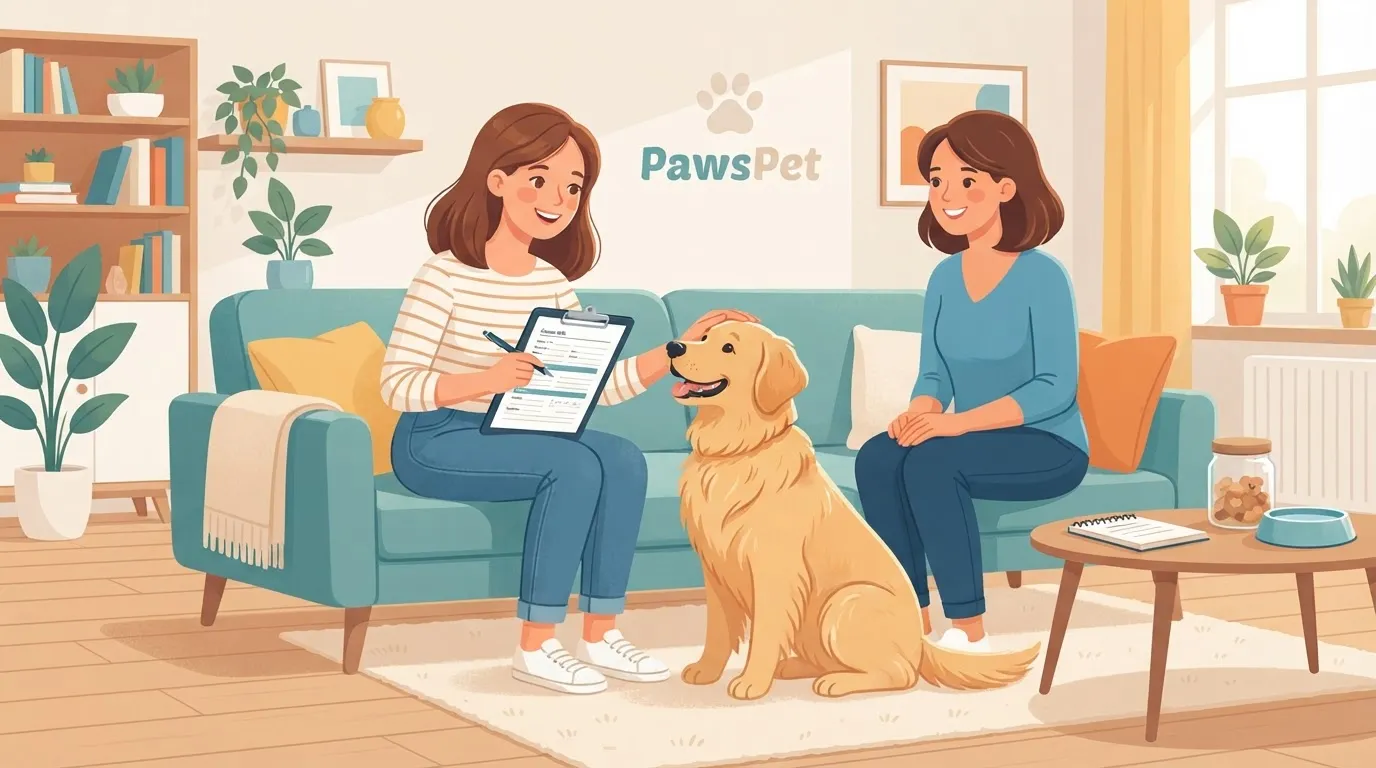
A well-prepared pet sitter intake form turns the first meeting into a useful step, rather than just an introduction. Collecting information about routines, health, safety, and contacts makes it possible to provide a more reliable service and reduce unexpected issues when the owner is away.
The questionnaire does not need to be complicated: it should be clear, easy to update, and focused on the animal’s actual needs.
Why the first meeting matters
The first meeting with a pet sitter is useful for assessing not only the client’s requests but also the animal’s well-being in its usual environment. It is the time to observe the pet’s reactions, understand the household routine, and clarify boundaries, priorities, and responsibilities.
A good pet sitter form helps prevent relying only on memory. It also communicates organization and care, both important for building trust with a new client.
During the meeting, avoid filling everything out hurriedly. Alternate questions with observation: while the owner describes a typical day, check where bowls, leashes, litter trays, toys, carriers, and necessary supplies are kept.
Animal details and daily routine
The first part of the form should collect the essential information the pet sitter needs about the animal. In addition to name, species, age, and sex, record practical details that may affect daily care.
Include at least:
- the animal’s name and any nickname it responds to;
- species, breed, or physical features that help identify it;
- microchip details, if the owner wishes to share them;
- feeding habits, meal times, and stated portions;
- foods, objects, or situations to avoid;
- routines for walks, toileting, litter care, or cleaning;
- rest times and areas of the home the animal can access;
- favorite toys and preferred activities;
- usual signs of stress, fear, excitement, or discomfort.
Also ask how the animal reacts to unfamiliar people, other animals, noises, the doorbell, cars, bicycles, or handling. This information is not meant to label the animal as “difficult,” but to support a respectful approach and help prevent risky situations.
For a dog, it is useful to know whether it pulls on the leash, whether it may be off leash in areas the owner permits, and which commands it knows. For a cat, clarify any usual hiding places and how doors, windows, and balconies should be managed.
Health, safety, and useful contacts
The health section requires care and confidentiality. A pet sitter should know only the information necessary to provide the service safely, without taking the place of a veterinarian.
Include the following in the pet sitting questionnaire:
- the name and contact details of the regular veterinarian;
- an after-hours clinic to contact, if the owner has identified one;
- allergies, known sensitivities, or conditions already reported by the veterinarian;
- current treatments, only with clear instructions from the owner;
- any difficulty with administering medication or handling the animal;
- an alternative emergency contact;
- agreed authorizations in case of an emergency.
If the animal develops sudden symptoms, gets worse, or is involved in an accident, the priority is to contact the owner and a veterinarian. It is helpful to agree in advance on which decisions the pet sitter may make independently, especially if the client cannot be reached.
Also record home safety information: where the carrier is kept, spare keys, the alarm system, products that must be kept out of reach, baby gates, and instructions for entering the home.
Authorizations and agreements to clarify
An intake form does not replace a contract, but it helps make operational agreements explicit. Before the service begins, confirm the dates, times, number of visits or walks, expected duration, and how updates will be shared.
Clarify in particular:
- who may pick up or return the animal;
- whether walks with other dogs are planned;
- which areas, toys, or activities are authorized;
- how to handle delays or changes of plan;
- whether the owner wants photos, messages, or a brief report after each visit;
- which expenses may be incurred in an emergency.
Review the form together before ending the meeting. This gives the client an opportunity to correct details and allows the professional to confirm that the priorities are understood.
How to keep the form up to date
An animal’s needs can change: a diet may be adjusted, a treatment may end, or a new habit may develop over time. Plan to review the form before every long service and whenever the owner reports relevant changes.
Keeping profiles, reminders, and communications in one place can make the work more efficient. On PawsPet, pet sitters and owners can manage useful information about the animal and keep service-related updates more organized.
FAQ
What information should always be included in a pet sitter intake form?
The owner’s and veterinarian’s contact details, routine, feeding information, relevant behaviors, safety instructions, reported treatments, and authorizations for possible emergencies.
Is it useful to meet the animal before the service begins?
Yes. A preliminary meeting allows the pet sitter to meet the animal in its usual setting, observe its reactions, and receive practical instructions from the owner.
Can a pet sitter administer medication?
Only if the owner provides clear instructions and the professional feels prepared to do so safely. If there are doubts, difficulties, or unusual reactions, it is appropriate to contact the veterinarian.