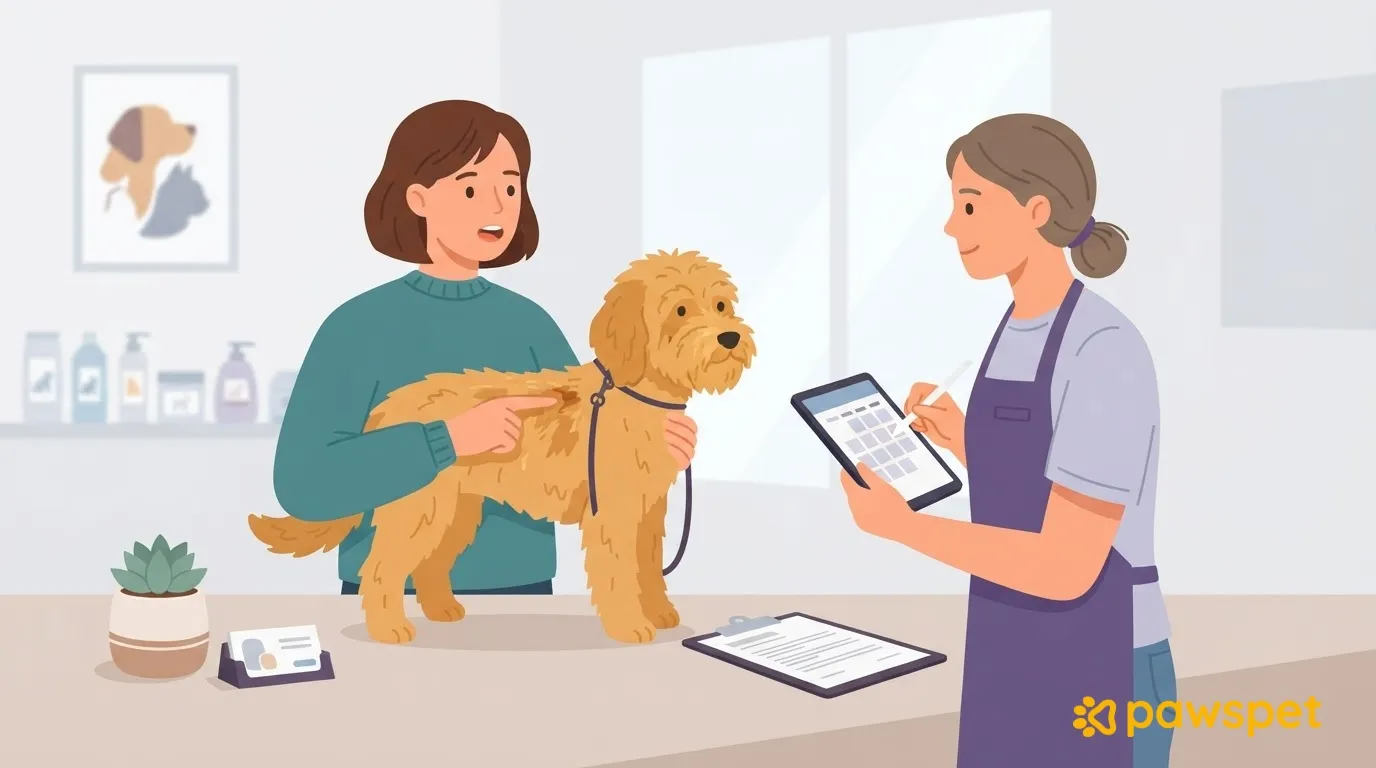
For a first appointment with a new groomer, five kinds of information are useful: your dog’s coat history, reactions to handling and noises, any episodes of fear or biting, guidance from the veterinarian, and the result you want. It’s best to put them together in a short form, send it before the appointment, and go over it in person when you drop off your dog.
Coat and last grooming appointment: the starting point
Start with what the groomer will notice right away: your dog’s age, approximate size, and breed or mix. Then write down when the last grooming appointment was and what was done, such as a bath, a haircut, or just hygiene care, and what the coat is like now: mats, dirt, or shedding.
If you don’t know your dog’s history, for example because you adopted them recently, say so. Also mention any conditions on the day, such as a female dog being in heat, and have a recent photo of the coat ready to send with the form.
How your dog reacts to handling, noises, and waiting
For each item, write “tolerates well,” “doesn’t tolerate well,” or “not sure”:
- paws and nails
- ears
- muzzle and eyes
- tail and hindquarters
- being lifted
- standing on the grooming table
- water
- the sound of the hair dryer and clippers
- being around other dogs
- waiting in a kennel or away from you
“Not sure” is a useful and honest answer: it tells the professional where to proceed more carefully. There’s no need to force your dog to find out in advance.
Fear, growling, or biting: always mention it, with details
Write down any episode of fear, growling, or biting in the form: this information protects both your dog and the professional and helps them plan. It’s understandable to worry about being turned away, but keeping quiet doesn’t help: if the salon isn’t comfortable handling your dog, it’s better to know before the appointment is underway.
Describe the incident clearly and without downplaying it, following this format: “They growled [when], during [situation], after [what happened beforehand]; things went better with [what helped].”
If your dog is already used to wearing a muzzle, say so. If their reactions are intense or frequent, talk to your veterinarian or a trainer beforehand.
Health: only report what you know from the veterinarian
Only include what your veterinarian has told you here; anything you’ve noticed yourself belongs under reactions. If applicable, write down:
- known allergies to products
- skin problems already being treated
- recent procedures or wounds
- areas the veterinarian has identified as painful
- current treatments
- guidance about baths and products
If you’re unsure what is safe during grooming, for example whether your dog can have a bath after a procedure, ask your veterinarian before the appointment. The groomer doesn’t diagnose medical conditions: if they notice anything unusual, it’s up to the veterinarian to assess it.
The result you want and what you’d rather avoid
A few lines are enough: the approximate length you want and, if you have one, a reference photo. Add anything you don’t like, such as fragrance or certain accessories. Say who will pick up your dog and how you’d like to be contacted—a call or a message—when they’re ready or if they need you to make a decision.
The form to copy and when to send it
Copy and fill out the template: if there’s nothing to mention, write “nothing to report”; if you’re unsure, write “not sure.”
- Dog: name, age, approximate size, breed or mix.
- Last grooming appointment and coat condition: when, what was done, and what the coat is like today.
- Tolerates well: items from the list that cause no problems.
- Doesn’t tolerate well: difficult items, describing your dog’s reactions, and anything to mark “not sure.”
- Fear, growling, or biting: when, situation, what happened beforehand, what helped; muzzle, if already accustomed to one.
- Veterinarian’s guidance: allergies, treatments, recent procedures or wounds, painful areas, baths and products.
- Desired result: approximate length and reference photo.
- Things to avoid: fragrance, accessories, or anything else you don’t like.
- Pickup and contact details: who will pick up your dog, and how and at what number to contact you.
Send it a few days before the appointment, along with the coat photo, using the channel specified by the salon so there’s time to read it. When you drop off your dog, go over the key points in person and update the form after each appointment with what worked.
When you send the form, ask the salon whether they need health records, and ask three questions:
- Can they take breaks or stop and call you if your dog is struggling?
- How do they handle dogs while they’re waiting?
- Will they let you know before changing the haircut or service?
If you still need to book, on PawsPet you can search for grooming services, compare prices and availability, and summarize the main points from the form in the booking summary’s notes field.
FAQ
Can I stay during the grooming appointment?
It depends on the dog and the salon, so you’ll need to agree on this in advance: ask when you send the form. If your dog finds it difficult to be away from you, note it under “doesn’t tolerate well.”
Next step
Fill out the form today with what you know, including any “not sure” answers. Then send it to the salon before the appointment so the person welcoming your dog already knows what to expect.