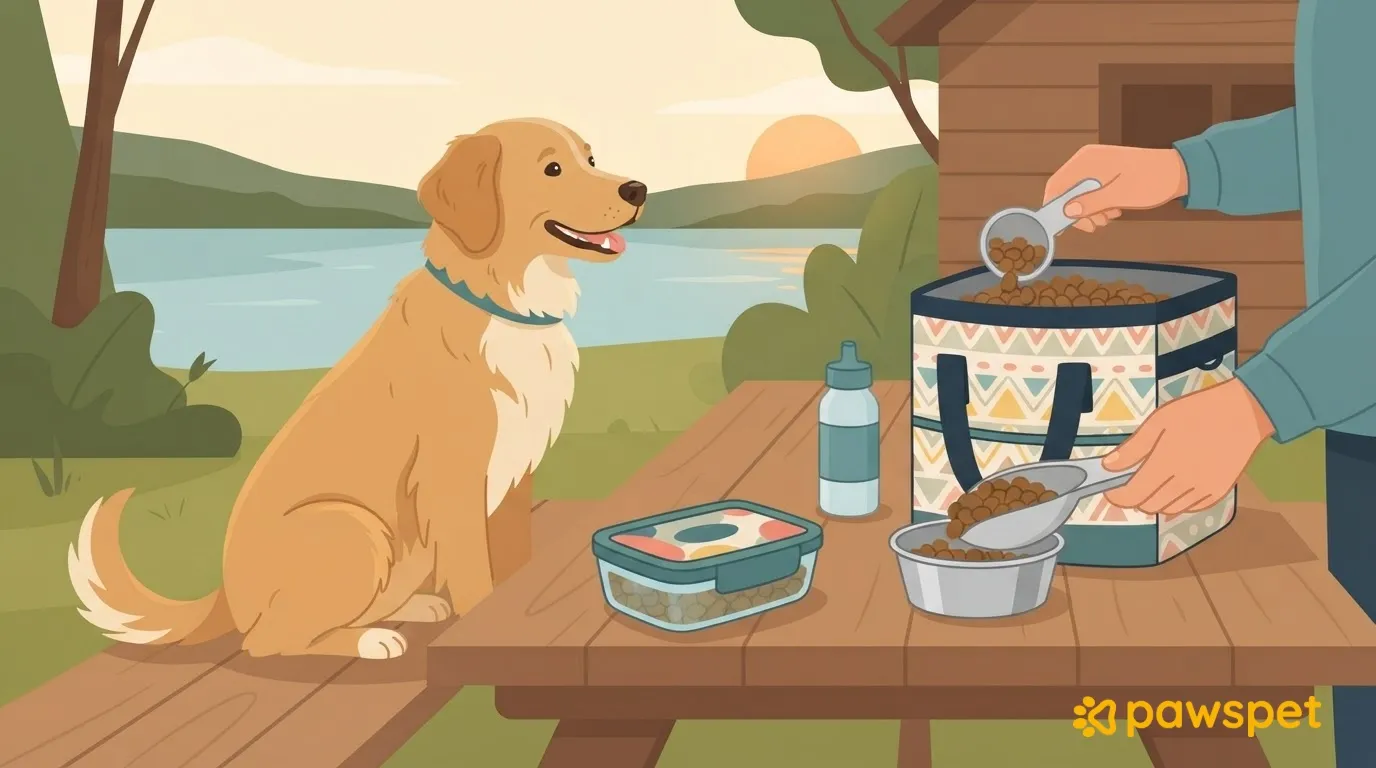
For a stay in a hotel, B&B, or vacation rental, it’s best to bring the same food your dog eats at home, in a quantity you’ve calculated plus some extra, and already divided into portions. That way, you won’t run out or have to switch foods while you’re there. Before you leave, clarify two things with your accommodation: whether you’ll have access to a refrigerator and what rules apply to mealtimes.
How much food to bring: the calculation
The calculation takes three steps:
- Start with the daily portion your dog already eats at home, including treats.
- Multiply it by the number of days you’ll be away, including travel days.
- Add some extra for unexpected situations, such as a delayed return or a damaged package.
Example with made-up numbers: if the daily portion were 10 units (using whatever measure you use at home) and the total number of days away and traveling were 7, you would need 10 × 7 = 70 units; with an extra 2 days’ worth, or another 20 units, you would bring 90. This is only to show how to do the calculation and is not a recommended amount: for your dog’s portions, use what you already feed at home or what your veterinarian has recommended.
Also take a photo of the package label: if you need to buy more food while you’re away, it will help you find the same product.
Same food, ready-made portions, and mealtimes
It’s best not to change foods during your stay: travel, a new place, and different routines are already a lot of changes for a dog, and a sudden food change can upset digestion. If a change is unavoidable, make it gradually and after speaking with your veterinarian.
Prepare pre-weighed portions at home in bags or containers, one per meal or per day: at your destination, you won’t have to measure anything, and you’ll be able to see at a glance whether you have enough for the days remaining. Include treats in your calculation: they’re part of the daily allowance, not an addition to meals.
Keep to your usual mealtimes, even on days out: bring the portion ready to serve so your dog’s routine changes as little as possible.
Water and bowls
Bring a collapsible bowl and extra water for the journey and outings. Always leave fresh water available in your room, with extra care during hot hours. Ask your accommodation whether food and water bowls are provided.
To keep track of mealtimes when your plans change, you can create an activity of the type “Feeding and supplies” in the PawsPet app, set “Repeat” to “N times a day” at the times you choose, and set “Duration” to “Until a date” (your return date), then add a reminder, which will arrive if you’ve allowed the app to send notifications.
Storing food in your room
- Kibble: keep it in a sealed container or a tightly closed bag, away from sunlight, heat sources, and a hot trunk, because sunlight and heat are not good for storage.
- Out of reach: keep food and treats up high or in a closed cupboard, because a backpack on the floor is tempting.
- Opened wet food: store it as directed on the label, since those instructions apply to that product; if there’s no refrigerator in your room, ask your accommodation.
- Leftovers: remove any wet food left in the bowl at the end of a meal, because it spoils faster when left out, especially in hot weather.
- Bowls: wash them every day, because food residue builds up.
Accommodation rules and food offered by others
Ask your accommodation where your dog is allowed to eat: in your room, on the terrace, or in the garden. Also ask whether your dog can enter the breakfast room or restaurant and where they’re expected to stay. If dogs are allowed, keep yours away from buffets, tables, and leftovers.
Politely ask staff and other guests not to give your dog food: a morsel offered as a friendly gesture can throw off your portion calculations. If the accommodation offers welcome snacks or food, check the ingredients against your dog’s known allergies and, if in doubt, don’t give them to your dog.
Remember that some common foods are dangerous for dogs, such as chocolate and grapes: if your dog eats any, contact a veterinarian immediately. Also contact your veterinarian if your dog stops eating or has persistent vomiting or diarrhea.
In practice: prepare the portions the day before you leave, and ask your accommodation whether there’s a refrigerator and what rules apply to mealtimes.
FAQ
Is it a good idea to buy food at your destination?
Only if you’re sure you can find the same product in the area. If you’re not, you may have to change foods while you’re there: bring food from home and consider buying it locally only as a backup.