When a new dog is about to arrive at home — puppy or adult, adopted from a shelter or taken from a private owner — the question is always the same: what should you buy before they get here?
The fear is twofold:
- forgetting something important (for example, the right leash or suitable bowls)
- spending money on useless items that will end up in a closet.
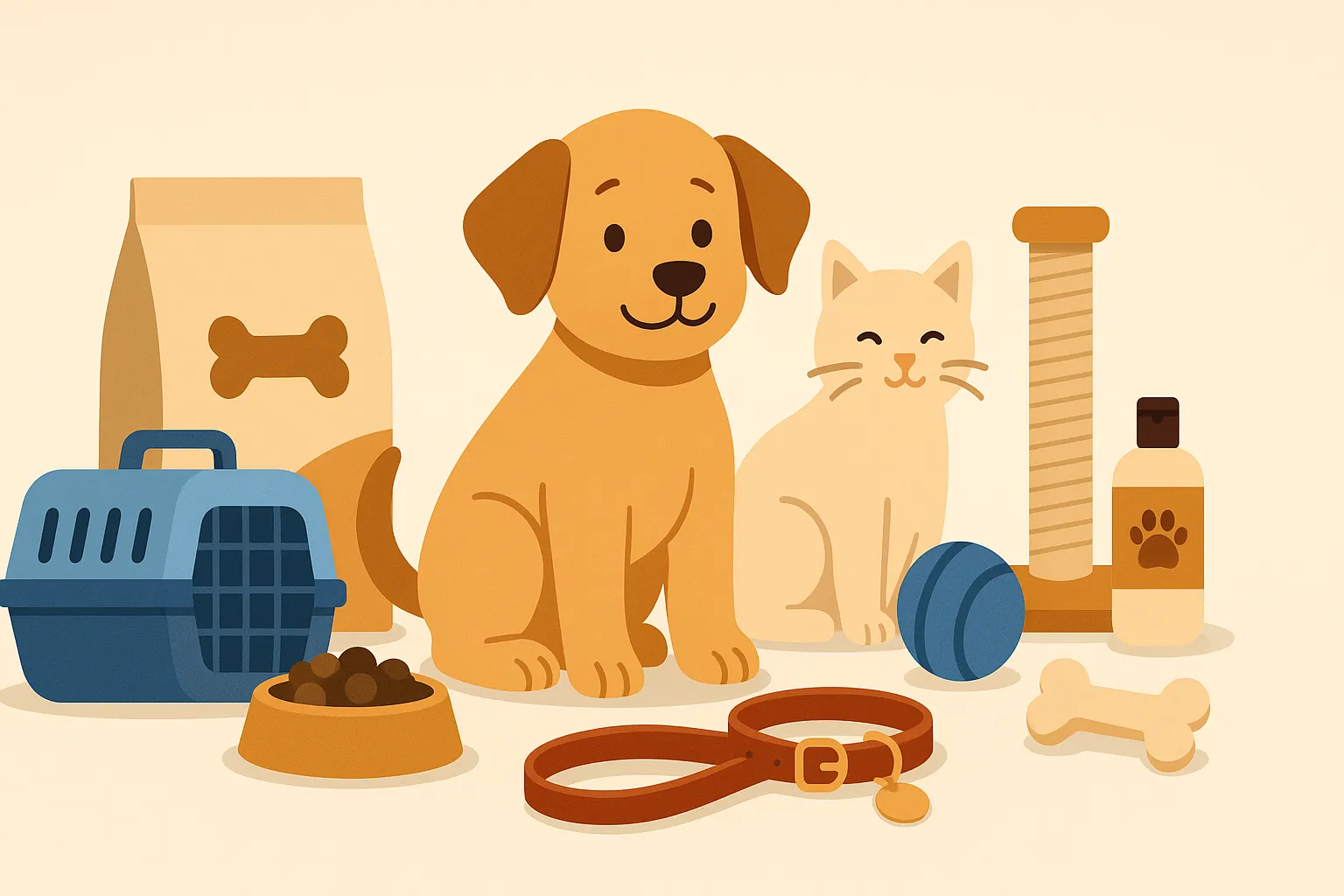
In this article you’ll find a complete, well-thought-out checklist for a basic dog starter kit, with everything essential for a new dog at home: from the bed to toys, from hygiene products to the indispensable accessories for going out safely.
It will help you prepare calmly, without impulsive purchases, avoiding common mistakes and duplicates.
1. Before you shop: 4 questions to ask yourself
Before rushing to buy the “puppy kit” or a huge new dog starter set, pause for a moment and clarify:
-
The dog’s age
- Puppy (up to 12 months)
- Adult
- Senior
This affects: type of food, toys, leash, and any barriers in the house.
-
Size and build
- Small, medium, large, giant
The dog’s size and strength are crucial for choosing a harness, leash, bowls, carrier, and bed.
- Small, medium, large, giant
-
Where the dog is coming from
- Breeder / private owner
- Shelter / rescue
- Adoption from another family
Often some basic accessories (harness, bowl, blanket) are already provided or recommended by the person rehoming the dog.
-
The family’s lifestyle
- Do you live in an apartment or a house with a garden?
- Are you sporty, or do you prefer relaxed walks?
- Will the dog travel often by car?
These answers guide you toward truly useful accessories for your daily routine.
2. Food and bowls: the foundation of daily well-being
2.1 What to buy for the new dog’s diet
To start, you only need a few essentials:
- Kibble or wet food
- Always ask the shelter, breeder, or vet what food the dog is eating now.
- It’s best not to change food immediately: switch gradually over 7–10 days to avoid digestive upset.
- Treats / training rewards
- Ideal for reinforcing correct behavior during the first days at home.
- Choose simple, good-quality treats appropriate for the dog’s size and age.
- Any veterinary supplements
- Only if recommended by a professional (weak puppies, senior dogs, medical conditions).
2.2 Dog bowls: which ones to choose and how many
Dog bowls are among the most-used accessories, so it’s worth choosing them carefully.
Indispensable accessories:
- 1–2 food bowls
- 1 water bowl always available
Recommended materials:
- Stainless steel: hygienic, durable, easy to clean.
- Ceramic: stable, nice-looking, but more fragile.
- Plastic: only if high quality, without sharp edges or scratches that are hard to clean.
Useful features:
- Non-slip base (especially on smooth floors)
- Not too high a rim for puppies or small dogs
- Raised bowls for very tall dogs or those with joint issues (check with your vet)
For dogs that eat too fast, consider an anti-gulp / anti-slip bowl or a “slow feeder.”
3. Bed, resting spots, and comfort zones
3.1 How many beds are needed and where to place them
A new dog at home needs a safe, quiet place where they can retreat.
Usually:
- 1 main bed in the living area (where you spend most time)
- An optional second bed or mat in the bedroom (if you choose to let them sleep near you)
- A blanket or support mat (sofa, travel, vet visits)
Ideal placement:
- Away from drafts and constant foot traffic
- Not completely isolated, but not in the middle of chaos either
- A “their” corner, where no one disturbs them while they rest
3.2 What kind of bed to choose
To build your basic dog kit:
- Soft cushion/bed
- Choose a size that lets the dog stretch out fully.
- Removable cover and machine washable.
- Mat or blanket
- Handy for travel or as a portable “place” to bring along (to a restaurant, to friends’ homes).
- For puppies who tend to chew: durable materials, nothing with stuffing that can be destroyed too easily.
For senior dogs or dogs with joint problems, consider an orthopedic mattress (with your vet’s advice).
4. Leash, harness, and collar: safety first
Many people focus on toys and beds, but among the essential dog accessories are, above all, those related to outdoor safety.
4.1 Collar and harness: which to choose first
For a new dog at home, it’s advisable to have:
- Simple collar
- Not a choke collar, not a half-check collar to start.
- With a sturdy ring for ID tag and leash.
- Harness
- H-shaped or Y-shaped model, adjustable to the dog’s size.
- Avoid harnesses that restrict shoulders and shoulder blades, especially for growing puppies.
For small puppies and insecure dogs, a harness is often more comfortable and supports a calmer walk.
4.2 Leash: length and type
In the basic dog kit, you should not be without:
- Fixed leash (1.5–2 meters / 5–6.5 feet)
- Nylon or leather, sturdy but light.
- More practical for basic training and first walks.
- Optional long line (5–10 meters / 16–33 feet)
- Useful for practicing recall safely, in parks or open areas.
Retractable leashes are convenient but not ideal for the first outings: dogs learn to pull constantly to move forward. It’s better to introduce them later, if truly needed.
4.3 ID tag and microchip: identifying your dog
In addition to collar and leash, these are essential:
- ID tag with phone number
- Even if the dog has a microchip, the tag speeds up reunification if they get lost.
- Microchip check or registration
- This is usually done by the shelter, breeder, or vet.
- Make sure it is registered in your name and up to date.
5. Hygiene products: what you really need (and what can wait)
5.1 Basic hygiene for the first days
Your new dog starter kit should include:
- Poop bags and a bag holder to attach to the leash
- Dog-specific wet wipes
- To clean paws and coat after walks, especially in rainy weather.
- Brush or slicker brush, suitable for the dog’s coat type
- Dedicated dog towel
- Microfiber is best: it dries quickly and takes up little space.
For a full bath:
- Dog shampoo (do not use human shampoo)
- Optional conditioner for long coats (if recommended by the groomer/vet)
Don’t overdo baths: frequency and products should be agreed with your vet or groomer, depending on skin and coat type.
5.2 Extra useful accessories (but not urgent)
Once the routine is established, you can consider:
- Toothbrush and dog-specific toothpaste
- Ear-cleaning lotions (under veterinary guidance)
- Parasite prevention products (spot-on, collar, tablets) — choose with your vet
6. Toys and enrichment: what to buy for a happy dog without overdoing it
Toys are essential, but it’s easy to get carried away and fill the house with items that barely get used.
6.1 Basic toys for the puppy kit or adult dog
To start, a few different types are enough:
- Chew toys
- Ropes, durable rubber bones, non-toxic toys.
- They help relieve stress and save furniture and slippers, especially with puppies.
- Fetch toys
- Soft balls, sturdy plush toys, throw toys (not real sticks).
- Mental stimulation toys
- Kong or similar toys you can fill with food
- Snuffle mats
- Simple beginner puzzles
Observe your dog: some love tug-of-war, others prefer searching for food, others still like tearing up fabric. Choose toys based on their real preferences.
6.2 What to avoid or use with caution
- Toys that are too small and could be swallowed
- Easily destroyed objects with detachable parts (plastic eyes, bells)
- Very noisy toys if you live in a building sensitive to noise
7. Carrier, car travel, and getting around: safety on the road
If the dog will travel by car (which is almost always the case, for vet visits or holidays), your basic dog kit should include at least one safety solution.
7.1 What you need to transport the dog by car
Main options:
- Hard carrier or kennel
- Ideal for small and medium-sized dogs.
- It must be large enough for the dog to stand up and turn around.
- Seat belt with approved harness
- Never attach the belt to the collar, always to the harness.
- Car crate/kennel for larger dogs
- Barrier or divider net if they’ll travel in the trunk, as required by road rules
7.2 Other useful travel accessories
- Seat cover or trunk liner
- Foldable water bowl
- A familiar blanket or mat (reduces stress and travel nausea)
With PawsPet you can track vet appointments, vaccine reminders, and preventive treatments, so you can better organize the trips needed for your dog’s health.
8. Home accessories: gates, pens, mats, extra bowls
Especially with a puppy, some accessories help you manage the space at home.
8.1 For puppies and dogs still settling in
- Gate/barrier for doors or stairs
- To block access to off-limits areas (kitchen, stairs, delicate rooms).
- Modular playpen
- Useful in the very first weeks with puppies, to prevent them from roaming everywhere when you can’t supervise.
- Absorbent pads (puppy pads)
- Useful only as a transitional phase with puppies or dogs that cannot yet go out regularly.
- They do not replace walks; they are only a temporary aid.
8.2 Protecting the house and the dog
- Gather exposed electrical cables
- Keep toxic products up high (cleaners, medicines, dangerous plants)
- Consider a sofa cover if the dog will be allowed on it
9. Documents, health, and paperwork: the “invisible kit” you can’t forget
Beyond physical items, welcoming a new dog into the family also requires some essential documents.
9.1 Documents to have right away
- Health record
- Vaccinations received
- Parasite treatments
- Any tests or ongoing treatments
- Microchip certificate and registration in the canine registry
- Adoption or transfer documents (contract, foster agreement, etc.)
If anything is missing, book a vet appointment in the first few days: in addition to a general check-up, you can clarify questions about diet, prevention, sterilization, etc.
9.2 How to organize your dog’s health data
To avoid losing track over time, you can:
- Keep a physical folder with all documents
- Use an app like PawsPet to:
- Upload photos of the health record
- Log vaccinations and boosters with automatic reminders
- Save contacts for vet, groomer, trainer
- Record weight, treatments, and visits
10. How much does a basic kit for a new dog cost?
The cost of a new dog starter kit can vary a lot depending on size, product quality, and where you shop.
As a rough guide (broad ranges only):
- Bed / mattress: €20–80
- Bowls (2–3 pieces): €10–40
- Collar + harness + leash: €30–100
- Basic toys (4–5 pieces): €20–60
- Basic hygiene products: €20–50
- Carrier / car safety solution: €30–150
- Treats and food for the first month: €30–80 (very variable)
Approximate total for a basic dog kit: €130–400, excluding veterinary and paperwork costs.
11. Complete list: what to buy for a puppy or adult dog (printable checklist)
11.1 New dog basic kit – essentials
For eating and drinking:
- Kibble/wet food (the same as used up to now, for gradual transition)
- 1–2 food bowls
- 1 water bowl (always available)
For sleeping and resting:
- 1 main bed/mat
- 1 blanket or mat
For going out safely:
- Adjustable collar (not a choke collar)
- Harness suitable for the dog’s size
- Fixed leash (1.5–2 m / 5–6.5 ft)
- ID tag with phone number
For basic hygiene:
- Poop bags + bag holder
- Dog wet wipes
- Brush suitable for the coat type
- Dedicated towel
For play:
- 1–2 chew toys
- 1 fetch toy (ball/plush toy)
- 1 mental stimulation toy (e.g. Kong)
For the car (if needed):
- Carrier / kennel / safety system
- Mat or seat cover
- Foldable bowl
11.2 Useful but not urgent accessories
- Long line (5–10 m / 16–33 ft) for recall training
- Gate/barrier for doors or stairs
- Absorbent pads (early puppy phase)
- Dog shampoo
- Dog toothpaste and toothbrush
- Snuffle mat
- Second bed (bedroom or office)
- Indoor kennel (if welcomed and used correctly)
12. How to use PawsPet to manage your new dog
Having the basic kit ready is only the first step. Then comes the everyday management: appointments, reminders, information scattered across messages and paper sheets.
With PawsPet you can:
- Create a complete dog profile with photos, personal data, microchip info
- Record vaccines, parasite treatments, visits with automatic reminders
- Keep a history of weight, treatments, and documents always at hand
- Search for and contact vets, groomers, trainers, pet sitters in your area
- Organize your dog’s life collaboratively among multiple family members
That way you can focus on what really matters: building a calm relationship with your new companion, with less organizational stress.
Conclusion: enjoy the arrival, the basic kit is (almost) the last thing
A new dog at home brings excitement, a little fear, and a lot of change. Having a well-thought-out basic dog kit ready allows you to:
- welcome them more calmly
- avoid wasting money on useless accessories
- focus on their real needs, not just the look of the setup
Start with the essential accessories — bowls, bed, leash, harness, basic toys, and essential hygiene products — and add the rest only if and when needed.
If you want to simplify management from day one, try the PawsPet app: it helps you keep track of your dog’s health, appointments, and important information in one place, so you can focus on enjoying your new life together.
FAQ on what to buy for a new dog at home
What should I buy for a puppy before they arrive?
For a puppy you need at least:
- food suitable for their age (the same used so far, for a gradual transition)
- bowls for food and water
- a bed or soft mattress
- collar, harness, and fixed leash
- poop bags and dog wipes
- 2–3 toys (chewable, fetch, mental stimulation)
- absorbent pads for the first few weeks if needed
The rest (long line, kennel, extra accessories) can be considered after a few weeks, based on actual needs.
What are the essential accessories for an adopted adult dog?
For an adult dog, the essentials are:
- collar/harness and leash suited to their strength
- ID tag with phone number
- food and water bowls
- a comfortable bed or mat
- basic hygiene products (brush, wipes, bags)
- a few toys suited to their energy level and interests
In addition, it’s important to have all veterinary documents in order right away and schedule a check-up.
What bed and harness size should I buy if I don’t know the exact size yet?
If you haven’t seen the dog in person yet, ask the shelter/breeder/rescue for:
- current weight and expected adult weight
- chest circumference
- any photos including objects for reference (for example, next to a person)
For the harness, choose highly adjustable models with a wide size range. For the bed, it’s better to go slightly larger than too small: you can always add a blanket to “fill” the space.
Is it better to buy everything at once or build the basic dog kit in stages?
The ideal approach is:
- buy only the indispensable accessories before arrival (bowls, bed, collar/harness, leash, a few toys, basic hygiene)
- observe the dog for 2–3 weeks
- then add, in stages, what proves truly useful (second bed, kennel, specific toys, car accessories, etc.)
This way you reduce waste, avoid duplicates, and build a custom setup for your dog and your lifestyle.