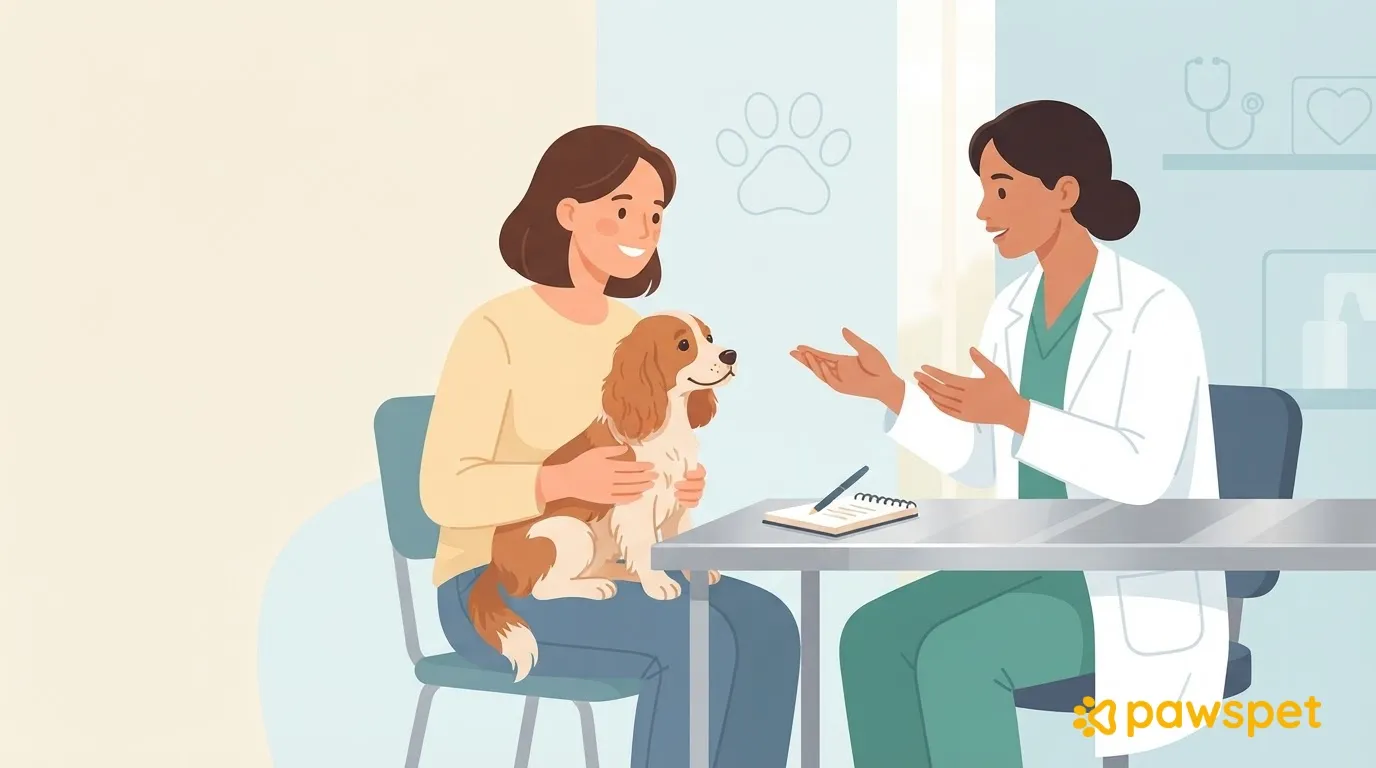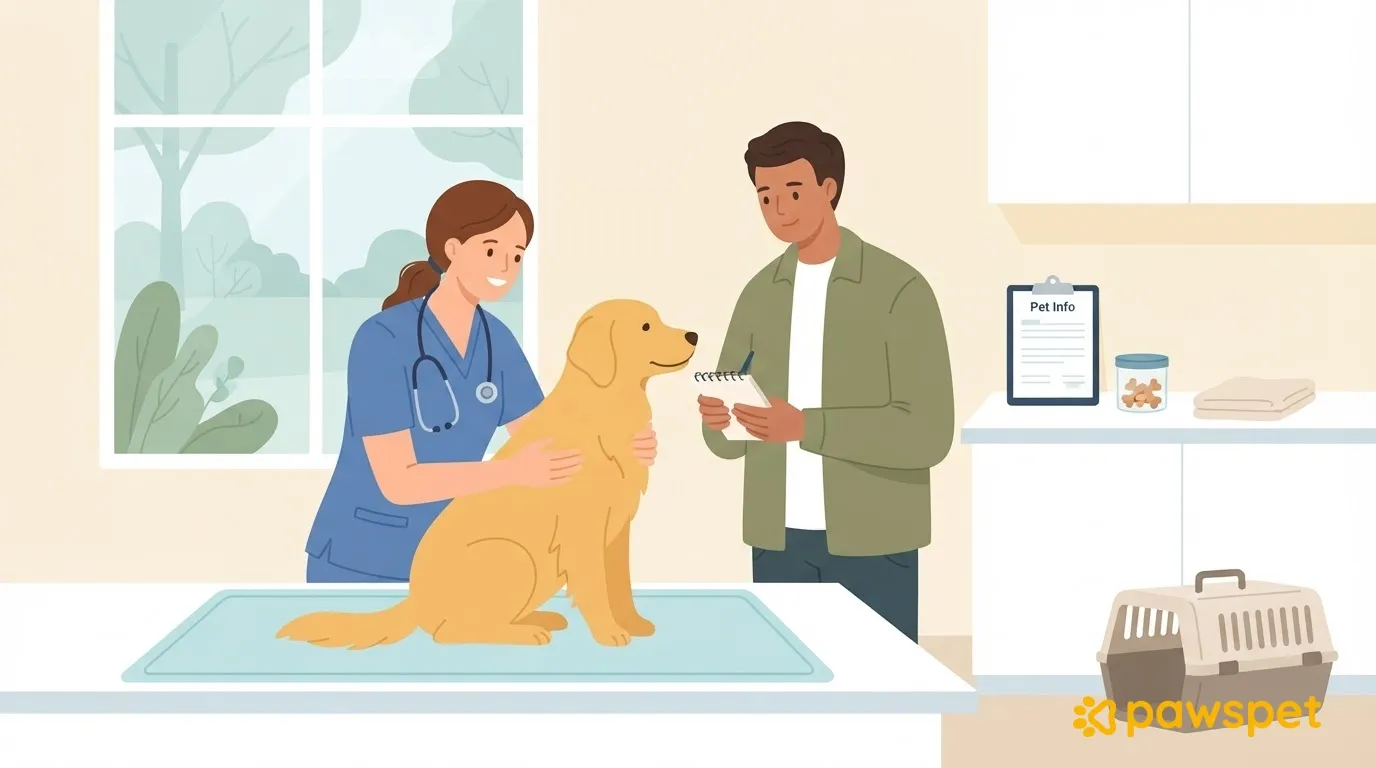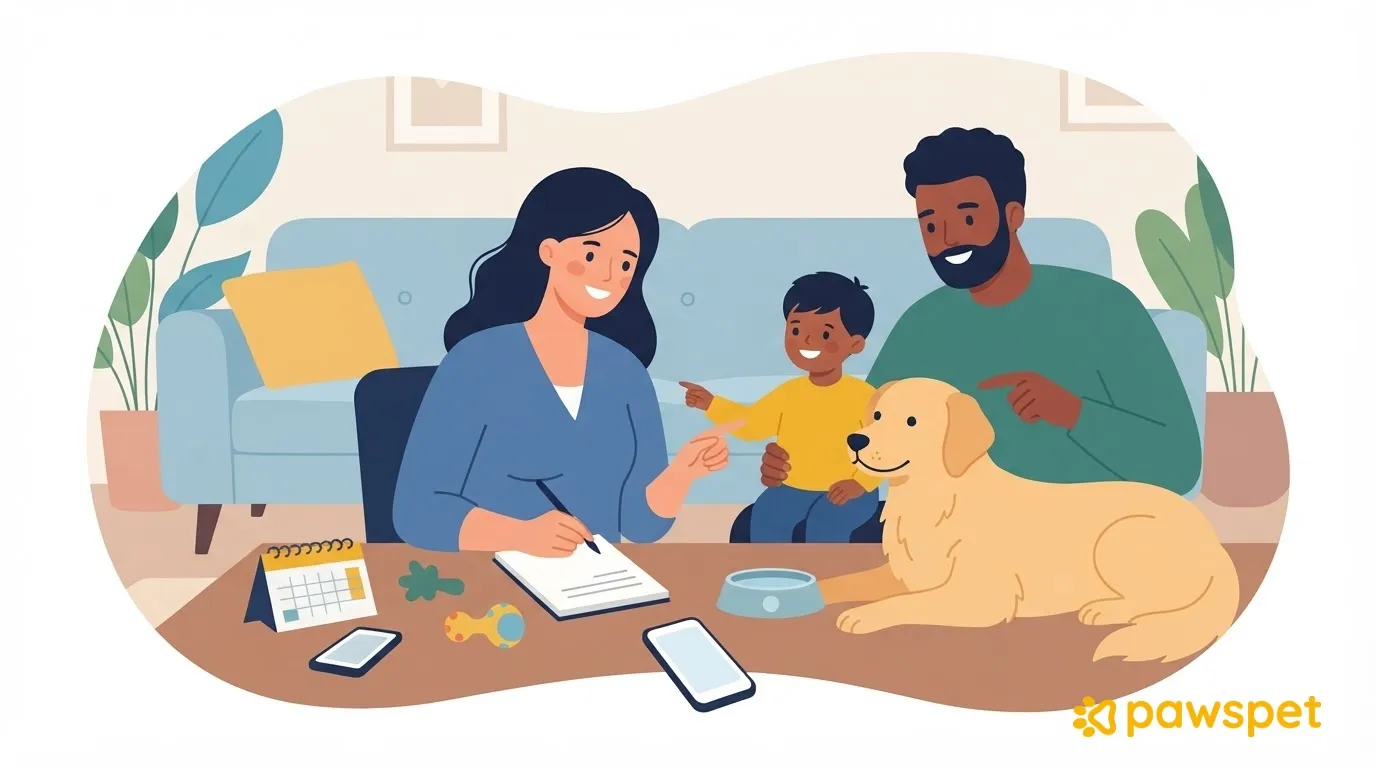
In a home where different people see the dog or cat at different times, you need one shared symptom diary, with one simple rule: one episode, one entry. Write down each episode just once, with the date and time, what was seen, the context, and who was there. Before the visit, one person reviews everything, combines duplicate entries, and prepares a summary.
The diary records observations; it does not interpret them. That is the vet’s job. And the urgent signs listed below cannot wait for the diary: call first.
Why observations get lost or duplicated
The problem is not just remembering: more people means more versions. With symptoms that come and go, such as occasional vomiting, an on-and-off appetite, a mild limp, or scratching, everyone tells their own part of the story. The same bout of vomiting, reported by two people, becomes two episodes: one “after breakfast,” another “around eight.” And anyone who only sees the pet in the evening may not know what happened that morning.
After a few days, memories get muddled. And observations scattered through the family chat among photos and shopping lists are hard to find when you need them.
What to write in each entry
- Date and time of the episode.
- Objective description: what, how much, appearance, duration. “Their stomach hurts” is a guess; “they refused their bowl and curled up” is what you saw.
- Context: before or after a meal, after a walk, something new at home, a different food.
- What they did afterward: whether they ate, drank, played, or slept.
- Who saw it.
- Photos, when possible.
An example, before and after:
- Vague note: “They threw up this morning.”
- Useful note: “Tuesday, 7:40 a.m.: vomited food shortly after breakfast, once. Then drank and played. Seen by Luca. Photo attached.”
Also note what is normal, such as finishing a meal or having regular stools: this helps you see the overall pattern, not just the worst days.
How to avoid duplicates between family members
- Whoever sees it writes it down right away, while the memory is fresh.
- Anyone who arrives later reads the latest entries before adding one. If it is the same episode, they add only their own detail to the existing entry.
- One person weighs the pet and records the measurements so the values remain comparable.
- Assign one person to each symptom to review and combine duplicate entries in the evening or before the visit.
When not to wait until the diary is complete
A few examples, not a complete list. If you notice any of these signs, contact your vet or an emergency veterinary clinic right away:
- difficulty breathing;
- collapse or fainting;
- seizures;
- suspected ingestion of toxic substances or medication intended for human use;
- major trauma;
- bleeding that will not stop;
- a cat going in and out of the litter box and straining without urinating.
If in doubt, call: you can complete the diary afterward.
Bringing the diary to the appointment
Before the visit, turn the entries into a five- or six-line summary so you already know what to tell the vet:
- what you observed;
- when it started;
- how many times, counting each episode only once;
- what has changed over time;
- medications or supplements already being used;
- the questions you want to ask.
Have the photos ready on your phone; you can show any videos from your gallery. After the visit, write down the instructions you received in the same place as the diary so no one has to remember them.
If you use PawsPet as a shared diary
In the PawsPet phone app, open the pet’s profile and the “Health” tab: the “+” button opens “Add health record.” Choose “Other,” not “Condition” (intended for diagnoses and their course), and give the entry a descriptive name, for example, “Observations: vomiting”—one entry per symptom. The date and notes describe the first episode; in the final “Photo” step, you can attach files in PDF, JPG, JPEG, PNG, or HEIC format. Then save.
Each subsequent episode becomes an update to that entry: open it from the “History” section of the “Health” tab and, in the “Updates” section, tap “New” to add the date and note. Write the time in the note text, along with who saw the episode: each update shows who wrote it or the date.
Enter weight in the “Measurements” tab, which keeps only one measurement per day: if a second family member records the weight on the same day, they will find the existing value and update it instead of duplicating it.
For family members to add updates and measurements, they need to be collaborators with “Edit” access to the “Health” area: from the ⋮ menu on the pet’s profile, choose “Collaborators,” then “Add collaborator.” A new collaborator starts with only “View” access to “Health”: they can read, but they will not see “New.”
If you prefer to see episodes in the calendar, there is also the “Symptom monitoring” activity type in the “Health” category.
With one entry that grows as family members add updates, you can arrive at the appointment with an orderly timeline instead of scattered memories.
Prepare today
- Choose where to keep the diary (app, notebook, or shared note): one place only.
- Decide who will be the point person.
- Explain the “one episode, one entry” rule to everyone.
- Save your vet’s number and that of an emergency veterinary clinic in your contacts.
Frequently asked questions
What if not everyone in the family uses PawsPet?
To add someone as a collaborator, they must already have a PawsPet account. Others can pass their observations to the point person verbally or by message: the point person enters them in the record and notes who saw what (“seen by Grandma Rosa, 5 p.m.”), so the chat does not become the archive.