
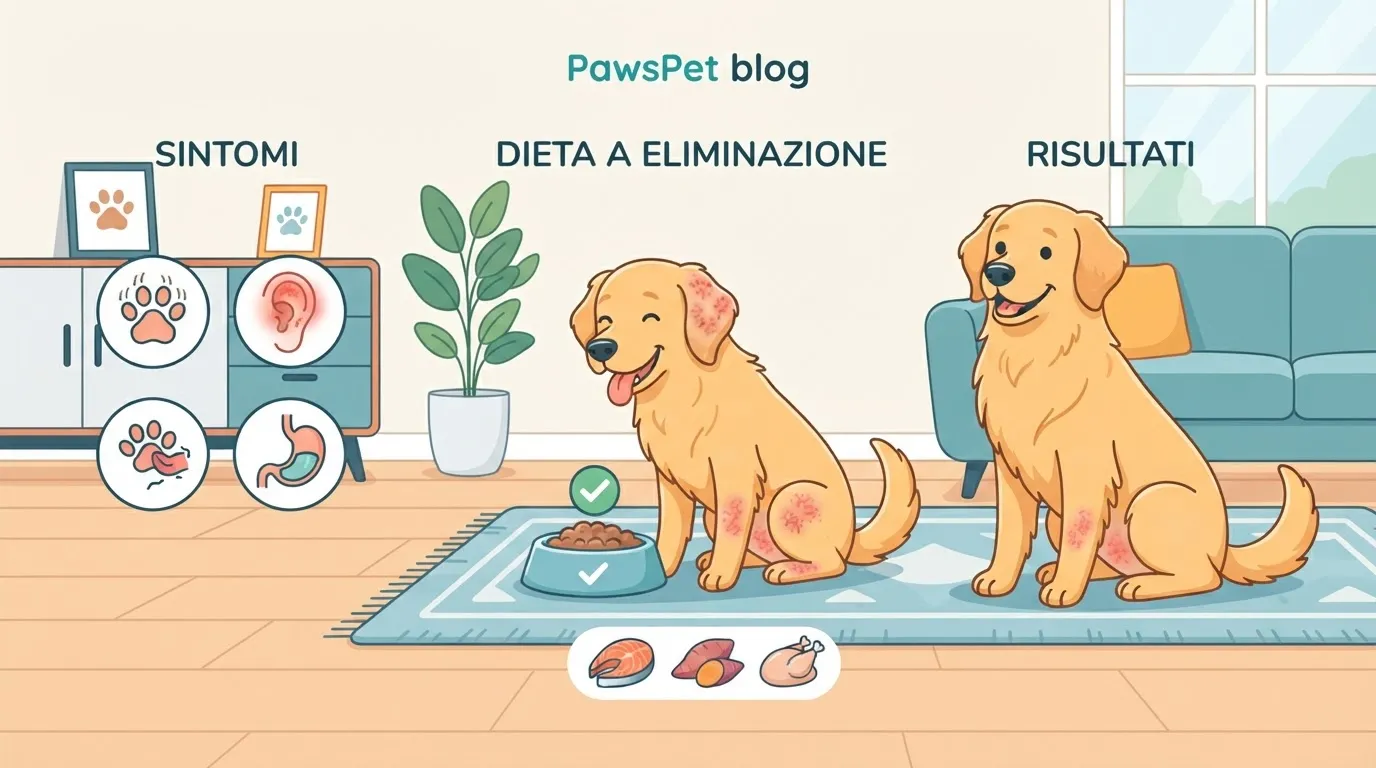
Food allergies in dogs can appear as persistent itching, skin problems, or digestive issues that keep returning over time. Finding out whether food is genuinely involved requires observation, consistency, and veterinary support: changing your dog’s diet at random can make it harder to reach a reliable answer.
Food allergies in dogs and intolerances: what is the difference?
The term food allergies in dogs refers to an immune system reaction to one or more components of the diet. A food intolerance in dogs, on the other hand, is not necessarily immune-related and may be linked, for example, to difficulty digesting an ingredient or to an individual sensitivity.
In everyday life, the distinction is not always obvious because the signs can overlap. A veterinarian considers the overall picture, medical history, usual diet, and other possible causes, such as parasites, skin infections, or environmental allergens.
It is important to avoid drawing quick conclusions: a single episode of soft stool after a new treat does not, by itself, prove an allergy. Recurring symptoms, however, deserve professional evaluation.
What symptoms should you observe in your dog?
The most frequently mentioned sign is food-related itching in dogs, but it is not the only one. Some dogs scratch, lick, or nibble themselves frequently, even without clear seasonality; others mainly develop gastrointestinal problems.
Signs to record include:
- frequent itching on the paws, ears, muzzle, groin, or abdomen;
- redness, irritation, hair loss, or persistent licking;
- recurring ear infections or ear discomfort;
- vomiting, soft stools, diarrhea, or more frequent bowel movements;
- flatulence and persistent changes in stool quality;
- worsening symptoms associated with treats, table scraps, chews, or new foods.
Not all of these symptoms are caused by diet. If your dog develops facial swelling, breathing difficulties, collapse, severe vomiting, or other sudden and serious signs, contact a veterinarian or an emergency veterinary service immediately.
How does an elimination diet for dogs work?
An elimination diet for dogs is the method most commonly used to determine whether certain foods contribute to symptoms. It does not mean trying many different foods, but following a controlled plan established by a veterinarian.
Usually, the veterinarian selects a diet containing proteins the dog has not eaten before or a food formulated with hydrolyzed proteins, meaning proteins broken down into very small fragments. The plan must be followed for the period specified by the professional, without exceptions.
During this phase, your dog should receive only:
- the prescribed or agreed food;
- water;
- any medications or supplements approved by the veterinarian;
- compatible treats, if included in the protocol.
Even small amounts of biscuits, table scraps, chew bones, flavored toothpaste, or palatable medications can affect the assessment. If symptoms improve, the veterinarian may assess a controlled reintroduction of specific ingredients to check the dog’s response.
Mistakes to avoid during the process
Consistency is just as important as choosing the food. The most common mistake is alternating products “just to be safe”: this makes it impossible to understand which ingredient the dog can actually tolerate.
To make the process clearer:
- keep a complete list of all dry food, wet food, treats, chews, and table scraps your dog receives;
- inform everyone who cares for your dog, including family members, dog sitters, and boarding staff;
- record itching, stools, vomiting, and the condition of the ears and skin every day;
- weigh your dog according to the instructions you receive, especially if the diet changes;
- do not stop or change prescribed medications without speaking to your veterinarian.
With PawsPet, you can organize reminders for appointments and checkups, as well as collect useful health information in one place: an orderly timeline makes it easier to report changes and progress to your veterinarian accurately.
When should you consult a veterinary nutritionist?
If symptoms persist, recur, or affect your dog’s well-being, it is appropriate to request a veterinary evaluation. A veterinarian with expertise in veterinary nutrition can create a complete and balanced diet, avoiding deficiencies caused by sudden restrictions.
Bring the labels of the foods used, a list of treats, and a symptom diary to the appointment. This information helps the veterinarian plan an elimination diet that is more accurate and realistic for your household routine.
FAQ about food allergies in dogs
How long does an elimination diet last?
The duration depends on the clinical picture and the protocol established by the veterinarian. For the results to be reliable, the diet must be followed strictly for the entire agreed period, without extra foods.
Can I prepare a homemade diet for my dog?
Only if it is formulated by a veterinarian with expertise in nutrition. An improvised homemade diet may be incomplete or contain ingredients that interfere with the assessment.
Do food allergies only appear in young dogs?
No. They may be considered at any age if a dog has compatible, recurring symptoms. A veterinary evaluation is also important to rule out causes unrelated to food.
Systematic observation and following an agreed plan are the most useful ways to protect your dog’s well-being. With PawsPet, you can keep health data, reminders, and daily notes organized to share during veterinary checkups.


