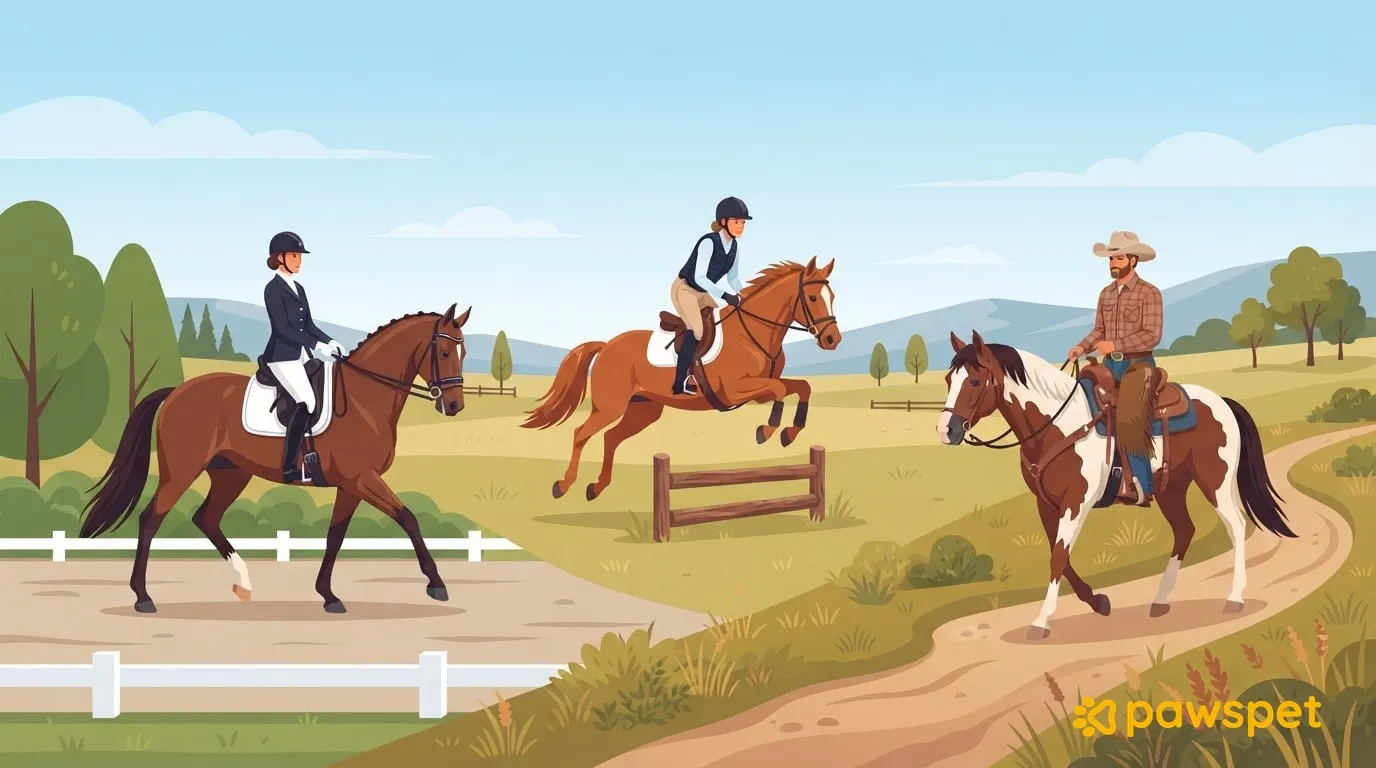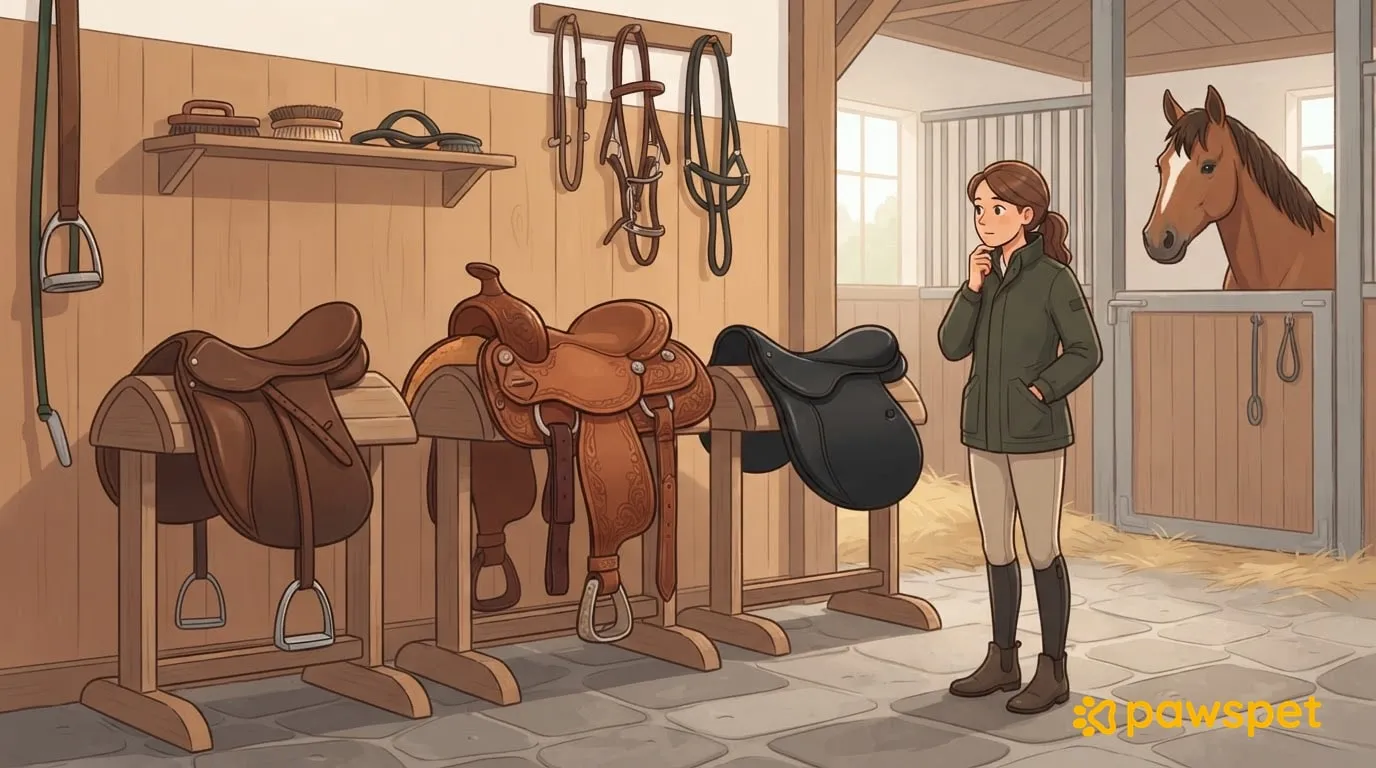
The real difference between saddle types is what carries the rider's weight: a spring or rigid tree, the bars of a western saddle, or padding and panels in a treeless saddle. In our view, anyone who is learning should start with a saddle with a tree that fits the horse's back. Riders who already have an independent seat and want lightness and close contact now have a serious alternative in made-to-order treeless saddles.
What a saddle tree is and why it decides
The tree is the saddle's internal frame. Together with the panels, the cushions under the saddle, it keeps the weight to either side of the spine. Three things depend on it:
- Where the weight ends up: on the tree and panels, or closer to your seat bones, the pelvic bones you sit on.
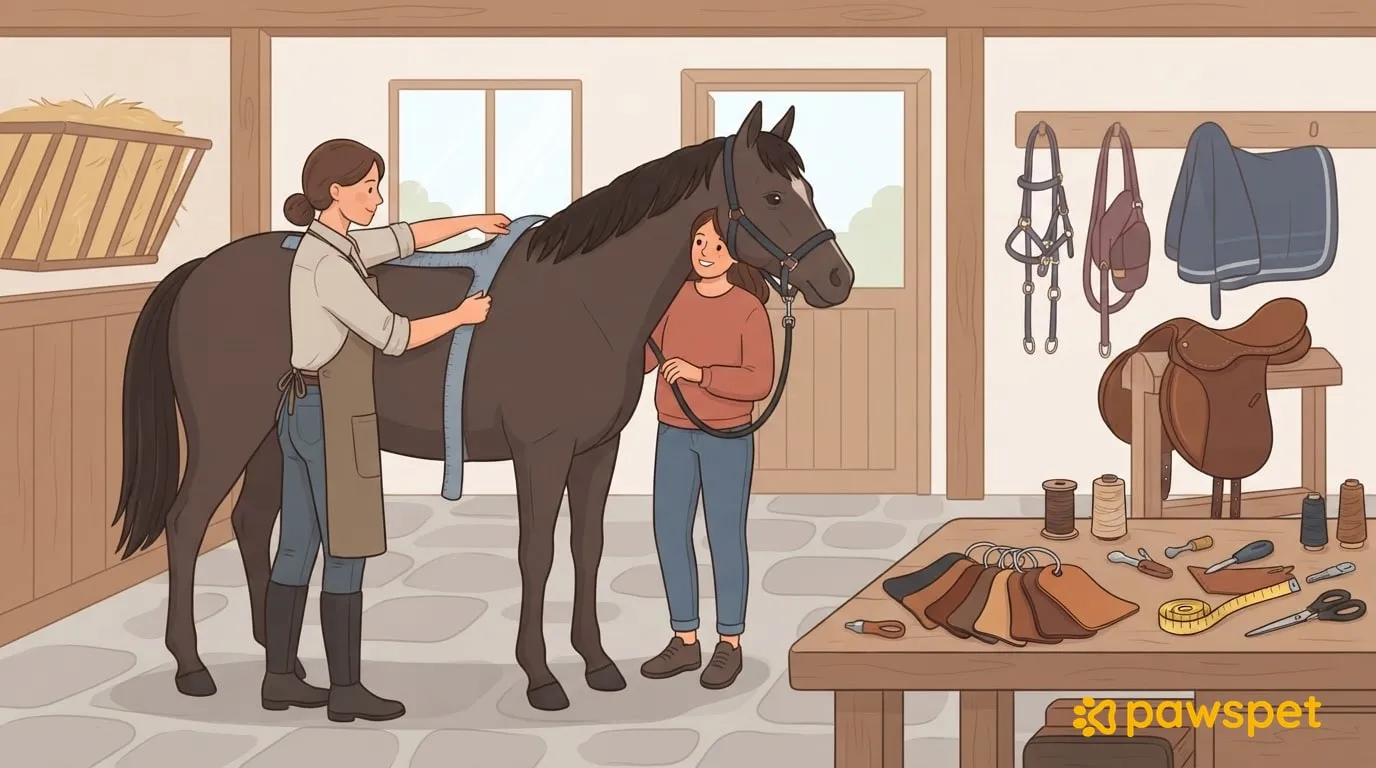
- How well it adapts to the horse: a wooden tree usually comes in only a few widths. The interchangeable gullet plate, the plate over the withers, changes the width but not the shape or the length. The saddle fitter is the technician who checks and adjusts the saddle.
- What upkeep it needs: the wool in the panels packs down and has to be refilled by reflocking. A western saddle usually has no wool to refill.
"Rigid" is confusing: it means without springs, and it is used mostly for the western saddle or for a molded tree that can no longer be adjusted. Among English saddle trees, three differences matter: spring-tree wood, molded synthetic, flexible composite.
Saddle types compared
| Type | Structure | How it carries weight | Weight | New price | Who it's for |
|---|---|---|---|---|---|
| Treeless | No rigid tree, flexible base | Padding, panels and pad; in the models studied, peaks under the seat bones | 3-9 kg | From €271 to over €2,500; Freeform Classic from €1,570 | Riders who already have an independent seat |
| Leather English | Wood with steel springs; polymer with a gullet plate in many cheaper ones | Tree and panels | Jumping 5-8 kg, dressage 6-10 kg | €451-6,900 | English-style riding |
| Synthetic with gullet plate | Synthetic, replaceable gullet plate | Padded or air-filled panels | Wintec 250: 5.2 kg | €234-1,496 | Horses that change shape, riding schools |
| Flexible tree | Composites, polymers | Sellers say it follows the back; little data | n/a | Edix Tudor €1,650-1,845 | To decide with a fitter |
| Semi-treeless | Partial tree: leather or arch | Open channel; little data | Startrekk ST: about 6 kg | Edix soft tree €1,800-2,350 | A compromise, with a fitter |
| Western | Wood and rawhide bars, or synthetic | Bars on the back, large surface area | 10-25 kg | €249-3,350 | Work, trail, western disciplines |
| Australian | Own tree, also adjustable | Wool panels, deep seat | n/a | €342-1,097 | Many hours, difficult terrain |
| Endurance with tree | Tree in several sizes | Wide bearing surface, free shoulders | 3.8-10.2 kg | €279-3,100 | Long distance |
Treeless saddles: models, prices and limits
The load passes through padding or a flexible frame, panels and saddle pad. Many models still have an arch or a rigid structure. The German retailer sattel-baumlos distinguishes three families: padding only, flexible frame, hybrid.
Treeless brands: prices and weights
Prices are in the original currency. Add the saddle pad if it is not included.
| Brand | How it's made | New price | Weight |
|---|---|---|---|
| Freeform | One-piece foam base, flexible aluminum arch, detachable seat | Classic from €1,570 | From about 3.5 kg, base and seat |
| Barefoot | Cushions and dedicated saddle pad | €499-1,369 | Cherokee: about 6 kg |
| Edix | With panels | €550-1,180 | n/a |
| Pioneer | Endurance, air-mesh | €712, with girth and saddle pad | 3 kg |
| Startrekk | Comfort and Espaniola; replaceable gullet plate | $2,264-2,424 | 12-15.5 lb |
| Sensation | Older models without panels: special pad | C$3,050-3,450 | About 4-5.5 kg |
Freeform The Original: why we shortlist it
The Freeform The Original treeless saddle is made to order in Italy by Le Selle Italiane (Lendinara, Rovigo), part of the Amahorse group since 2024. It is made on the horse's measurements, especially the interior, with a base chosen from three catalog lengths. Riders with the right seat consider it for these reasons:
- Construction: a single piece of injection-molded foam, covered in full-grain Italian calfskin. According to the maker, the mold guarantees symmetry and the saddle is built by hand in Italy.
- A back that changes: the aluminum arch in the pommel is shaped by hand. According to the maker, with the right pad the same saddle can move from one horse to another and keeps fitting as the back changes with age and work.
- Modular: detachable seat, removable panels, adjustable stirrup attachment.
- Where it loads: the catalog places the rider between the 9th and 13th thoracic vertebra, with no load beyond the 14th, and reports results among the best of the treeless saddles in tests with the Port Lewis Impression Pad. These are the maker's figures, not an independent study.
- In the field: it is also used at the Tevis Cup, an endurance race. The American retailer Saddle Up lists winners on a Freeform in six editions between 2004 and 2013; the organization does not record saddles.
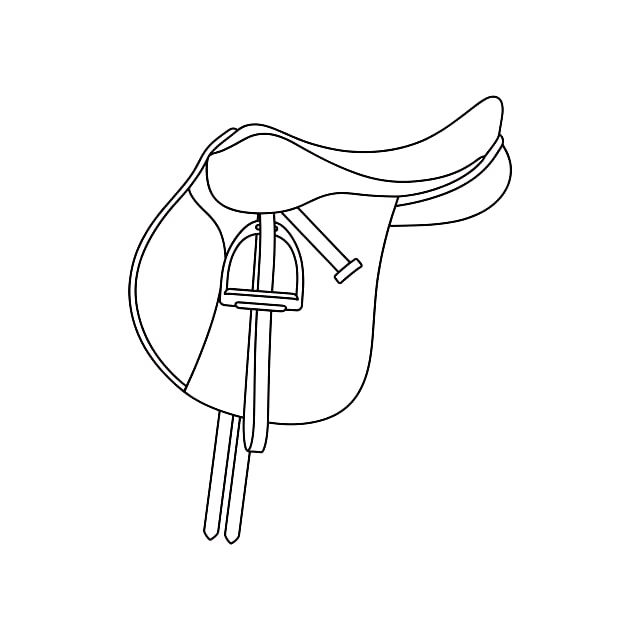 Freeform Classicfrom €1,570English line, with seats ranging from the classic to the Elite Dressage and the Trail.
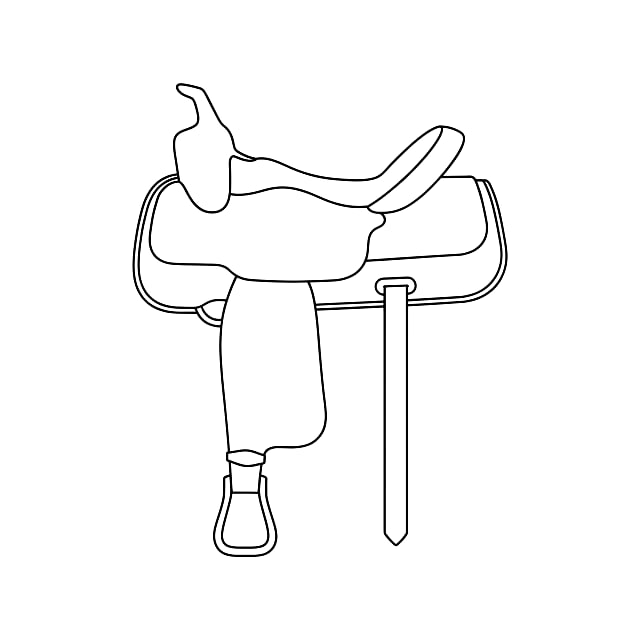 Freeform Scoutfrom €2,270Western line, comfort seat, pommel without a horn.
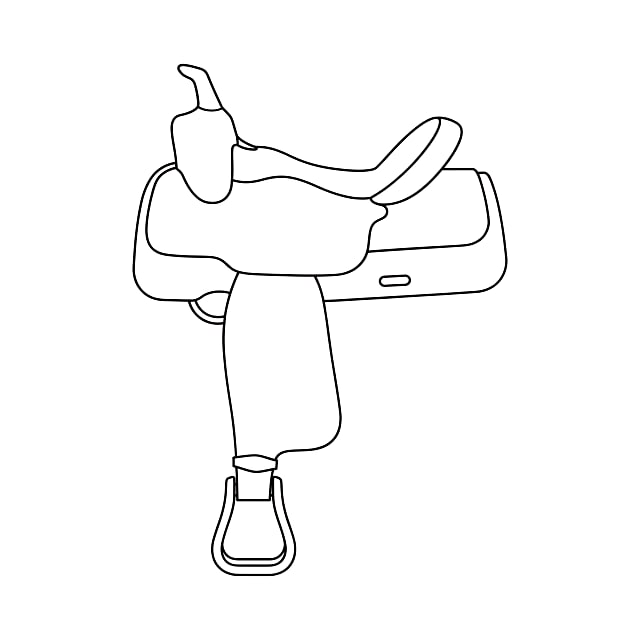 Freeform Pathfinderfrom €2,560Western line with a trail setup, pommel without a horn.
You configure and order it on Equirea, in 3D with the price updated at every choice: base, seat, leathers and finishes. As far as we could verify in November 2026, it is the only 3D online configurator dedicated to the Freeform. The Freeform saddle pad is sold separately, €146, so with the Classic the minimum spend is at least €1,716. Delivery is stated as 6-8 weeks, with free shipping in Italy (for other countries, ask Equirea for the conditions before ordering), and installments at checkout, subject to the amount and approval of the application.
Equirea asks for a rider verification before payment, free and with no obligation, for example with a free trial lesson (Italy only), in which a technician brings a Freeform to try on your horse, or a call. Outside Italy, the call is the option. It is not a technical selection and does not certify your level. Fitting to the horse's back is a separate check, and the different levels of "custom" are explained in the custom saddle guide. The Freeform is also sold by Amahorse, the maker's group, by Equitime and by sattel-baumlos, with stable visits in Germany and Austria.
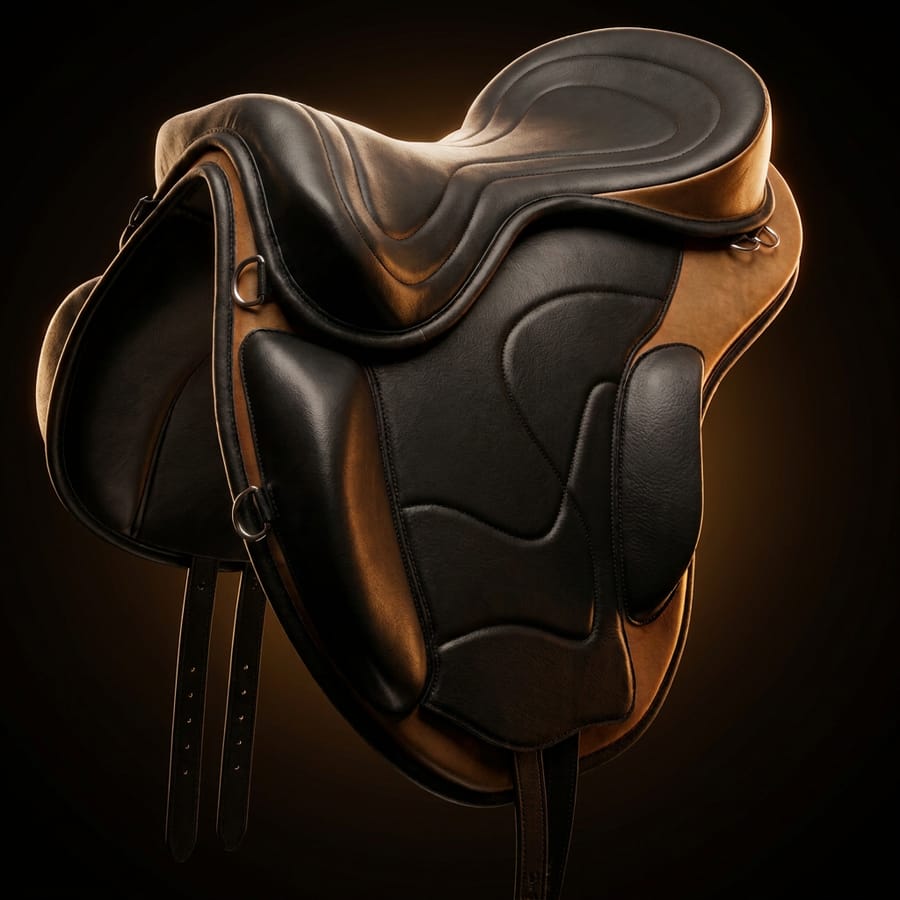
Who it suits and who it doesn't
This is the editorial team's judgment: no controlled study has measured rider stability.
- Worth considering: if you have an independent seat and a horse whose back is hard to fit or changes shape. Animal Health Trust and World Horse Welfare report that some horses seem to do better, without measurements. Kay Hastilow, a former president of the Society of Master Saddlers, sees it at most as a temporary measure.
- Riders who are learning: a saddle with a tree is better. Sattel-baumlos says so too, against its own interest.
- Jumping: no controlled comparison. The Freeform catalog offers a jumping base and a stirrup attachment in jumping position; Hastilow writes of forces concentrated under the stirrup leathers, the girth attachments and the seat bones, and riders who use it and write about it are skeptical about demanding fences.
- Heavy rider on a small horse: an unfavorable combination according to sattel-baumlos.
- Very high withers: the veterinarian Joyce Harman writes that some horses will never be comfortable without a tree and that extra padding does not fix it.
- Long rides with luggage: sources differ. Krämer recommends it for short rides, other shops sell endurance models.
What the studies on treeless saddles say
| Study | Sample | Result | Limits |
|---|---|---|---|
| Belock et al., The Veterinary Journal, 2012 | 8 horses, one female rider, sitting trot | Treeless: contact area 14% smaller, higher pressures, peaks under the seat bones | One model, no pad, no stirrups |
| Clayton et al., The Veterinary Journal, 2014 | 6 horses, one rider, trot | Same area and forces, higher pressures without a tree, attributed to a narrow channel and tilted panels | One model, one rider |
| Latif et al., Equine Veterinary Journal, 2010 | 8 Thoroughbreds, normal tree, flexible and treeless | At the gallop, over 80% of the weight on the front third with all three. With the flexible tree the shift toward the rear is less marked | Racing position, not transferable to dressage or trail |
None of these studies names the Freeform, so the results cannot be attributed to it, nor ruled out. Hilary Clayton concludes that these saddles may be less suitable for heavy riders and for those who do a lot of trot and canter work. It is an extrapolation: she did not measure heavy riders, and there is no validated weight threshold. We found no peer-reviewed studies after 2014, no long-term outcomes, no comparisons with poorly fitted saddles with a tree, and no measurements on trail riding or with specific pads.
Saddles with a tree: English, synthetic, flexible
Spring-tree English saddle
This is the classic choice at the high end. The traditional tree is made of layers of wood, usually beech, with steel springs. Krämer, a German shop, writes however that today wood remains mostly in western saddles: ask the seller what yours is made of. Used ones run from €200 to €3,600. Shape and rules for each discipline are in the guide to which saddle to choose.
The limit is that the horse changes and the frame adapts little. Reflocking corrects the panels, while the tree depends on the model: Acavallo changes the opening with an Allen key, and Schleese, which sells saddles, warns that widening or narrowing the wood risks breaking it. In return the saddle lasts: according to Krämer up to 15 years or more, depending on quality, use and care.
Synthetic with an interchangeable gullet plate
Wintec and Bates use an Elastiflex tree, flexible from side to side. Winner, Waldhausen and Decathlon fit a replaceable gullet plate. Risers, meaning shims, correct the balance.
You will spend €234-292 for a Winner or Norton, €822-950 for a Wintec 500 and 2000, up to €1,496 for the Isabell Icon. The Umbria Torino Dressage costs €222 but does not state a gullet plate. A single Wintec gullet plate costs €42. According to Krämer, a synthetic saddle can last less than leather.
Flexible tree and semi-treeless
For the flexible tree, the only evidence we found is on Thoroughbred racehorses (Latif, in the studies table above) and it does not carry over to other kinds of riding.
The semi-treeless, or soft tree, has a partial tree: leather in the Heather Moffett Vogue, a replaceable front arch in the Startrekk ST.
Western, Australian and endurance saddles
Western saddle
The tree is made of wood and rawhide, or of Ralide or fiberglass, usually lighter and cheaper. The bars, the two elements that run along the back, rest on it without padding between tree and skirt. The surface often reaches past the 18th thoracic vertebra, so the criteria for an English saddle do not apply.
You will spend €249-480 at the low end, €481-1,650 mostly for Ralide, €1,850-3,350 mostly for wood and rawhide. Anyone who wants the western look without a tree looks at models such as the Freeform Scout and Pathfinder.
Fit is decided at purchase. Bar angles are 86° (narrow), 90° (wide) and 94° (extra wide), with ±3° and no standard among makers. Italian listings say Quarter and Full Quarter: ask which angles those correspond to.
Australian saddle
It derives from the English saddle, with a deeper seat, a high cantle and knee rolls. Wool panels can be reflocked; Syd Hill and Wintec have plates to change the width.
Endurance saddle with a tree
The Prestige Desert Light weighs about 3.8 kg and costs €1,620-1,800; the Trekker M X-Breath, a trail (UK trekking) saddle, weighs 10.2 kg. Stirrups and stirrup leathers are often sold separately.
Traditional saddles: maremmana, vaquera, Portuguese
Scafarda, bardella and sella col pallino are the three saddles of Maremma-style riding, often confused with one another. The data here is thinner.
| Saddle | Structure | Price |
|---|---|---|
| Scafarda | Wood, arches on padded bands: horsehair in the historic one, Evazote in the Pioneer | Pioneer Scafarda €1,586; other Pioneer Maremma-style saddles €1,208-1,635 |
| Bardella | Padded sack | New: price not public. Used €1,200 (Selleria Lamberto, Tolfa) |
| Col pallino | Fig wood, iron reinforcements | Price not public |
| Vaquera | Traditional, fiberglass or synthetic | Umbria JM from €658; Zaldi 2G €1,935 excl. VAT, indicative |
| Portuguese | Composite and felted wool panels (Zaldi) | Sartore €1,208; Zaldi Escola-Golegã €2,257 excl. VAT, indicative |
- Scafarda: it derives from the military artillery saddle and prevails in Tuscany. The historic one weighs about 18 kg, the Pioneer about 8. It gives more freedom than the bardella and is less suited to long days.
- Bardella: common in Lazio, Campania and Abruzzo. A deep, secure seat, and a posting (UK rising) trot is hard. On what is inside, sources differ: the Butteri d'Alta Maremma describe a wooden tree stuffed with straw, Pinto Selleria a treeless saddle. Ask the saddler what is inside.
- Sella col pallino: the oldest of the three, of Spanish derivation, similar to the vaquera.
- Vaquera: the Spanish saddle of doma vaquera. Zaldi indicates more than 15 hours of use for it to settle in.
How to tell if a saddle fits
In a Swiss study from 2017-2018 of 201 horse-and-rider pairs with English saddles, 95% were convinced the saddle fit. About a third really did: 35% had no defects. Half of the riders do not have it checked regularly. The study is by Dittmann et al. (Journal of Equine Veterinary Science, 2020), picked up by the Swiss institute Agroscope with the University of Zurich, and it covers a single country.
The checks below come from Agroscope, the French institute IFCE and the British Horse Society (BHS). They apply to the English saddle: Agroscope warns that western, baroche and treeless saddles have criteria of their own.
- Position: without pad or girth, the tips of the front arch sit behind the shoulder blade.
- Length: the bearing surface does not go past the 18th thoracic vertebra. You find it by following the last rib toward the spine.
- Withers: with the rider in the saddle, 2-3 fingers of clearance above and about 2 at the sides.
- Gullet channel: 6-8 cm. Too wide is a defect, because the tree can touch the spine.
- Balance: the lowest point of the seat is in the middle; shoulder, hip and heel are aligned.
- Contact: with a hand between saddle and back, you feel the same pressure along the arch and panels. No bridging, meaning contact only at the front and back.
- Stability: press on the pommel, then on the cantle. The opposite end must not lift.
- Sweat: a dry patch in the middle of wet hair can indicate compression.
- Movement: try all gaits, with and without a rider, for at least 20 minutes.
- Signs in the horse: restless at saddling and girthing, a back that drops, white or broken hairs.
For a treeless saddle, judge saddle and pad together, with at least 2 fingers between pad and spine. Size, shape and tilt of the panels have to be adapted to the horse.
On frequency, sources differ: the BHS asks for at least twice a year, with a qualified fitter, Agroscope at least once. You can keep dates and results in the horse's profile on PawsPet. If the back is sore, talk to the vet first: massage does not replace that assessment.
Common saddle buying mistakes
- Choosing because it is comfortable for you: that does not make it right for the horse.
- Buying used without a fitter: a used saddle has taken the shape of the previous horse. The BHS advises testing the tree, straps and stitching beforehand and having the saddle checked afterward.
- Thinking the saddle pad will fix it: it shifts the pressure and makes a narrow saddle worse.
- Underestimating the return policy: made-to-order saddles often cannot be returned. Ask for the conditions in writing before you order.
In short
- Start from what carries the weight. In our view, anyone who is learning should choose a saddle with a tree that fits the horse; a treeless saddle calls for an independent seat already and a check of the back before you order.
- If you have that seat, the Freeform is the one to start from: light, modular, made in Italy and configurable in 3D on Equirea.
- In November 2026, new adult saddles start at €222 for a synthetic, €249 for a western, €271 for a treeless, €451 for a leather English saddle, and go up to €6,900.
- The studies on treeless saddles are few and small: 6-8 horses, one rider, one model at a time, none naming the Freeform.
- Of 201 Swiss pairs with English saddles, 95% believed the saddle fit, and about a third were right. Have it checked at least once a year.
Frequently asked questions
What is the best treeless saddle?
It depends on horse and rider, and no study compares them with one another. In our view, if you already have an independent seat, the Freeform is the one to start from: it weighs little, comes apart into its parts, is made in Italy and can be configured in 3D on Equirea. Barefoot and other brands cost less and are an alternative if the budget is tight.
Which saddle tree should I choose?
In our view it depends on how much the horse changes. If the horse changes shape or the saddle moves between several horses, an interchangeable gullet plate costs little, but it corrects only the width. For years on the same back, a wooden spring tree lasts longer. For the flexible tree the data is scarce: decide with a fitter.
Does a treeless saddle hurt the horse's back?
The studies do not let us say either way. In two comparisons on 6 and 8 horses, with one rider and one model at a time, the treeless saddle recorded higher pressures than a saddle with a tree. Long-term outcomes and comparisons with poorly fitted saddles are missing.
Do I need a special saddle pad?
Yes. It has to leave clearance for the spine, and fit has to be judged on saddle and pad together. How much it corrects the pressure under the seat bones, no study we found has measured. In November 2026 it costs from €134 to €299.
How much does a saddle cost on average?
Krämer, a German shop, places most saddles between €500 and €3,500. In November 2026 a synthetic starts at €222, a western at €249, a leather English saddle at €451.
How much does a western saddle weigh compared with an English one?
As an order of magnitude, a western weighs 10-25 kg, a jumping saddle 5-8 kg, a dressage saddle 6-10 kg. These are data from the Chaire BEA of VetAgro Sup (June 2026).
What is the difference between a bardella and a scafarda?
The scafarda has a wooden tree with arches on flat bands and prevails in Tuscany. The bardella is built around a padded sack, and on whether it has a tree, sources differ. The bardella gives a deeper seat, the scafarda more freedom.