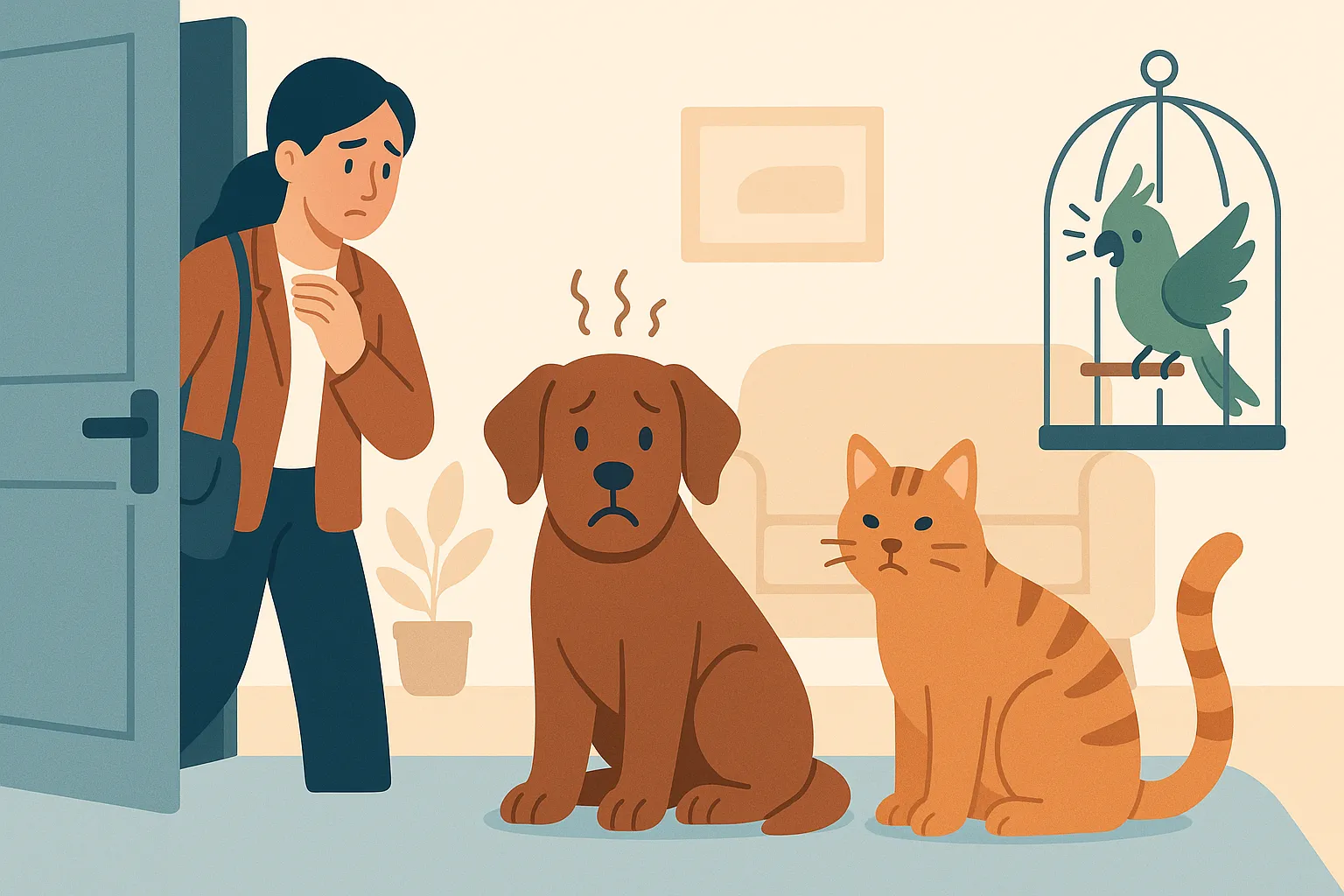
Walks with a reactive dog can quickly become a major source of stress: sudden barking, pulling on the leash, fear of other dogs or people, and difficulty predicting their reactions. Many owners end up dreading walks, or even reducing them to a minimum to avoid problems.
In this article, we’ll look at how to make walks with a reactive dog safer and more manageable, thanks to:
- better leash handling,
- choosing the right accessories,
- careful route and timing choices,
- simple practical exercises to reduce tension and surprises,
- when and how to involve a dog trainer or a veterinary behaviorist.
You won’t find “magic tricks” here, but concrete tools to make walks less stressful while respecting your dog’s limits and needs.
What a reactive dog is (and what it is not)
Before talking about “stress-free walks,” it’s essential to clarify what is meant by a reactive dog.
Reactive dog: a practical definition
In simple terms, a reactive dog is a dog that:
- reacts very intensely and quickly to certain triggers (other dogs, people, bikes, noises, cars, specific smells…);
- often has a low tolerance threshold: very little is enough to trigger a reaction;
- struggles to return to a calm state once activated.
The reactions may include:
- barking, growling, lunging at the leash (toward or away from the trigger),
- body stiffness, a high and fixed tail, staring at the other dog or person,
- or the opposite: desperately trying to escape, trembling, attempting to hide.
Not just an “aggressive dog”
“Reactive” does not automatically mean “aggressive.” Some reactive dogs:
- are insecure or frightened, and use barking to keep what worries them away;
- may have been poorly socialized or have had traumatic experiences;
- are extremely sensitive to context (smells, noises, narrow spaces).
Knowing this is crucial to approaching walks with more empathy, avoiding punishments or scolding that often increase anxiety and frustration.
Why the leash can make reactivity worse (or better)
Many owners look for information on how to manage a dog that pulls on the leash or what to do when their dog explodes at the sight of another dog during a walk. The leash is not just a physical tool: it completely changes the dog’s movement and communication options.
The leash’s “trap” effect
In some cases, the leash:
- prevents the dog from moving away from what scares them,
- limits classic calming signals (turning the head, making a curve, sniffing),
- transmits our tension through constant pulling.
The dog feels “stuck” and may react more intensely because they have no other strategies.
How the owner can help (or make it worse)
Even with the best intentions, we can worsen reactivity on walks when we:
- tighten the leash as soon as we see another dog or person (“Careful, someone’s coming!”);
- yank or scold the dog when they bark;
- force them to approach the trigger that makes them uncomfortable;
- hold them back in narrow spaces (crowded sidewalks, entrances, corridors).
On the other hand, we can help the reactive dog if we:
- learn to read signs of discomfort before they explode;
- keep the leash soft whenever possible;
- allow them to take some safe distance;
- help them move away and change direction without conflict.
Accessories for reactive dogs: what to choose and what to avoid
Choosing the right accessories for reactive dogs has a big impact on safety and comfort, for both the dog and the owner.
Collar or harness?
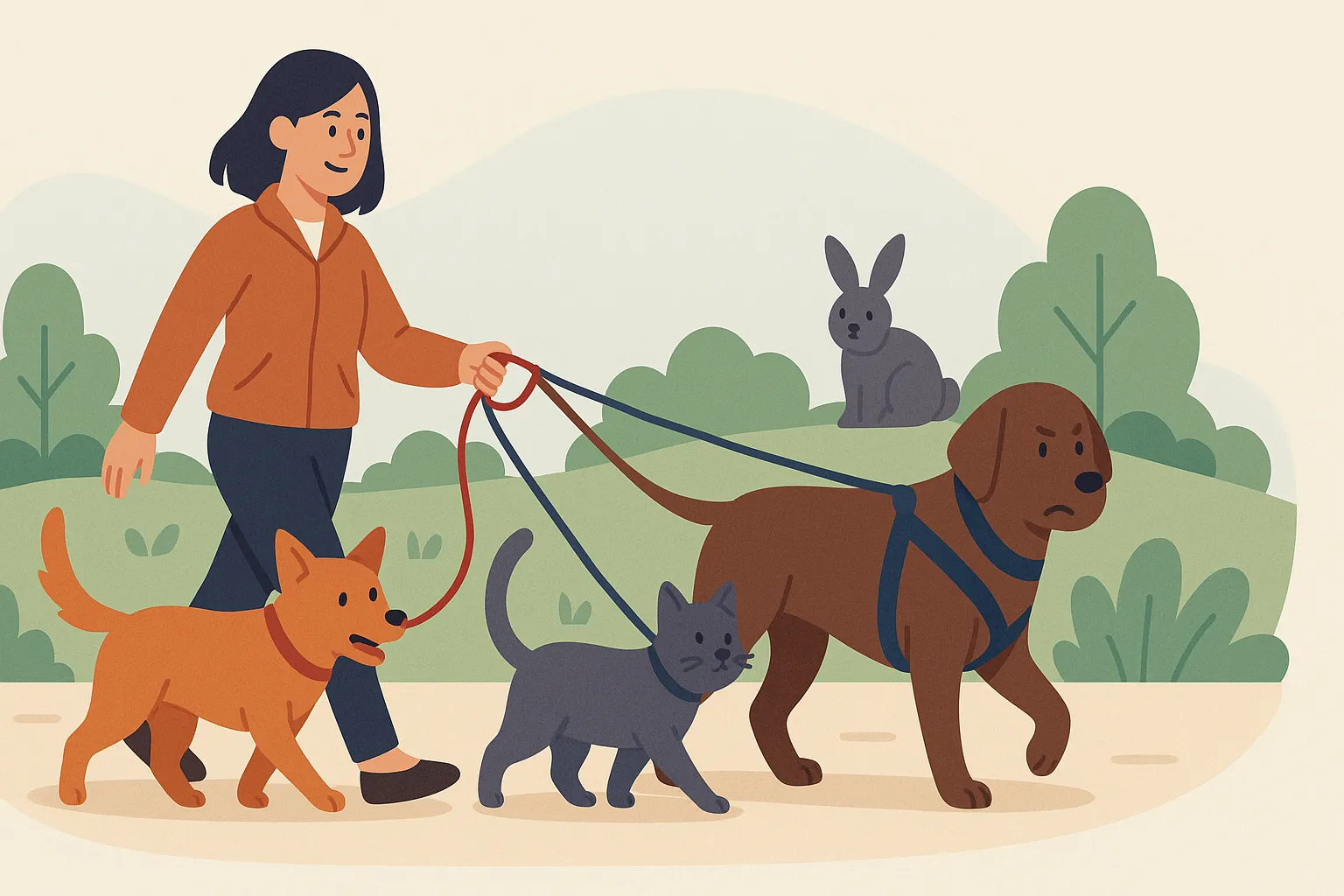
For a reactive dog on walks, in most cases it’s better to use a properly fitted H- or Y-shaped harness, which:
- distributes pressure better across the chest,
- reduces the risk of neck and trachea injuries,
- provides more leash attachment points.
A fixed collar or slip collar (such as a semi-choke or choke chain):
- can cause pain and physical damage, especially in dogs that pull;
- can increase discomfort and therefore reactivity;
- should be avoided in particular with dogs that already show tension and handling difficulties.
Leash: recommended length and materials
For reactive dogs, a leash longer than the classic 1.2 m is often useful, as long as it is used safely and with awareness:
- ideal length: 2–3 meters, sometimes even 5 m in open spaces;
- material: durable nylon or biothane, easy to clean and handle;
- no retractable leashes in urban settings or situations with possible close encounters.
Why does a longer leash help?
- it allows the dog to take curves instead of approaching head-on;
- it allows them to sniff and decompress;
- it reduces constant tension on the neck/harness.
Accessories to avoid with a reactive dog
For the dog’s safety and well-being, it is wise to avoid:
- choke chains or prong-style collars (shock collars, pinch collars, electric collars);
- harnesses that compress the shoulders and shoulder blades (X-shaped models that restrict movement);
- elastic leashes that amplify pulling;
- unsuitable closed muzzles (which prevent the dog from panting, drinking, or opening their mouth).
If a muzzle is necessary for safety reasons:
- choose a basket muzzle (e.g. in sturdy plastic or coated metal),
- introduce the dog to it gradually with positive associations (food, play),
- never use it as a “punishment.”
Planning safer walks: routes, times, and settings
One of the most important ways to reduce stress in walks with an anxious or reactive dog is context management.
Choosing suitable routes
Whenever possible, favor:
- quieter side streets with less traffic;
- green areas with plenty of space (parks during calm hours, fields, riverbanks);
- routes you know well that allow for “escape routes” (cross streets, open spaces where you can move away).
Avoid or limit:
- narrow, crowded sidewalks, especially at peak hours;
- very small or overly busy dog parks where dogs lack self-control;
- unavoidable passages such as narrow bridges, stairs, crowded underpasses.
Strategic times
If your dog struggles with other dogs or with people approaching them, it may help to:
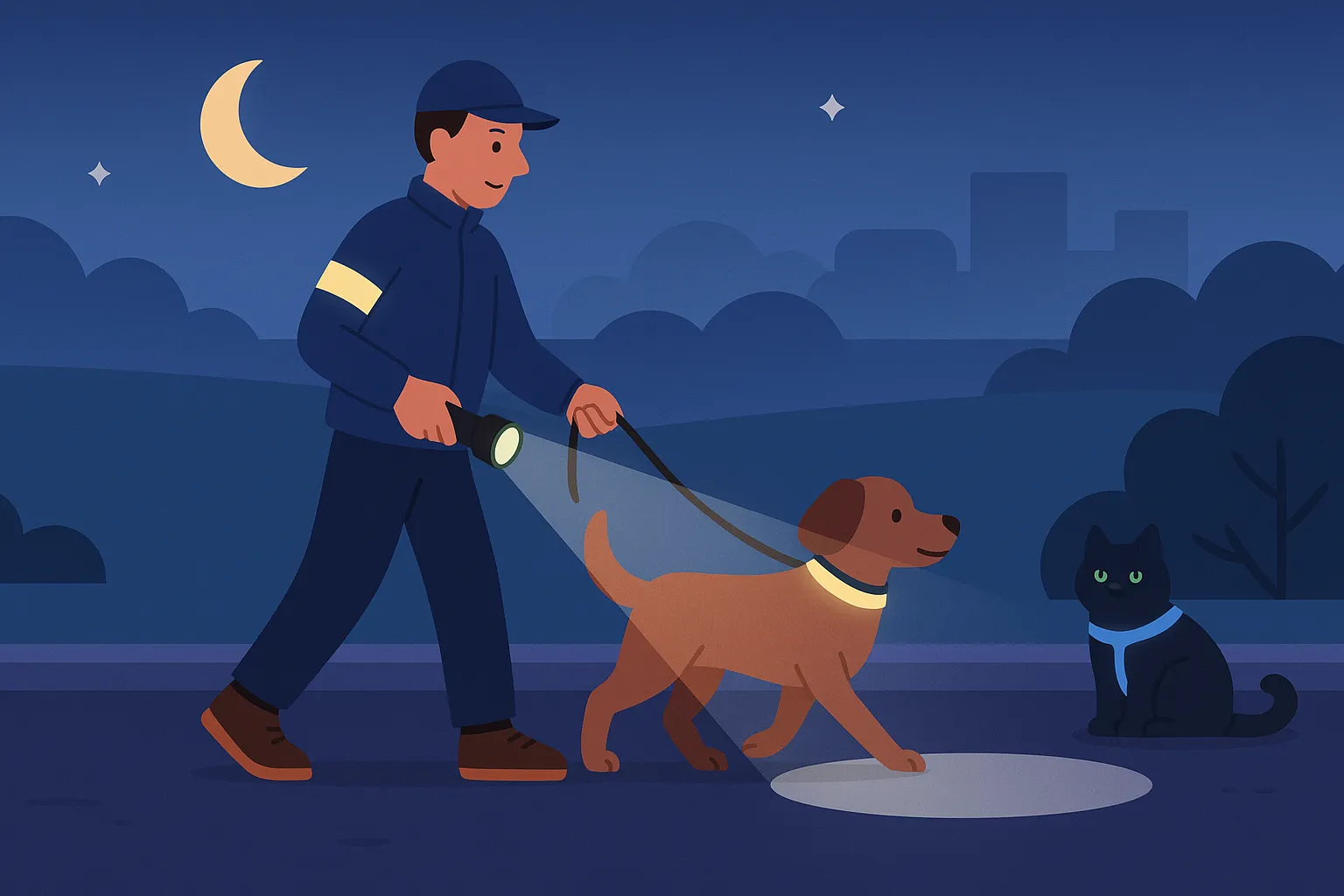
- go out very early in the morning or later in the evening;
- avoid school drop-off/pick-up times or office closing hours;
- spend less time in busy areas and more in quiet ones.
Over time, with targeted work and professional support, you may be able to gradually expand the times and contexts.
How to prepare for the walk (mentally too)
To reduce anxiety and surprises:
- check the route in advance (even using maps) and identify places where you can pause or detour;
- bring high-value treats (things your dog really loves);
- make sure your dog has done their business and isn’t overly full or too hungry;
- if you’re feeling tense, take a couple of minutes to breathe deeply: your calm helps them too.
Managing a reactive dog on walks: practical strategies
Let’s now look at some concrete strategies for managing a reactive dog on walks, especially around other dogs or problematic triggers.
1. Increase and maintain safe distance
Every dog has a comfort distance: beyond that distance they can observe, but below it they may likely react.
When you spot a known trigger (dog, person, bike):
- Stop for a moment and assess how you can increase distance:
- cross the street,
- make a wide curve,
- step into an open area or behind a parked car to create a visual barrier.
- Keep the leash soft, avoiding rigid pulling toward yourself.
- Let your dog watch the trigger from farther away, if they remain relatively calm.
- Reward or praise your dog when they manage to look and then return their attention to you.
If you realize you’re too close:
- move away calmly and decisively, without scolding,
- try not to drag them, but guide them with your body and movement.
2. Learn the “180° turn” (gentle change of direction)
A very useful exercise is a direction change paired with something positive:
- start in a quiet environment,
- call your dog in a calm voice,
- make a half-turn (180°) and, as they follow you, reward them,
- repeat often, even when there are no triggers.
That way, when you spot a dog or person ahead who could create difficulty, you can:
- use this already familiar exercise,
- change direction smoothly,
- avoid a direct encounter without creating conflict.
3. Handling unavoidable encounters
Sometimes it’s not possible to create much more distance (narrow sidewalk, corners, doorways). In these cases:
- position yourself so that you are physically between the dog and the trigger;
- shorten the leash a little, but without keeping it under constant tension;
- if your dog accepts food, offer rapid “rain” treats as the trigger passes;
- if they look at the other dog but manage not to explode, reward them as soon as they look away.
If they react despite everything:
- don’t scold them, don’t panic, don’t shake them,
- move them away decisively, but without violent physical conflict,
- once you’re at a safe distance and they begin to calm down, start breathing and moving more loosely again.
What to do during and after a reactive episode
Even with the best planning, your dog may still have a strong reaction.
During the episode
- Focus first on physical safety: hold the leash securely and check that the harness is properly fastened.
- Avoid yelling or yanking: it often increases tension and frustration.
- If possible, move to increase the distance from the trigger.
- If they are very agitated and won’t take food, focus only on getting out of there safely.
After the episode
Your dog may remain “charged” for several minutes (or longer). To help them decompress:
- move away from the scene that triggered the reaction;
- if possible, go to a quiet area where they can sniff freely on a long leash;
- don’t overwhelm them with commands: give them a few minutes of movement and sniffing.
Once home:
- offer a calm and predictable environment;
- avoid talking aloud about it or “reliving” the episode while visibly upset in front of them;
- if these episodes are frequent or very intense, note them down to discuss with a trainer or veterinary behaviorist.
Useful exercises to reduce stress and improve management
Beyond route and accessory choices, a few simple exercises can help with walks for a reactive dog.
1. “Look at me” and shared attention
Goal: teach your dog to voluntarily seek your eye contact, not only when you call them.
How to start:
- At home, in a quiet environment, hold a few treats in your hand.
- Without talking too much, wait for your dog to look at you, even for just a second.
- As soon as they look at you, mark the behavior (with a “yes!” or a click if you use a clicker) and reward.
- Repeat in short sessions, gradually increasing the duration of the gaze.
On walks:
- try it in low-stimulation settings,
- ask for “look” or the cue you’ve chosen,
- reward them when they offer attention, especially if they’re near a trigger but still under threshold.
2. Therapeutic use of scent
Scent is a powerful resource for lowering a dog’s stress. Some ideas:
- slow your pace and let them sniff bushes, tree trunks, and grass;
- organize “sniff walks” in quiet areas, with less focus on linear movement;
- hide small treats in the grass and let them search calmly.
Often, slow walks with lots of sniffing are worth more than hours of nervous walking in difficult settings.
3. Training calmness at home too
A dog that lives constantly “on edge” has a harder time handling triggers on walks. It may help to:
- create a quiet zone at home with a bed or mat;
- reward them when they spontaneously choose to go there and relax;
- reduce overly stimulating input (very loud TV, constant visitors, frantic games right before going out).
When to involve a dog trainer or veterinary behaviorist
If your dog:
- has very intense and frequent reactions,
- has already bitten or attempted to bite people or other dogs,
- is always hyper-alert and struggles to relax,
- shows strong fear signs (trembling, fleeing, frequent freezing),
don’t try to handle the situation alone.
Who to contact
- Dog trainer/instructor with a modern, welfare-based approach (no coercive methods): ideal for assessing management, routines, environments, and exercises.
- Veterinary behaviorist: essential if significant emotional issues, anxiety disorders, deep-rooted fears, or trauma are suspected. If needed, they can also assess pharmacological support.
How a professional can help you
- By analyzing the dog’s behavior in daily life and on walks.
- By identifying the main “triggers” (dogs, people, noises, contexts).
- By building a tailored desensitization and counterconditioning plan.
- By supporting you during the first working walks and teaching you how to move.
How PawsPet can make managing a reactive dog easier
Technology doesn’t replace hands-on work with your dog, but it can make management more organized and safer.
With the PawsPet app, for example, you can:
- log episodes of reactivity (date, place, intensity, what happened) to build a useful history to show your trainer or vet;
- save the professional’s guidance (exercises, safe distances, walking routines) in one place;
- set reminders for specific training sessions (e.g. 10 minutes a day of “look at me” exercises);
- mark the routes and times that work best for your dog, so you can repeat them or share them with anyone walking them.
If you run a professional service (trainer, dog sitter, boarding):
- you can keep the records of reactive dogs updated, with specific notes on walk management;
- coordinate better with owners by sharing observations and progress.
Quick checklist: a walk tailored to a reactive dog
Before going out:
- Harness properly fitted and comfortable
- Suitable leash (at least 2–3 m, no retractable leash in the city)
- High-value treats within reach
- Route and timing chosen based on your dog’s critical points
- Your emotional state: calm enough to handle the walk
During the walk:
- Leash as soft as possible
- Allow your dog to sniff and make small approach arcs
- Watch the environment to prevent too-close encounters
- Be ready to change direction calmly if needed
- Reward calm behaviors, including small improvements
After the walk:
- Offer your dog a calm environment to recharge
- Assess how it went without judging yourself or your dog
- If you use PawsPet, log any significant episodes to keep an accurate record
Conclusions: small steps, but in the right direction
Living with a reactive dog on walks can be exhausting and, at times, discouraging. But with:
- more mindful leash handling,
- suitable and comfortable accessories,
- less stressful route and timing choices,
- a few targeted exercises and, when needed, professional support,
it’s possible to turn walks from a nightmare into moments that are more manageable and gradually more peaceful.
No forceful methods or harsh techniques are needed: what you need is time, patience, consistency, and respect for your dog’s limits.
If you want to better organize your dog’s journey, track episodes and training, and share information with trainers and pet sitters, try the PawsPet app: it can become your digital notebook for the day-to-day management of their well-being, on walks and beyond.
FAQ about walks with reactive dogs
How can I calm a reactive dog before leaving the house?
It helps a lot to create a predictable and calm routine:
- avoid overly exciting games right before the walk;
- calmly prepare the leash, harness, and treats;
- if your dog gets excited when you pick up the leash, wait a few seconds for quiet before putting it on;
- reward calm behaviors (sitting, looking at you) instead of nervous dashing to the door.
If the agitation is very strong or gets worse over time, consult a trainer or veterinary behaviorist.
What should I do if my reactive dog always barks at other dogs?
Don’t try to “shut them up” with yelling or leash jerks. Instead, work on:
- safe distance: move away until they can still think clearly;
- positive reinforcement when they look at the other dog and then back at you;
- routes with fewer close encounters for a while, to reduce stress buildup.
If the barking is constant and intense, consider a personalized plan with a dog trainer.
Is it useful to take a reactive dog to a dog park to “get them used to it”?
In most cases, no. Dog parks are often:
- small, fenced spaces where distance cannot be increased;
- full of dogs with different play styles, sometimes intrusive;
- highly stimulating places, often hard for an already struggling dog to handle.
It’s better to start in open, manageable spaces, with carefully selected “helper” dogs if needed, under a professional’s guidance.
How long does it take to improve reactivity on walks?
There’s no single answer: it depends on the dog’s history, the severity of the issue, how consistent the work is, and professional support. Some dogs improve a lot in a few weeks, others need months or more. The realistic goal is to:
- reduce the frequency and intensity of reactions,
- increase your ability to manage the situation,
- build more sustainable walks together, while respecting their well-being.
Tracking progress, for example with the help of an app like PawsPet, makes it easier to see improvements even when they seem small from day to day.