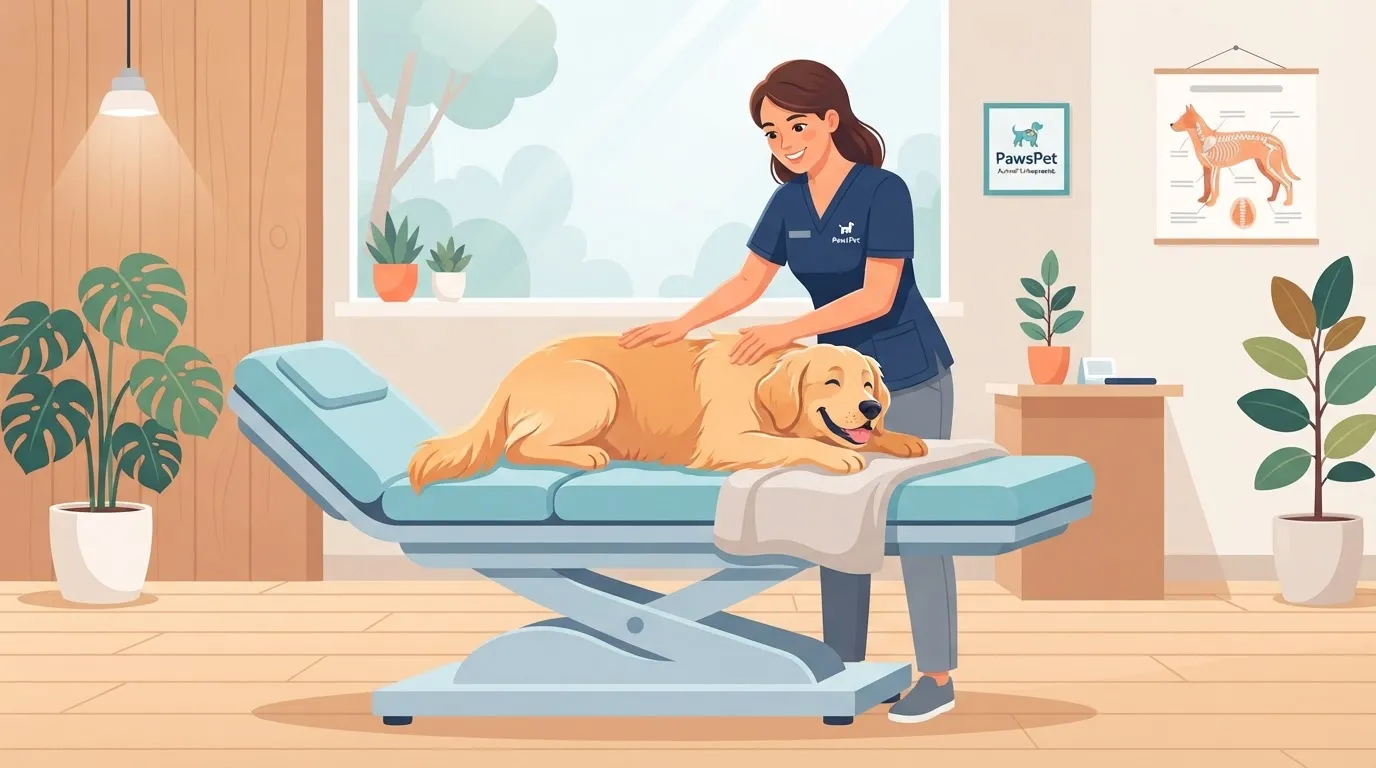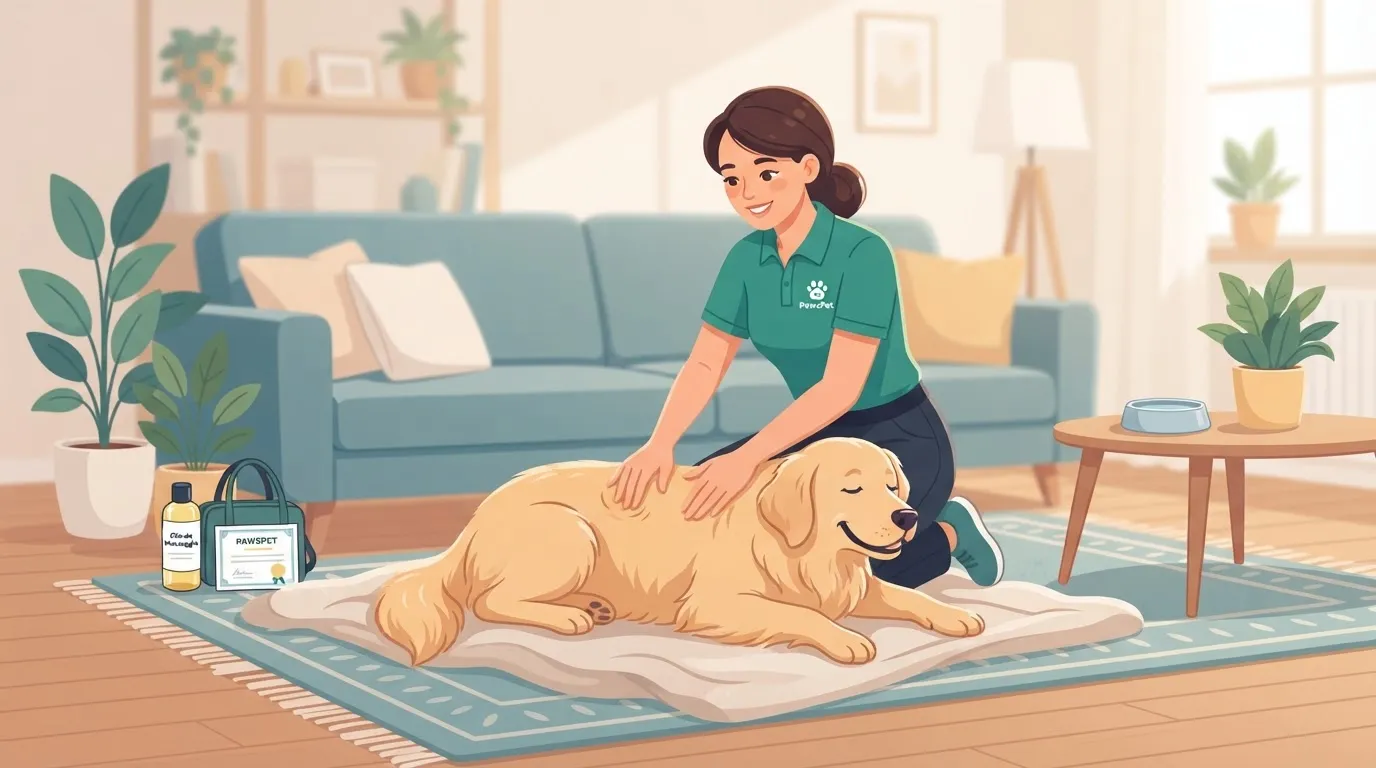
An at-home dog massage can be a relaxing experience and support your dog’s muscle wellness routine, especially when they feel more comfortable in their own surroundings. Choosing the right professional requires care, however: expertise, an initial assessment, and communication with your veterinarian all matter.
When canine massage may be useful
Dog massage does not replace veterinary examinations, diagnoses, physiotherapy, or veterinary treatment. It may, however, be part of a wellness routine for healthy, athletic, older, or particularly tense dogs, provided it is offered appropriately.
A responsible canine massage professional does not promise clinical results or work on problems that have not been assessed. Before a session, they should ask about:
- your dog’s age, size, habits, and activity level;
- any diagnoses, recent procedures, or ongoing treatments;
- observed stiffness, sensitivity to touch, or changes in movement;
- instructions already provided by your veterinarian or a veterinary physiotherapist;
- your dog’s behavior around unfamiliar people and at home.
If your dog shows sudden pain, limping, swelling, weakness, fever, breathing difficulties, or a rapid change in behavior, contacting your veterinarian is the priority. Booking a massage should not delay a medical assessment.
How to evaluate a dog massage therapist
The title “dog massage therapist” alone does not define a person’s training or professional limits. Ask directly what training they have completed, which techniques they use, and which healthcare professionals they work with when a case requires it.
Positive signs include:
- specific training in animal massage and interpreting canine body language;
- demonstrable experience with dogs of a similar age, size, or temperament to yours;
- willingness to follow your veterinarian’s instructions;
- clear explanations of the session’s realistic goals;
- attention to your dog’s consent, comfort, and need for breaks;
- transparent information about duration, service area, payment methods, and cancellation policies.
Be cautious of anyone who diagnoses conditions, recommends stopping medication, or promises to “cure” pain, arthritis, neurological problems, or injuries. These situations require the involvement of qualified healthcare professionals.
You can use the PawsPet marketplace to compare profiles and services available in your area, carefully checking the stated experience, skills, and contact details before booking.
What an initial at-home assessment should include
One benefit of at-home massage is that your dog remains in a familiar place, with fewer journeys and external stimuli. This does not mean the first session should begin immediately with prolonged manipulation.
The professional should observe how your dog interacts, moves around the home, and responds to touch. Depending on the situation, they may prefer a short introductory meeting or proceed gradually.
To prepare:
- choose a quiet room with enough space and a non-slip surface;
- avoid scheduling the session immediately after a large meal or intense activity;
- keep any relevant veterinary reports or instructions available;
- let the professional know in advance if your dog is afraid of touch, guards certain areas, or finds it difficult to relax;
- do not force your dog to stay still: moving away, becoming stiff, repeatedly licking their lips, or growling are signals that should be respected.
A well-managed session adapts to the dog, not the other way around. Sometimes the initial goal is simply to build trust and help the experience feel safe.
Contraindications and signs not to ignore
There are conditions in which massage may not be appropriate or may require explicit veterinary advice. These include recent injuries, wounds, acute inflammation, fever, unexplained swelling, undiagnosed pain, contagious skin conditions, and the postoperative period.
When a dog has a chronic condition or is receiving treatment, the professional must know what to avoid and how cautiously to proceed. Do not attempt deep DIY massage by following videos or general advice: inappropriate pressure may increase your dog’s discomfort.
After the appointment, calmly observe your dog’s behavior. Contact the professional and, if needed, your veterinarian if you notice persistent discomfort, reduced mobility, unusual reactions to touch, or marked tiredness.
Dog massage cost: what to ask before booking
The cost of dog massage can vary depending on the appointment length, travel distance, the professional’s experience, the initial assessment, and the number of sessions recommended. A clear quote should state what is included, including any additional fee for an at-home visit.
Before confirming, ask:
- how long the appointment lasts and how much time is dedicated to the assessment;
- whether travel is included in the price;
- what the rescheduling and cancellation policies are;
- whether you will receive practical guidance for everyday care;
- when it would be advisable to update your veterinarian.
Making an informed choice protects your dog’s well-being and makes the experience more useful. With PawsPet, you can organize health information, set reminders, and find pet services more easily, keeping important details close at hand.
FAQ
Is at-home dog massage suitable for every dog?
Not necessarily. Every dog has different needs, sensitivities, and health conditions. Before starting, the professional should gather relevant information and, if there are concerns or symptoms, you should consult your veterinarian.
How many canine massage sessions are needed?
It depends on the goal, your dog’s response, and the guidance of any healthcare professionals involved. A responsible practitioner avoids offering standard packages without an initial assessment.
Can I stay during the session?
Yes. In most cases, the owner’s presence can help the dog feel safe. Follow the professional’s guidance, though: at certain points, it may be helpful to remain calm and avoid intervening constantly.